Is Pico Laser Safe for Dark Skin? Usually, if You Go Slowly
For most brown and deep-brown skin, pico laser can be done safely when the energy stays low, sessions are spaced weeks apart and the skin isn't tanned or inflamed. The main risk is dark patches that appear weeks later.

Whether this treatment suits you needs a dermatologist to assess. Send a photo and your travel dates on WhatsApp, and we reply in English whether it can be arranged for your case and which days are open.
Ask us on WhatsApp
Why darker skin reacts differently to laser heat
Is pico laser safe for dark skin, or will a laser meant to fade your spots leave new, darker ones behind?
For most medium-brown to deep-brown skin, it can be, when the energy stays low, sessions are spaced weeks apart and the skin isn't tanned or inflamed on the day. The real risk is post-inflammatory hyperpigmentation: dark patches that tend to show up a few weeks later, often after you've already flown home.
Hello, I'm Dr. Won Woo Choi, Medical Director at WELLS Clinic in Apgujeong, Seoul.
I'm a board-certified dermatologist trained at Seoul National University Hospital, and at WELLS a board-certified dermatologist handles your consultation, diagnosis and treatment, so the doctor who judges your skin is the one at the laser. WELLS has used PicoSure since introducing it in 2015, about 30,000 procedures so far. If talking through skin color and medical history in a second language worries you, a medical interpreter for your language is provided at no extra charge.
If you're not sure how reactive your skin is, send one photo of the area in daylight, without makeup, on WhatsApp, and ask the one thing you most want to know before you plan a trip around it.
Send a clear photo and your travel dates, and we will tell you what fits the time you have in Seoul.
Send a daylight photo of the area on WhatsAppMelanin is what a pigment laser aims at, and darker skin simply has more of it everywhere, including in the normal skin around the spot you want gone. Think of a black T-shirt and a white one left on the same sunny bench: the dark one heats up faster. Laser light behaves the same way, so in darker skin the surrounding surface absorbs more of the energy meant for the spot.
Heat in those cells is what sets off inflammation, and inflammation is what tells melanocytes to make extra pigment. That chain, from heat to irritation to new pigment, is the whole safety problem in one line. Every decision about settings is an attempt to break the chain at the first link.
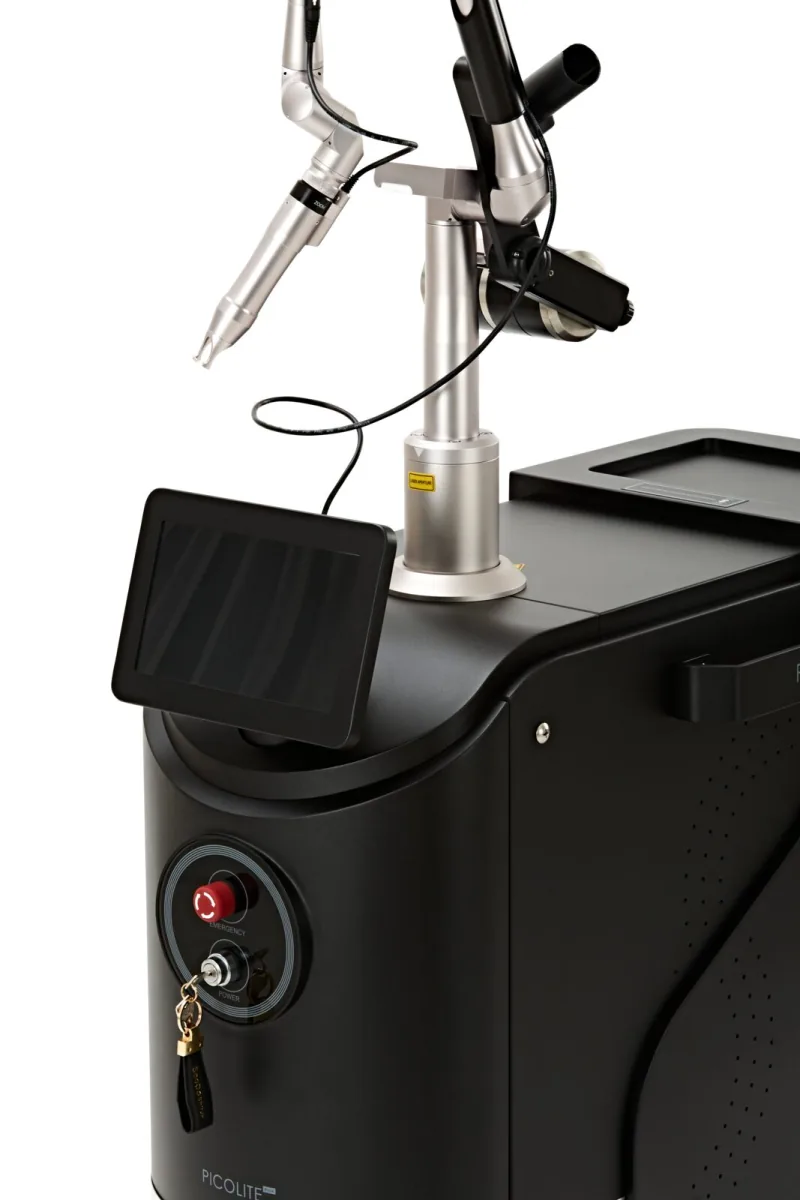
Picosecond lasers help because of timing. Their pulses are about 1,000 times shorter than conventional laser toning, which shatters pigment into finer particles with less heat spreading into the skin around it. Wavelength matters too: 1064 nm passes through the top layer with less melanin absorption, which is why it is generally the gentler choice for darker skin, while 755 nm and 532 nm grab surface pigment harder and need more caution.
The other lever is how many times you heat the skin. I presented an analysis at the Korean Dermatological Association meeting on combined pico laser treatment for melasma, where about 5–7 picosecond sessions did the work of about 10 conventional toning sessions. For darker skin, fewer passes means fewer chances to provoke inflammation, and that matters as much as the device itself.
Worried about your own case? Let a dermatologist look first: send a photo and your dates, and we reply whether it can be arranged.
Ask us on WhatsAppWhen is pico laser safe for dark skin, and when should you wait?
When one of the following applies, I'd hold off or change the plan, and I would rather do nothing on that trip than start a pigment course on skin that is already stirred up.
- A recent tan, beach holiday or self-tanner on the area you want treated.
- An active acne flare, eczema, sunburn or rash where the laser would go.
- A peel, another laser or waxing on the same area within the last few weeks.
- Isotretinoin in recent months, or medicines that make skin sun-sensitive. Bring the names.
- Pregnancy or breastfeeding, when melasma often shifts on its own.
- A spot that is growing, changing color or bleeding. That needs a diagnosis before any laser, and our post on how a mole check and removal works in Seoul explains that visit.
Risks and side effects to know
Some patches aren't pigment at all. Skin conditions that look alike can have different causes and stages, and redness can read as a dull brown on darker skin. A pigment laser does little for blood vessels; that is a different tool, covered in vascular lasers for redness and broken capillaries. Diagnosis decides which laser, if any, belongs on your face.
Is pico laser safe for dark skin that darkened after a laser before?
In short, this is the situation where people are told no at home, and sometimes that is the right call for that moment. A previous reaction tells me your melanocytes answer heat quickly. That is useful information; on its own it doesn't close the door.
Say you're 41, living in Atlanta, with brown skin and melasma across both cheekbones. A spa IPL three years ago left a darker band along one cheek that took most of a year to fade, and you have eight days in Seoul in late spring. Here is how I would reason through it.
The IPL reaction says your skin overreacts to broad, uncontrolled heat, so any plan would start at low energy with a wavelength that spares the surface, and the first session would really be a test of how your skin answers. Eight days is too short to read that answer, because post-inflammatory darkening takes weeks to show, so I wouldn't squeeze a second session into the same trip. If you had flown in straight from a beach week, my advice would be to skip the laser this time and come back untanned.
For how a pico appointment itself runs and how it fits around flights, see our guide to pico laser in Korea.
Dark patches, white spots and blisters: what can go wrong
The usual reactions are short-lived. Expect redness and warmth for a few hours to a day or two, and if individual spots were treated, they may look darker and form a fine crust that flakes off over roughly one to two weeks. That darkening is the broken pigment leaving, which is different from new pigment forming.
The complication darker skin worries about is post-inflammatory hyperpigmentation: new brown patches that appear weeks later where the skin was irritated. It is more common in skin with more melanin, and it usually fades over months with strict sun protection, though deeper pigment can last much longer. The opposite problem, small lighter or white spots, has been reported after frequent, repeated low-energy toning, which is one more reason to space sessions out instead of booking them weekly. Blisters and burns are uncommon at toning settings and become more likely with high energy or tanned skin. Melasma can also flare after heat, and how your skin responds is individual, which is why the first session is set conservatively.
If dark patches or irritation appear after you're home:
- Don't pick at crusts, and skip scrubs, acids and retinoids until the skin is settled.
- Use broad-spectrum sunscreen every day, reapply it, and wear a hat outdoors.
- Don't book another laser or peel at home to fix it quickly; more heat usually adds to the problem.
- Take a daylight photo in the same spot each week so you can see the trend.
- See a dermatologist at home promptly for blistering, oozing, or darkening that keeps spreading.
If you've had a reaction like this before, mention it in your WhatsApp message: which treatment it was, roughly when, and a photo if you kept one. Then ask whether your skin, as it is now, is better started this season or the next.
Send a clear photo and your travel dates, and we will tell you what fits the time you have in Seoul.
Send a daylight photo of the area on WhatsAppPlanning a Seoul trip so the sun doesn't undo the laser
The tip I'd give anyone with darker skin is about order: put the laser before the beach, never after it. Arrive untanned, stop self-tanner a few weeks ahead, and keep the outdoor half of the holiday for after the skin has settled at home, not the days right after the session.
Visible light, not only UV, drives pigment in darker skin, and a plain white sunscreen does little against it. A tinted sunscreen containing iron oxides blocks more of it, and it also blends into brown skin better than chalky formulas. Seoul's spring and summer sun is strong, so pack a wide-brimmed hat; on the flight home, keep the window shade down if you're in a window seat.
A test spot is often suggested for darker skin, and it is reasonable, but be clear about timing. A test patch done on day one of a week-long trip will tell you very little before you leave, because the reaction that matters shows weeks later. That is why I'd treat a short trip as one cautious session, and plan any second session for a later visit.
The same caution applies to old brow or eyeliner pigment on darker skin, which is covered in fading old eyebrow tattoos with pico lasers.
Questions to put to any clinic before a laser touches darker skin
Wherever you book, these questions show quickly whether a clinic has thought about skin like yours:
- Who examines my skin, and is that the same doctor who sets the laser?
- Which wavelength would you start with for my skin, and why that one?
- How many weeks apart are sessions, and after how many do you reassess?
- What happens if my skin is tanned or irritated on the day?
- If dark patches appear after I'm home, what should I do and whom do I contact?
Ask them of us as well as anyone else. A clear answer to each is a better guide than any device name on a website.
Where I stand on lasers for darker skin
Darker skin is no reason to refuse pico laser, and no reason to rush it. I'd rather diagnose what the patch actually is, start low and give the skin weeks to show how it answers than chase a fast result. Before treatment WELLS does a 3D skin analysis, and what decides your plan is how deep the pigment sits and how quiet your skin is that day. Nothing about this has a deadline; a season of sunscreen while you wait costs your skin nothing.
Deposit and payment are settled after the consultation, so you can raise that in the same message. WELLS is on the 8th floor of Apgujeong B/D, 842 Nonhyeon-ro, Gangnam-gu, Seoul, a five-minute walk from Apgujeong Station (Line 3) Exit 3.
— Dr. Won Woo Choi, Medical Director · M.D., Ph.D.
Plan your visit before you fly
Send a daylight photo, your travel dates and what you have tried before. A dermatologist will suggest where to start and what fits your stay.
Send a daylight photo of the area on WhatsAppReplies on WhatsApp · prices in KRW, including 10% VATBefore you message us
Is pico laser safe for dark skin during pregnancy?
Most dermatologists postpone elective pigment lasers during pregnancy and breastfeeding. Melasma often changes after delivery, so a plan made mid-pregnancy may not fit the skin you have a few months later. Daily tinted sunscreen and a hat are the part worth keeping up now.
How long does post-inflammatory hyperpigmentation take to fade?
Pigment sitting in the upper skin usually fades over several months with strict sun protection. Pigment that has dropped deeper can last a year or longer. Sun exposure restarts the clock, which is why sunscreen matters more than any cream you add.
Can I combine pico laser with a peel or microneedling on the same trip?
With darker skin I'd keep one source of heat or irritation per area per trip. Each one adds inflammation, and stacking them raises the chance of new dark patches. A second treatment can wait for a later visit once you know how your skin responded.
Does pico laser hurt more on darker skin?
The sensation is similar: a quick snapping on the skin, often compared to a rubber band. Spot treatments at higher energy sting more than toning, and numbing cream is commonly used for those. Stronger pain or heat during a session is worth mentioning right away, because it can mean the energy is higher than your skin needs.
Can I fly home the day after pico laser?
For toning, flying the next day is generally fine. Cabin air is dry, so moisturize, and keep sunscreen on if you're near a window. If spots were treated and are crusting, leave the crusts alone during the trip and let them flake off on their own.
Results and recovery vary by individual. Every treatment carries possible side effects, which are explained at the consultation. Prices are in Korean won, including 10% VAT, and confirmed at your consultation. This article is general information from the clinic, not a diagnosis.
See the treatment in detail, or ask us
You can ask whether it suits your case, which dates are open, and about language support.
Message us on WhatsAppDr. Won Woo Choi
Board-certified dermatologist in Korea; trained at Seoul National University Hospital; Dermatology residency, Seoul National University Hospital; board certification in dermatology in Korea; Ph.D. in Dermatology, Seoul National University
- WELLS was founded in 2008 by Dr. Won Woo Choi and Dr. Won Sin Lee.
- Board-certified dermatologist in Korea; trained at Seoul National University Hospital
- Dermatology residency, Seoul National University Hospital; board certification in dermatology in Korea
Medically reviewed by Dr. Won Woo Choi
Full profile