Korean Facial Sunscreen: How to Read SPF and PA, and Apply It Properly
What SPF and PA mean on a Korean label, which numbers you need, how much to apply, why windows matter, and how to wash it off without hurting your skin.

How do I use a Korean facial sunscreen properly?
Hello, I'm Dr. Won Sin Lee, a board-certified dermatologist trained at Asan Medical Center in Seoul and Chief Director of WELLS Clinic in Apgujeong. This article is based on my YouTube video from August 2026 above, where I answered the questions people argue about most when it comes to a korean facial sunscreen.
The short version: SPF 30–50 with PA++ or higher is enough for everyday life, as long as you apply enough and reapply. How you use it matters more than chasing the highest number on the tube.
This is not a product review; I won't name brands. It is about reading the label, choosing the right strength, applying it so it actually works, and taking it off without harming your skin.
What do SPF and PA mean on a Korean label?
SPF is the UVB protection rating, written as a number such as 30, 50 or 100. PA is the UVA protection rating, written with plus signs: PA+, PA++, PA+++ and so on. Higher means stronger protection.
So should you always buy the highest? In theory, yes. In practice, a higher rating needs more filter ingredients, which makes the product thicker and stickier and often leaves a white cast. Then people dislike wearing it and use less, or skip it.
- Commuting and ordinary days: SPF 30–50 and PA++ or higher.
- A day outdoors, a picnic, football or baseball: SPF 50 or higher and PA+++ or higher.
Some people insist on SPF 100. But SPF 30 blocks about 97% of UVB, SPF 50 about 98% and SPF 100 about 99%. The gap is one or two percent. Reapplying two or three times on a long day outside does more than forcing a higher number.
How much should I apply, and when?
The usual advice is about one finger joint's worth for the face. That is close to the amount used in the official tests that give a product its SPF and PA rating, so you only get the number on the label if you apply that much.
Most people use half or less, because the full amount feels greasy or turns white. A practical fix: apply one layer, wait a minute or two, then apply a similar amount again. You get closer to the tested amount without the heavy feel.
Apply it about 30 minutes before you go out, and again two to three hours later. Sweat and rubbing wear it off and protection drops quickly after a few hours, so if you have sweated a lot, reapply straight away. On mostly indoor days you don't have to hit the full amount, but on a day outside, keep reapplying.
Pigmentation & Melasma treatments
- What it is
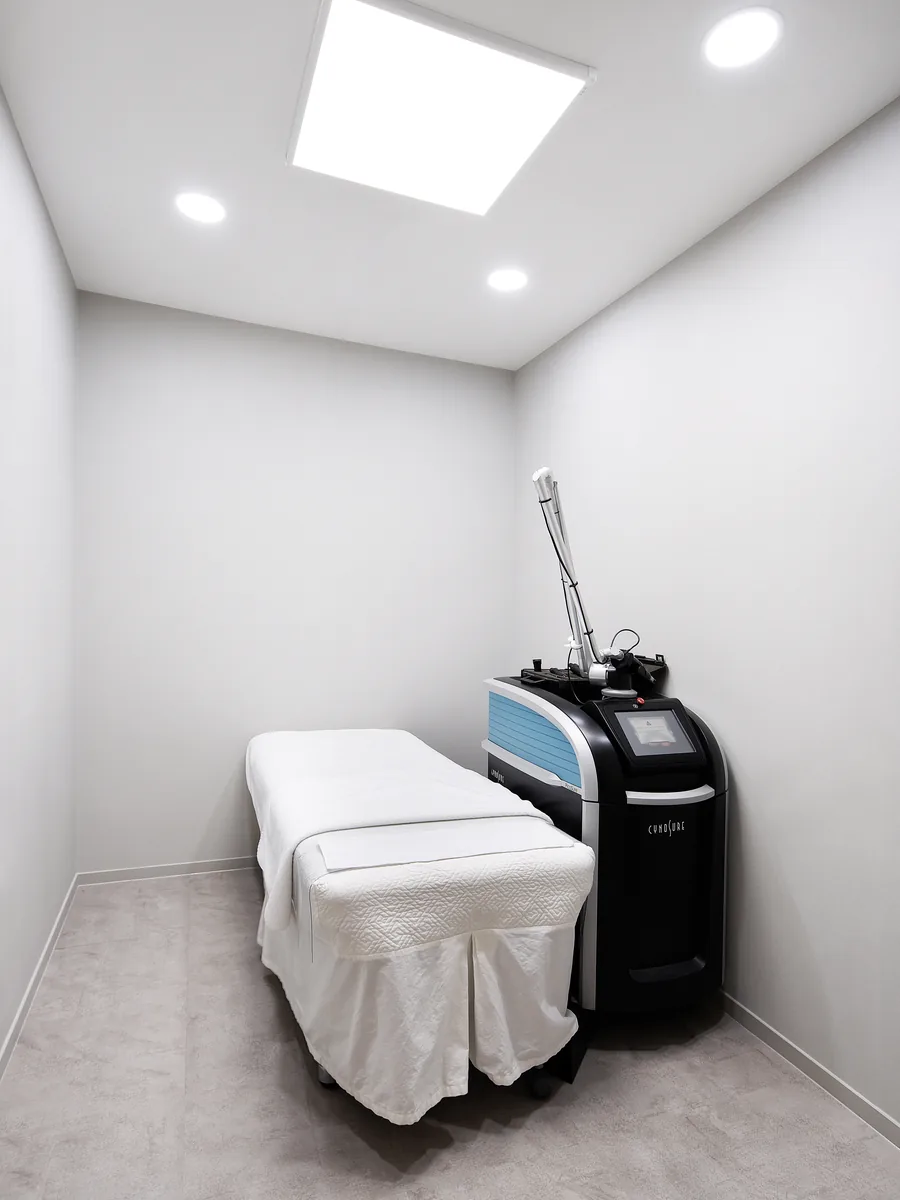
- Treatment for melasma, freckles, sun spots and congenital pigment with picosecond lasers and BBL, plus MELA Triple Toning, our protocol for pigment that keeps coming back.
- How it works
- A dermatologist diagnoses the type and depth of your pigment first, then chooses the laser. Daily sun protection is part of the plan before and after every session.
- Sessions
- Set at consultation according to the type of pigment.
- Recovery
- Depends on the treatment; your dermatologist explains aftercare, including sun protection, before you leave.
- Price
- MELA Triple Toning ₩770,000 per session (VAT excluded); other prices confirmed at consultation
Why patients fly in for it
- Board-certified dermatologists diagnose and treat every patient.
- Pigment has been treated at WELLS since 2008 with picosecond lasers and BBL.
- Consultations are available in English, with replies on WhatsApp in English.
Planning pigment or laser treatment in Seoul? Send a photo and your travel dates on WhatsApp, and ask us about aftercare too.
Message on WhatsAppMineral or chemical: which suits sensitive or post-laser skin?
Mineral filters such as zinc oxide and titanium dioxide sit on the skin and reflect UV, rather than being absorbed. When your skin is sensitive, or temporarily sensitised after a treatment, that coating is the safer choice. The downside is more white cast and poorer spread, which can make makeup harder.
That is why many people use chemical filters for daily makeup. Most products today are hybrids anyway. For sensitive skin, don't chase high numbers: higher ratings usually contain more chemical filters, even in hybrids. Around SPF 30 and PA++ is a comfortable level, and many makeup bases already sit around there.
Sun protection matters most around pigment treatment. Strong UV makes brown marks after a laser wound more likely, which I explain in my video on syringoma removal. If you are treating melasma or spots, it is part of the plan at WELLS pigmentation treatments.
Do I need a Korean facial sunscreen indoors?
Not because of fluorescent lights; the UV they give off is tiny. Windows are the real reason. Most UVB is filtered by ordinary window glass, but UVA has a longer wavelength and mostly passes through.
If your desk is far from any window, the effect is small. If you sit near a window at home, in the office or in class, you are getting UV even though you feel you are indoors. Unless the glass has a proper UV film, wearing sunscreen every day, indoors too, is the better habit.
Do I need to double cleanse to remove sunscreen?
Usually not. Everyday sunscreens are formulated to come off with a normal cleanser. Waterproof sports sunscreens for the pool or beach, the kind water beads off, are different: they need a double cleanse, an oil cleanser first and then a foam.
Double cleansing also strips more of the skin's protective layer. Healthy skin recovers quickly, but sensitive, dry or atopic skin takes longer and can become irritated, so avoid it when you don't need it. If even foam cleanser is too much for you, look for gentle sunscreens made to rinse off with water, the kind also used for babies; they wear off faster, so reapply more often.
Coming to Seoul for laser treatment? Your dermatologist will go through sun protection before you leave, and you can read why it matters after toning in laser toning side effects. Results vary from person to person.
Want Dr. Choi to look at your skin?
Send a photo and your travel dates on WhatsApp. We reply in English.
Message on WhatsAppQuestions about this video
What SPF and PA should a korean facial sunscreen have for daily use?
For ordinary days, SPF 30–50 with PA++ or higher is enough. For long hours outdoors, choose SPF 50 or higher with PA+++ or higher.
How often should I reapply sunscreen?
Apply about 30 minutes before going out and again every two to three hours outside. Reapply straight away after heavy sweating.
Is SPF 100 much better than SPF 50?
Not by much: SPF 50 blocks about 98% of UVB and SPF 100 about 99%. Reapplying is more useful than a higher number.
Which sunscreen is better after a laser treatment?
When skin is temporarily sensitised after a treatment, a mineral sunscreen that coats and reflects UV is the safer choice. Your dermatologist will advise on aftercare.
This article explains general medical information from the video. It is not a diagnosis; results vary by person and are decided in consultation.