Korean rosacea treatment: vascular lasers for redness and capillaries
What causes lasting facial redness, what Korean skincare can and cannot do for rosacea, and how vascular laser treatment works in Seoul.

Korean rosacea treatment: what are you actually looking for?
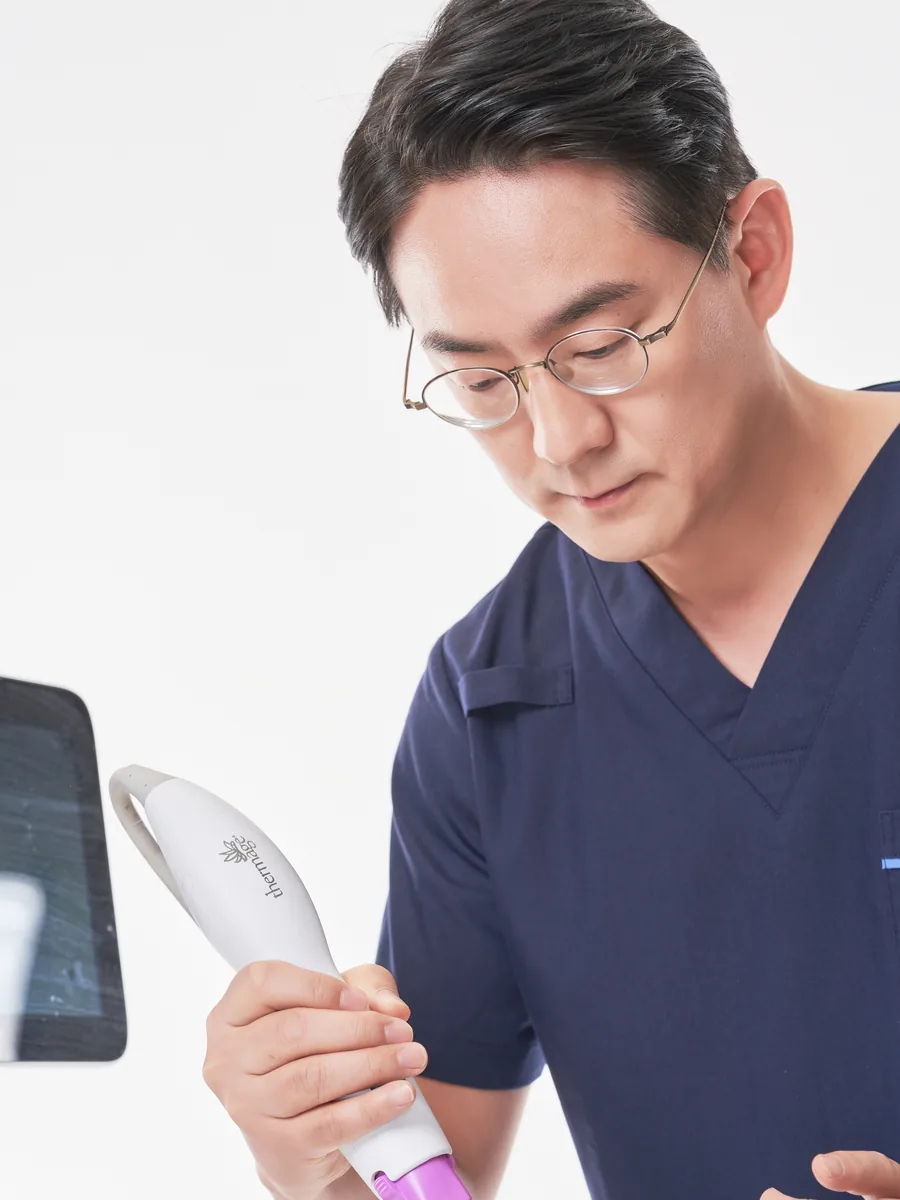
Hello, I'm Dr. Won Woo Choi, a board-certified dermatologist with a Ph.D. in dermatology from Seoul National University, and a chief director at WELLS in Apgujeong. The honest answer has two parts.
If your face turns red and stays red, you have probably heard "have you been drinking?" or "you look exhausted" more times than you can count. Many people tell me that this is harder than the redness itself. When they search for Korean rosacea treatment, they want to know whether Seoul has something that actually works.
Korean skincare can help calm the skin, but it cannot shrink vessels that are already dilated. For that, the treatment that works is a vascular laser.
In this post I will explain where lasting redness comes from, what skincare can and cannot do, and how we treat flushing and broken capillaries at WELLS, including how to plan it around a visit.
What causes rosacea-type redness and broken capillaries?
When I assess a red face, I am usually looking at one of two causes, and often both. The first is chronic inflammation: flushing or breakouts that keep going for more than three months can settle into lasting redness.
The second is a problem with the autonomic nerves that control how the facial vessels widen and narrow. When they misfire, the face flushes suddenly with emotion, heat, or hot and spicy food.
Everyone flushes sometimes. The difference is duration: with true facial redness, the flush can last 30 minutes, and sometimes as long as two hours. Both causes end in the same place, dilated capillaries near the surface, so treatment is really about reducing or controlling those vessels.
Why it gets worse in winter
Between November and February, we see noticeably more people with facial redness. Dry air and sharp changes between cold wind outside and warm rooms inside are the main triggers. Someone who barely notices their redness in summer can find it flaring every time they come indoors.
Korean beauty for rosacea: what skincare can and cannot do
Korean skincare for rosacea tends to focus on calming, barrier-friendly products, and for mild flushing that can genuinely help. Medication or skincare can sometimes manage mild cases on its own.
What skincare cannot do is shrink capillaries that are already dilated. Home care alone does not reduce dilated vessels, however good the routine. What it can do is stop things getting worse, and that is worth doing whatever treatment you choose.
- Avoid saunas, jjimjilbang and other very hot environments.
- Go easy on very spicy or very hot food and drinks.
- Protect the skin barrier in dry, cold weather, especially around the change from outdoors to heated rooms.
- Keep products simple; a long routine of actives is more likely to irritate than to calm.
Medication or laser: how a Korean treatment for rosacea is chosen
Medication has a place, but each form has a drawback. Oral medicine acts on the whole body rather than only the face, which some people are uncomfortable with. Topical medicine can work well, yet redness can rebound sharply when it wears off.
Because both causes of redness end in dilated vessels, the most direct approach is a physical one: a laser that destroys, reduces or contracts those capillaries. Flushing and visible capillaries are vascular conditions, and the right wavelength treats the enlarged vessel selectively while normal skin is left alone.
| Approach | How it works | The catch |
|---|---|---|
| Oral medication | Acts on the whole body | Not limited to the face |
| Topical medication | Applied to the red areas | Redness can rebound when it wears off |
| Vascular laser | Treats the dilated vessel directly | Several sessions, spaced weeks apart |
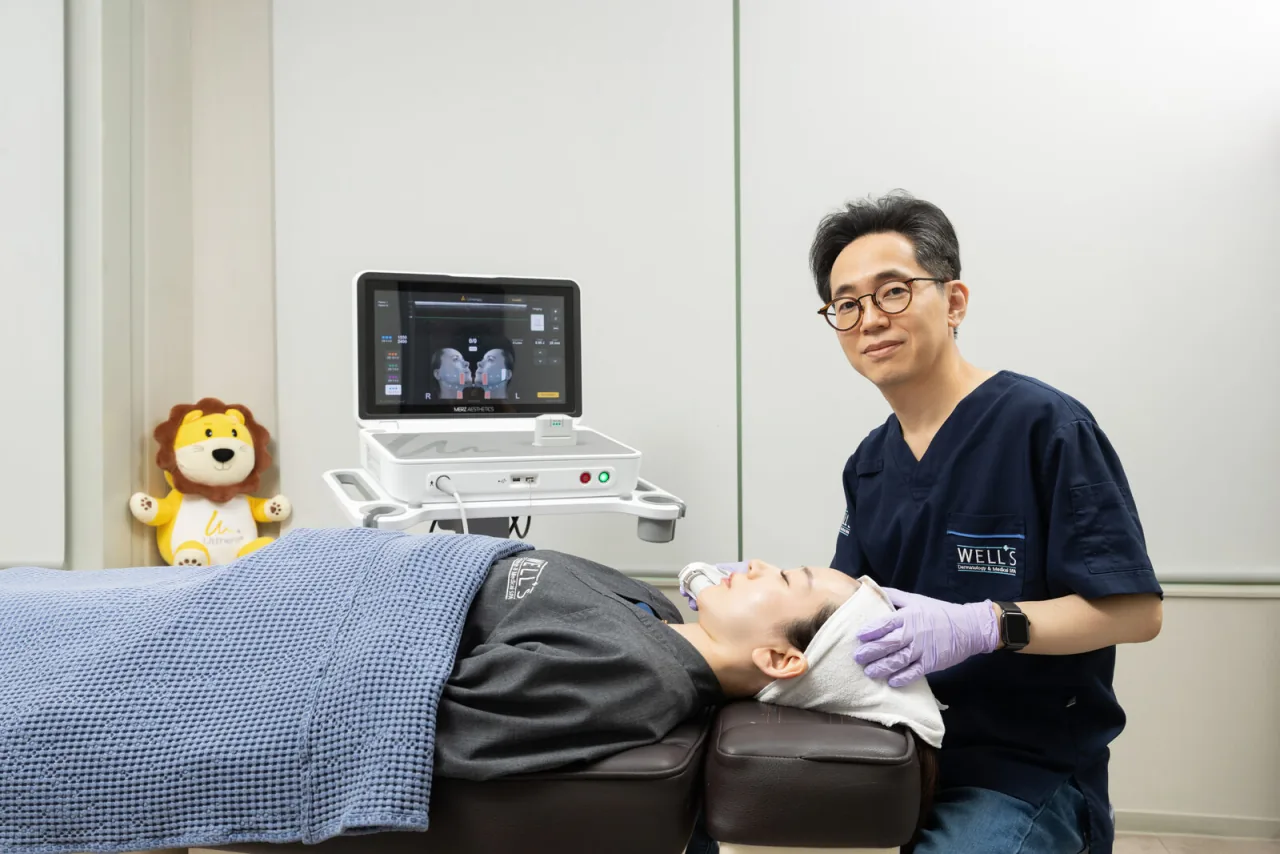
At WELLS we use three vascular lasers, Synergy, Clarity and BBL, to cover the wavelengths needed for different vessels. Synergy is the one I use most for facial redness, because it can be used locally and safely. The full outline is on our rosacea and broken capillaries page. Clear vascular changes respond best when they are treated early, before they become more established.
What a vascular laser session at WELLS involves
Every session starts with the dermatologist confirming what is driving your redness: chronic inflammation, nerve-related flushing, or both. That decides the laser and settings.
Anesthetic cream is applied beforehand. Treatment can cover the whole face or focus on specific areas, such as the nose or cheeks, where capillaries are most visible.
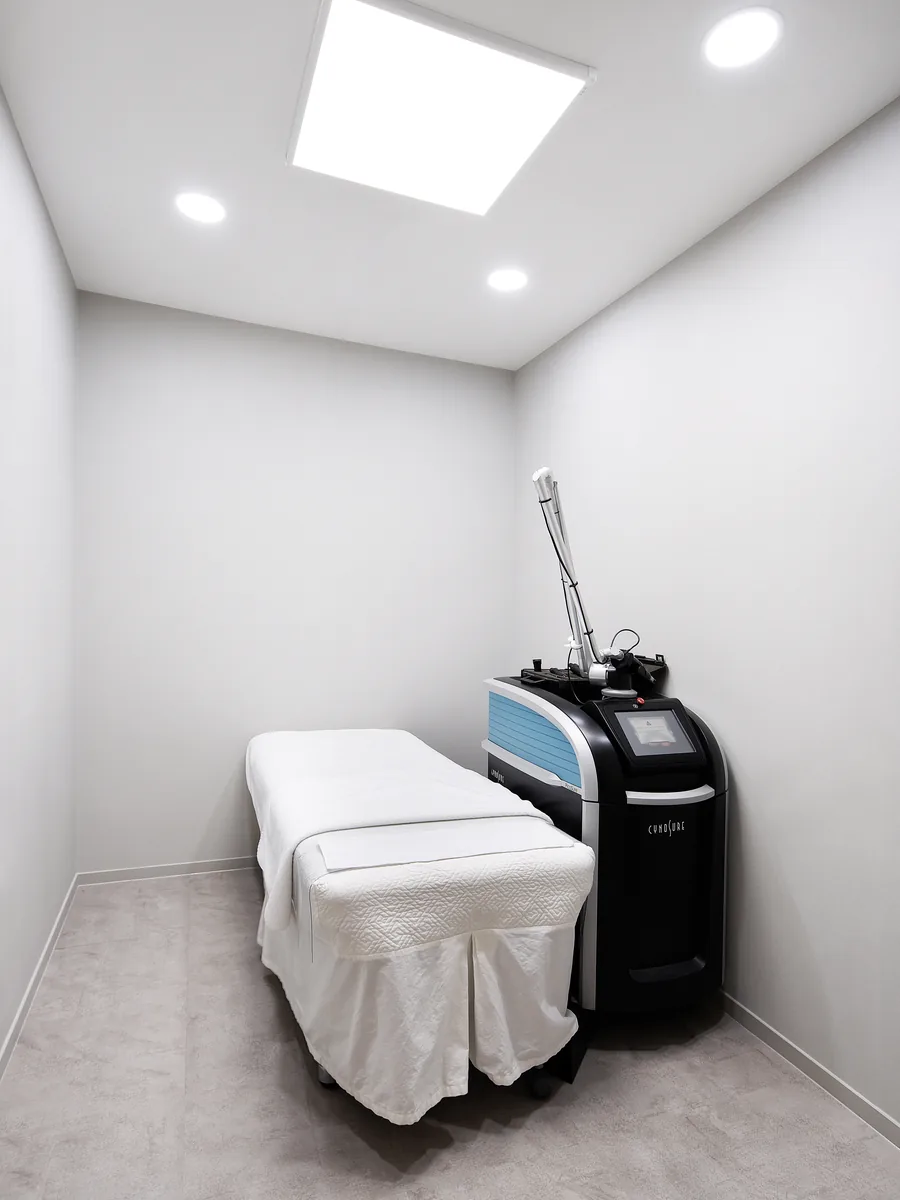
The number of sessions depends on severity, but a course is usually 3 to 5 sessions, spaced 2 to 3 weeks apart. The dermatologist sets the exact plan for your skin. The price for this treatment is confirmed at your consultation, once the areas and the number of sessions are clear.
Send a photo of your redness in natural light and tell us when it flares. A dermatologist will suggest where to start.
Send a photo, get a planPlanning Korean rosacea treatment around a trip to Seoul
Because sessions are spaced 2 to 3 weeks apart, a full course rarely fits into a short holiday. In practice, visitors tend to take one of three routes: a consultation and first session on one trip, sessions matched to repeat visits, or a full course during a longer stay.
- Message us on WhatsApp with a photo and your travel dates. We reply in English with options and available times.
- At the clinic, a dermatologist examines your skin and confirms the plan and price.
- Treatment is done in the same clinic, and you leave with aftercare instructions.
- You can reach us on WhatsApp after you fly home.
WELLS is on the 8th floor of the Apgujeong Building, 842 Nonhyeon-ro, Gangnam-gu, about five minutes on foot from Apgujeong Station Exit 3 on Line 3. We are open Monday to Friday 10:00–20:00 and Saturday 10:00–17:00. Directions are on the clinic page, and our guide to foreigner-friendly skin clinics in Seoul covers what to expect as an international patient.
One timing tip: if you can choose when to come, remember that winter is when redness tends to flare. A dermatologist seeing your skin at its worst can often plan more accurately.
When redness will not settle: looking for the cause
Some people come to us after trying several treatments elsewhere without much change. In that situation, I look harder at the inflammation behind the redness. For refractory cases, we recommend a skin microbiome test to find the source of the chronic inflammation, so treatment can aim at the cause rather than only the vessels.
My residency and board certification were at Seoul National University Hospital, where I was a clinical instructor and am now an adjunct professor of dermatology. I am also CEO of CutisBio Co., Ltd. You can read about each of us on the doctors page.
Redness often sits alongside acne. If breakouts are part of the picture, our personalised acne treatment addresses them at the source, and early red marks left by acne can respond to vascular lasers too; deeper marks are covered on the acne scar and pore page. Everything in this area is listed under acne, scars and pores, and if you want a broader view of specialist care here, read about seeing a Korean dermatologist.
Tried treatments that did not last? Tell us what you have used and when you will be in Seoul.
Ask about my rednessSend a photo and your dates. A dermatologist will plan your redness treatment.
Tell us where the redness is, what triggers it and when you will be in Seoul. You will get a suggested plan, how many visits it may take, and available times.
Message the clinic on WhatsAppReplies on WhatsApp · prices in KRW, excluding 10% VATBefore you message us
What is the Korean treatment for rosacea?
For persistent redness and broken capillaries, WELLS uses vascular lasers, Synergy, Clarity and BBL, that treat the dilated vessel selectively. Gentle skincare and avoiding triggers support the treatment but cannot shrink dilated vessels on their own.
Can Korean skincare cure rosacea?
Calming, barrier-friendly skincare can help mild flushing and stop symptoms getting worse. It cannot reduce capillaries that are already dilated; that needs a vascular laser.
How many laser sessions do I need for redness?
Usually 3 to 5 sessions, spaced 2 to 3 weeks apart, depending on severity. The dermatologist sets the exact plan after examining your skin.
Does vascular laser treatment hurt?
Anesthetic cream is applied before treatment. The dermatologist can also focus on specific areas, such as the nose or cheeks.
How much is rosacea treatment at WELLS?
The price is confirmed at your consultation, because it depends on the areas treated and the number of sessions. Send a photo on WhatsApp for an initial view before you travel.
Results and recovery vary by individual. Every treatment carries possible side effects, which are explained at the consultation. Prices are in Korean won, excluding 10% VAT, and confirmed at your consultation. This article is general information from the clinic, not a diagnosis.
Dr. Won Woo Choi
- Board-certified dermatologist in Korea; trained at Seoul National University Hospital
- Dermatology residency, Seoul National University Hospital; board certification in dermatology in Korea
- Ph.D. in Dermatology, Seoul National University
- Former clinical instructor, Seoul National University Hospital
- Adjunct professor, Department of Dermatology, Seoul National University Hospital