Korean Skin and Hair Care: Why Your Hair Needs Anti-Aging Too
Hair ages the way skin does. Dr. Choi explains age-related thinning, the signs you can check at home, and what a Seoul dermatology clinic can do now.
What is Korean skin and hair care, and why does hair need it?
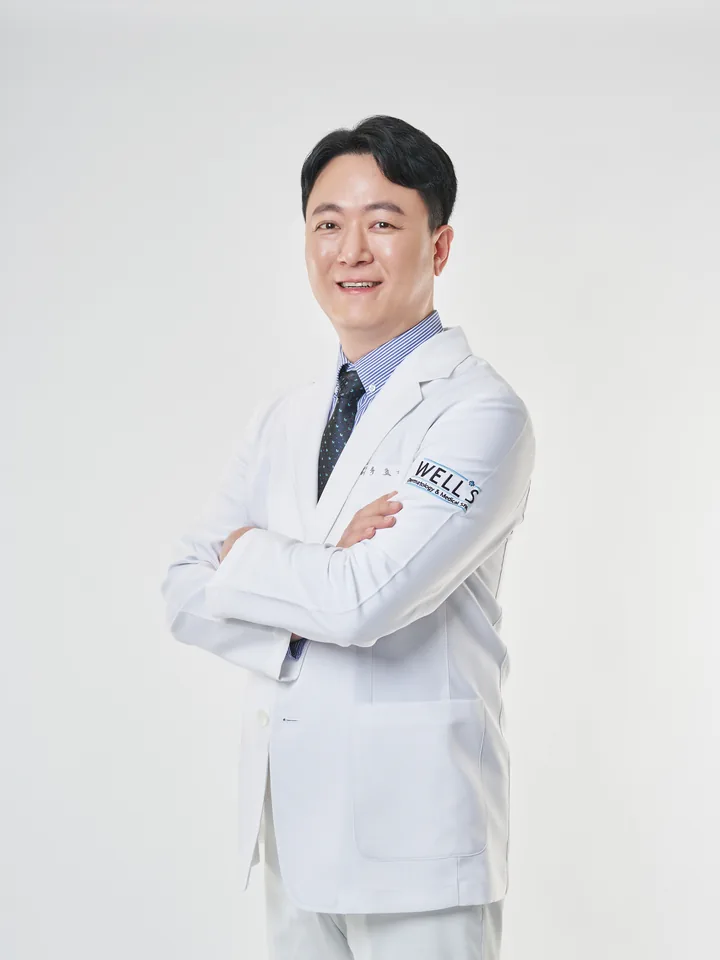
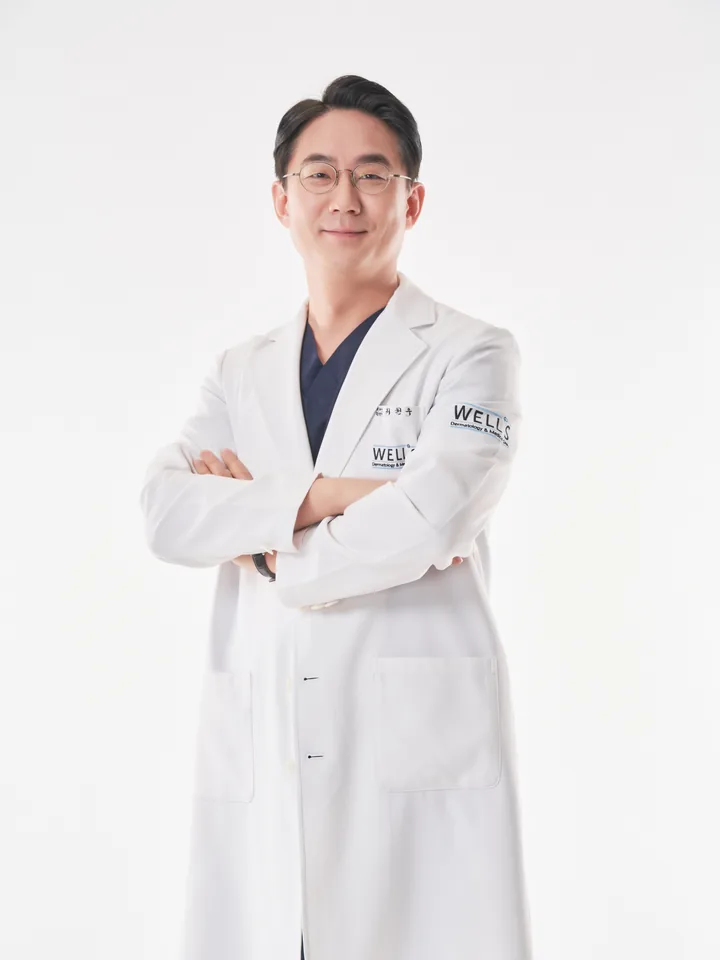
Hello, I'm Dr. Won Woo Choi, a board-certified dermatologist and Chief Director at WELLS Clinic in Apgujeong, Seoul. I trained at Seoul National University Hospital, hold a Ph.D. in dermatology from Seoul National University, and am CEO of CutisBio. This article is based on my YouTube video from March 2025 above, about Korean skin and hair care and why hair ages too; English auto-translated captions are available on YouTube.
My short answer: Korean skin and hair care should look after both, because hair ages much as skin does. It gets finer, loses its lift and grows back weaker. A face treated for aging still looks older under thin, flat hair, so hair deserves attention before it turns into visible hair loss.
Below I explain how age-related thinning differs from hereditary hair loss, the signs you can check yourself, what a dermatology clinic can do today, and how WELLS approaches it for patients visiting Seoul.
Is it hereditary hair loss or age-related thinning?
Both men and women can have hereditary hair loss, often called androgenetic hair loss. It shows most clearly in men: hair starts to go at a young age and can progress to baldness. The main driver is DHT, which forms when the male hormone testosterone is converted inside hair cells; hair that is sensitive to it grows less and falls out.
Age-related thinning is different. It usually develops through the 40s and 50s: hair slowly becomes finer and sparser, and hair that falls out does not grow back well, so the scalp gradually looks emptier.
- Hereditary hair loss: several prescription medicines already work on the DHT pathway, each in its own way.
- Age-related thinning: no medicine is approved for it yet. The main cause is thought to be that the stem cells which build hair age and lose strength.
- Research is now looking for ways to strengthen those stem cells, and several candidate substances have reached preclinical studies.
That is why medicine aimed at hereditary hair loss is often not the whole answer when the real issue is age.
How can you tell your hair is starting to age?
Many women notice it from their mid-30s to their 40s: the hair feels finer when they wash it. Heavy shedding after childbirth or another big life event is different; it is not age-related thinning, and in most cases it recovers.
The clearest sign is styling. In your 30s a morning blow-dry holds its lift; in your 50s the same hair can fall flat about ten minutes later. That loss of body is where age-related thinning begins.
- Hair feels thinner in the shower or when you tie it back.
- A style that used to hold now collapses within minutes.
- The part line looks wider and the scalp shows through more than it used to.
CeraXosome Scalp & Hair Program
- What it is
- A scalp care program built around CeraXosome, an exosome developed by Dr. Won Woo Choi at CutisBio, aimed at the growth signal in the hair follicle.
- How it works
- One in-clinic session: a scalp microbiome test and standardized photos, CeraXosome delivered into the scalp with a fine microneedle system after lidocaine spray, an AQ injection and electromagnetic therapy. Then three months of NMN hair chews at home.
- Sessions
- The listed package is one in-clinic session plus three months of chews. In the clinical program, infiltration is repeated every two weeks; your dermatologist advises how many sessions fit your case.
- Recovery
- Confirmed at consultation. Lidocaine spray is applied to the hairline (and crown if treated) three minutes before the microneedle step.
- Price
- Microbiome test + session + three boxes of NMN chews ₩770,000 (VAT excluded)
Why patients fly in for it
- CeraXosome was developed by Dr. Choi at CutisBio, and he presented the WELLS hair-aging program at the World Congress for Hair Research 2026.
- A scalp microbiome test and photos before the first session, so changes can be compared.
- Consultation and treatment by a board-certified dermatologist.
Not sure whether your thinning is hereditary or age-related? Send photos of your hairline and crown with your travel dates on WhatsApp.
Message on WhatsAppWhat can a Korean skin and hair care clinic do for aging hair today?
Hair aging only became a research focus recently, within about the last five years; before that, researchers concentrated on hereditary hair loss. There is still no FDA-approved, established treatment for aging hair, but candidate substances are available as boosters and other products that clinics combine with basic hair treatment.
- Exosome-type boosters that help the hair stem-cell cycle keep turning, so stem cells move on to become the cells that build the root and the hair shaft.
- Medicines first approved for other uses that are reported to support hair stem cells; there are examples of this approach in Japan and Europe.
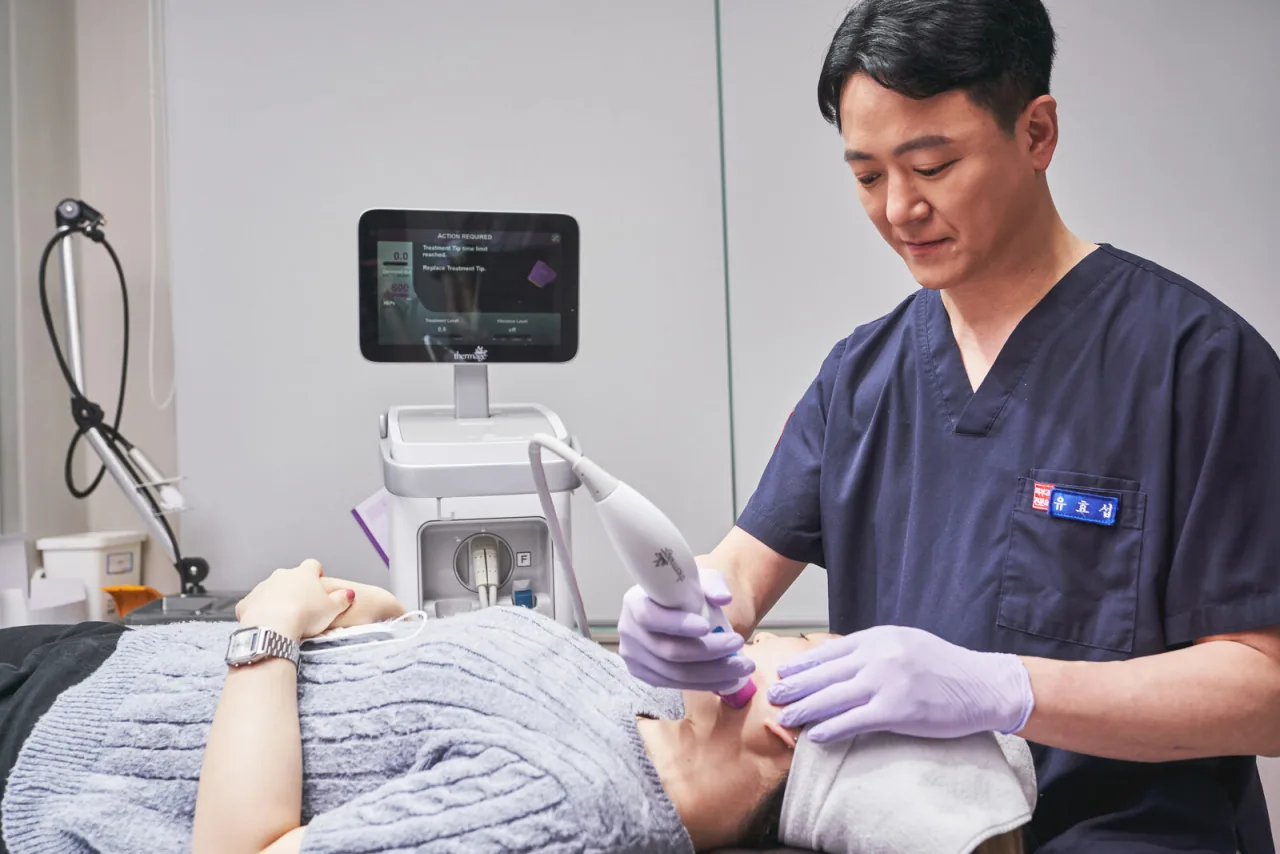
At WELLS we treat thinning hair as follicle aging. Our CeraXosome Scalp & Hair Program starts with a scalp microbiome test and photos, then delivers CeraXosome, an exosome I developed at CutisBio, into the scalp with a fine microneedle system, together with an AQ injection and electromagnetic therapy. You then take three months of NMN hair chews home. The package is ₩770,000 (VAT excluded). Where the cause calls for it, prescription medicine is chosen for the cause and stage of your hair loss.
Can treatment bring back volume in your 40s and 50s?
When hair turns thin and weak and fallen hair grows back as very fine strands, combining treatments aimed at hair aging can help hair grow back thicker and stronger, so it holds a style again. A younger look depends on the hair as much as the skin, which is why I keep saying this is the era of anti-aging for hair.
Expect a slow change rather than a quick one. Each hair cycles through growing, resting and shedding, and the resting phase alone lasts about three months, so the program is judged at around 14 weeks, not after the first session.
If you want to know where exosomes fit and why daily pills have limits for thinning hair, see my next video article on Korean exosomes for hair.
How do you plan hair care around a Seoul trip?
The listed package is one in-clinic session plus three months of chews at home, so it can start on a single visit. In the clinical program, infiltration is repeated every two weeks; if you are staying longer or can return, your dermatologist will suggest a schedule.
Before you fly, send clear photos of your hairline and crown with your travel dates on WhatsApp. We reply in English, and a dermatologist confirms the diagnosis and plan at the clinic. For other options for thinning hair, see scalp treatment in Seoul.
WELLS is on the 8th floor of the Apgujeong Building, about five minutes on foot from Apgujeong Station (Line 3), Exit 3. Results vary from person to person, and the right plan is decided in consultation with your dermatologist.
Want Dr. Choi to look at your skin?
Send a photo and your travel dates on WhatsApp. We reply in English.
Message on WhatsAppQuestions about this video
Does Korean skin and hair care include treatment for thinning hair?
At WELLS it does. Thinning hair is treated as follicle aging, with the CeraXosome Scalp & Hair Program and, where appropriate, prescription medicine chosen for the cause and stage of your hair loss.
Is there a medicine for age-related hair thinning?
Not yet. Medicines exist for hereditary hair loss, but none is approved for hair aging itself. Candidate substances are being researched, and some are used as boosters alongside basic hair treatment.
Is heavy shedding after childbirth the same as hair aging?
No. Shedding after childbirth or another big event usually recovers. Age-related thinning develops gradually through the 40s and 50s, with hair becoming finer and losing its lift.
How much is the CeraXosome program at WELLS?
₩770,000 (VAT excluded) for a scalp microbiome test, one in-clinic session and three boxes of NMN chews. Your dermatologist advises how many sessions fit your case.
This article explains general medical information from the video. It is not a diagnosis; results vary by person and are decided in consultation.