Korean Exosomes for Hair: Where They Fit When Pills Aren't Enough
Why daily hair-loss pills slow shedding but rarely regrow fine hair, why aging hair needs a different signal, and how WELLS uses CeraXosome.

What are Korean exosomes for hair, and who are they for?
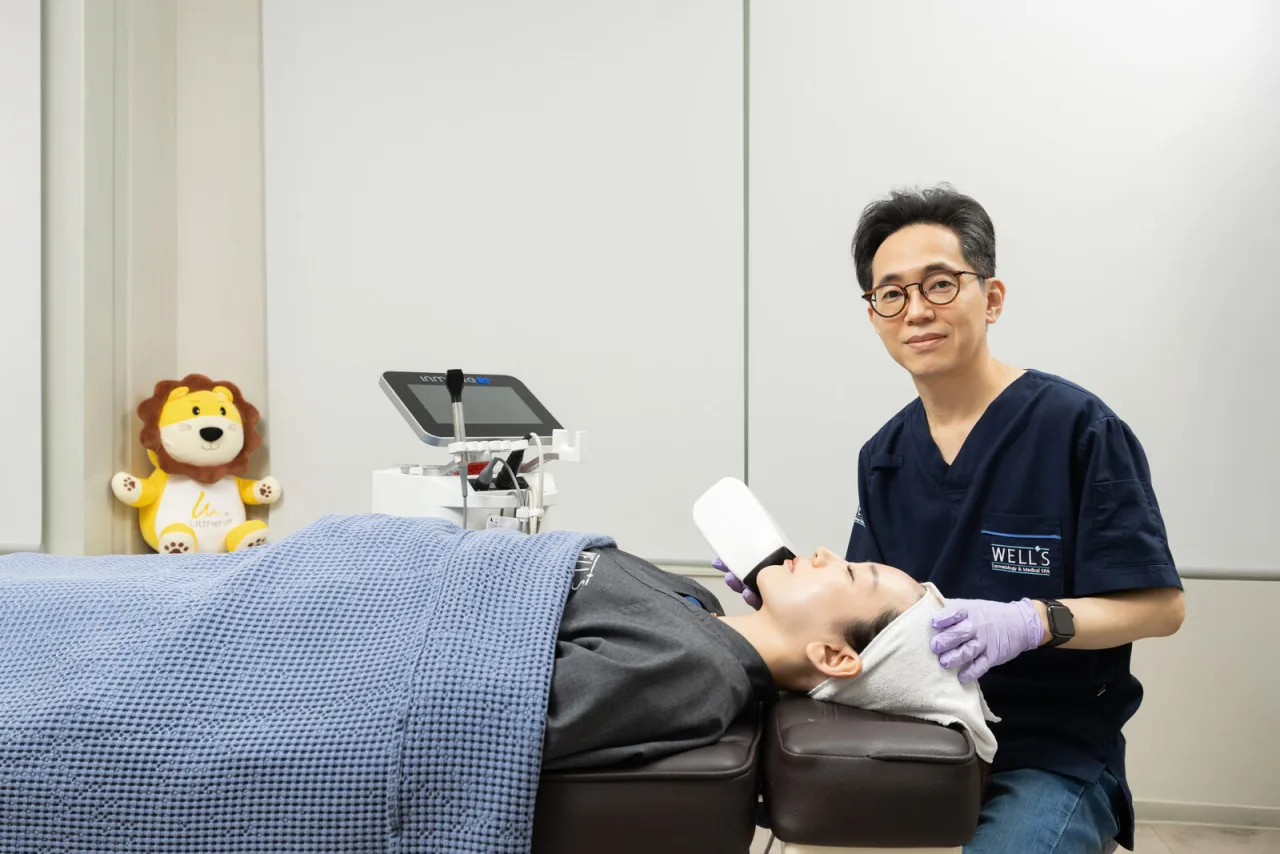
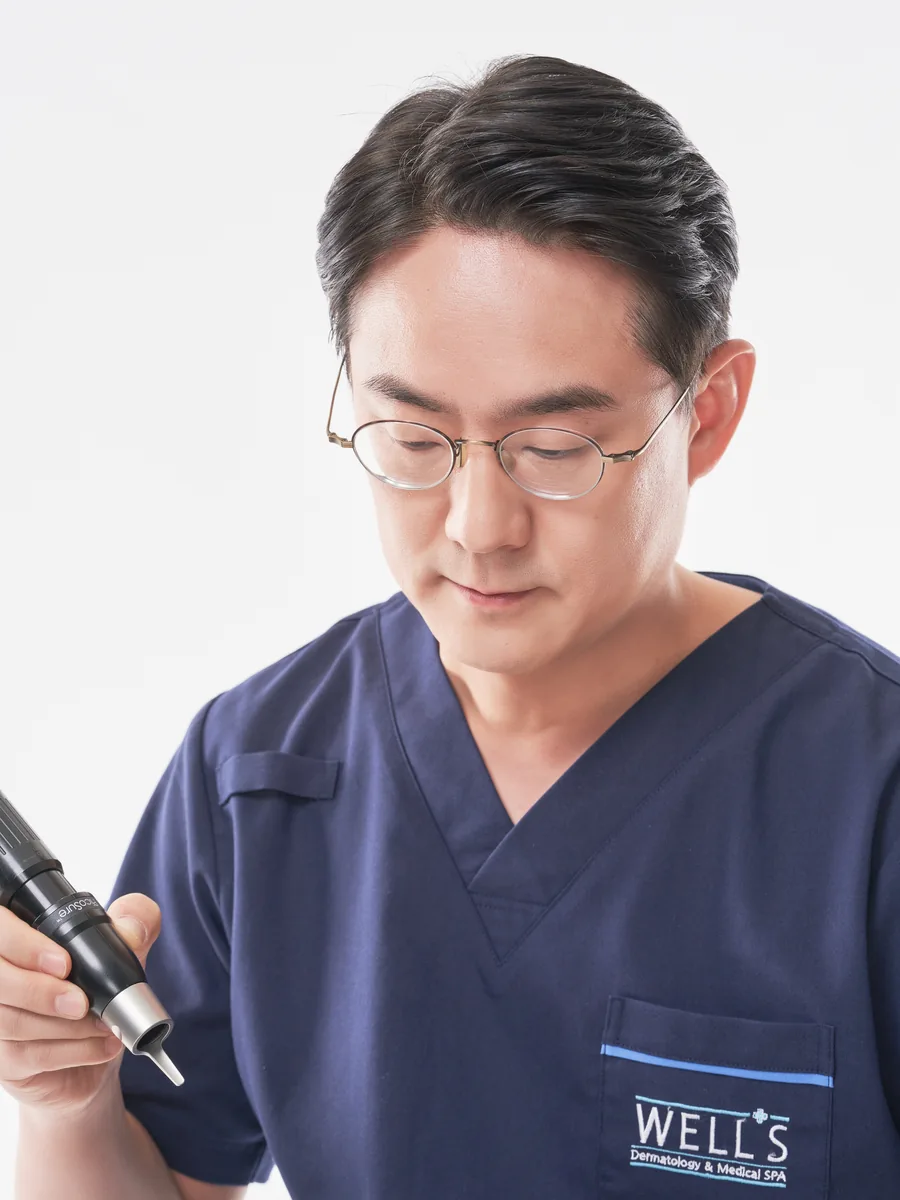
Hello, I'm Dr. Won Woo Choi, a board-certified dermatologist and Chief Director at WELLS Clinic in Apgujeong, Seoul. I trained at Seoul National University Hospital, hold a Ph.D. in dermatology from Seoul National University, and am CEO of CutisBio. This article is based on my YouTube video from February 2025 above, the first in our hair anti-aging series, where my colleague Dr. Won Sin Lee talks about two decades of taking hair-loss medicine; English auto-translated captions are available on YouTube.
Korean exosomes for hair, at WELLS, means CeraXosome: an exosome I developed at CutisBio that works on the growth signal inside the hair follicle. It is aimed at the thinning that daily pills do not reach well: fine, weak hair losing volume, thinning at the hairline or crown, shedding after childbirth or menopause, and care after a hair transplant.
To see why that matters, it helps to look at what long-term medicine does and does not do, which is what Dr. Lee and I discuss in the video.
What did 20 years of daily hair-loss pills teach us?
Dr. Lee has a family history of male-pattern hair loss, especially on his mother's side, so he started prescription hair-loss medicine early and has taken it for about 20 years as prevention. Many men choose a pill because they are too busy to visit a clinic regularly.
Side effects are a common worry, particularly for men in their 40s and beyond. Dr. Lee says he has not noticed any himself, and when I prescribe, I find that a good part of the concern is anxiety rather than experience. Whether a medicine suits you is still a decision to make with a dermatologist who knows your health.
One detail from the video is telling. During periods when he skipped his medicine for a few months, his hair became finer and he shed more; after a few months of taking it consistently, his hair had more body and the shedding clearly dropped. Medicine mainly helps you keep the hair you have.
Why do pills have limits for thinning hair?
- They have to be taken every day, without fail.
- Long-term safety has been studied, but committing to a pill for decades is still a psychological burden for many people.
- The biggest limit: hair that has already been lost rarely grows back from medicine alone.
The science behind that last point is the hair cycle. Each follicle should keep moving through its growing (anagen), regressing (catagen) and resting (telogen) phases. Hair that has become very fine is often stuck in one stage, and getting it to grow long again with medicine is uncommon.
Women face a different gap. Low-dose use of one hair-loss medicine is known to help some women, but because it was contraindicated for women early in its development, few women are prescribed it. More importantly, female thinning has no single clearly established cause. Stress, a mix of factors and some genetic tendency all play a part, and in many women the hair simply becomes sparse, fine and slow-growing with age. That is hair aging, and it needs a different approach.
CeraXosome Scalp & Hair Program
- What it is
- A scalp program built around CeraXosome, an exosome developed by Dr. Won Woo Choi at CutisBio that targets the Wnt/β-catenin growth signal in the dermal papilla.
- How it works
- A scalp microbiome test and photos, then CeraXosome delivered into the scalp with a fine microneedle system after lidocaine spray, plus an AQ injection and electromagnetic therapy, followed by three months of NMN hair chews at home.
- Sessions
- The listed package is one in-clinic session plus three months of chews. In the clinical program, infiltration is repeated every two weeks and progress is judged at around 14 weeks.
- Recovery
- Confirmed at consultation. Lidocaine spray is applied three minutes before the microneedle step.
- Price
- Microbiome test + session + three boxes of NMN chews ₩770,000 (VAT excluded)
Why patients fly in for it
- CeraXosome was developed by Dr. Choi; the mechanism was published in Experimental Dermatology and presented at the World Congress for Hair Research 2026.
- Made by precision fermentation with no petrochemicals or preservatives, and suitable for men and women.
- Patented in Korea, with an international application filed.
Taking medicine but still thinning? Send photos of your hairline and crown with your travel dates on WhatsApp.
Message on WhatsAppHow does WELLS use Korean exosomes for hair?
Hair aging has hardly been treated as its own target until recently; research and medicine focused on hair loss. CeraXosome is how we approach it. It contains CeraEV, extracellular vesicles from a Sphingomonas ferment extract, with over 10¹⁰ vesicles in every 2.5 ml vial.
- Mechanism: in human dermal papilla cells, IGF-1 and VEGF expression rose with the dose, and the Wnt/β-catenin growth switch was activated via AKT/GSK3β. This was published in Experimental Dermatology.
- In human hair follicles cultured outside the body for six days, hair shafts grew faster and thicker with CeraXosome. These are laboratory results, not a promise for any patient.
- Made by precision fermentation, with no petrochemicals or preservatives, and suitable for men and women.
In the clinic, the CeraXosome Scalp & Hair Program starts with a scalp microbiome test and photos. CeraXosome is delivered into the scalp with a fine microneedle system after lidocaine spray, together with an AQ injection and electromagnetic therapy, and you take three months of NMN hair chews home. The package is ₩770,000 (VAT excluded). Exosomes do not have to replace medicine; for hereditary hair loss, prescription medicine can still be part of the plan your dermatologist recommends.
What should you expect, and how does it fit a trip to Seoul?
The resting phase of a hair lasts about three months on its own, so the program is judged at around 14 weeks rather than after the first session. In the clinical program, infiltration is repeated every two weeks, with photos and a scalp microbiome test before the first session and after the last.
The listed package is one in-clinic session plus three months of chews, so you can start on a single visit and continue the home care after you fly back. Send photos of your hairline and crown with your travel dates on WhatsApp, and a dermatologist confirms the plan at the clinic.
For the signs of hair aging and how it differs from hereditary loss, see my video article on Korean skin and hair care. If you are comparing exosomes with PRP and other options, read stem cell hair treatment Korea. Results vary from person to person.
Want Dr. Choi to look at your skin?
Send a photo and your travel dates on WhatsApp. We reply in English.
Message on WhatsAppQuestions about this video
Are Korean exosomes for hair a replacement for hair-loss medicine?
Not necessarily. Medicine mainly slows shedding, while CeraXosome targets the growth signal in the follicle. For hereditary hair loss, your dermatologist may recommend both.
Can exosomes help women with thinning hair?
CeraXosome is suitable for men and women, and postpartum or postmenopausal thinning is one of the uses it is designed for. A dermatologist confirms whether it fits your case.
What does the CeraXosome program cost at WELLS?
₩770,000 (VAT excluded) for a scalp microbiome test, one in-clinic session and three boxes of NMN chews.
Is the scalp numbed for the procedure?
Yes. Lidocaine spray is applied to the hairline, and the crown if treated, three minutes before the microneedle infiltration.
This article explains general medical information from the video. It is not a diagnosis; results vary by person and are decided in consultation.