Korean hair loss treatment: what a Seoul dermatologist offers, and PRP
What Korean hair loss treatment at a dermatology clinic really involves, where PRP fits, and how to plan sessions around a trip to Seoul.

What are people looking for in Korean hair loss treatment?
Most people who search for Korean hair loss treatment have already tried something. A shampoo, a supplement, maybe a prescription from home. The hair is still thinner at the parting or the crown, and they want to know whether a clinic in Seoul can do more.
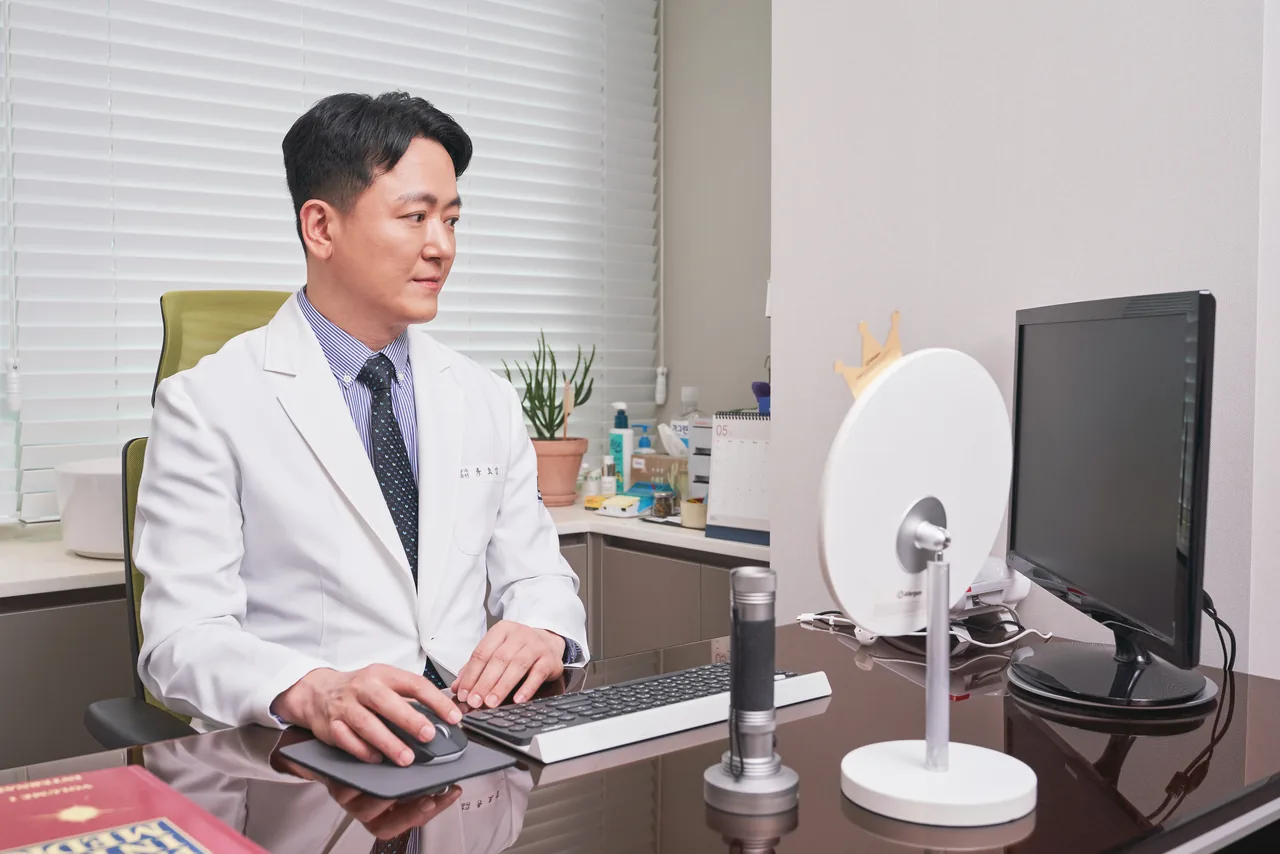
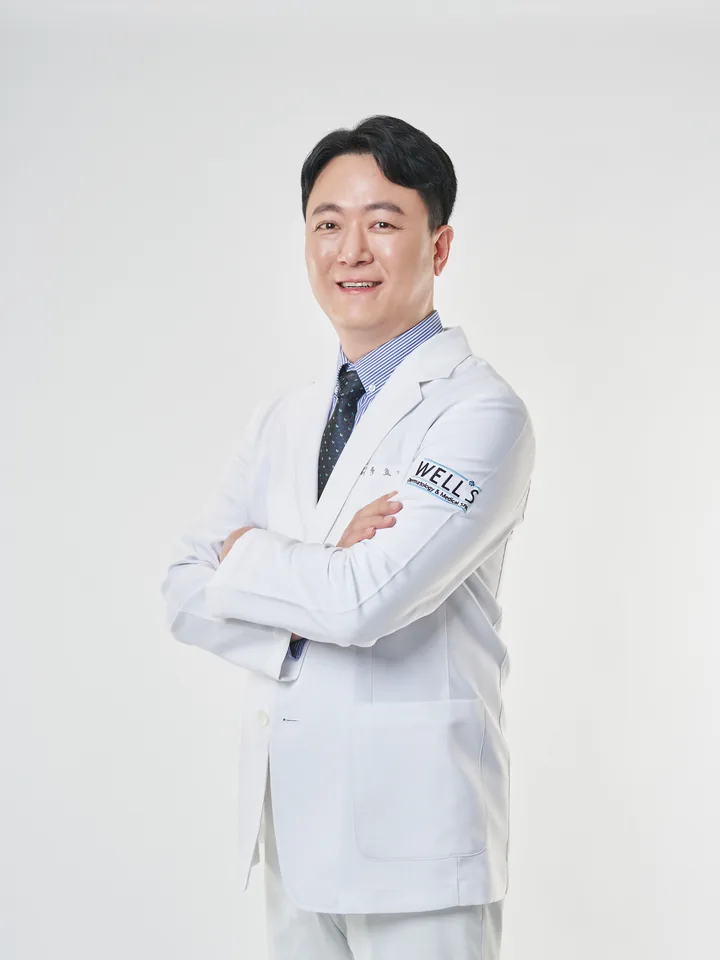
I'm Dr. Hyo Seop Ryu, a board-certified dermatologist and one of the chief directors at WELLS in Apgujeong. This post is about what a Korean hair loss clinic visit looks like from a doctor's side: what we check, which options we offer, where PRP fits, and how to fit treatment around a flight home.
One honest point up front: the right plan depends on the cause and stage of your hair loss, and I cannot see that from a search query. What I can do is explain how we decide.
Why we treat thinning hair as hair ageing, not only genetics
Hair ageing shows up in two ways: each strand gets thinner, and hair grows more slowly. Male- and female-pattern hair loss come from the same two changes, and the end result is the same too, a scalp that shows through and less density overall.
The cells at the base of the follicle, the dermal papilla cells, age over time. Oxidative stress and androgens such as DHT can speed that up. As those cells age, the growth signals weaken and follicles gradually shrink.
This is why I don't assume that thinning after 40 is simply genetic. Many people in their forties and older come to us worried about density, and for them the scalp and hair themselves have aged. If you treat only the genetic side, you can miss the part that is still reversible.
When should you start treatment?
Treatment should begin when hair becomes sparse, fine or dull, not once the scalp is fully visible. At that stage the follicles are still there to respond, and the aim is to improve shine, thickness and density while slowing the progression.
What happens at a Korean hair loss clinic visit at WELLS?
The first step is diagnosis. We take a history, photograph the hairline and crown in a standard way, and run a scalp microbiome test. That baseline tells us how much hair is actually shedding, and whether follicles look weakened before the loss is visible.
From there, we build one of two kinds of plan:
- An individualized hair loss program. Growth-factor infiltration, EMTS (electrical microneedle stimulation) and prescription medication chosen for the cause and stage of your hair loss. The price is confirmed at consultation. Details are on our hair loss and thinning hair page.
- The CeraXosome Scalp & Hair Program. A microbiome test, one in-clinic session and three boxes of NMN chewable supplements for home, listed at ₩770,000 (VAT excluded). See the CeraXosome program page.
CeraXosome was developed by my colleague Dr. Won Woo Choi at CutisBio. It is an exosome made by precision fermentation of Sphingomonas, a microbe found on a healthy scalp. I won't repeat the whole session here; I already walked through it step by step in our scalp treatment guide.
Send a photo of your hairline and crown in daylight, and tell us how long you have noticed the change. We will reply with a suggested plan.
Send a scalp photo on WhatsAppPRP hair loss Seoul searches: is PRP what you need?
Many visitors ask me about PRP because it is what they have heard of. To be straightforward: PRP is not one of the treatments we list at WELLS. If PRP specifically is what you want, we are not the right clinic for it.
What people usually want from PRP is growth signals delivered to the follicle. That is the same goal behind the growth-factor infiltration in our hair loss program, and behind CeraXosome, which we deliver into the scalp with a fine microneedle system.
The published work behind CeraXosome was done on dermal papilla cells and on human follicles grown outside the body. In that ex vivo study, hair-shaft growth rate rose about 40% over six days and thickness about 30%. Those are lab results, not a promise for your scalp, but they are the reason I use it.
| Study | Measure | Result |
|---|---|---|
| Growth factors | IGF-1 and VEGF in dermal papilla cells | Dose-dependent increase |
| Signaling | Wnt/β-catenin via AKT/GSK3β | Activated |
| Ex vivo human follicles | Hair-shaft growth rate | About +40% over 6 days |
| Ex vivo human follicles | Hair thickness | About +30% |
Medication, transplant or in-clinic treatment: where each fits
Oral hair loss medication mainly helps you keep the hair you have. Its ability to grow new hair on an area that is already smooth is limited, which is why many people feel stuck on it.
A hair transplant can be a very good solution once loss has progressed a long way. In early scalp ageing, when hair is only starting to weaken, I don't think you need to take on the cost, pain and recovery of surgery yet.
In-clinic treatment, such as our individualized hair loss program, sits between the two and can be combined with them. The CeraXosome program is suitable for thinning at the hairline or crown, fine hair losing volume, postpartum or postmenopausal shedding, and care after a hair transplant.
Who responds, and what I tell patients to expect
The change we see most often is new growth along the hairline, and fine, almost invisible hairs growing thicker. Women whose crown looks sparse or whose parting widens with age have also done well. Results still vary with your scalp and how far the loss has gone.
What happens between visits: home care
Hair grows slowly, so most of the work happens between appointments. With the CeraXosome program you take daily NMN, spermidine and keratin chews for three months, three boxes in total, to support the follicles that were activated in clinic.
NMN is there to supply energy to aged follicles and help extend the growth phase of the hair cycle. It is not a replacement for the in-clinic session, and I don't recommend relying on unverified home products alone when thinning is clearly progressing.
If you already take prescription medication at home, bring the name and dose to the consultation. The dermatologist will tell you whether to continue it alongside the program, and whether anything should change for your stage of hair loss.
Planning Korean hair loss treatment around a trip to Seoul
Hair treatment works best as a series. In our clinical program, scalp infiltration is repeated every two weeks, so plan the trip with that rhythm in mind rather than expecting one visit to finish it.
- Short trip: diagnosis, microbiome test and a first session, then three months of chews at home. The dermatologist tells you how many sessions your case needs.
- Longer stay: sessions two weeks apart while you are in Seoul.
- Comfort: lidocaine spray goes on the hairline, and the crown if treated, about three minutes before the microneedle infiltration.
Consultations are available in English. We are a five-minute walk from Exit 3 of Apgujeong Station on Line 3; directions are on our clinic page, and the hair treatments overview lists everything we offer for hair.
Tell us how long you'll be in Seoul, and we'll suggest how to split diagnosis and sessions across your stay.
Plan sessions around my tripStart with a scalp check
Send photos of your hairline and crown with your travel dates. We'll reply in English with a suggested plan and appointment times.
Message the clinic on WhatsAppReplies on WhatsApp · prices in KRW, excluding 10% VATBefore you message us
Does WELLS offer PRP for hair loss?
PRP is not on our listed treatments. We offer an individualized program with growth-factor infiltration, EMTS and medication when appropriate, and the CeraXosome Scalp & Hair Program.
How much is Korean hair loss treatment at WELLS?
The CeraXosome program is ₩770,000 (VAT excluded) for a microbiome test, one in-clinic session and three boxes of NMN chews. The individualized hair loss program is priced at consultation.
How often are sessions done?
In the clinical program, infiltration is repeated every two weeks. The dermatologist advises how many sessions fit your case.
Does it hurt?
Lidocaine spray is applied to the hairline, and crown if treated, three minutes before the microneedle infiltration. Some people feel slight stinging.
Is it suitable for women?
Yes. CeraXosome is suitable for men and women, including postpartum or postmenopausal shedding.
Results and recovery vary by individual. Every treatment carries possible side effects, which are explained at the consultation. Prices are in Korean won, excluding 10% VAT, and confirmed at your consultation. This article is general information from the clinic, not a diagnosis.
Dr. Hyo Seop Ryu
- Board-certified dermatologist, M.D., Ph.D.
- Clinical instructor, Department of Dermatology, Seoul National University Bundang Hospital
- Assistant professor, Seoul National University Bundang Hospital
- Visiting professor, Dubai Maris Clinic, through International St. Mary's Hospital
- Former chief director, Bundang Bon Dermatology Clinic