Ultherapy Before and After Korea: How Results Depend on Your Face
What actually changes after Ultherapy, why the same treatment suits a full face and not a very thin one, and the safety checks Dr. Lee asks every patient to make.
What does ultherapy before and after Korea really depend on?
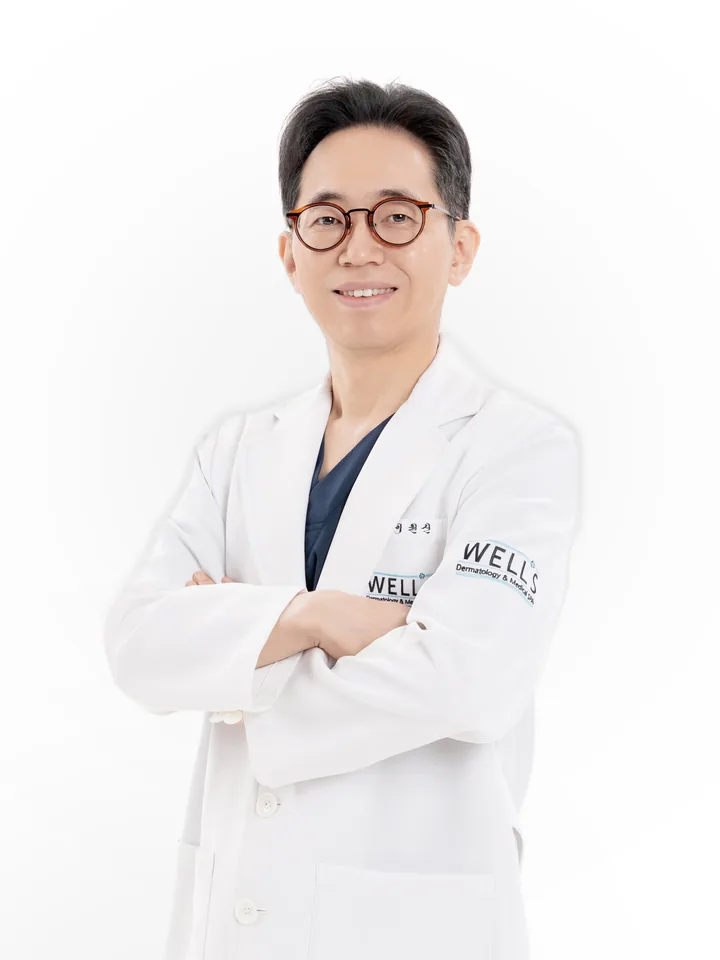
Hello, I'm Dr. Won Sin Lee, a board-certified dermatologist trained at Asan Medical Center and Chief Director of WELLS Clinic in Apgujeong, Seoul. Patients who search for ultherapy before and after Korea usually want one thing: to know what will change on their own face. This article is based on my YouTube video from February 2026 above, where I answered the questions I hear most about Ultherapy.
My short answer is that your ultherapy before and after in Korea depends less on the device than on your face. The same treatment that lifts a full lower face can make a very thin face look more hollow. That is why the decision should come from a dermatologist who has examined you, not from a friend's result or a photo online.
Below I explain how the lift happens, which faces it suits, how we keep it safe, and what to check before you book.
How does Ultherapy lift sagging skin?
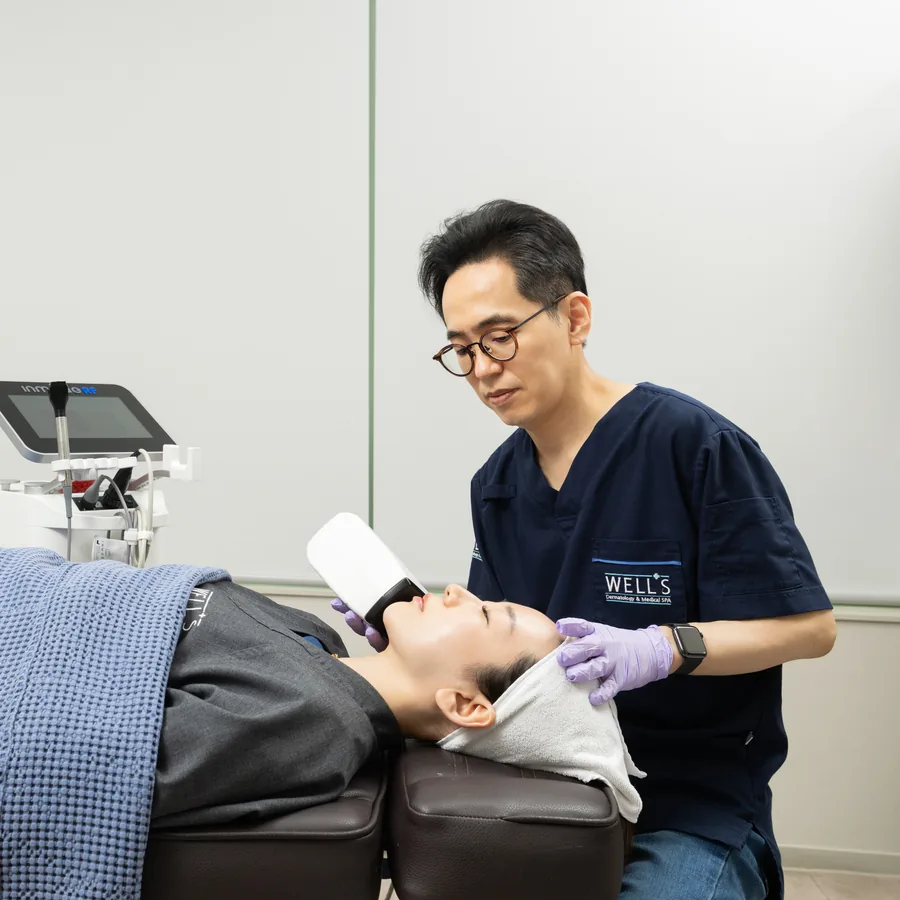
Ultherapy focuses ultrasound energy on the SMAS, the fibrous layer that sits between the skin and the muscle. Tightening that layer pulls sagging tissue back up. It is the same layer a surgical facelift works on, reached here without an incision.
The depth can be changed. The two tips I use most reach 4.5 mm and 3 mm, and I choose between them by face shape: how much cheek fat there is, and whether the face is full or thin but sagging. Planned this way, a person with little cheek fat can get a cleaner contour without losing volume, and a person with fuller cheeks can get some fat reduction and a lift at the same time.
Because one Ultherapy tip holds 2,400 shots, energy can also be shared out by area. That lets us treat only the jowls beside the marionette lines, only a double chin, or the whole face, from about 50 shots for a small area to several hundred in one session.
Which faces see the clearest change, and which should choose something else?
Ultherapy tends to satisfy people with a moderate amount of cheek fat, or with full cheeks that bother them. For them, the energy that reaches the fat layer is part of the benefit.
For a very thin face it can work against you. The fat layer sits right on top of the SMAS, so when a lot of energy goes into the SMAS, the fat attached to it can shrink a little. The fat is not destroyed, but the cheek can look less full, and someone who already worries about hollow cheeks may dislike the result precisely because the lift worked.
Thin faces more often show loose skin, fine lines and crepey texture than true sagging. In that case I usually suggest Thermage instead; my colleagues' post on Thermage vs Ultherapy walks through that choice in more detail.
- Full or moderate cheeks with a heavy jawline: Ultherapy is a good fit.
- Jowls beside the marionette lines: a targeted Ultherapy design can press that area up.
- Very thin cheeks with fine lines: Thermage-type treatment is usually the better choice.
Ultherapy Prime FIT
- What it is
- Ultherapy Prime focused ultrasound for the deep SMAS layer, plus a second 'Fitting' treatment for the layer between Ultherapy and Thermage depth, in the same visit.
- How it works
- Your face is analyzed with 3D imaging first, and an individualized map sets the energy and shot distribution for each area. Ultherapy lifts from the SMAS layer; Fitting tightens the contour along the jawline.
- Sessions
- One session. FIT 400 is 300 Ultherapy shots plus Fitting 100 kJ; FIT 500 is 400 shots plus Fitting 100 kJ. Your dermatologist recommends one at consultation.
- Recovery
- Confirmed at consultation. No deep sedation: Air NOX with local anesthetic keeps you awake.
- Price
- FIT 400 ₩1,925,000 · FIT 500 ₩2,409,000 (VAT excluded)
Why patients fly in for it
- Merz Ultherapy Golden Record Award clinic; every session runs on the Ultherapy Prime system.
- Genuine tips only, with a ten-times refund if a tip is ever found not to be genuine.
- You stay awake, so you can see the tip and the shot count yourself.
Not sure whether your face suits Ultherapy, Thermage or a combination? Send a front and side photo with your travel dates on WhatsApp.
Message on WhatsAppHow do we keep Ultherapy safe without deep sedation?
Because Ultherapy places its energy deep, visible burns are uncommon. The tip has to sit flat on the skin with gel in between, though. If a gap forms, energy can land at the surface, and Ultherapy uses strong energy, so a burn is possible.
Ultherapy has a reputation for hurting, so some clinics use deep sedation. Under sedation you are not conscious, and you may move when you feel pain without knowing it. In my view that movement makes it harder to keep the tip in contact and raises the burn risk, on top of the risks of sedation itself.
So I don't recommend sleep sedation for Ultherapy. I use local anesthesia that blocks the nerves and, as I say in the video, takes away roughly 80% or more of the pain, so we can talk during treatment and you stay in control of your body. At WELLS, Air NOX (an oxygen and nitrous-oxide mix) can be added, and you stay awake throughout. More on what is normal afterwards is in our guide to Ultherapy side effects.
What should you check before Ultherapy in Seoul?
These are the four points I close the video with.
- Whether Ultherapy suits your face, and how many shots: decide this with a dermatologist, not from the internet or a friend.
- Sedation: under deep sedation you can move without knowing it, which raises burn risk, and sedation carries its own risks. Nerve-block anesthesia is the safer, more comfortable route.
- Combination: when Ultherapy alone is not enough, a microwave-based device such as Fitting can be added for a more natural, fuller effect.
- Genuine tips: because Ultherapy is expensive, cases of refilled or fake tips have been reported. Check that the clinic uses genuine tips on a genuine machine; Ultherapy's own website explains how.
The third point is why WELLS designed Ultherapy Prime FIT: Ultherapy for the deep layer and Fitting for the layer above it in one visit. FIT 400 is ₩1,925,000 (VAT excluded) and FIT 500 is ₩2,409,000 (VAT excluded). Most of our patients are satisfied with 300–400 shots; only about 2% of WELLS patients need 600 or more.
How does an Ultherapy visit fit a trip to Seoul?
Send a front and side photo, your concerns and your travel dates on WhatsApp. We reply in English with which option might suit you, and the dermatologist confirms the plan, shot count and price at the clinic before anything starts, after a 3D analysis of your face.
You stay awake with no fasting, and you can check the genuine tip and the shot count yourself. If a tip were ever found not to be genuine, WELLS refunds ten times the treatment price.
WELLS is about five minutes on foot from Apgujeong Station (Line 3), Exit 3. Results vary from person to person, and the right plan for you is decided in consultation with your dermatologist.
Want Dr. Choi to look at your skin?
Send a photo and your travel dates on WhatsApp. We reply in English.
Message on WhatsAppQuestions about this video
What can I expect from ultherapy before and after Korea if my face is thin?
Energy aimed at the SMAS can also shrink the fat layer above it a little, so a very thin face may look more hollow. Dr. Lee usually suggests Thermage for thin faces with loose skin and fine lines.
Can Ultherapy treat just my jowls or double chin?
Yes. One Ultherapy tip holds 2,400 shots, so energy can be planned by area, from about 50 shots for a small area to several hundred for a full face.
Will I be asleep during Ultherapy at WELLS?
No. WELLS does not use deep sedation for Ultherapy. Local anesthesia and Air NOX keep you comfortable while you stay awake and can see the tip and shot count.
How much is Ultherapy Prime FIT at WELLS?
FIT 400 (300 shots plus Fitting 100 kJ) is ₩1,925,000 (VAT excluded) and FIT 500 (400 shots plus Fitting 100 kJ) is ₩2,409,000 (VAT excluded). The dermatologist recommends one at consultation.
This article explains general medical information from the video. It is not a diagnosis; results vary by person and are decided in consultation.