Milia Removal Korea: Milia, Syringoma or an Oil Gland? How to Tell
White, yellow or skin-coloured bumps look alike but sit at different depths. Dr. Ryu explains how to tell them apart and how each one is removed.

What should you know before milia removal in Korea?
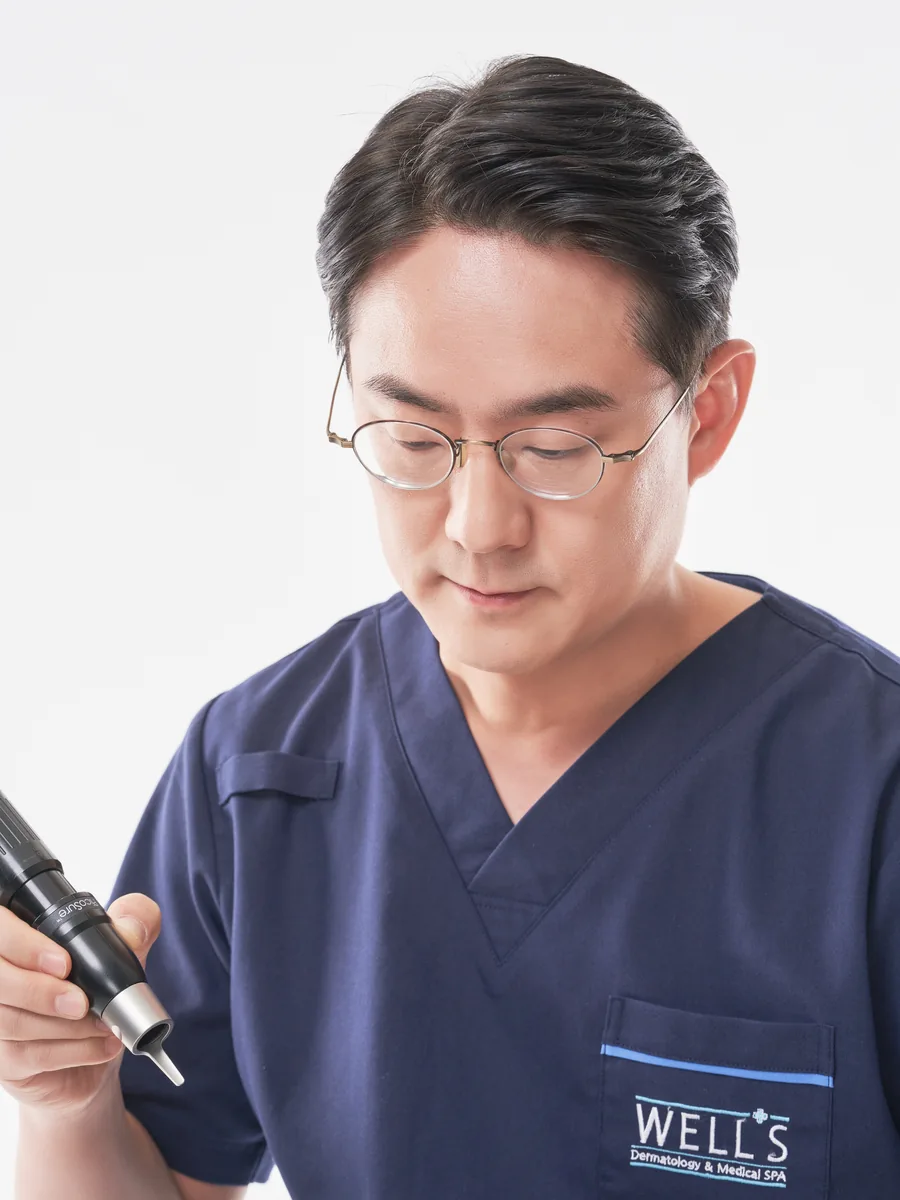
Hello, I'm Dr. Hyo Seop Ryu, a board-certified dermatologist (M.D., Ph.D.), former assistant professor at Seoul National University Bundang Hospital, and Chief Director at WELLS Clinic in Apgujeong, Seoul. Many people who look up milia removal Korea are not sure their bumps are milia at all. This article is based on my YouTube video from February 2026 above, where I explain the bumps I see most often.
The first step in milia removal in Korea, or anywhere, is a correct diagnosis. Milia, sebaceous hyperplasia and syringoma look alike to most people but sit at different depths, and depth decides how easy each one is to remove and which laser is used.
Below I explain the skin layers involved, how to tell the bumps apart, how I remove each one, and what you can safely do at home.
Why do milia, oil glands and sweat ducts look so alike?
It helps to picture the skin in two layers. The epidermis is the outer layer, where dead skin cells are made and shed. Under it is the dermis, the layer that gives skin its firmness.
- Milia (epidermis): keratin that should have shed gets trapped and shows as a firm white dot.
- Flat warts (epidermis): a viral infection that raises the skin slightly and can spread sideways.
- Sebaceous hyperplasia (upper dermis): the oil gland that keeps skin moist enlarges and shows as a slightly raised yellowish bump.
- Syringoma (deep dermis): the sweat duct sits deepest, and when it enlarges it forms a skin-coloured, slightly shiny bump.
In short, milia are white keratin, sebaceous hyperplasia has a yellow, oily tint, and syringoma is skin-coloured with a sheen. Even so, telling them apart reliably is hard for anyone who is not a dermatologist, which is why diagnosis comes first.
Which bumps are easy to remove, and which are not?
Ease of treatment comes down to depth. Flat warts and milia, confined to the surface, and sebaceous hyperplasia in the upper dermis are relatively straightforward. Syringoma, the deepest of them, is the hardest to treat.
With all of these, the goal is removal. Unlike pigment, which we can lighten slowly without harming the tissue, these are structures that have to be broken down, so we use tissue-removing lasers such as a CO2 laser or an erbium laser.
Of the four, only flat warts spread, because they are caused by a virus. Sebaceous hyperplasia and syringoma are not contagious; they come with skin aging as the oil glands or sweat ducts enlarge.
Warts & Syringomas
- What it is
- Diagnosis and removal of small benign bumps by a dermatologist: milia, flat warts, sebaceous hyperplasia and syringoma are told apart first, then treated at the depth where each sits.
- How it works
- Surface bumps such as milia and flat warts are removed under magnification with a tissue-removing laser. Deeper lesions need a method matched to their depth, such as a multi-step CO2 laser approach or a radiofrequency needle.
- Sessions
- Milia and flat warts often clear in one or two treatments; deeper lesions such as syringoma may need more. Confirmed at consultation.
- Recovery
- Confirmed at consultation, based on which lesions are treated and how many.
- Price
- Confirmed at consultation.
Why patients fly in for it
- A board-certified dermatologist diagnoses every bump before anything is removed.
- Treatment depth is matched to the lesion, to lower the risk of scarring and recurrence.
- Consultations are available in English, with planning on WhatsApp before you fly.
Not sure whether your bumps are milia, syringoma or an enlarged oil gland? Send a close-up photo and your travel dates on WhatsApp.
Message on WhatsAppHow does a dermatologist remove each one?
Milia and flat warts sit at the surface, so I remove them under magnification, usually in one or two treatments. Milia can come back when the skin is under various kinds of stress, and flat warts can reappear in the same area after a few months.
Sebaceous hyperplasia sits beneath the surface in the upper dermis. If it is finished with one ordinary laser pass, the deeper part comes back quickly. My approach has three steps: I remove the covering surface, liquefy the oil inside more strongly with the CO2 laser and press it out, then treat the remaining tissue once more.
Syringoma lies so deep that working down from the top with a CO2 laser tends to leave scars. A radiofrequency needle that delivers energy only to the deep tissue while sparing the surface is the better option. Why syringoma recurs, and how to choose a method, is covered in syringoma removal in Korea.
Can you squeeze milia out at home?
Milia confined to the epidermis can be pressed out if you very carefully open just the top layer first. Sebaceous hyperplasia and syringoma, however, sit in the dermis, and squeezing them out at home is not possible.
Since most people cannot be sure which bump they have, pressing on something that will not come out only irritates the skin. Our post on milia under the eyes covers home care for the eye area specifically.
Whether these bumps run in families is not clearly established. In my clinic I have not seen reports that a parent's syringoma means a child will get them, though similar skin types and habits in a household may play some part.
How does milia removal Korea fit a short trip to Seoul?
Send close-up photos of the bumps, where they are, and your travel dates on WhatsApp. We reply in English, and at the clinic a dermatologist confirms what each bump is before planning removal; see our Warts & Syringomas page for how we approach these lesions.
Surface lesions often fit a single visit, while deeper ones may need follow-up. The price is confirmed at consultation. WELLS is about five minutes on foot from Apgujeong Station (Line 3), Exit 3.
Diagnosis at the right depth with the right laser is what keeps the number of treatments down and the result clean. Results vary from person to person.
Want Dr. Choi to look at your skin?
Send a photo and your travel dates on WhatsApp. We reply in English.
Message on WhatsAppQuestions about this video
How many sessions does milia removal Korea usually take?
Milia sit at the surface, so Dr. Ryu usually removes them under magnification in one or two treatments. The dermatologist confirms the plan after examining you.
How can I tell milia from syringoma?
Milia are firm white dots of trapped keratin; syringomas are skin-coloured, slightly shiny bumps from enlarged sweat ducts deep in the dermis. They look similar, so a dermatologist should confirm which you have.
Are milia or syringomas contagious?
No. Of the four bumps in the video, only flat warts spread, because they are viral. Sebaceous hyperplasia and syringoma come with skin aging.
Why does sebaceous hyperplasia come back after laser?
It sits in the upper dermis, so one ordinary laser pass can leave the deeper part behind. Dr. Ryu removes the surface, liquefies and presses out the oil with a CO2 laser, then treats the remaining tissue again.
This article explains general medical information from the video. It is not a diagnosis; results vary by person and are decided in consultation.