“A facelift without surgery”? What PDO thread lift korea can and can't do
A PDO thread lift in Korea places dissolvable polydioxanone threads under the skin to reposition mild-to-moderate sagging and prompt collagen. It suits early jowls and cheek laxity, not heavy loose skin.

What is a PDO thread lift, physically?
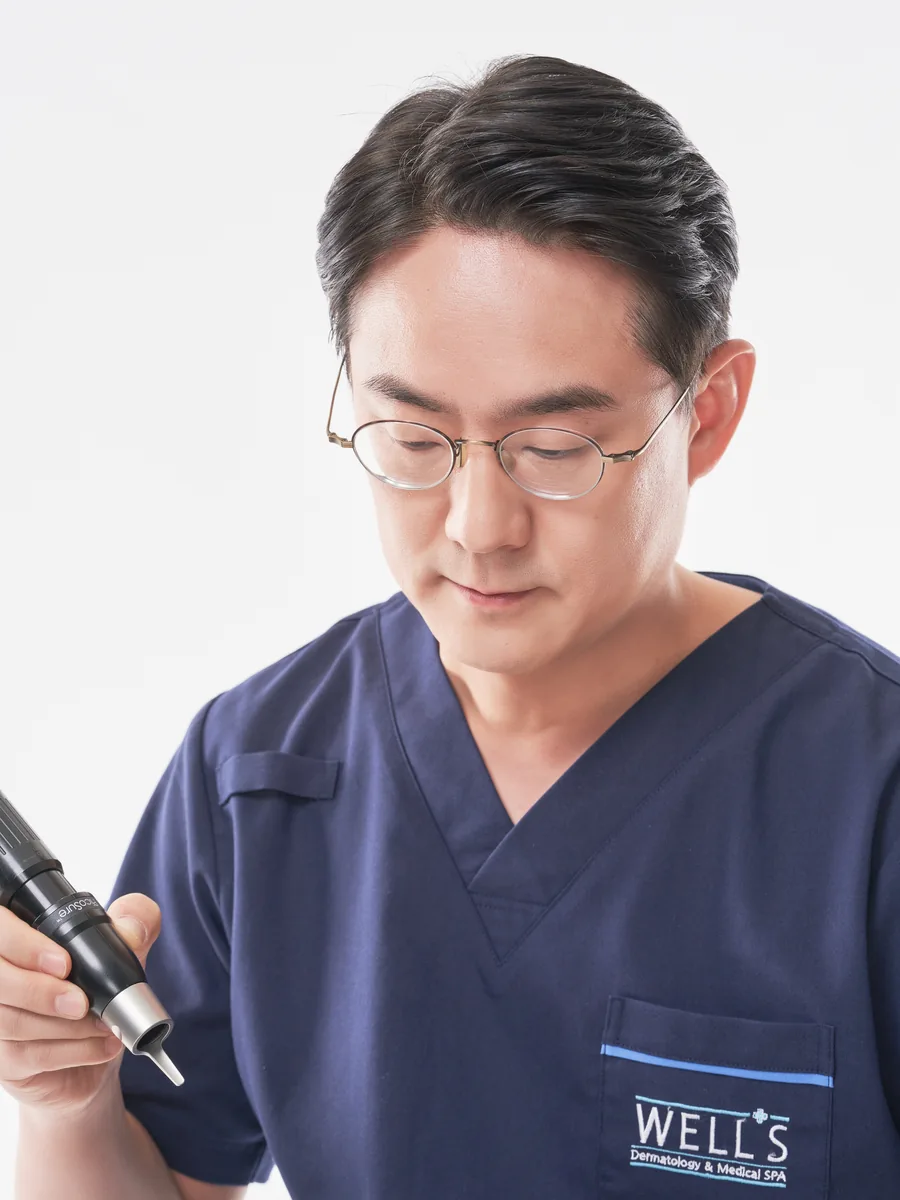
PDO thread lift korea, in one line: dissolvable polydioxanone (PDO) threads are placed under the skin through a fine needle or cannula to reposition mild-to-moderate sagging in the cheeks, jowls or neck, and the skin builds collagen around them as they absorb. It suits early laxity in people who want a modest lift without an incision, and it doesn't replace a surgical facelift when there's a lot of loose skin.
If you're flying in for it, the worry worth raising early is how your face will look and feel on the flight home a few days later, with threads still settling. At WELLS in Apgujeong, a board-certified dermatologist consults with you and places the threads, and only genuine, KFDA-approved threads are used.
Most people searching PDO thread lift korea have seen threads sold as “a facelift without surgery.” That phrase is where most disappointment starts, so the sections below take the common beliefs one at a time: what physically happens, which part of the belief holds up, and what a dermatologist checks before saying yes.
If you'd like a first read on your own face before booking anything, send front and both side photos taken in daylight, without makeup or filters, plus your travel dates on WhatsApp. Mention any fillers or threads you've had before, with the product and the date. That's enough for a first suggestion of which options fit your face and how to time them around your flights.
Send a clear photo and your travel dates, and we will tell you what fits the time you have in Seoul.
Send your photos and travel dates on WhatsAppA PDO thread lift uses sutures made of polydioxanone, an absorbable material used in surgical stitches for decades. Threads are passed under the skin along planned lines: barbed threads grip tissue and hold it in a lifted position, while smooth ones mainly prompt collagen along their path.
The body breaks PDO down slowly over several months. As it does, the tissue around each thread responds with a mild healing reaction that lays down new collagen, which is why texture and firmness can keep changing for weeks after the visible lift on day one. WELLS's own treatment page describes skin tone and elasticity improving over 2 to 4 weeks.
| Thread type | What it does | Typical use |
|---|---|---|
| Mono (smooth) | Prompts collagen along the thread, little lift | Thin areas, fine texture |
| Screw (twisted) | More material in one line | Mild hollowing, light support |
| Barbed (cog) | Small barbs hook tissue and hold it up | Jowls, cheeks, jawline |
PDO isn't the only material. Polylactic acid (PLLA) and polycaprolactone (PCL) threads also exist and absorb more slowly. Which material and type suits your face is a fair question for consultation; the page on thread lifting at WELLS covers the basics.
Is a thread lift really a facelift without surgery?
No. A thread lift repositions tissue a little and holds it while collagen forms; a surgical facelift removes excess skin and tightens deeper layers. The American Society of Plastic Surgeons presents thread lifts as a less invasive option with subtler results than surgery.
The true part of the belief: there's no incision, the procedure takes around 20 to 60 minutes according to the clinic's treatment page, and a lift is visible straight afterwards. The part that doesn't hold up: threads can't remove skin. When the jawline sits under heavy, loose skin, threads hold for a while and then the weight wins.
If a surgeon at home told you your face is past what threads can do, take that seriously. They examined you; a forum photo didn't. Two people with the same jowl can have very different skin thickness and fat volume, and those two things decide most of it.
Does the lift disappear when the PDO dissolves?
Not on the day the thread dissolves. WELLS's treatment page describes thread lift results lasting more than a year, longer than filler; how long yours lasts depends on skin thickness, age and how much sagging there was.
The true part of the belief: it's temporary. Ageing and gravity keep going, and threads don't stop either. On the clinic's Sculptra page, Sculptra is described as something combined with thread lifting, and skin-quality treatments such as microneedle RF options in Seoul work on a different layer from threads.
Why more threads don't mean a bigger lift
Lift comes from vector and depth: the direction each thread pulls and the layer it sits in. Too many threads, or threads placed too shallow, are a common cause of dimpling, ridges and a face that looks pulled rather than lifted.
Risks and side effects to know
WELLS's thread lift page says thread length, direction and depth are planned around your skin thickness and degree of sagging, with the aim of minimizing dimpling. The clinic also lists a 3D analysis before procedures, which shows volume and asymmetry from angles a bathroom mirror can't. The fewest threads that hold the tissue where it needs to sit is the target.
Thread menus in Seoul can look confusing because brand names and counts differ from clinic to clinic. The question that matters anywhere is simple: how many threads, in which direction, and why there.
Can you fly home the week after a PDO thread lift?
Usually yes, if you plan for swelling and bruising instead of hoping there won't be any. Most of it eases over the first several days to two weeks, and the clinic advises avoiding saunas for two weeks afterwards.
| When | What's common | What to avoid |
|---|---|---|
| Day 0–1 | Tightness, tugging when you open your mouth wide, swelling | Wide yawns, hard chewing, pressing on the face |
| Days 2–7 | Bruising and swelling settle, small puckers often smooth out | Sleeping face-down, facial massage, heavy workouts |
| Up to 2 weeks | Most faces look settled | Saunas (clinic advice: two weeks) |
| 2–4 weeks | Skin tone and elasticity keep improving | Nothing new, keep sun protection |
For a PDO thread lift korea trip, the flight itself isn't the main concern; what presses on your face around it is. Sleeping against a window or a neck pillow pushed into the cheek is the kind of pressure most aftercare advice tells you to avoid in the first days. The CDC's medical tourism guidance suggests allowing time to recover before flying, carrying copies of your treatment records, and arranging follow-up care at home before you leave.
Two weeks after a thread lift, the typical picture is faded bruising and a mild tightness when you smile broadly.
Your dates shape this plan more than anything else. Send your arrival and departure dates on WhatsApp with one front-facing photo, and say whether you go straight back to work after landing; that's enough for a first suggestion of where the visit sits in your trip.
Send a clear photo and your travel dates, and we will tell you what fits the time you have in Seoul.
Send your photos and travel dates on WhatsAppWhen does a thread lift go wrong, and who should skip it?
Problems come mostly from placement and from treating the wrong face. Bruising, swelling and soreness are common and usually temporary; dimpling, asymmetry, a visible or palpable thread, thread migration and infection are less common; nerve or gland injury is rare.
The ASPS safety page lists infection, visible sutures, dimpling, pain and thread migration among the risks. A “thread lift gone wrong” photo online often shows a thread sitting too shallow or pulling at the wrong angle.
Threads are usually a poor fit with heavy loose skin, very thin skin where threads may show, an active infection or inflammation in the area, a bleeding disorder or blood thinners you can't safely pause, or a history of keloid scarring. Pregnancy is generally a reason to postpone elective procedures. Previous fillers or threads in the same area change how new threads sit, so mention them.
Results vary between people, and suitability is decided when a dermatologist examines your face in person.
What happens at WELLS before threads go in
A board-certified dermatologist examines you and performs the thread lift, after a 3D analysis of the face. WELLS has been in Apgujeong since 2008, at one location: 8F Apgujeong B/D, 842 Nonhyeon-ro, about five minutes on foot from Apgujeong Station Exit 3 on Line 3.
My own background: board-certified dermatologist with residency and board certification at Seoul National University Hospital, a Ph.D. in Dermatology from Seoul National University, and adjunct professor in the Department of Dermatology at Seoul National University Hospital.
WELLS doesn't use unnecessary sleep sedation. Its awake option is Air NOX, a precise mix of oxygen and nitrous oxide: you stay awake, don't need to fast, and recover in about two minutes. Air NOX isn't suitable in early pregnancy or with respiratory conditions, panic disorder or vitamin B12 deficiency, so mention any of those.
Hours are weekdays 10:00–20:00 and Saturday 10:00–17:00, with lunch 13:00–14:00; Sundays and holidays are closed. If threads are one part of a bigger trip, the Thermage planning guide for Seoul shows how lifting treatments fit around flights, and if dry skin is your other concern, how PDRN is chosen for dry skin covers that side.
The most useful first message is short: three photos (front, left, right) in daylight, your dates in Seoul, and anything already injected in your face. Send it on WhatsApp, and you'll get a first suggestion of whether threads, another lifting option or a combination fits, and how it lines up with your flight home.
Plan your visit before you fly
Send a daylight photo, your travel dates and what you have tried before. A dermatologist will suggest where to start and what fits your stay.
Send your photos and travel dates on WhatsAppReplies on WhatsApp · prices in KRW, excluding 10% VATBefore you message us
How long does a PDO thread lift last?
The PDO material itself absorbs over several months, but the collagen formed around it stays longer. WELLS's treatment page describes thread lift results lasting more than a year, longer than filler. Skin thickness, age and how much sagging you start with all affect how long the effect holds.
Does a thread lift hurt?
Most people describe pressure and tugging during placement and soreness or tightness for a few days afterwards, especially when chewing or yawning.
Can threads lift the jawline, chin or neck?
Jowls and the jawline are common targets for barbed threads, because the tissue there can be repositioned along a clear direction. Neck skin is thinner and looser, so results there tend to be more modest. A nose thread lift is a different procedure that shapes the nose rather than lifting sagging skin.
Is a PDO thread lift korea visit possible if I've had fillers?
Often yes, but previous filler or threads in the same area change how new threads sit. Send the product names and dates along with your photos, and bring the same details to the consultation in Seoul.
Can a thread lift be combined with other lifting treatments?
Yes, threads are often combined with treatments that work on a different layer. WELLS describes Sculptra as something combined with thread lifting, and energy devices or microneedle RF can address skin quality. The order and spacing are planned with the dermatologist.
Results and recovery vary by individual. Every treatment carries possible side effects, which are explained at the consultation. Prices are in Korean won, excluding 10% VAT, and confirmed at your consultation. This article is general information from the clinic, not a diagnosis.
Dr. Won Woo Choi
- Board-certified dermatologist in Korea; trained at Seoul National University Hospital
- Dermatology residency, Seoul National University Hospital; board certification in dermatology in Korea
- Ph.D. in Dermatology, Seoul National University
- Former clinical instructor, Seoul National University Hospital
- Adjunct professor, Department of Dermatology, Seoul National University Hospital