Korean wrinkle treatment for lines that move vs lines that stay
Korean wrinkle treatment uses a neuromodulator for lines that move and filler or a skin booster for lines that stay at rest. Neuromodulator settles over about two weeks, so plan where it sits in your trip.

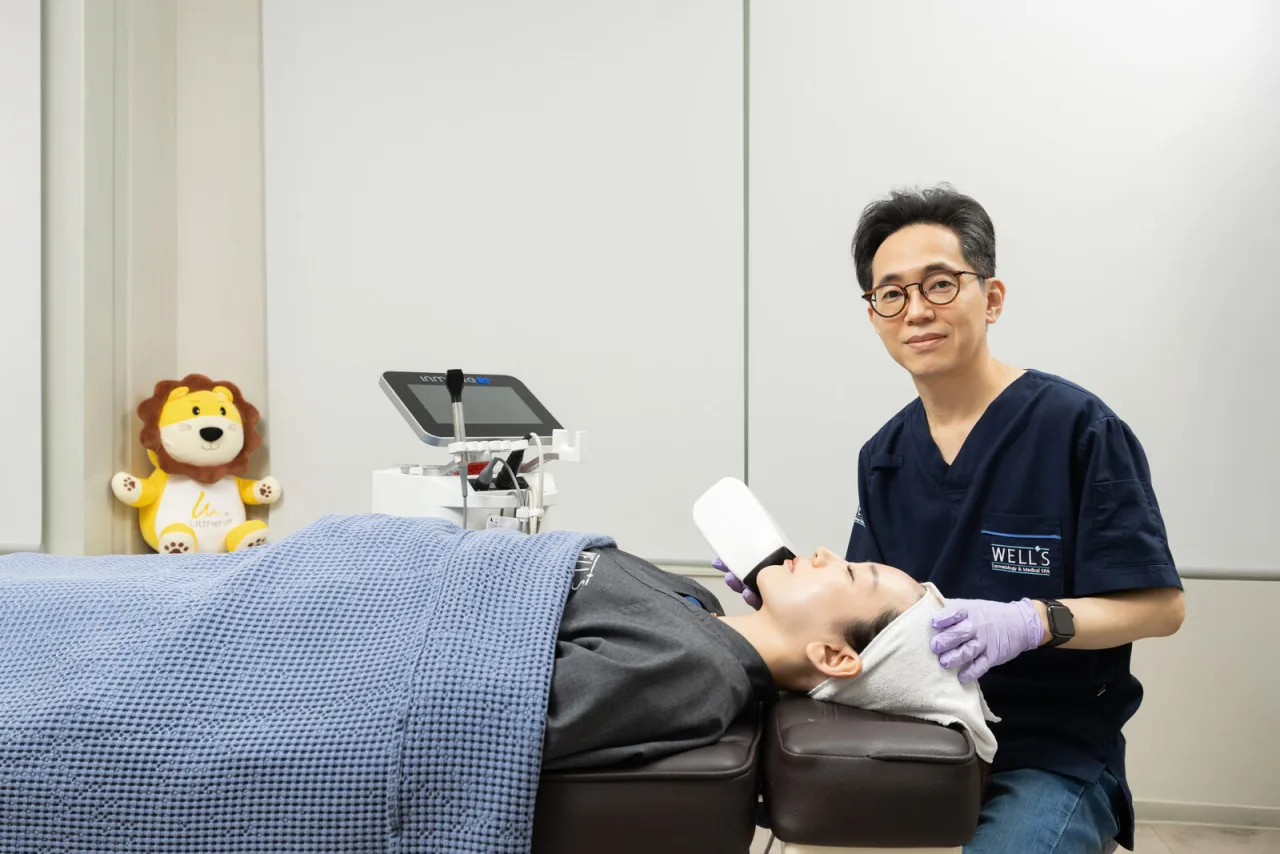
What makes a line “moving” or “resting”?
Korean wrinkle treatment at a dermatology clinic comes down to two tools: neuromodulator, which relaxes the muscle that folds a line, and filler or a skin booster, which works on a groove that stays when your face is still. Which one you need depends on whether the line moves. If you're flying in for a week, the worry is usually timing: neuromodulator takes around two weeks to settle fully, so you'll likely be home when the result shows, and nobody wants an uneven brow as a souvenir.
At WELLS, a board-certified dermatologist does both the consultation and the injections, and the neuromodulator we use is limited to products with US FDA approval. We commit to genuine product and the full quantity, and before any filler, the product and amount are confirmed with you.
If you can't tell which kind of line you have, take two daylight photos of the same area without makeup: one relaxed, one while you frown, raise your brows or smile. Send both on WhatsApp with your travel dates and the one question on your mind, such as whether a single visit is enough. Clear photos and your dates are enough for a first suggestion of options and timing.
Send a clear photo and your travel dates, and we will tell you what fits the time you have in Seoul.
Send a relaxed and a moving photo on WhatsAppLines across the forehead, the “11” between the brows and crow's feet at the corners of the eyes are expression lines. A muscle underneath contracts, the skin above it folds, and that happens thousands of times a day. Early on, these lines vanish when your face relaxes. That's a dynamic wrinkle.
After years of the same folding, the crease starts to stay. Now two problems sit on top of each other: the muscle still pulls, and the skin has kept a groove. Other lines never had much to do with muscle. The folds from nose to mouth mostly come from lost volume and support in the midface, and the fine, crinkly lines under the eyes are about thin, dry skin.
When I look at a forehead, the question I care about is what's left when you stop frowning. If the skin goes smooth, relaxing the muscle is usually enough. If a line is still etched there, relaxing it alone will soften the line without erasing it, and you should hear that before anything is injected.
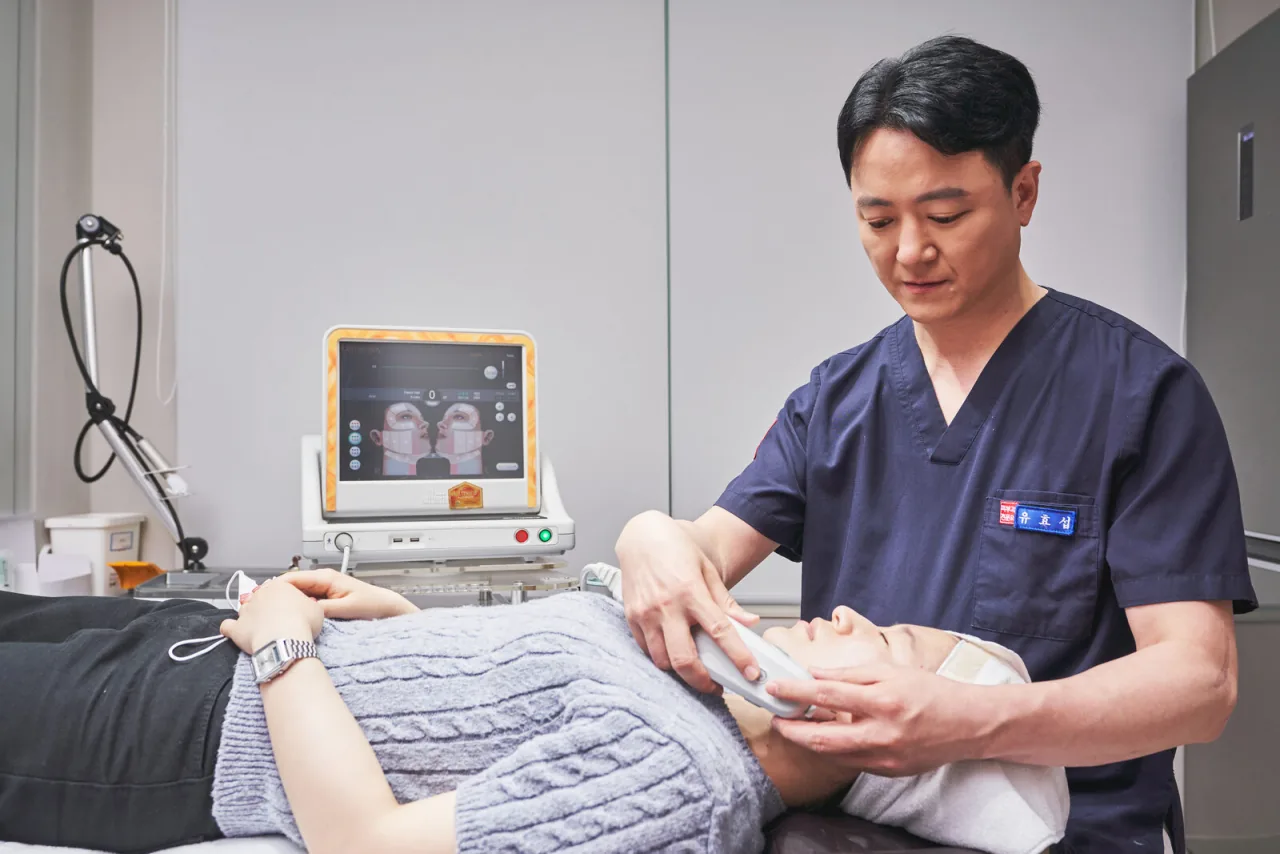
Korean wrinkle treatment, matched to the line
| The line | What's usually behind it | What usually helps |
|---|---|---|
| Forehead, frown or crow's-feet lines that vanish at rest | Muscle folding the skin | Neuromodulator |
| The same lines, still visible at rest | Muscle plus a crease in the skin | Neuromodulator first, then filler or a skin booster if the crease remains |
| Nose-to-mouth folds | Lost volume and support | Filler, or lifting when sagging drives it |
| Hollows under the eyes | Lost volume | Filler |
| Fine, crinkly lines under the eyes or on the cheeks | Thin, dehydrated skin | A skin booster course |
Neuromodulator is what people mean by a wrinkle relaxer. It quiets the nerve signal to one specific muscle, so the skin above it stops folding as hard. We use it for expression lines and also to slim enlarged muscles. Your dermatologist explains the product, what it's approved for and its potential risks before you're treated, so you can write the name down for your doctor at home.
Filler works on a different problem: it puts back volume where the face has lost it. We inject filler with a cannula, a blunt-tipped tube, where possible, because it lowers the risk of damaging a vessel compared with a standard needle. Nose-to-mouth folds get a large-particle, longer-lasting filler, and under-eye hollows can be treated with filler instead of surgery. Combining filler with neuromodulator extends the result, since the muscle isn't re-creasing the area you've just filled.
For crinkly skin, a skin booster such as Rejuran HB+ works on skin quality. It's a salmon-derived polynucleotide with hyaluronic acid and lidocaine, aimed at elasticity, fine lines and hydration. The catch for a traveler: the recommended course is four sessions at two- to three-week intervals, which is a plan across visits rather than one appointment.
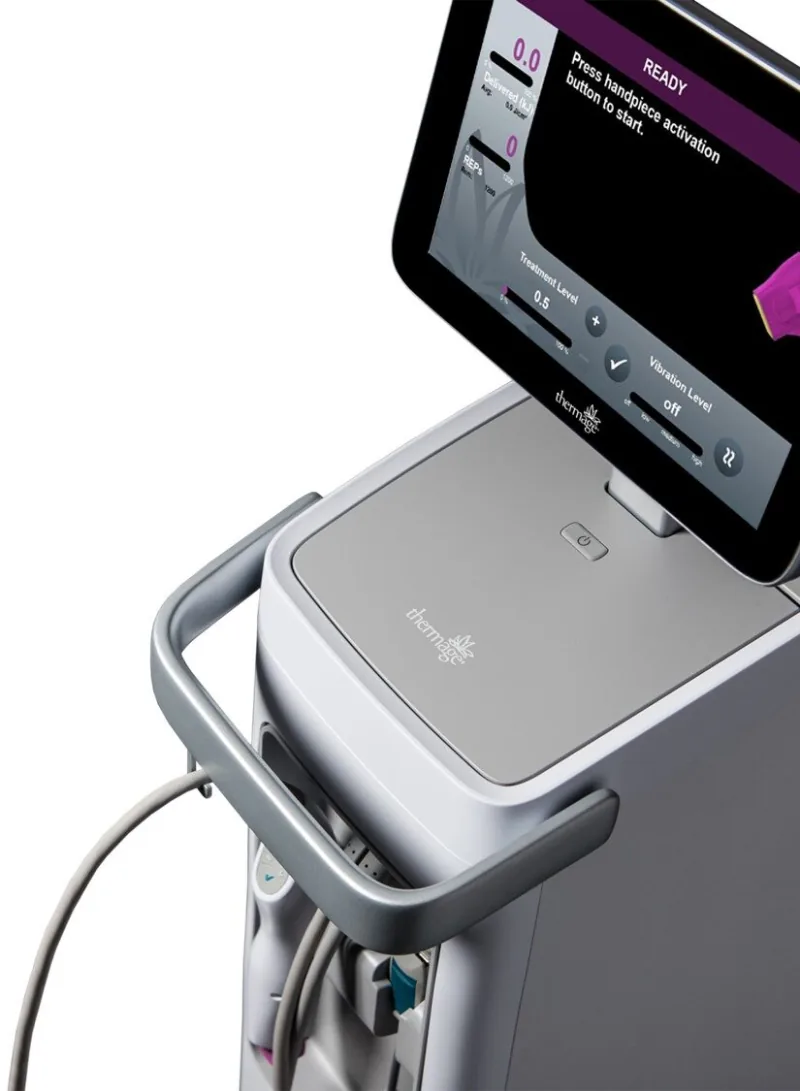
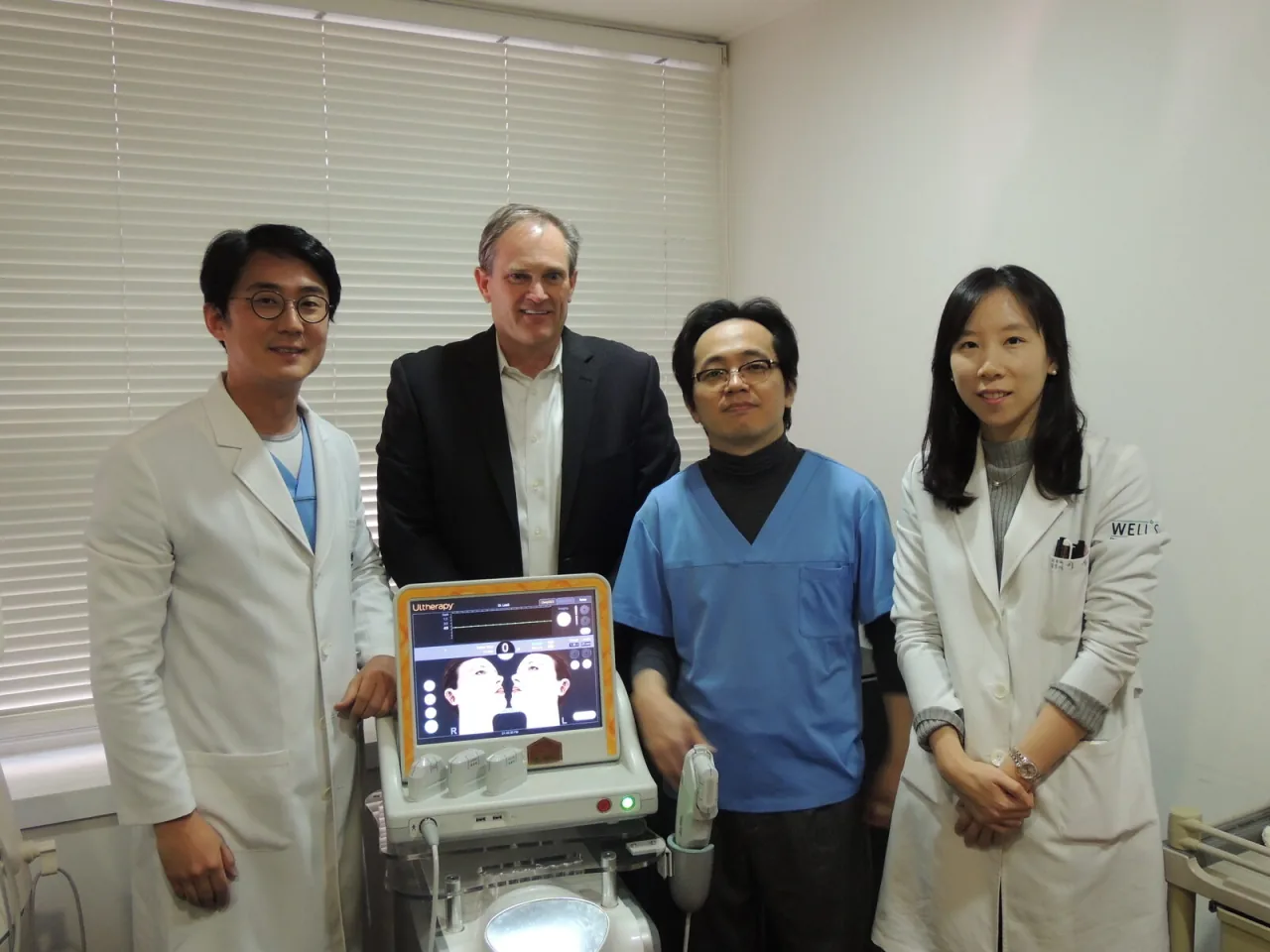
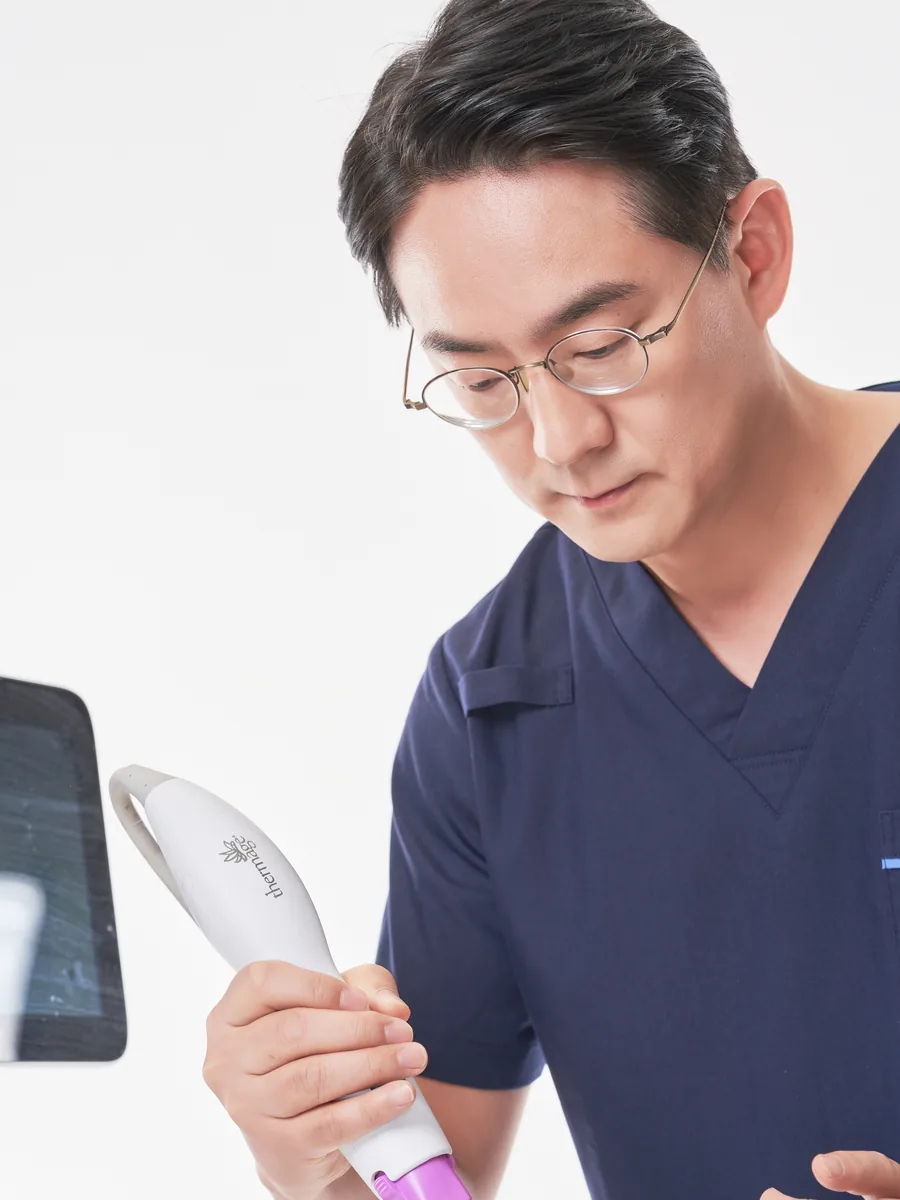
When the folds come mainly from sagging, the conversation moves to energy-based lifting with Thermage or Ultherapy Prime. Adding more and more volume to a face that's drooping tends to make it look heavy.
Do Korean wrinkle sticks and creams do the same job?
The wrinkle sticks and multi-balms sold in Korean beauty shops are cosmetics. They hydrate the surface, and hydrated skin makes fine lines look softer for a while. They can't relax a muscle or replace lost volume, so a frown line driven by the muscle under it stays where it is.
That doesn't make them pointless. A moisturizer you like, daily broad-spectrum sunscreen and, if your doctor agrees, a topical retinoid are the parts of wrinkle care that happen at home between clinic visits. Treat the stick as skincare, and the clinic as the place for the muscle and the volume.
What happens in the two weeks after neuromodulator if you fly home?
Neuromodulator doesn't work on the spot. Most people notice it starting within a few days, and the full effect usually settles at around two weeks. For expression lines it then tends to last a few months, often around three to four, before the muscle gradually wakes up again.
This is the part that matters on a short trip. Small differences between sides, such as one brow sitting a little higher, are usually checked and adjusted around the two-week mark. If you're back in Sydney or Toronto by then, that adjustment can't happen in Seoul, so where the appointment sits in your trip is a medical decision as much as a travel one.
We're open Monday to Friday 10:00–20:00 and Saturday 10:00–17:00, with lunch from 13:00 to 14:00, and closed on Sundays and public holidays. If your trip runs close to two weeks, an appointment on your first weekday puts the two-week point before your flight. The clinic is a five-minute walk from Exit 3 of Apgujeong Station on Line 3.
Flying itself is generally not a problem after neuromodulator. The usual advice is to avoid rubbing or pressing the treated area for the rest of that day and to skip facials or massage on that part of the face for a while; ask your dermatologist which of these apply to you. Filler is different again, because swelling and bruising are most visible in the first days, so a big event right after landing is worth avoiding.
Put your exact arrival and departure dates in your message, not just the month. The question worth asking with them is where in your trip the appointment should sit, so the two-week point lands before you fly.
Send a clear photo and your travel dates, and we will tell you what fits the time you have in Seoul.
Send a relaxed and a moving photo on WhatsAppRisks and side effects to know
With neuromodulator, the common effects are small: a bruise or tenderness at the injection points, and sometimes a headache in the first day or two. The one people fear most is a heavy brow or drooping eyelid, which happens when the neuromodulator affects a neighboring muscle. It usually fades as the neuromodulator wears off, but that can take weeks.
US prescribing information for neuromodulator neuromodulators carries a boxed warning about the effect spreading beyond the injection site. It's rare, but trouble swallowing, speaking or breathing after an injection needs urgent medical care. Drug information from MedlinePlus also asks you to tell your doctor if you're pregnant or breastfeeding or have a condition affecting nerves and muscles, such as myasthenia gravis.
With filler, swelling, bruising and small lumps are the usual short-lived effects. The rare serious one is filler blocking or pressing on a blood vessel, which shows as skin turning pale or dusky with pain, and it needs treatment the same day. That's why I'd keep a day or two in Seoul after filler instead of injecting on the morning of your flight.
Results vary from person to person, and whether a treatment suits you is decided when a dermatologist examines your face in person. Every Korean wrinkle treatment carries some risk, and knowing exactly what was injected is what lets a doctor at home help you. Before you leave, write down the product names, areas and doses; the CDC's medical tourism guidance also recommends keeping copies of your records and planning follow-up care at home.
When would a dermatologist say “not this trip”?
Some situations are better left for another visit. Pregnancy or breastfeeding, a cold sore or active rash where the needle would go, or a wedding or photo shoot within a few days of filler are all reasons to wait. So is a first-ever filler around the eyes on a trip that leaves no days to recover before flying.
Sometimes what looks like a wrinkle is something else, and skin problems that look alike can have different causes, so the diagnosis decides the treatment. Rolling acne scars on the cheeks can read as lines in side light; they need a different approach, covered in our guide to Korean acne scar treatment around a Seoul trip. If what bothers you around the eyes is brown patches rather than creases, that's pigment, and why we go gentle with Korean melasma treatment is the better place to start.
If breakouts keep inflaming the same skin, it makes sense to settle those first; acne treatment in Seoul and the order it works in explains why.
Korean scalp treatment in Seoul: exosome, stem cell or PRP, and trips go further into what usually comes next.
Who you'd see at WELLS, and what to bring
I completed my residency and board certification in dermatology at Seoul National University Hospital, where I'm an adjunct professor, and that training is why I treat a wrinkle as a diagnosis before it's an injection. WELLS has been at one location in Apgujeong since 2008. A dermatologist handles your consultation, diagnosis and treatment, and the dermatologists who inject filler here have more than fifteen years of filler experience.
We also run a 3D analysis before treatment, which is useful when the question is whether a fold comes from lost volume or from sagging. For the consultation itself, bring front and both side photos in daylight, a list of medicines and allergies, and anything you've had injected or lifted before.
When you write to us on WhatsApp, add your treatment history after the photos: any filler, neuromodulator or threads you've had, with the product and the month if you remember them.
Plan your visit before you fly
Send a daylight photo, your travel dates and what you have tried before. A dermatologist will suggest where to start and what fits your stay.
Send a relaxed and a moving photo on WhatsAppReplies on WhatsApp · prices in KRW, excluding 10% VATBefore you message us
How long does a Korean wrinkle treatment with neuromodulator usually last?
For expression lines, the effect usually lasts a few months, often around three to four, and then fades gradually as the muscle recovers. Lines return toward where they were; they don't get worse because the neuromodulator wore off. Many people repeat it on a schedule that matches their trips.
Can eye wrinkles be treated in Korea in a single visit?
Crow's feet from smiling are usually a neuromodulator question and can be done in one appointment, keeping the two-week settling time in mind. Fine, crinkly lines under the eyes are a skin-quality issue; Rejuran HB+ is recommended as four sessions two to three weeks apart. Hollows under the eyes are a volume question, treated with filler.
Are Korean wrinkle relaxers the same drug as the ones at home?
They're neuromodulator type A, the same class of drug used for expression lines elsewhere. At WELLS we use only products with US FDA approval, and your dermatologist explains which product is used. Write down the name and dose so a doctor at home knows what you've had.
Do I need to stop any medicines before the appointment?
Don't stop a prescribed medicine on your own. Tell the dermatologist about blood thinners, aspirin, fish oil or other supplements that can make bruising more likely, along with allergies and skin conditions. Your own doctor decides whether anything should be paused.
Can neuromodulator and filler be done in the same appointment?
Often, yes, and combining them is one way to make a filled area last longer, since the muscle isn't creasing it again. On a short trip, remember that filler swelling and bruising show in the first days, while neuromodulator takes around two weeks to settle.
Results and recovery vary by individual. Every treatment carries possible side effects, which are explained at the consultation. Prices are in Korean won, excluding 10% VAT, and confirmed at your consultation. This article is general information from the clinic, not a diagnosis.
Dr. Won Woo Choi
- Board-certified dermatologist in Korea; trained at Seoul National University Hospital
- Dermatology residency, Seoul National University Hospital; board certification in dermatology in Korea
- Ph.D. in Dermatology, Seoul National University
- Former clinical instructor, Seoul National University Hospital
- Adjunct professor, Department of Dermatology, Seoul National University Hospital