How to get rid of milia under eyes: a dermatologist's answer
Milia under the eyes look simple, but three other facial bumps look almost identical. What they are, why diagnosis comes first, and what not to do at home.


What milia under the eyes actually are
Small, hard, white dots under the eyes that never come to a head, never hurt, and never respond to the exfoliating acid you bought for them. If you have searched how to get rid of milia under eyes, you have probably already collected ten confident answers online — and several of them are written for a completely different bump.
Milia are keratin. The epidermis, the outer layer of skin, constantly makes keratin and sheds it. When a small amount is made but cannot find its way out, it stays lodged just under the surface as a firm white deposit. That is a milium.
This matters for one practical reason: milia sit in the epidermis, not deep in the skin. Nothing is inflamed, nothing is infected, and there is no gland to shrink. It is a trapped structure that has to be opened and removed, which is why creams, masks and rich eye serums so rarely change them.
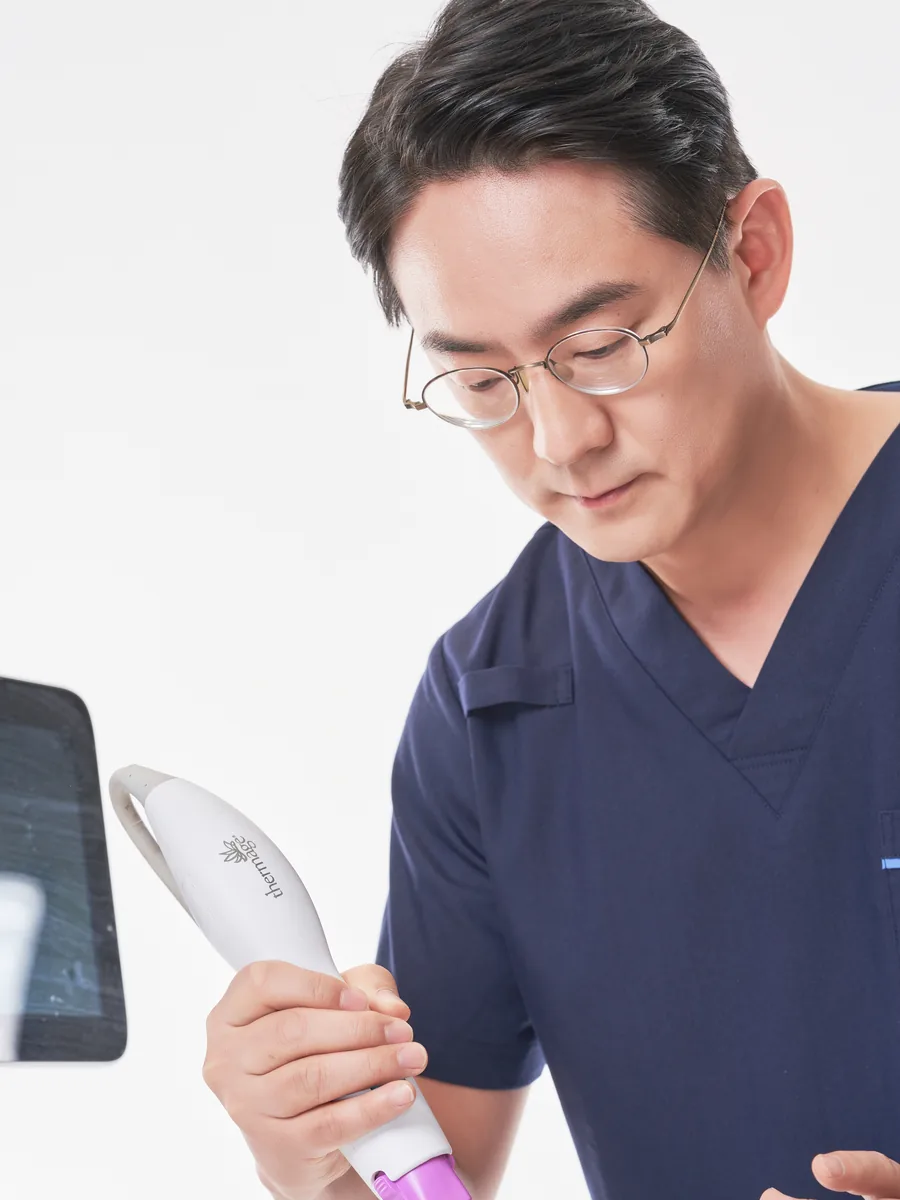
I'm Dr. Won Sin Lee, a board-certified dermatologist trained at Asan Medical Center in Seoul, and this question comes up in our clinic almost every week — usually from someone who has been treating the wrong thing for months.
Why "how to get rid of milia under eyes" starts with a diagnosis
Four different benign bumps appear on the face and look similar in a bathroom mirror: flat warts, milia, sebaceous hyperplasia and syringoma. They differ in cause and, more importantly, in the depth at which they sit — and depth decides treatment.
| Bump | Where it sits | How it tends to look |
|---|---|---|
| Flat warts | Epidermis (viral) | Slightly raised, flat-topped; can spread |
| Milia | Epidermis | White keratin lodged under the surface |
| Sebaceous hyperplasia | Upper dermis | Skin-toned with a yellowish, oily tinge |
| Syringoma | Lower dermis (sweat duct) | Slightly raised, shiny, skin-coloured |
Syringoma is the one most often mistaken for milia, and it is also the hardest to treat, because it reaches the lower dermis. Our warts and syringoma page notes that syringoma is hard to self-diagnose precisely because it resembles milia, recurs easily, and should be confirmed and treated by an experienced dermatologist.
So the honest first answer to how to get rid of milia under eyes is: confirm that it is milia. A bump treated on the wrong assumption is not just ineffective — it can leave a scar or a patch of pigmentation where there was only a small white dot.
In the consultation room we look at the lesion under magnification, in good light, and tell you which of the four it is before anything is planned.
Can I squeeze milia at home?
Technically, a milium is confined to the epidermis, so it can be extracted. That is different from saying it should be — and it is the reason this question needs a careful answer rather than a yes.
Anything sitting in the dermis cannot be squeezed out at all. Sebaceous hyperplasia and syringoma live below the surface, and forcing them can cause inflammation or post-inflammatory pigmentation that lasts far longer than the bump would have.
- The under-eye area is thin and unforgiving — pressure marks and bruising show easily here.
- A needle that is not sterile turns a cosmetic bump into an infection risk.
- If the bump is not milia, extraction does nothing except damage the surface.
- Pigmentation left behind after home extraction usually takes longer to treat than the original lesion.
My advice is simple: leave the under-eye area alone and have it looked at. It takes a few minutes to diagnose and removes the guesswork entirely.
Send a clear, well-lit photo of the bumps and we'll tell you what we think we're looking at before you come in.
Send a photo, get a read on itHow milia on the face are removed in a clinic
For all four of these bumps, the goal is the same: remove the structure itself without damaging the skin around it. That generally means a tissue-destructive laser such as CO2 or Erbium, used at the depth the lesion actually occupies.
Because flat warts and milia are the most superficial of the group, they are the most straightforward. Working under magnification, the lesion can usually be taken down low in one or two sessions — the skill is in stopping at the right depth rather than going deeper than the bump requires.
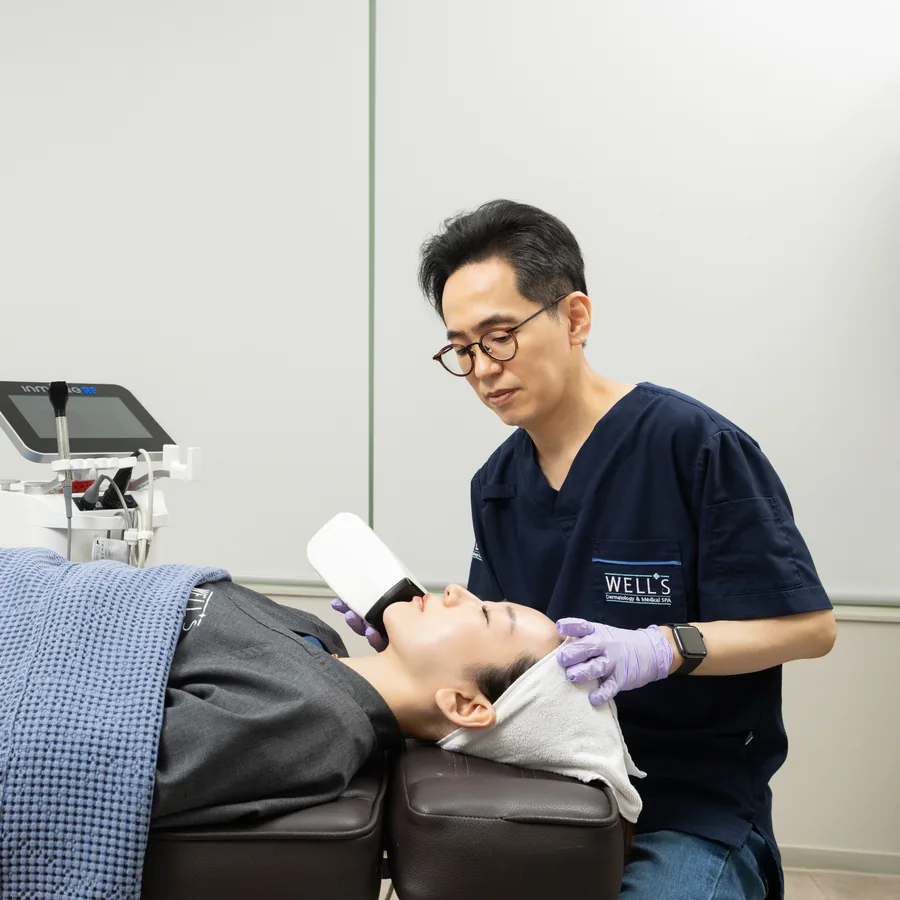
The deeper look-alikes need a different approach. Sebaceous hyperplasia sits in the upper dermis, and a single ordinary laser pass usually leaves the gland behind, so it comes back quickly. Syringoma sits lower still, and ablating it repeatedly from the surface with a CO2 laser is a reliable way to create a scar — which is why insulated radiofrequency microneedling, which spares the surface while delivering energy to deep tissue, is often the better option.
That is the whole argument for seeing a dermatologist rather than a device operator. At Wells, consultation, diagnosis and treatment are done by a board-certified dermatologist from start to finish, and the plan and the price are confirmed at the consultation before anything begins. You can read more on our skin conditions page.
What about pores, texture and tone in the same area?
People who ask how to remove milia on the face are often also unhappy with the skin around it — visible pores on the cheeks and nose, rough texture, uneven tone. These are separate problems with separate answers, and they should not be bundled into one aggressive session.
Enlarged pores
Pores do not close from the surface. Our approach to pore reduction uses Pico Fraxel to change the structure of the dermis so that pores tighten as elasticity returns, with Genius RF or Winergy added where the nose or cheeks need more. It spares the epidermis, which suits skin that reacts badly to heat.
An even, brighter tone
There is no treatment that changes the skin you were born with, and I would be cautious of anyone promising fair skin as an outcome. What can genuinely be improved is pigment that has been added — sun spots, melasma, marks left after inflammation — and that is what pigmentation treatment is for. Daily sun protection does more for under-eye skin than most products sold for it.
If you want texture and tone addressed in the same trip, say so early. The order matters, and some things are better done weeks apart than on the same afternoon.
What a visit to Wells in Apgujeong looks like
Most international patients start on WhatsApp. You send your concern, a photo if you have one, and your travel dates; you get a reply in English with what we think fits and which times are open. Consultations at the clinic are in English, so you can plan the whole visit without a translator.
At the clinic, a dermatologist examines the skin, confirms what the bumps are, and explains the plan and the price before anything starts. If you came in asking how to get rid of milia under eyes and the answer turns out to be syringoma or sebaceous hyperplasia, you will be told that plainly — including when the honest recommendation is to do nothing for now.
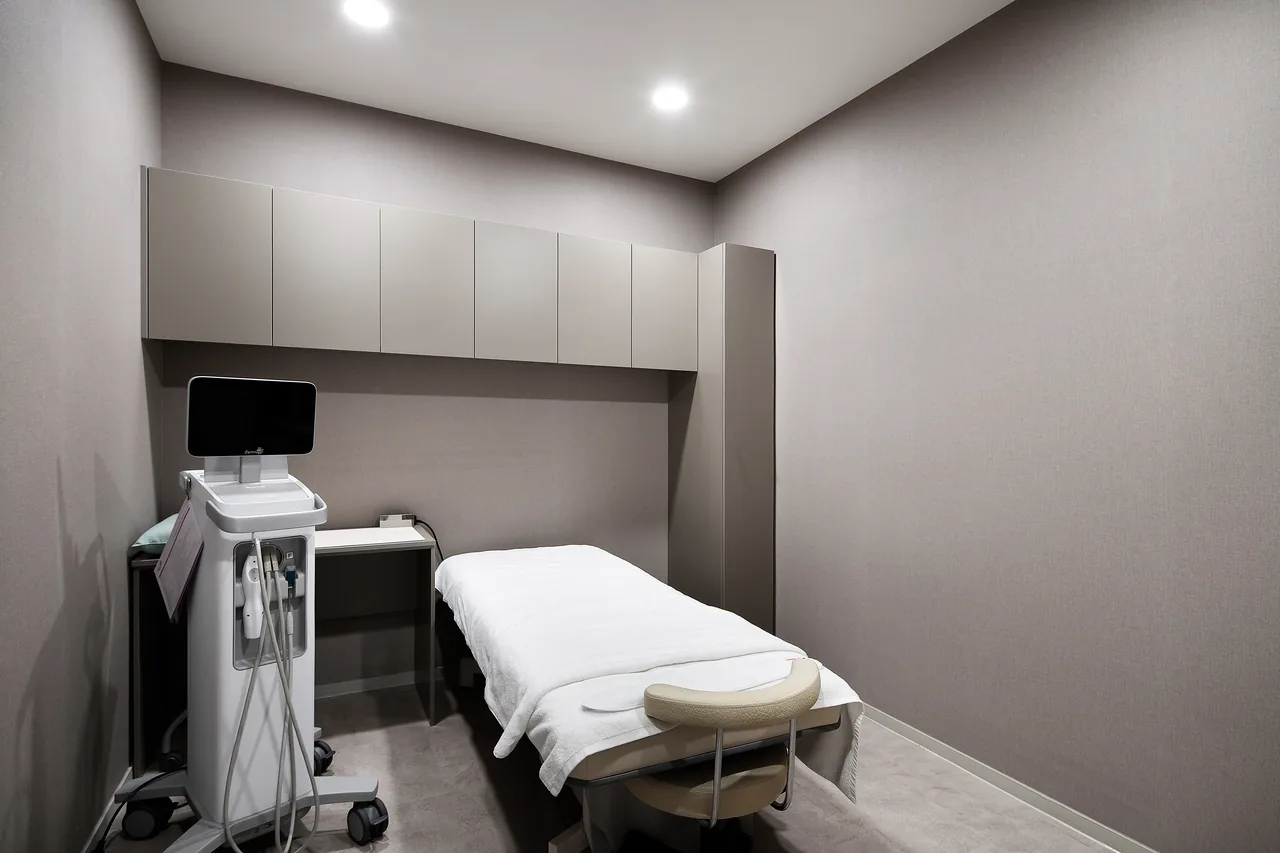
We are on the 8th floor of the Apgujeong Building, 842 Nonhyeon-ro, Gangnam-gu — about five minutes on foot from Apgujeong Station, Line 3, Exit 3. Hours are Monday to Friday 10:00–20:00 and Saturday 10:00–17:00, with lunch from 13:00 to 14:00, closed Sundays and Korean public holidays. Full directions are on the clinic and access page.
Tell us your dates and we'll fit the appointment around your trip, with aftercare instructions you can follow at home.
Message the clinic with your datesWhen to have a facial bump checked sooner
Milia are harmless. The reason I still want to see them is that a few things on the face are not, and the only way to separate them is to look properly.
- A bump that is growing, changing colour, bleeding or crusting.
- Flat, slightly raised bumps that are multiplying — flat warts are viral, and picking at them spreads the virus.
- A pigmented spot you are calling a mole that has changed in shape or border.
- Bumps that returned quickly after being treated somewhere else — usually a sign the depth was wrong.
Flat warts are often two to three times more numerous than you can see, which is why a dermatologist looks for the smallest ones as well. Moles with deep roots are another example: forcing one out in a single session can scar, so mole removal at Wells is staged two to three months apart and performed by dermatologists with twenty years of clinical experience.
For anything on the face, early and accurate beats fast and aggressive. That is the short version of everything above.
Not sure what those bumps actually are?
Send a clear photo and your travel dates on WhatsApp. A dermatologist will tell you what we think we're seeing, whether it needs treating, and how long it would take while you're in Seoul.
Message the clinic on WhatsAppReplies on WhatsApp · prices in KRW, VAT excludedBefore you message us
Are milia and syringoma the same thing?
No. Milia are trapped keratin in the epidermis. Syringoma comes from proliferation of sweat-gland ducts and reaches the lower dermis. They can look alike under the eyes, which is exactly why they are confused, but the depth is different and so is the treatment.
Can I get rid of milia under my eyes at home?
A milium is confined to the epidermis, so it can technically be extracted, but there is a real risk of infection and scarring — especially on thin under-eye skin. I recommend having it done at a dermatology clinic. Bumps that sit in the dermis cannot be extracted at home at all.
How many sessions does removal take?
Superficial lesions such as milia and flat warts can usually be treated low in one or two sessions while the dermatologist checks the lesion under magnification. Deeper lesions take longer and a different method. Your dermatologist confirms this at the consultation.
Do milia spread to other parts of my face?
Milia are not contagious and do not spread. Of the common facial bumps, only flat warts spread, because they are viral — they tend to recur slowly around the same area after a few months rather than all at once.
Will removal leave a mark under my eye?
Any procedure can have side effects, which is why depth and diagnosis matter so much. Treating a bump at the wrong depth — or repeatedly ablating a deep lesion from the surface — is what tends to leave scars or pigmentation. The dermatologist explains what to expect for your skin before you decide.
How do I book from overseas?
Message us on WhatsApp with your concern, a photo if you like, and your travel dates. You'll get a reply in English with a suggested plan and available appointment times before you fly.
Results and recovery vary by individual. Every treatment carries possible side effects, which are explained at the consultation. Prices are in Korean won, VAT excluded, and confirmed at your consultation. This article is general information from the clinic, not a diagnosis.
Dr. Won Sin Lee
- Board-certified dermatologist, Asan Medical Center, Seoul
- Residency & board certification in dermatology, Asan Medical Center
- Adjunct professor, Department of Dermatology, Asan Medical Center
- Former director, Bokji Dermatology Clinic, Korean Leprosy Welfare Association
- Commendation for Outstanding Public Health Doctor