Pico toning explained: how it works, who it suits, how WELLS plans it
What pico toning is, how it differs from laser toning and pico fraxel, who it suits, and how a dermatologist in Seoul plans the sessions.

What is pico toning? The short answer
Hello, I'm Dr. Hyo Seop Ryu, a board-certified dermatologist and chief director at WELLS Clinic in Apgujeong, Seoul. I hold an M.D., Ph.D., and I was a clinical instructor and then assistant professor of dermatology at Seoul National University Bundang Hospital. Patients often ask me about pico toning, usually after a friend's skin looked clearer and they want to know whether it would work for them.
Here is the direct answer. Pico toning is a low-energy laser treatment that fires pulses in picoseconds, a trillionth of a second, to break pigment into very fine particles with less heat to the surrounding skin. At WELLS it runs at 1064 nm and 755 nm, with pulses 1,000 times shorter than conventional laser toning.
It is used for melasma, age spots (lentigo), nevus of Ota and ABNOM, and as a gentle way to even out tone. What it is not is a one-visit eraser: it works over a series of sessions, and whether it suits you depends on what the pigment actually is.
How is a pico toning laser different from ordinary laser toning?
Conventional laser toning fires in nanoseconds, a billionth of a second, and works mainly through heat. A pico toning laser fires a thousand times faster and works mainly through a photomechanical effect: the pigment is shattered by an instantaneous shockwave rather than cooked.
The size of the fragments matters. I explain it to patients as gravel versus sand. Gravel-sized pigment is hard for the skin's immune cells (macrophages) to clear, while sand-sized fragments drain away through the lymphatic system much more readily.
| Laser toning (nanosecond) | Pico toning (picosecond) | |
|---|---|---|
| Pulse length | A billionth of a second | A trillionth of a second |
| How pigment breaks | Mainly heat (photothermal) | Mainly shockwave (photomechanical) |
| Fragment size | Gravel | Sand |
| Heat to surrounding skin | Relatively more | Less |
In practical terms, that tends to mean fewer sessions for the same pigment and less burning sensation during treatment. My colleague Dr. Won Woo Choi presented an analysis at the Korean Dermatological Association meeting showing combined pico laser melasma treatment worked more than 40% faster than conventional toning, at about 5–7 picosecond sessions compared with 10 conventional toning sessions.
Pico toning vs pico fraxel: same laser family, different job
People often search "pico fraxel" and "pico laser toning" as if they were the same thing. They use the same kind of picosecond laser, but the energy is delivered differently and the goal is different.
- Pico toning spreads low energy evenly across the face to break up pigment and brighten tone.
- Pico fraxel (what we call Fractional Picosecond Laser Treatment) focuses energy into tiny points inside the dermis to remodel texture, pores and shallow scars, while the surface stays intact.
The fractional mode creates laser-induced optical breakdown (LIOB) inside the dermis: tiny micro-cavities that prompt the skin to make new collagen and elastin. There is no oozing or wound dressing, and any redness usually clears in 3–4 days. If pores rather than pigment are your main worry, our pore reduction treatment is built around this pico fraxel laser.
Many faces need both, and that is a decision I make at consultation after looking at the skin, not from a menu.
What can pico laser toning treat, and who is it for?
Pico toning is a good fit when pigment is stubborn or has come back, and when gentleness matters more than speed. I tend to recommend it in these situations:
- Melasma, especially if conventional toning gave little benefit or caused darkening
- Age spots (lentigo) and uneven, dull tone
- Deeper pigment such as nevus of Ota and ABNOM, as part of a longer plan
- Patients who are sensitive to pain, since the shockwave produces less heat and burning
Melasma deserves a special note. It is not just pigment sitting in the skin; the skin environment itself has changed, often with a weakened barrier and dilated vessels. Strong settings used to clear melasma quickly can backfire, causing rebound darkening or pale white spots, which is why we keep pico toning gentle and consistent.
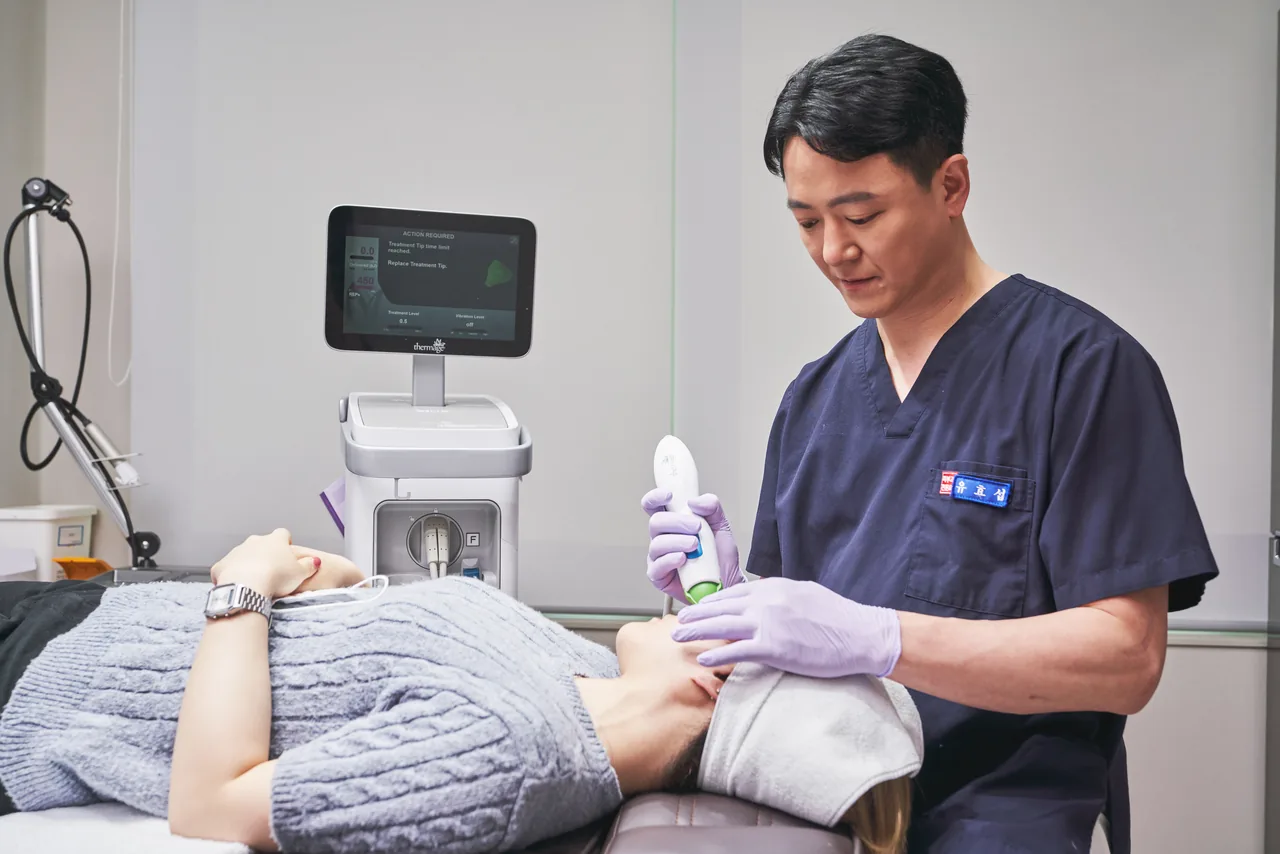
It is less suited to someone who expects one session to remove a large, dark spot. A raised or changing spot also needs to be examined before any laser touches it.
Not sure whether your pigment is melasma, age spots or something else? Send a clear photo in daylight and I will tell you what I see and how pico toning might fit.
Send a photo of your pigmentHow pico toning is done at WELLS in Seoul
Every plan starts with diagnosis. Pigment disorders are often a mix of melasma, freckles, nevus of Ota and post-inflammatory hyperpigmentation, and the wrong diagnosis can make melasma darker. So a dermatologist examines the type, depth and pattern of your pigment before choosing a wavelength.
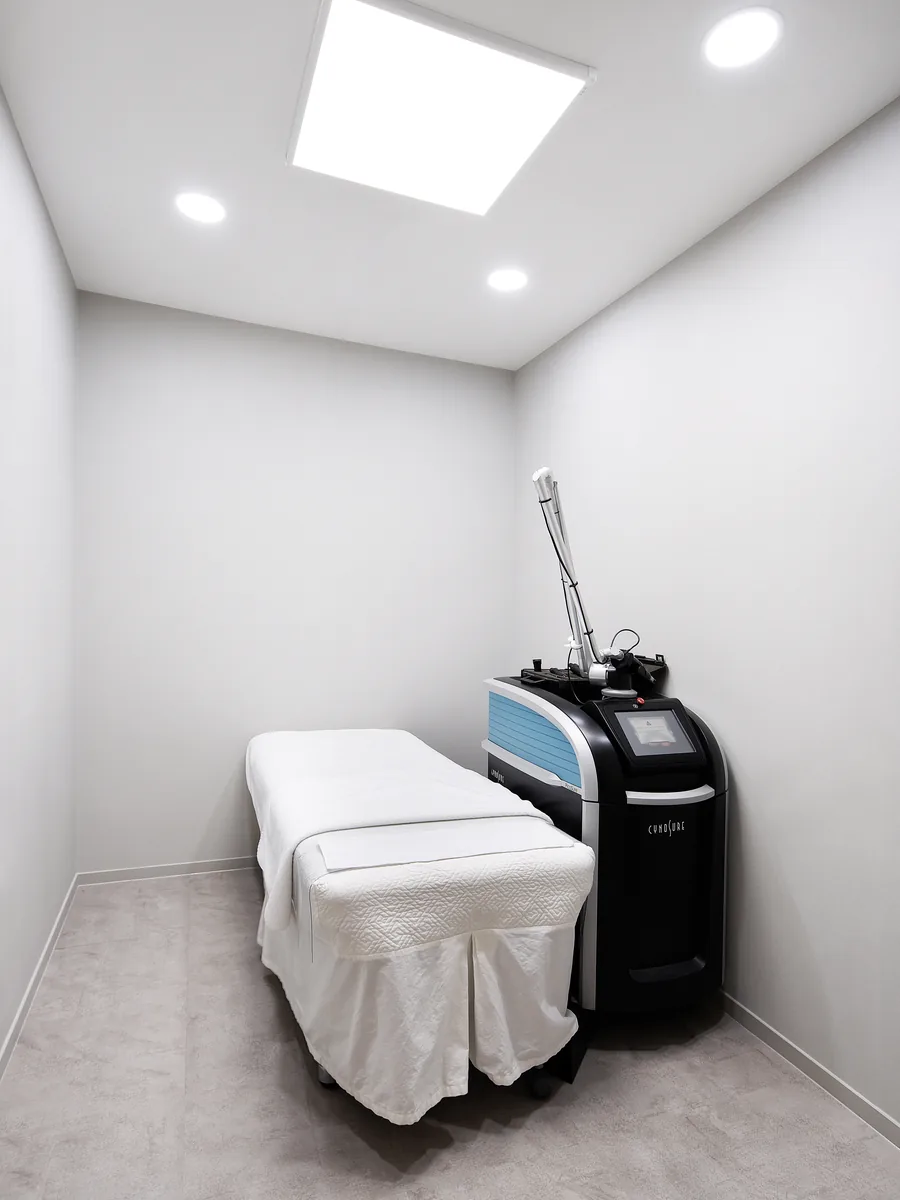
For most toning we work at 1064 nm and 755 nm. The 755 nm work is done with PicoSure Pro, which acts selectively on melanin, delivers over 40% more fluence than the original PicoSure, and is FDA and KFDA approved. You can read the treatment details on our pico toning for melasma and stubborn pigment page.
For melasma that keeps returning after toning, we often use MELA Triple Toning, a protocol developed at WELLS. It combines pico or Clarity toning, Potenza microneedle RF and a skin-brightening enzyme driven in with LDM ultrasound, and is listed at ₩770,000 (VAT excluded) per session.
The price of a standard pico toning course is confirmed at consultation, because it depends on the pigment and the number of sessions. You can see all options on our pigmentation and melasma treatments page.
How many pico toning sessions, and what is recovery like?
Pico toning is a series, not a single visit. The number of sessions and the interval between them are set by the dermatologist at consultation, based on your pigment type and how your skin responds.
Recovery is usually quiet. Because the surface is not wounded, most people generally return to daily life straight away, though skin can feel a little dry or sensitive for a few days. The rules that protect your result are simple:
- Sunscreen every day, even indoors or on cloudy days, reapplied every 2–3 hours when you are outside
- No peels, scrubs or other exfoliation for about a week
- Pause retinol and high-strength vitamin C for a while, as your dermatologist advises
- Skip saunas, jjimjilbang, alcohol and hard exercise in the first days, since heat can trigger flushing
Treated skin is temporarily more vulnerable to UV, and sun exposure is the most common reason pigment comes back. That is the part of the result that is in your hands.
Planning pico laser toning in Seoul around a trip to Korea
Patients flying in for a Korea pico laser plan usually ask how much they can fit into one stay. Because pico toning works over several sessions, we plan it around your dates: what can be started now, and what you continue at home or on a later visit.
The process is straightforward. You message us on WhatsApp with a photo and your travel dates, a dermatologist examines your skin at our Apgujeong clinic, and you leave with aftercare instructions and a way to reach us afterwards. Consultations are available in English, and you can read more about our team on the doctors page.
If you are comparing pico laser Seoul options more broadly, my pico laser Korea guide covers how to choose a clinic and time sessions around flights, and the laser toning Korea guide explains conventional toning in more detail.
Tell us your dates in Seoul and send a photo. We will reply with a suggested pico toning plan and available times.
Plan pico toning on WhatsAppSend a photo and your dates, and a dermatologist will plan your pico toning.
Tell us what bothers you most, whether melasma, spots or dull tone, and when you will be in Seoul. You will get a suggested plan, the price where it is listed, and available appointment times.
Message the clinic on WhatsAppReplies on WhatsApp · prices in KRW, excluding 10% VATBefore you message us
What is pico toning?
Pico toning is a low-energy laser treatment that fires pulses in picoseconds to shatter pigment into fine particles the body can clear. At WELLS it uses 1064 nm and 755 nm, with pulses 1,000 times shorter than conventional laser toning.
Is pico toning the same as pico fraxel?
No. Both use a picosecond laser, but pico toning spreads low energy evenly to treat pigment and tone, while pico fraxel (Fractional Picosecond Laser Treatment) focuses energy into the dermis to remodel pores, texture and shallow scars.
Does pico toning hurt?
Pain varies between people, but because the pigment is broken by a shockwave rather than heat, the burning sensation is generally milder than with conventional toning.
How much does pico toning cost at WELLS?
The price for a pico toning course is confirmed at consultation. MELA Triple Toning, our combined melasma protocol, is listed at ₩770,000 (VAT excluded) per session.
Can I fly home right after pico toning?
Pico toning has little visible downtime for most people, but tell us your flight dates on WhatsApp so the dermatologist can plan sessions and sun protection around them.
Results and recovery vary by individual. Every treatment carries possible side effects, which are explained at the consultation. Prices are in Korean won, excluding 10% VAT, and confirmed at your consultation. This article is general information from the clinic, not a diagnosis.
Dr. Hyo Seop Ryu
- Board-certified dermatologist, M.D., Ph.D.
- Clinical instructor, Department of Dermatology, Seoul National University Bundang Hospital
- Assistant professor, Seoul National University Bundang Hospital
- Visiting professor, Dubai Maris Clinic, through International St. Mary's Hospital
- Former chief director, Bundang Bon Dermatology Clinic