Age spots removal: diagnosis first, then the right laser for each spot
Why age spots removal starts with diagnosis, which lasers we use for lentigines at WELLS, how many sessions it takes and how to keep spots from returning.

Age spots removal: the short answer
Hello, I'm Dr. Hyo Seop Ryu, a board-certified dermatologist and chief director at WELLS Clinic in Apgujeong, Seoul. I hold an M.D., Ph.D., and I was a clinical instructor and then assistant professor of dermatology at Seoul National University Bundang Hospital. Patients often ask me about age spots removal, usually holding up a phone photo of one or two brown marks that seem to be getting darker.
The short answer is that most age spots can be treated well with laser or light, but the first step is confirming that the spot really is an age spot. Small, faint lentigines often clear in one or two focused sessions, while larger, deeper or stubborn ones are treated gradually over several sessions.
What changes the plan is what the spot is, how deep it sits, how big it is and where it is on the face. That is why I never quote a session count from a description alone.
What are age spots, and what else looks like them?
Age spots, which dermatologists call solar lentigines, are flat brown marks that form mainly from years of UV exposure. They are common on the cheeks, temples and backs of the hands, and once they appear they rarely fade on their own. Left alone, they tend to widen and darken over time.
The difficulty is that several different things look alike in a mirror:
- Freckles usually sit in the upper layer of skin, are lighter and have clear edges
- Melasma is a patchy, often symmetrical tan or grey-brown shadow driven by UV, hormones and changes in the skin environment
- Seborrheic keratoses are often grouped with "sun spots" but are slightly raised growths rather than flat pigment
- Moles can be flat or raised and some extend deep into the skin
White spots under eyes or white spots around eyes are a different question altogether. Those are often milia or syringomas, and syringoma in particular resembles milia, sits deep in the dermis and should be confirmed by a dermatologist before treatment.
Why diagnosis comes before any age spot laser
Pigment that looks the same can need opposite treatments. A lentigo usually responds to a focused, stronger approach, while melasma is made worse by exactly that. Strong settings on melasma can cause rebound darkening, pale white spots or a blotchy result that looks worse than before.
Many faces also carry a mix, for example age spots on top of a background of melasma. In that case the spots and the melasma are treated on different terms in the same plan, and getting the order right matters more than the device.

A spot that is raised, growing, bleeding or changing colour is examined first as a skin lesion, not treated as cosmetic pigment. If it turns out to be a mole, the plan, the mole removal cost and how we limit the risk of a mole removal scar are discussed separately; deeper moles at WELLS are treated in several sessions two to three months apart, as explained on our mole removal page.
Send a clear daylight photo of the spots that bother you. A dermatologist will tell you what they look like and what removal would involve.
Send a photo of your spotsAge spots removal options at WELLS
Once the spots are confirmed, we choose between light and picosecond laser according to depth, colour and skin type. These are the main tools we use for age spots removal in Seoul:
| Option | Best suited to | Notes |
|---|---|---|
| BBL (515 nm, strong cooling) | Light, superficial sun spots and freckles, including those IPL left behind | Skin typically clears by around day seven; price confirmed at consultation |
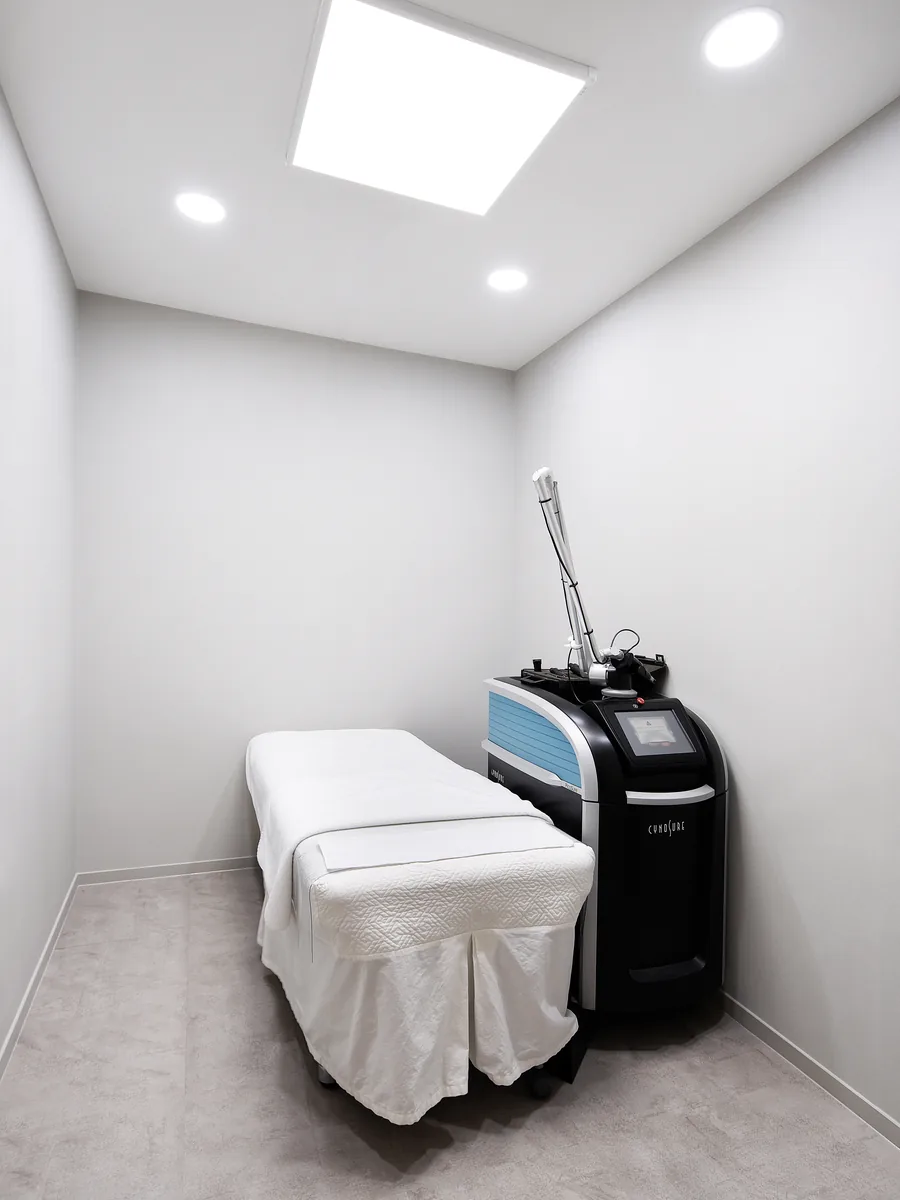
| PicoSure Pro (755 nm picosecond) | Defined brown spots that need focused, melanin-selective treatment | FDA and KFDA approved; price confirmed at consultation |
| Pico toning (1064 nm and 755 nm) | Age spots (lentigo) mixed with melasma or uneven tone | Low energy over a series of sessions; price confirmed at consultation |
| MELA Triple Toning | Sun spots and pigment that keeps coming back | ₩770,000 (VAT excluded) per session |
BBL for freckles and sun spots keeps the wavelength suited to pigment uniform from the first pulse to the last, and its cooling makes 515 nm safe for Asian skin, which carries melanin even in normal areas. It is a good choice if you want the result of two to three IPL sessions in one.
PicoSure Pro acts selectively on melanin at 755 nm, so the energy goes into the pigment rather than the surrounding tissue. Where spots sit on a background of melasma, I usually switch to gentle pico toning, which breaks pigment into finer particles with less heat.
How many sessions does it take to remove age spots?
It depends on the spot, and two people with similar-looking marks can need different plans. As a general guide from what we see in clinic:
- Small, faint lentigines often clear in 1–2 focused sessions
- Large spots (coin-sized or bigger) or spots on thin skin around the eyes are treated in stages, never forced off in one go, to avoid scarring
- Deep-rooted or stubborn lentigines usually need 5 or more divided sessions, with the mode adjusted as the pigment responds
The interval between sessions is set at consultation, because it depends on how deep the pigment is and how quickly your skin recovers. Too short and the skin is treated before it has healed; too long and new pigment can hide the progress.
Recovery after age spot treatment, and keeping spots away
After a focused treatment, fine crusts usually form over the spot and then fall off on their own as the area brightens. Do not pick the crusts; that is how marks and uneven colour are made.
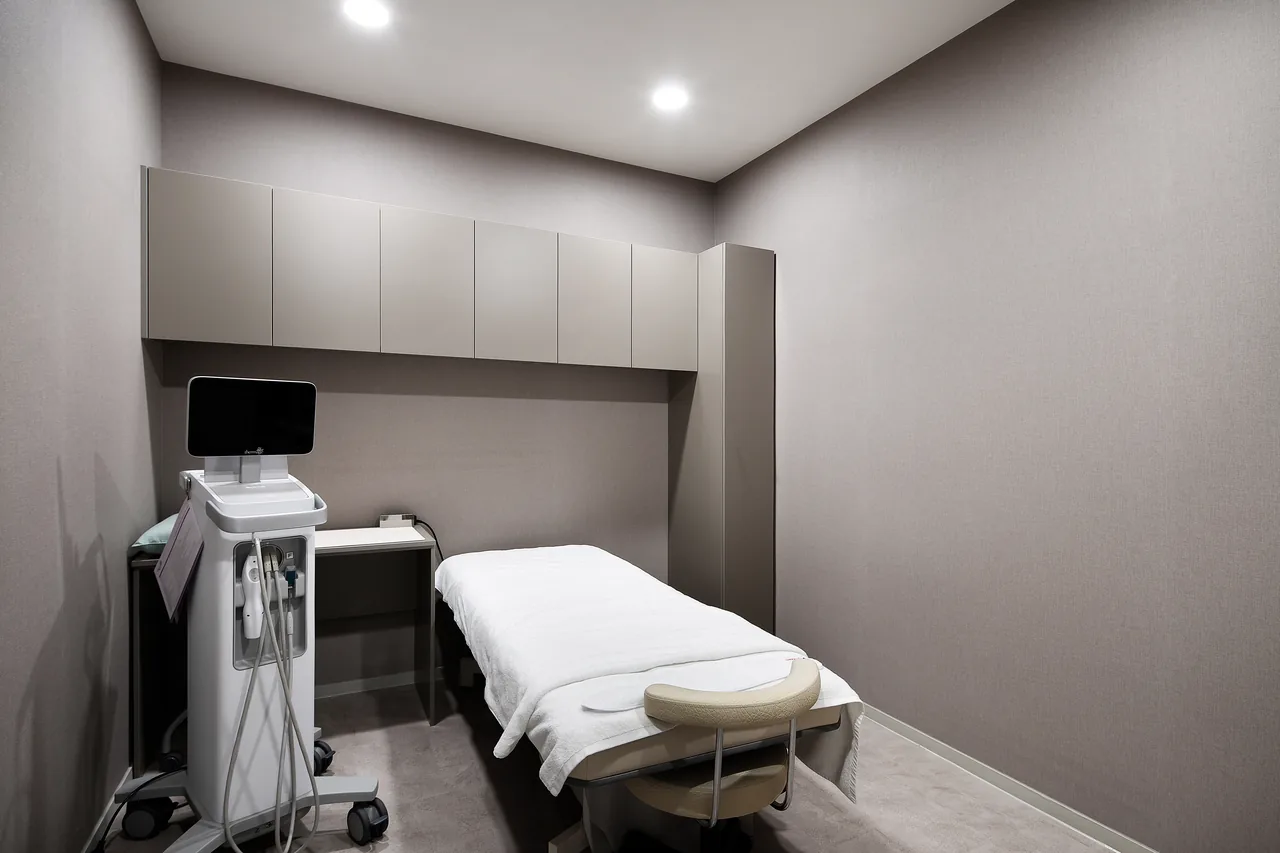
Skin can feel thin, red or dry for a short time afterwards. Pigment lasers do not actually make skin thinner; the barrier is briefly weaker while it recovers, and we often add soothing LDM ultrasound care right after the laser to settle redness and dryness.
- Use sunscreen every day; treated skin is more sensitive to UV, and sun exposure can leave new or darker pigment
- Avoid saunas, alcohol and anything that heats the face for the first few days
- Moisturise well and skip scrubs and peels until the skin has settled
Age spots form because of sun exposure, so new ones can appear over the years. Sun protection is what keeps the result looking clean.
Planning age spots removal on a trip to Seoul
If you are visiting Seoul, small spots that need one or two sessions are often easy to fit into a stay, while larger or stubborn spots may need a plan that continues on a later visit. We work this out from your photos and dates before you arrive.
You message us on WhatsApp, a dermatologist examines your skin in Apgujeong, and you leave with written aftercare and a way to reach us. You can read about our dermatologists on the doctors page and see every option on our pigmentation and melasma treatments page.
If you are not sure whether your marks are freckles or melasma, my freckles vs melasma guide explains the difference, and the Korean hyperpigmentation treatment guide covers mixed pigment in more depth.
Tell us your dates in Seoul and send a photo of your age spots. We will reply with a suggested plan and available appointment times.
Plan age spot treatment on WhatsAppSend a photo of your spots, and a dermatologist will tell you what they are and how to remove them.
Include a clear daylight photo and your dates in Seoul. You will get a likely diagnosis, a suggested plan, the price where it is listed, and available appointment times.
Message the clinic on WhatsAppReplies on WhatsApp · prices in KRW, excluding 10% VATBefore you message us
Can age spots be removed in one session?
Small, faint age spots often clear in one or two focused sessions. Large spots, spots around the eyes and stubborn lentigines are treated over several sessions to avoid scarring.
Is age spots removal the same as melasma treatment?
No. Age spots usually respond to focused treatment, while melasma needs gentle, repeated low-energy toning; strong settings can make melasma darker. That is why a dermatologist confirms the diagnosis first.
Will age spots fade with creams?
Once pigment has settled in the skin it rarely disappears on its own, and home care alone has limits for established spots. Daily sunscreen helps prevent new ones and protects treated skin.
How much does age spots removal cost at WELLS?
The price for BBL, PicoSure Pro and pico toning is confirmed at consultation, because it depends on the number and size of spots. MELA Triple Toning is listed at ₩770,000 (VAT excluded) per session.
Can age spots come back?
A treated spot can return and new spots can form with continued sun exposure. Daily sunscreen and avoiding heat on treated skin are the most important parts of keeping the result.
Results and recovery vary by individual. Every treatment carries possible side effects, which are explained at the consultation. Prices are in Korean won, excluding 10% VAT, and confirmed at your consultation. This article is general information from the clinic, not a diagnosis.
Dr. Hyo Seop Ryu
- Board-certified dermatologist, M.D., Ph.D.
- Clinical instructor, Department of Dermatology, Seoul National University Bundang Hospital
- Assistant professor, Seoul National University Bundang Hospital
- Visiting professor, Dubai Maris Clinic, through International St. Mary's Hospital
- Former chief director, Bundang Bon Dermatology Clinic