Can lasers darken pigment? Korean treatment for pigmentation
Korean treatment for pigmentation means matching a laser wavelength to the pigment's type and depth. It can still darken patches, leave pale spots or let melasma return, mostly through heat, sun and too many sessions.

What does Korean treatment for pigmentation actually involve?
The question I find hardest to answer in one line is whether a laser could make someone's pigment worse. It can, and knowing how it happens is more useful than any reassurance. Korean treatment for pigmentation, as done in a Seoul dermatology clinic, mostly means picosecond lasers and light devices matched to the type and depth of the pigment after a dermatologist has examined it.
When it disappoints, it usually does so in one of four ways: patches get darker, pale spots appear, melasma returns, or the skin stays irritated for longer than expected.
If you've spent weeks reading forum threads about pigmentation treatment in Korea, you've probably seen all four told as horror stories. Each one has a mechanism, and most of those mechanisms come down to heat, sun and timing.
A diagnosis, then a wavelength. Melasma, freckles, sun spots and pigmented birthmarks sit at different depths in the skin, so a dermatologist chooses the device and setting for each one rather than running one program on every face.
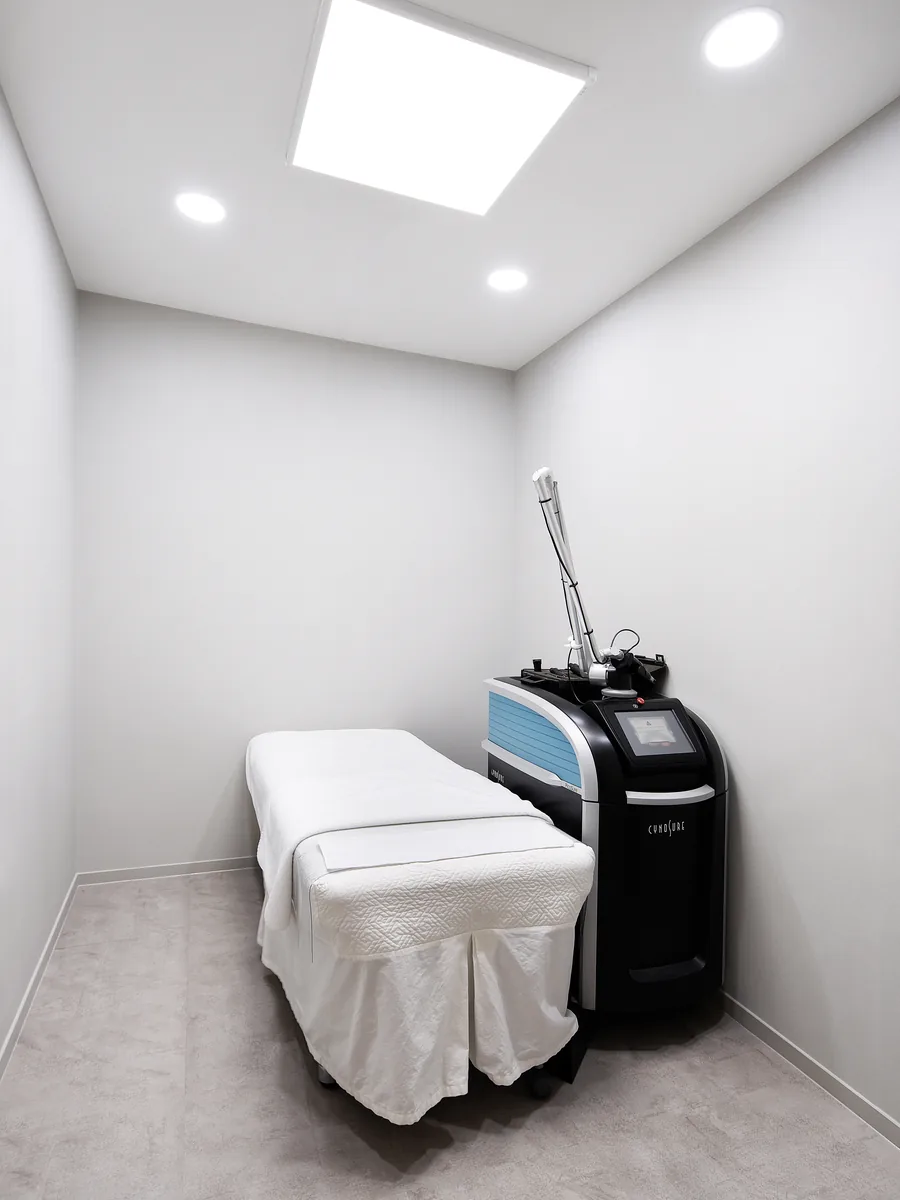
At WELLS in Apgujeong, the tools for this are pico toning at 1064 nm and 755 nm for melasma and stubborn pigment, PicoSure Pro at 755 nm (combined with 1064 nm and 532 nm for black, blue and red pigment at different depths), and BBL at 515 nm with strong cooling for freckles and sun spots. A 3D analysis is done before treatment.
If you want the diagnostic side in more detail, the post on diagnosing hyperpigmentation before choosing a laser covers it, and the pigmentation treatment pages list each device.
Why picosecond pulses matter for risk: the pulse is about 1,000 times shorter than conventional laser toning, so the pigment breaks into finer particles with less heat reaching the surrounding skin. Heat is the thread running through almost every complication below.
| What you notice | Usual cause | What changes next time |
|---|---|---|
| Patches darker than before | Inflammation from heat or irritation, often plus sun | Gentler settings, longer gaps, strict sun protection |
| Pale or white flecks | Too much cumulative laser energy | Fewer sessions, wider intervals, stop early |
| Melasma back after a few months | Melasma is a chronic tendency; sun and hormones restart it | Maintenance plan and sun habits, not more power |
| Redness that lingers | Irritated skin, or redness that was vascular all along | Pause, and check whether it is pigment at all |
"It got darker after the laser": rebound and post-inflammatory pigment
Darkening after any laser, including Korean treatment for pigmentation, usually comes from inflammation. When laser energy irritates the top layer of skin, pigment cells respond by making more melanin, and the patch can end up darker than where it started.

DermNet, the New Zealand dermatology reference, notes that peels, lasers and intense pulsed light can help surface pigmentation but can also aggravate it by injuring the epidermis, and that post-inflammatory pigmentation is more common, more intense and longer-lasting in darker skin.
Melasma is particularly reactive. A 2022 systematic review in Medicina on low-fluence Q-switched Nd:YAG toning found that rebound hyperpigmentation and mottled hypopigmentation were more frequent in Fitzpatrick skin types IV and V, and warned that even low-fluence toning, used aggressively, can trigger hyperpigmentation through unwanted inflammation.
The same logic is why WELLS treats congenital pigment with low-fluence picosecond pulses: repeated high-heat treatment can cause post-inflammatory hyperpigmentation or hypopigmentation. What tends to raise the risk for a visitor is predictable. A fresh tan, skin already irritated by strong acids or retinoids, and a beach day planned for the week after the session all push in the same direction.
If darkening does appear, it is usually temporary, but it fades slowly. The sensible response is to stop further laser sessions on that area, protect it from sun, and let the dermatologist look at it before anything else is done.
Why do pale, blotchy spots sometimes appear?
Pale flecks after toning, called mottled hypopigmentation, are linked mainly to too much cumulative laser energy. The 2022 Medicina review names excessive cumulative energy as the known risk factor, driven by high fluence, short treatment intervals and too many total sessions.
The authors call it the major concern because it can last a long time without treatment, and they advise stopping as soon as it develops.
This is the complication I take most seriously with melasma, because it is the one people can cause by being impatient. On a trip, the temptation is obvious: squeeze several sessions into a short stay to finish faster. Compressing the schedule is exactly the pattern the review describes.
If you have had laser toning before, at home or on an earlier trip, the number of sessions and how far apart they were matter as much as how your skin looks today. Bring that history, even if it's rough.
Send a clear photo and your travel dates, and we will tell you what fits the time you have in Seoul.
Send daylight photos of your pigment on WhatsAppMelasma that comes back is the most common disappointment
Melasma is a tendency of the skin, not a stain that is removed once. Expect a course of sessions, then maintenance, and expect sun exposure to be the thing that most often undoes the work.
The American Academy of Dermatology says sunlight makes the skin produce more pigment, which can darken existing melasma and cause new patches, and that melasma can last for years or even a lifetime. Sun protection is what helps keep it from returning. The Medicina review adds a less comfortable point: a few studies reported a high recurrence rate three months after toning stopped, and long-term follow-up data are thin.
The melasma and pico toning page describes the approach. What it can't tell you is how your own melasma will behave over a year, and neither can any single session.
Who should wait, or choose a different route?
Some skin is better left untreated for now. That includes recently tanned or sunburnt skin, skin that is actively inflamed, and melasma that started with pregnancy or a new medication, which the American Academy of Dermatology notes can fade on its own once the trigger is gone.
Other situations where waiting or a different plan is usually wiser:
- Your trip is mostly outdoors right after treatment. A week of beaches or hiking straight after a session is a common setup for darkening.
- The pigment may be deep or the diagnosis is unclear. DermNet notes that lasers, peels and intense pulsed light are not effective for pigment trapped deep in the dermis after inflammation, so the exam has to establish what kind of pigment it is first.
- You expect one session to clear melasma. It won't, and pushing the energy up to try is how pale spots and rebound happen.
- You are considering oral medication for melasma. The American Academy of Dermatology mentions oral tranexamic acid for resistant melasma and says anyone with a history of blood clots should tell their dermatologist first.
Other side effects include temporary redness, sensitivity and dryness after a session. How skin responds varies from person to person, and suitability is decided at the in-person exam.
Can Korean skincare products or a facial do the same job?
For mild, surface pigment, topical products help, slowly. They cannot tell you what kind of pigment you have, and that is where clinic treatment starts.
The American Academy of Dermatology lists gentler options such as azelaic acid, kojic acid and vitamin C, notes that hydroquinone is no longer sold without a prescription in the US, and says melasma treatment usually takes months to show results. Many Korean brightening products contain ingredients in this gentler family. A "glass skin" facial is aimed at hydration and glow on the surface, which can make skin look more even without changing deeper pigment.
One caution from the mechanism above: stacking strong exfoliating products on melasma to speed things up can irritate the skin and darken it. Some patches people read as pigment are actually redness from dilated vessels, which responds to a different kind of laser; the post on vascular lasers for redness and broken capillaries explains that difference.
Whatever you use now, bring the product names or photos of the labels to the consultation. It changes how fast and how strongly a dermatologist can reasonably treat.
Send a clear photo and your travel dates, and we will tell you what fits the time you have in Seoul.
Send daylight photos of your pigment on WhatsAppWhat lowers the risk on a short trip to Seoul?
For a Korean pigmentation treatment on a short trip, timing and sun matter more than the device. Autumn and winter usually make pigment treatment easier, because sun exposure is what most often darkens pigment again afterwards.
If summer is the only option, plan broad-spectrum SPF 30 or higher, a hat and shade, and tell the dermatologist your itinerary. A trip spent mostly outdoors may change which laser or setting is chosen.
BBL for freckles and sun spots tends to suit a short stay, since skin usually looks clear again around day seven. Melasma is different: one visit can be a first session and a plan, not a finished course.
WELLS Dermatology is a five-minute walk from Apgujeong Station (Line 3) Exit 3, open Monday to Friday 10:00 to 20:00 and Saturday 10:00 to 17:00, closed Sundays and public holidays. If you land on a Saturday evening, your first consultation is Monday, so count that day into your trip.
Before you book anything, send front and both side views of your face in daylight, without makeup or filters, plus close-ups of the patches, your travel dates, and a rough list of earlier laser sessions and the products you use now. Send them on WhatsApp. The dermatologist reviews them and can suggest options and timing, and the plan is confirmed only after the exam in Seoul. If you are also thinking about a skin booster on the same trip, see rejuran cost for how our Rejuran quotes work. If you are also considering a lifting treatment on the same trip, the guide to thermage cost shows the listed prices. If anti-wrinkle injection is also on your list, our korean anti-wrinkle injection brand guide explains which neuromodulators we use.
Plan your visit before you fly
Send a daylight photo, your travel dates and what you have tried before. A dermatologist will suggest where to start and what fits your stay.
Send daylight photos of your pigment on WhatsAppReplies on WhatsApp · prices in KRW, excluding 10% VATBefore you message us
Is pico toning safe for melasma?
Pico toning uses very short pulses that deliver less heat to surrounding skin, which matters because heat drives most melasma complications. Risks remain: rebound darkening and pale spots are reported with laser toning, especially with high cumulative energy and in darker skin. A dermatologist decides settings and spacing after examining your skin.
How many sessions does melasma treatment in Korea usually take?
Melasma is treated as a course, not a single visit. In Dr. Won Woo Choi's analysis presented at the Korean Dermatological Association meeting, about 5 to 7 picosecond sessions corresponded to 10 conventional laser-toning sessions. Your own number depends on the depth and type of pigment, and maintenance with sun protection follows.
Can I get pigmentation treatment in Seoul in summer?
Yes, but it takes more planning. Autumn and winter are usually easier because sun exposure is the most common reason pigment darkens again. In summer, use broad-spectrum SPF 30 or higher, a hat and shade, and tell the dermatologist your itinerary so the laser and settings can be chosen with it in mind.
Do Korean brightening products work on dark spots?
Gentle ingredients such as azelaic acid, kojic acid and vitamin C can help mild surface pigment over months. They do not identify what kind of pigment you have, and over-exfoliating to speed things up can irritate skin and darken melasma.
What should I do if my pigment gets darker after a laser session?
Stop further laser sessions on that area, protect it strictly from sun, and have a dermatologist look at it. Post-inflammatory darkening is usually temporary but can fade slowly, especially in darker skin.
Results and recovery vary by individual. Every treatment carries possible side effects, which are explained at the consultation. Prices are in Korean won, excluding 10% VAT, and confirmed at your consultation. This article is general information from the clinic, not a diagnosis.
Dr. Won Woo Choi
- Board-certified dermatologist in Korea; trained at Seoul National University Hospital
- Dermatology residency, Seoul National University Hospital; board certification in dermatology in Korea
- Ph.D. in Dermatology, Seoul National University
- Former clinical instructor, Seoul National University Hospital
- Adjunct professor, Department of Dermatology, Seoul National University Hospital