How many syringes for chin filler: one refines, two add length
Most chins take one syringe (usually 1 mL) to refine the tip and two to add visible length or projection. Above two, splitting the volume across two visits is usually the safer plan for a trip to Seoul.

Whether this treatment suits you needs a dermatologist to assess. Send a photo and your travel dates on WhatsApp, and we reply in English whether it can be arranged for your case and which days are open.
Ask us on WhatsApp
How many syringes for chin filler does a typical chin take?
“If one syringe isn't enough, can I add more after I've flown home?” That question usually comes up early for anyone working out how many syringes for chin filler they need, because the answer reshapes the whole trip.
Underneath it sits a plainer fear: flying all the way to Seoul, ending up with the wrong amount, and having nobody to ask once you're back.
Most chins take one syringe, usually 1 mL, to refine the tip, and two to add visible length or projection. A short or clearly receding chin can need more, and above two I would split the volume across two visits. What sets your number is how far your chin sits behind your lower lip in profile, and how thick the soft tissue over the bone is.
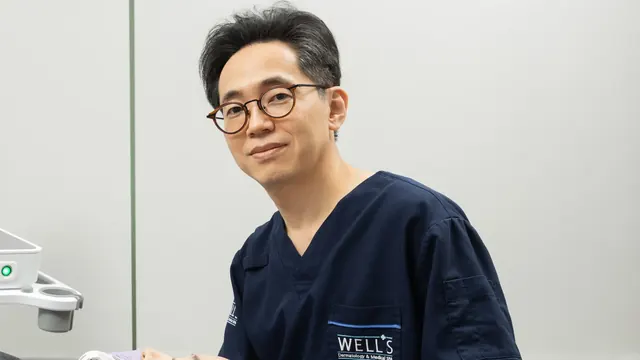
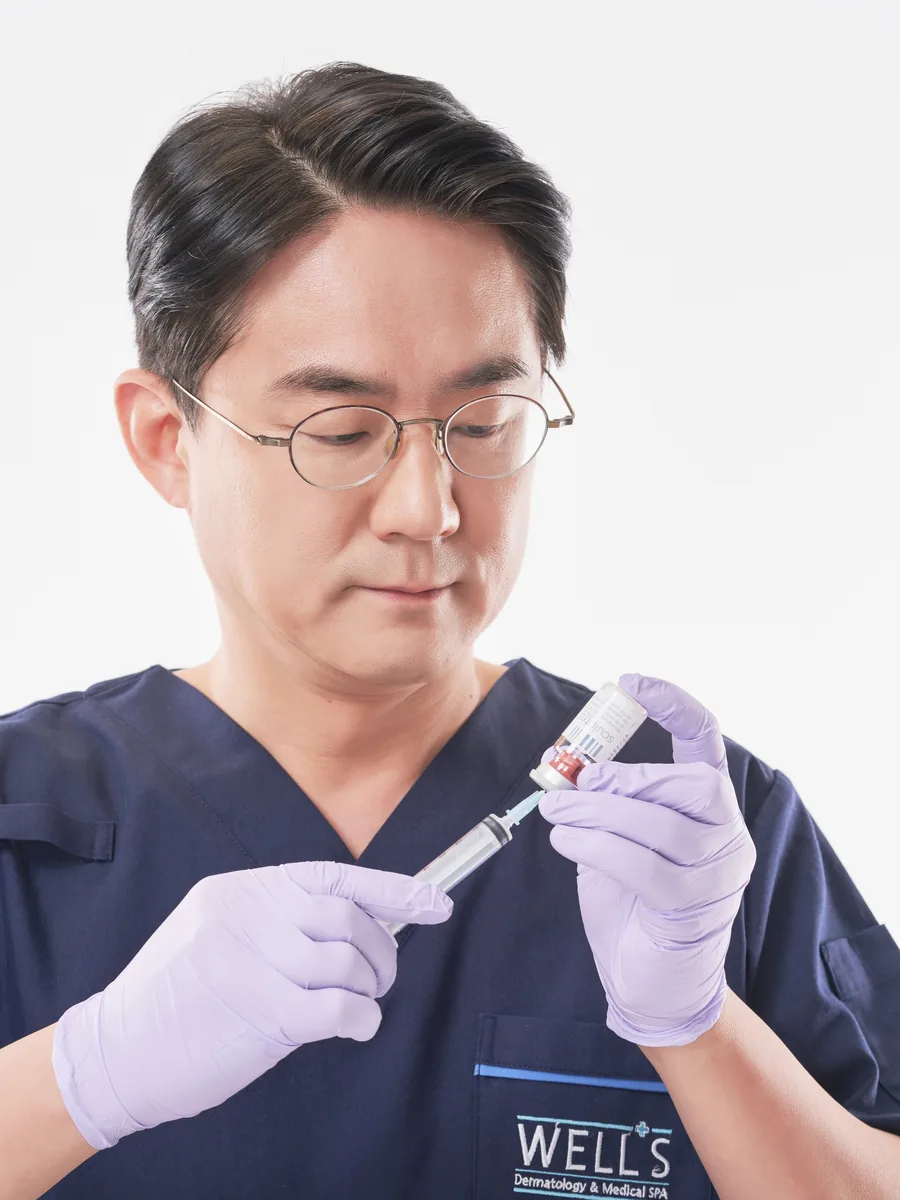
Hello, I'm Dr. Won Woo Choi, M.D., Ph.D., Medical Director of WELLS in Apgujeong, Seoul. I trained in dermatology at Seoul National University Hospital, where I'm now an adjunct professor, and I co-founded WELLS in 2008 with Dr. Won Sin Lee.
Three things matter for this particular question. A board-certified dermatologist handles your consultation, diagnosis and treatment. We confirm the product and the amount before anything is injected, so you know your syringe count before the needle goes in. Consultations are available in English, and if English isn't your first language, a medical interpreter for your language comes at no extra charge.
For a first message, one side-profile photo in daylight is enough: camera at chin height, lips relaxed, never shot from below. Send it on WhatsApp with your travel dates, and ask how many syringes a chin shaped like yours tends to need.
Send a clear photo and your travel dates, and we will tell you what fits the time you have in Seoul.
Send a side-profile photo and your dates on WhatsAppA syringe of hyaluronic acid filler usually holds 1 mL. That's about a fifth of a teaspoon, which sounds like almost nothing until it sits on the bone at the tip of the chin, where one or two millimeters of projection changes the whole profile.
As a general pattern, a chin that only needs the tip refined or brought slightly forward often takes one syringe. A chin that sits clearly behind the lower lip, or one that's short from lip to jawline, usually needs two before the change reads from across a room. Three or more is territory for a markedly receding chin, and that's where I start talking about two visits.
Soft tissue thickness is the part people don't expect. Thick tissue over the chin absorbs volume before it shows, so the same 1 mL looks smaller. Thin skin shows every contour, so filler there is better placed in smaller amounts with the outline checked as you go.
We do a 3D analysis before treatment, and for a chin that matters, because the result is judged from the side and from below, angles a bathroom mirror rarely shows you. For the wider picture of what the chin can and can't be reshaped into, see what chin filler can reshape and how a dermatologist plans it.
Worried about your own case? Let a dermatologist look first: send a photo and your dates, and we reply whether it can be arranged.
Ask us on WhatsAppChin filler: how many syringes in one visit before you should stop?
For most chins, two syringes in one sitting is where I would draw the line. The tissue over the chin stretches gradually. A large volume placed at once puts pressure on it, makes the swelling harder to read, and leaves you unsure whether the shape is right until days later.
Too much projection also tends to make the lower face look longer and heavier. Overfilled cheeks fail for much the same reason, and what goes wrong with cheek fillers shows the pattern clearly.
Say you're 33, living in Singapore, with five days in Seoul in March. In profile your chin sits a few millimeters behind your lower lip, and the photos suggest you'd need more than two syringes in total. I would place up to two on this trip, let the result settle over the following weeks, and decide on the rest at a second visit, once you've lived with the new profile. If the first round already looks right, you've saved yourself a syringe.
How do the days in Seoul fit around one or two syringes?
The injection itself fits into a single appointment. The trip planning is really about swelling: most of it settles within about a week, and a bruise, if you get one, can take a little longer to fade.
So put the chin early in your trip. That way the swelling comes down while you're still in Seoul, and if anything looks uneven you're still close enough to walk in, so ask at booking whether a recheck fits before your flight. We're open Monday to Friday 10:00–20:00 and Saturday 10:00–17:00, with lunch from 13:00 to 14:00, and closed on Sundays and Korean public holidays. If you land on a Sunday, your first appointment is Monday at the earliest.
For the first day, the usual advice is to skip alcohol, saunas and hard workouts, and not to press or massage the chin. Fish oil, vitamin E and ginkgo supplements make bruising more likely. If you take aspirin or another blood thinner for a medical reason, don't stop it on your own; ask the doctor who prescribed it.
Flying with fresh hyaluronic acid filler is generally not a problem. I would still leave at least one full day between the injection and a long-haul flight, so any early tenderness or unevenness shows up while you can still see us. If you want to see how a filler visit runs from first message to appointment, how a filler visit works in Seoul walks through it.
Bruising, lumps and a rare vessel problem: what to watch once you're home
The common reactions are temporary: swelling for about a week, tenderness when you chew or touch the chin, a small bruise at an entry point, and a firm feel that softens over the next few weeks. How strongly each shows up differs from person to person, which is why the plan leaves room before the flight.
Asymmetry and swelling: what to watch for
Less common is a small lump or a slight asymmetry, usually noticed once the swelling is gone. Hyaluronic acid can be reshaped or dissolved with an enzyme called hyaluronidase, which most dermatologists anywhere can use.
Risks and risk: what to watch for
Rare but serious is filler entering or pressing on a blood vessel; the US FDA lists this among the risks of dermal fillers. Our dermatologists, who have over fifteen years of filler experience, inject with a cannula where possible, which lowers the risk of vessel damage compared with a standard needle. The warning signs are skin turning white, gray or blotchy, and pain far stronger than ordinary tenderness, usually soon after the injection.
It makes sense to wait if you have:
- an active pimple, infection or cold sore on or near the chin
- a pregnancy, or you're breastfeeding
- a known allergy to hyaluronic acid filler or lidocaine
- a past reaction to any filler
- an infected tooth or dental work planned in the lower jaw in the coming weeks
Before you leave Seoul, photograph the product label and note how much went where. If a lump or unevenness appears at home, you can message us on WhatsApp. If you see color change or severe pain, go to an emergency department or a dermatologist the same day and show them the product name; don't wait for a reply from Seoul.
If you've had chin filler before, add the product name and roughly when it was done to your WhatsApp message, along with the date of your flight home. Older filler still in the chin changes how much new volume it can take.
Send a clear photo and your travel dates, and we will tell you what fits the time you have in Seoul.
Send a side-profile photo and your dates on WhatsAppWhat the syringe count does to the cost
If the real question behind how many syringes for chin filler is what you'll spend, the count is the biggest single factor. A few others move the figure too:
- The product. Firmer fillers built for projection on bone differ from softer ones used for lips or fine lines.
- Other areas in the same visit. The jawline, lips, or a muscle-relaxing injection for a dimpled, tense chin each add to the plan.
- One visit or two. Splitting the volume means two appointments, and two trips if you live abroad.
The dermatologist confirms your plan and the final price at the consultation, before anything starts. Ask on WhatsApp what one or two syringes would cost for your case, and in the same message ask how the deposit and payment work, since that is settled after the consultation as well.
What should you ask any clinic before the first syringe?
In short, it doesn't have to be us. Wherever you book, these questions protect you more than any photo gallery:
- How many syringes are you planning, of which product, and can I see the sealed box?
- Is it hyaluronic acid, so it can be dissolved if needed?
- Who examines me, and is that the same doctor who injects?
- Needle or cannula for the chin, and why?
- If a lump or asymmetry appears after I fly home, what do I do and whom do I contact?
- Is an interpreter available for my language during the consultation?
Where I stand on chin volume
A chin that looks weak can have different causes: a short bone, a strong chin muscle that pulls and dimples the skin, or soft tissue that has thinned. Things that look alike can need different treatments, so the diagnosis comes before the syringe count. If what bothers you is the skin over the chin rather than its shape, filler is the wrong tool, and a skin booster plan is the conversation to have instead.
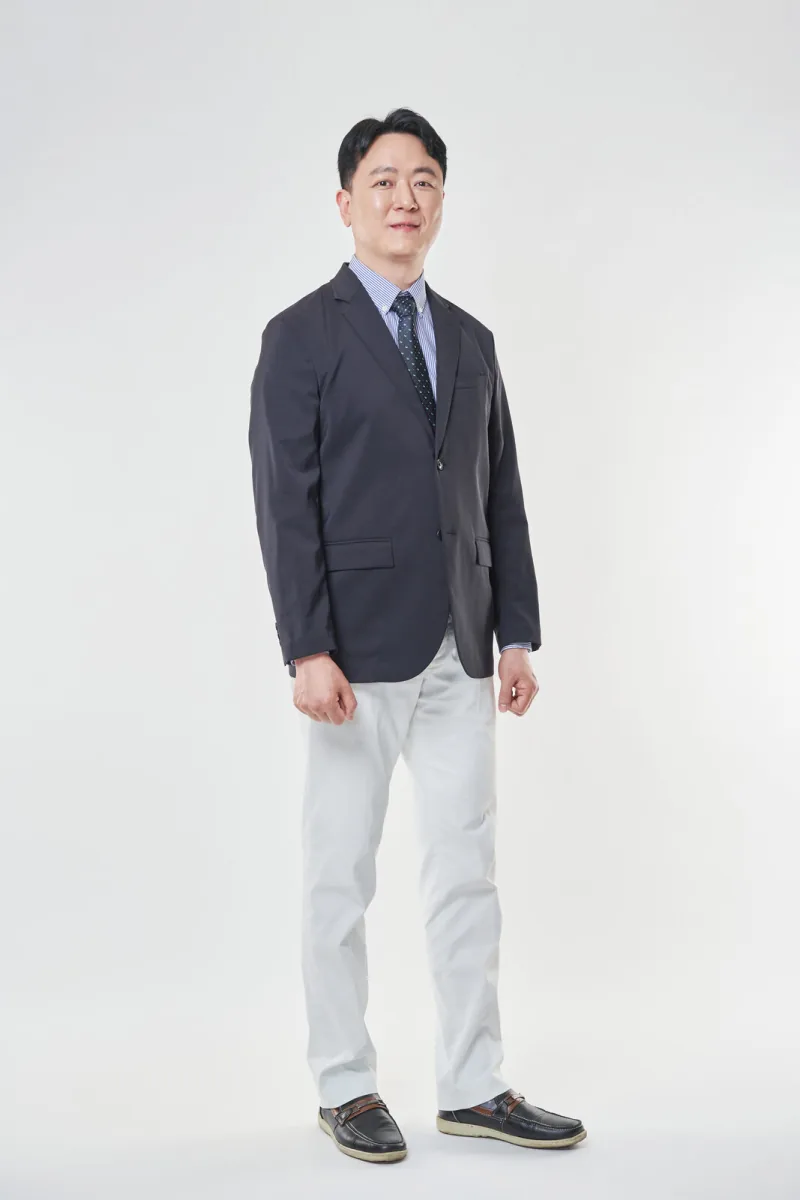
I would rather stage a chin than rush it. You don't need to settle the number before you book a flight; the shape of your chin settles it.
Send your travel dates on WhatsApp and ask whether your chin looks like a one-visit plan or a two-trip plan. You'll get a suggested plan and appointment time before you travel. When you're here, the final number comes down to how much tissue covers the bone and where your lower lip sits when you're relaxed. WELLS is at 8F Apgujeong B/D, 842 Nonhyeon-ro, Gangnam-gu, Seoul, a five-minute walk from Exit 3 of Apgujeong Station (Line 3).
— Dr. Won Woo Choi, Medical Director · M.D., Ph.D.
Plan your visit before you fly
Send a daylight photo, your travel dates and what you have tried before. A dermatologist will suggest where to start and what fits your stay.
Send a side-profile photo and your dates on WhatsAppReplies on WhatsApp · prices in KRW, including 10% VATBefore you message us
Can chin filler be dissolved if I don't like it once I'm home?
If it's hyaluronic acid, yes. A doctor can dissolve it with hyaluronidase, an enzyme dermatologists use widely. Keep the product name and the amount used so the doctor at home knows what they're treating.
Is half a syringe enough for a chin?
For a very small tip refinement, part of a syringe can be enough. An opened syringe shouldn't be saved for another day, though, so if a second visit is likely, it's usually planned as a fresh syringe.
How long does hyaluronic acid chin filler last?
Commonly somewhere around a year, sometimes longer. The product, how much was placed and your own metabolism set the span, and filler on bone at the chin tends to fade gradually rather than all at once.
Can I fly the same day as my chin filler?
Flying is generally not a problem for hyaluronic acid filler, but a same-day flight leaves no time to have anything looked at. A gap of at least one full day before a long-haul flight is the more comfortable plan.
Can chin filler be combined with other treatments on the same trip?
Yes, it's often paired with jawline filler or a muscle-relaxing injection when the chin muscle is tense and dimpled. Each extra area adds swelling, so put the combination early in your stay.
Results and recovery vary by individual. Every treatment carries possible side effects, which are explained at the consultation. Prices are in Korean won, including 10% VAT, and confirmed at your consultation. This article is general information from the clinic, not a diagnosis.
See the treatment in detail, or ask us
You can ask whether it suits your case, which dates are open, and about language support.
Message us on WhatsAppDr. Won Woo Choi
- Board-certified dermatologist in Korea; trained at Seoul National University Hospital
- Dermatology residency, Seoul National University Hospital; board certification in dermatology in Korea
- Ph.D. in Dermatology, Seoul National University
- Former clinical instructor, Seoul National University Hospital
- Adjunct professor, Department of Dermatology, Seoul National University Hospital
Medically reviewed by Dr. Won Woo Choi
Full profile