Ultherapy and Sculptra in One Visit: Why Each Layer Gets Its Own Treatment
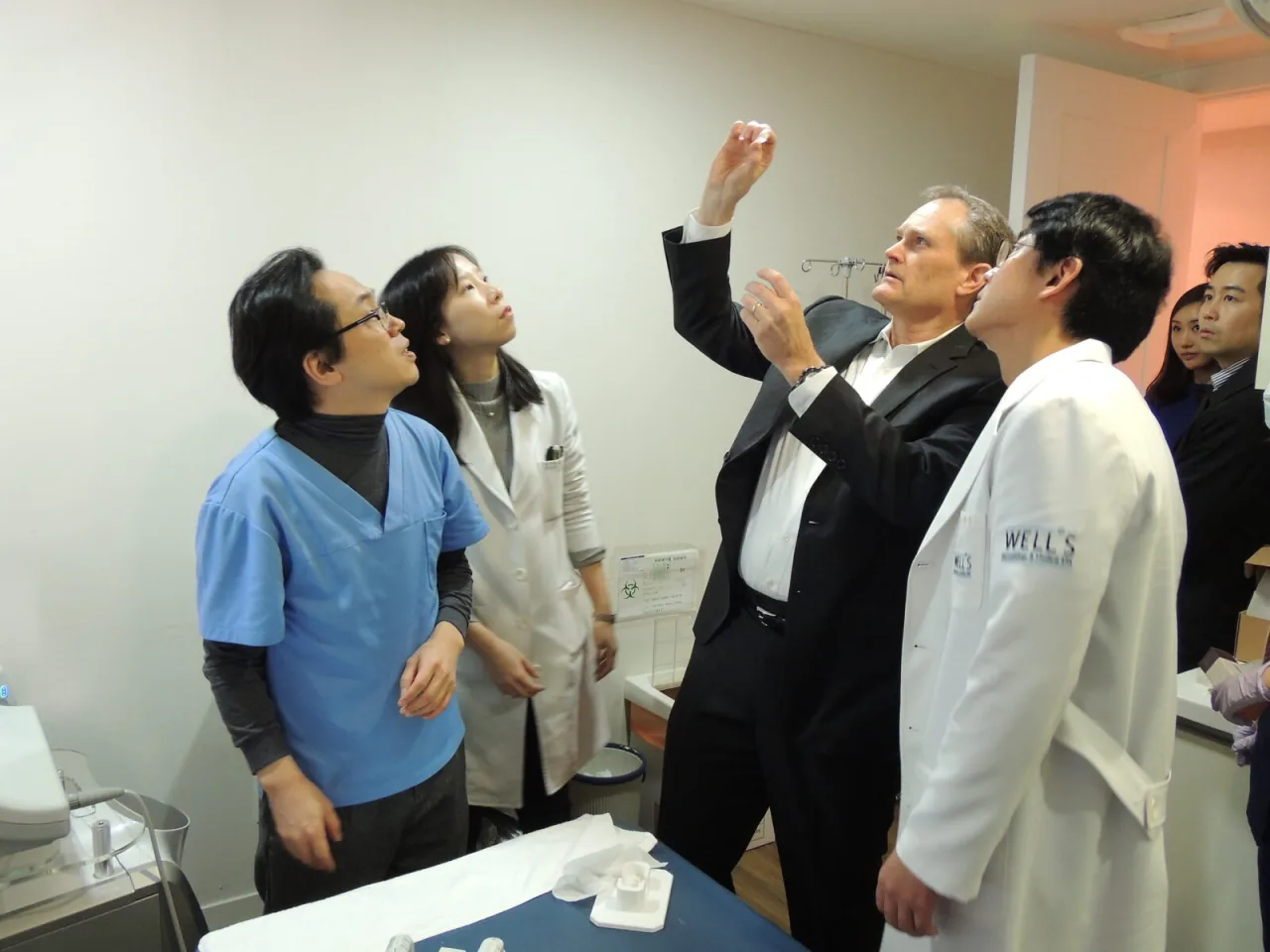
A full combination lifting session on camera: Sculptra for the ligaments, Ultherapy for the SMAS, Onda for the jawline, and how pain is handled without sleep sedation.

Why combine Ultherapy and Sculptra at all?
Hello, I'm Dr. Won Sin Lee, a board-certified dermatologist and Chief Director at WELLS Clinic in Apgujeong, Seoul. I trained at Asan Medical Center in Seoul, where I am an adjunct professor of dermatology. In my YouTube video from October 2026 above, I perform a full combination lifting session on camera, and many visitors ask me afterwards why I used Ultherapy and Sculptra together rather than just one.
My short answer: Ultherapy and Sculptra work on different layers, so together they cover what neither can do alone. In the video the goal was softer nasolabial folds and a tidier lower face, and I used three treatments for it: Sculptra for the ligaments, Ultherapy for the SMAS over the cheekbone, and Onda for the jawline.
Below I walk through why the face sags in the first place, what each treatment contributes, how I keep the session comfortable without sleep sedation, and when you can expect to see a change.
Why does the face sag? Think of a building frame
The face has three broad layers: skin, the muscles beneath it, and bone. Between skin and muscle sits the SMAS, a fascia layer that passes the movement of expression muscles smoothly to the skin. Retaining ligaments anchor the muscles firmly to bone.
When these structures stay tight and work together, the skin looks firm. With age, skin elasticity drops first, but the SMAS and ligaments are largely made of collagen too, and they weaken over time. The inner structure loosens and the face slides downward.
I compare it to a building. You raise a steel frame and then finish the walls around it. If the frame weakens, the whole building wobbles, however good the walls look. Lifting that lasts has to strengthen the frame, not just the surface.
What does each treatment do in the combination?
Sculptra (ligament lifting). Sculptra is usually used for volume in hollow cheeks or temples. Here the aim is different: I inject it where the retaining ligaments and SMAS meet, mostly along the outer line of the face and inside the temple hairline. It stimulates collagen there and strengthens the frame from inside. At WELLS this is our Sculptra Lifting, ₩1,320,000 (VAT excluded).
Ultherapy (SMAS). Ultherapy Prime tightens the fascia between skin and muscle. In the video I focus it just above the nasolabial fold, where the cheek bulges slightly, and over the cheekbone, where facial muscles attach firmly. Tightening there helps the fold settle.
Onda (fat layer). Onda MAX concentrates energy in the fat layer and the dermis just above it. I use it only along the lower face to tidy small pockets of fat that make the jawline look uneven. The overall lift comes from the upper treatments, so the lower face only needs shaping.
Where it helps, I add a fine skin smoothing injection along the jawline. The neck muscles there pull the face downward; relaxing that pull lets the upward support from Ultherapy and Sculptra hold better.
Sculptra Lifting
- What it is
- Sculptra placed along the face's support structure (temples, upper face and the ligament line) instead of filling the area that sags.
- How it works
- Sculptra stimulates collagen where the retaining ligaments and SMAS meet, strengthening the 'frame' that holds the face up. In the video it is combined with Ultherapy Prime and Onda MAX, each working on a different layer.
- Sessions
- One session per course; the combination and energy levels are set at consultation.
- Recovery
- Little to no downtime; swelling at injection points is possible. Done under local nerve block, without sleep sedation.
- Price
- Sculptra Lifting ₩1,320,000 (VAT excluded); Ultherapy Prime and Onda MAX are planned and priced at consultation
Why patients fly in for it
- Dr. Choi, Dr. Lee and Dr. Ryu completed Handok's Sculptra hands-on training, and every vial is genuine.
- A Merz Ultherapy Golden Record Award clinic using genuine Ultherapy Prime tips.
- No deep sedation: local nerve block and, if you wish, Air NOX while you stay awake.
Not sure which lifting combination fits your face? Send a photo and your travel dates on WhatsApp and we'll suggest a plan.
Message on WhatsAppDoes Ultherapy and Sculptra in one session hurt?
Ultherapy has a reputation for hurting, and it can. It reaches deep tissue, close to where many nerves and blood vessels run, so the sensation is stronger than surface treatments. That is why many people ask for sleep sedation.
I don't use it. Serious complications from sedation are rare, but when they happen they can be life-threatening, and a cosmetic treatment should put safety first. Instead I give small local anesthetic injections where the main nerves run, a nerve block. Most of the sensation is gone, and in the video the patient stays awake and comfortable throughout. If you are anxious, Air NOX can calm you while you stay conscious.
Sculptra injections sting briefly as the product goes in. For more on why we avoid sedation, see our earlier video on Ultherapy pain.
When do results appear, and how long do they last?
Right after the session the line already looks tighter. That is not the real result: some tissue contracts from the stimulation, and Sculptra, which goes in as a liquid, gives temporary volume. The real change comes as new collagen forms, from about one month onward, and continues over the following months.
On average the effect has been observed to last about a year or more, though it varies with age, skin thickness and how quickly your tissue ages. For thinner skin or patients past their fifties, I often suggest repeating about every eight months. Because the treatments don't cause much tissue damage, there is little downtime afterwards.
A good pattern is to build a strong result once, then maintain it with a lighter session in between, such as Onda or another gentle lifting treatment.
Is the same combination right for everyone?
No. Ultherapy and Sculptra on the nasolabial area suit most people, but the lower face differs. Someone with more fat may need more Onda; someone whose main problem is thin, loose skin may skip Onda and need more Ultherapy instead. Choosing a treatment because it worked for a friend often leads to a poor fit.
Splitting the work between treatments, each doing only what it does best, usually gives a better result for the cost than pushing one device harder. Send a photo and your travel dates on WhatsApp; we reply in English, and a dermatologist confirms the plan at consultation. For how Ultherapy compares with RF lifting, see Thermage vs Ultherapy. Results vary from person to person.
Want Dr. Choi to look at your skin?
Send a photo and your travel dates on WhatsApp. We reply in English.
Message on WhatsAppQuestions about this video
Can you get Ultherapy and Sculptra on the same day?
Yes. In the video Dr. Lee does Ultherapy first, then Sculptra ligament lifting, then Onda on the jawline, all in one visit. The combination is set at consultation.
Why combine Ultherapy and Sculptra instead of doing more of one?
They work on different layers: Ultherapy tightens the SMAS, while Sculptra builds collagen where the ligaments hold the face up. Each covers what the other can't.
Do I need sleep sedation for Ultherapy?
Not at WELLS. A local nerve block removes most of the sensation while you stay awake, and Air NOX is available if you're anxious.
How long does a combination lift last?
On average about a year or more, varying with age and skin thickness. Thinner or older skin may benefit from repeating about every eight months.
This article explains general medical information from the video. It is not a diagnosis; results vary by person and are decided in consultation.