Does chin filler hurt? Briefly, but plan for the sore days
Chin filler usually feels like a few minutes of deep pressure and brief stinging, eased by numbing cream and the anesthetic in many fillers. The chin stays tender for about two to four days; pain that worsens instead of easing needs a doctor the same day.

Whether this treatment suits you needs a dermatologist to assess. Send a photo and your travel dates on WhatsApp, and we reply in English whether it can be arranged for your case and which days are open.
Ask us on WhatsApp
Does chin filler hurt during the injection?
Does chin filler hurt enough to spoil a short trip to Seoul, or are the days afterward the part you should really plan around?
For most people the injection is a few minutes of deep pressure and brief stinging, softened by numbing cream and the local anesthetic that many hyaluronic acid fillers already contain. The chin then stays tender for about two to four days. Pain that gets worse instead of easing is the one kind that needs a doctor the same day.
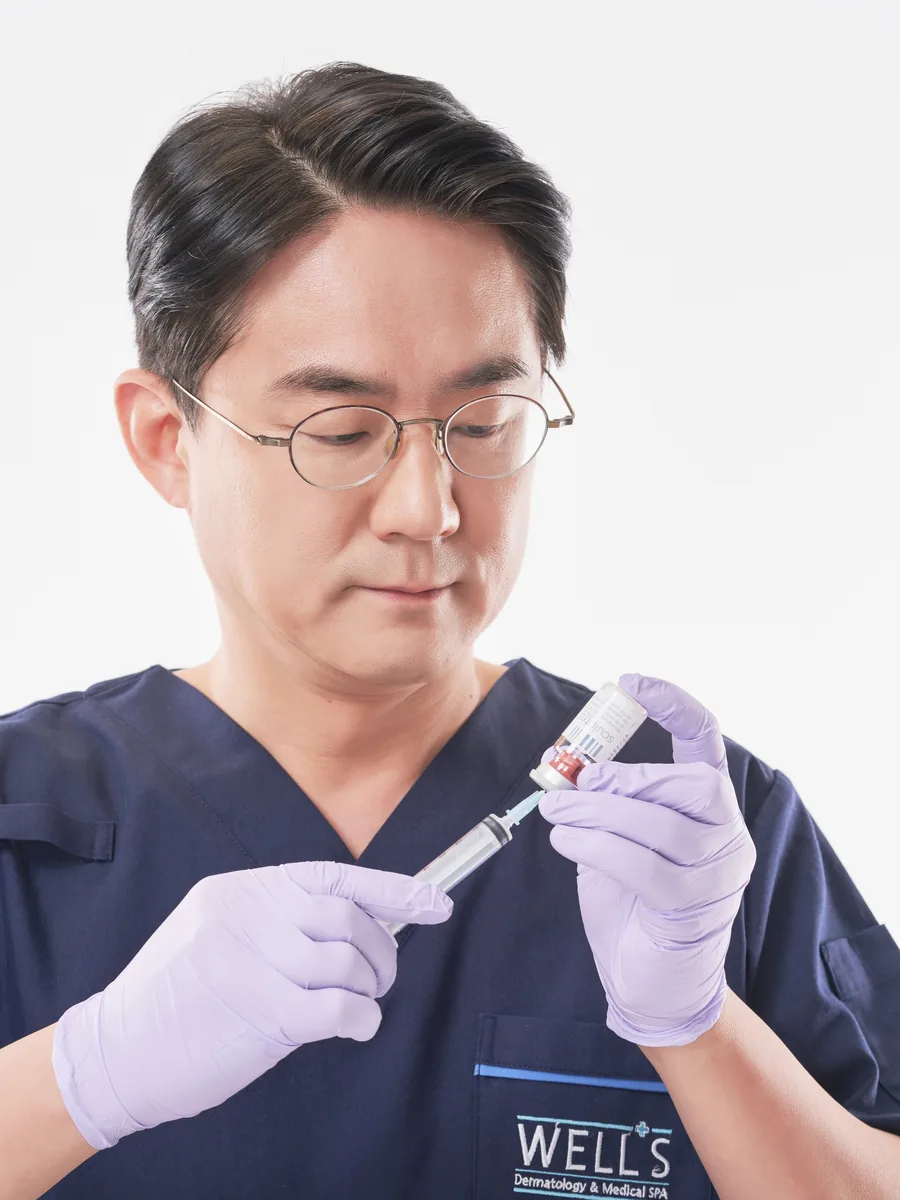
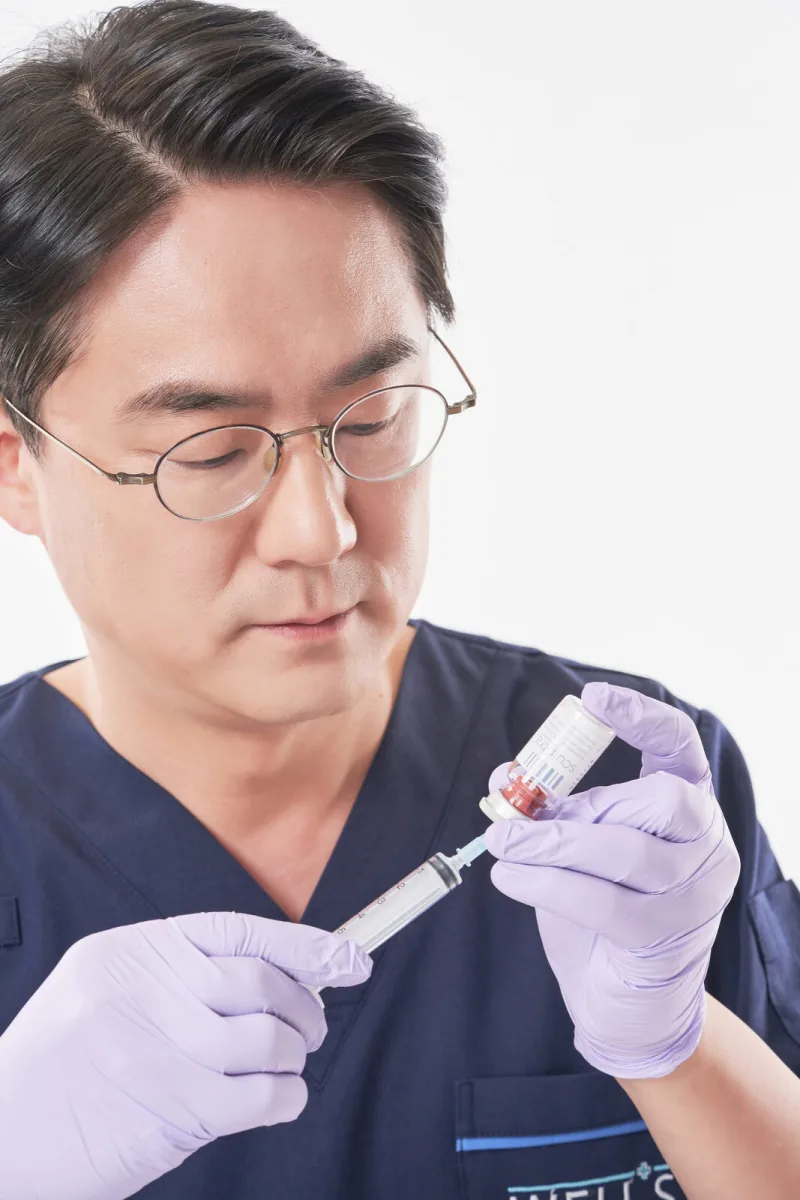
Hello, I'm Dr. Won Woo Choi, Medical Director at WELLS Clinic in Apgujeong, Seoul.
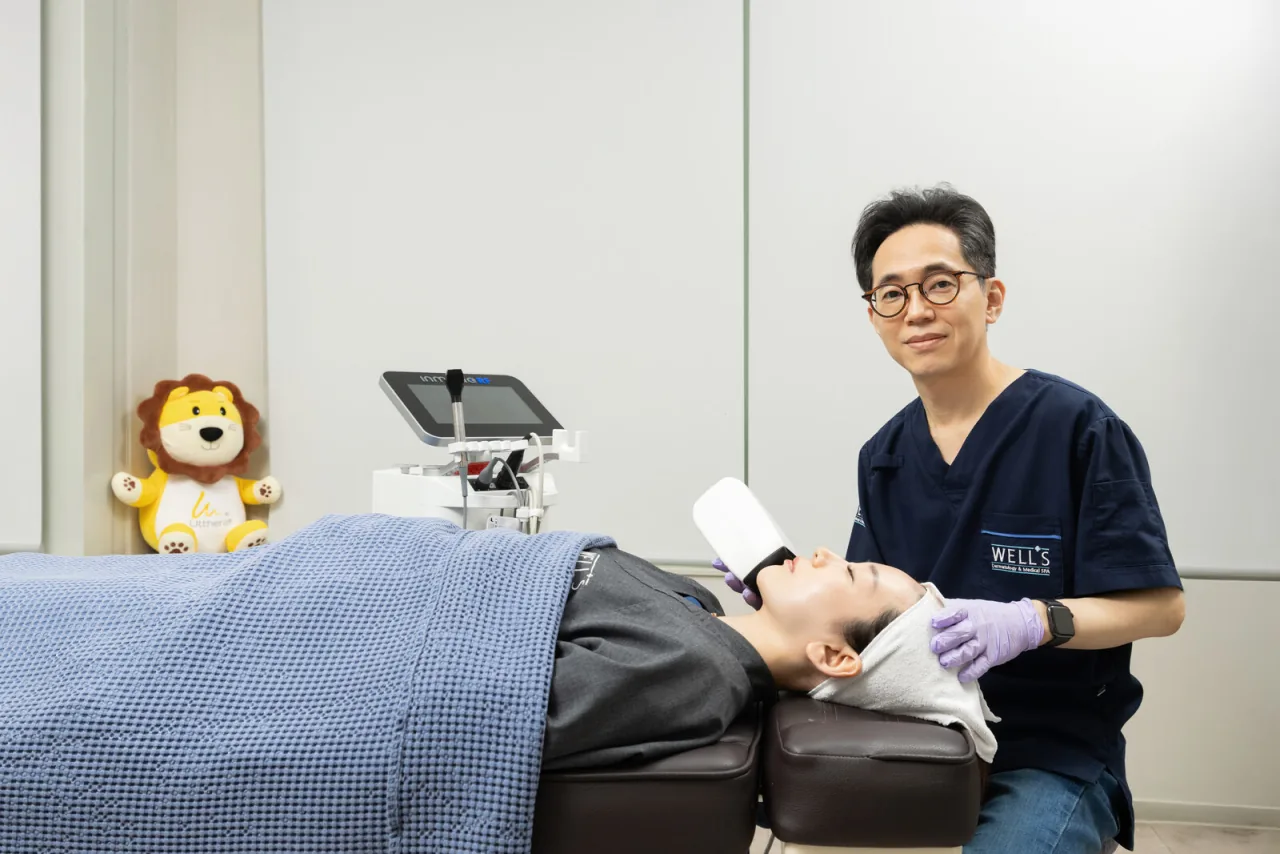
I'm a board-certified dermatologist trained at Seoul National University Hospital, and at WELLS a board-certified dermatologist handles your consultation, diagnosis and treatment, so the person you tell when something stings is the person injecting. We use a cannula where possible, which lowers the risk of damaging a blood vessel compared with a standard needle. If you'd rather go through numbing and risks in your own language, a medical interpreter is provided at no extra charge.
If you want to know how much of this applies to your chin, send one side-profile photo taken in daylight on WhatsApp, together with the medicines and supplements you take, and ask whether anything on that list should pause before your appointment. One photo is enough to start, and you can ask before booking anything.
Send a clear photo and your travel dates, and we will tell you what fits the time you have in Seoul.
Send your chin photo and travel dates on WhatsAppUsually less than people expect, and in a different way. The chin is less sensitive than the lips, and filler meant to change chin shape sits deep, close to the bone. Most people describe a dull push rather than a sharp pinch.
Bone is wrapped in a thin membrane that reacts to pressure. That's why a deep chin injection feels more like a firm knuckle pressed into your chin than like a pinprick. The injecting itself usually takes minutes; the numbing cream beforehand takes longer than the treatment.
Many hyaluronic acid fillers are premixed with lidocaine, so the first small amount numbs the path for what follows. With a cannula there are usually only one or two entry points instead of a row of needle pricks. The entry stings for a moment, and after that you mostly feel movement and pressure.
I don't use sleep sedation for chin filler, and I wouldn't want to. Awake, you can tell me if one spot suddenly feels different from the rest. That feedback matters for safety, for reasons the warning-sign section below makes clear.
Worried about your own case? Let a dermatologist look first: send a photo and your dates, and we reply whether it can be arranged.
Ask us on WhatsAppHow sore is your chin in the days after?
Expect your chin to feel tender to the touch for about two to four days. Swelling is most visible in the first day or two and mostly settles within about a week. A bruise may or may not appear; if it does, it fades over roughly the same week.
| When | What it usually feels like | What helps |
|---|---|---|
| Treatment day | Numb, then a dull ache as the anesthetic wears off; the chin feels full | A wrapped cold pack in short spells; soft food |
| Days 1–2 | Swelling at its most visible; tender when chewing or talking | Sleep on your back; don't press, rub or massage |
| Days 3–4 | Tenderness fading; any bruise turning yellow-green | Normal routine, but no sauna, facials or hard workouts yet |
| About a week | Most swelling gone; the shape is easier to judge | Note anything uneven or still sore and ask about it |
One thing that catches visitors out in Seoul is how easy it is to book a face-shaping massage or a facial on the same trip. Firm pressure on fresh filler can shift it and keep the chin sore for longer, so many dermatologists suggest leaving those for about two weeks. Dental work belongs in the same category: a cleaning or a dental injection means pressure and mouth bacteria right next to the chin, so keep it a couple of weeks away from filler on either side.
Bruising is the part you can reduce before you fly. Aspirin, ibuprofen and supplements such as fish oil, vitamin E and ginkgo make bleeding under the skin more likely, and stopping them for some days beforehand helps if they aren't prescribed for a medical reason. If they are prescribed, don't stop them on your own; ask the doctor who prescribed them first.
Blocked vessels, infection, lumps: which pain means something is wrong?
Three problems announce themselves through pain, and each has its own timing. Knowing which is which is the most useful thing in this post.
A blocked blood vessel is rare but serious. Filler pressing on or entering an artery cuts off blood to the skin that artery feeds. The signs come during treatment or within hours: sharp pain out of proportion to what came before, and skin on the chin or lower lip that turns pale, then blotchy or dusky purple, sometimes cool to the touch.
The U.S. Food and Drug Administration lists accidental injection into a blood vessel among filler risks, with skin damage and, rarely, vision problems or stroke as possible results. Hyaluronic acid filler can be dissolved with an enzyme called hyaluronidase, and the sooner that's done, the better the skin usually recovers. Any change in vision after a facial filler, even a blur in one eye, means going to an emergency department straight away.
Infection tends to show later, from a few days to several weeks: pain that increases, redness, warmth and sometimes a tender swelling. Small firm spots you can feel but not see are common in the first weeks and often soften by themselves. A lump that turns red, hurts more or grows is different and needs an exam. Swelling can also flare weeks later, sometimes around a cold or flu, as a delayed reaction to the filler.
How much any one person bruises or swells varies. The warning signs above don't vary, and neither does what to do about them.
If something worries you after you're home, take photos in daylight, compare both sides, and see a dermatologist first rather than a beauty salon; work done by non-specialists sometimes leaves marks that take longer to settle. For the blocked-vessel signs, go to an emergency department and say you had hyaluronic acid filler and when. Before you leave Seoul, keep a note of the product name, the amount and the date, because any doctor treating you at home will ask for it.
If you've had filler anywhere on your face before, add the product name and the year to your WhatsApp message along with your travel dates. Then ask how many days to leave between the treatment and your flight home.
Send a clear photo and your travel dates, and we will tell you what fits the time you have in Seoul.
Send your chin photo and travel dates on WhatsAppWhen I'd say not this trip
Some situations raise the chance of the painful problems above, and I'd rather move the date than work around them:
- A pimple, cold sore or any infection on the chin, lips or around the mouth
- Dental treatment in the two weeks before or after
- Pregnancy or breastfeeding, since fillers haven't been studied in either
- A known allergy to lidocaine or a past reaction to a filler
- A cold, flu or fever coming on in the days before
- The only free slot being the day before your flight
Blood thinners and bleeding disorders aren't automatically a no. They mean more bruising is likely and the plan needs your own doctor's input before you travel.
Is filler the right tool for your chin?
Filler adds projection and length to a chin. It can't move the jawbone, so a chin that sits far back because of the bite or jaw position may need an orthodontic or surgical opinion rather than filler. I've written separately about what chin filler can reshape and how it's planned.
Volume also matters for pain. More filler in one session generally means more stretch on the tissue and more soreness afterward. Before any injecting at WELLS, the product and the amount are confirmed with you, so you know what's going in. Adding more than the face needs is also how filler starts to look heavy, the same pattern I described in what goes wrong with cheek filler.
If your concern is gradual volume loss along the jaw rather than chin shape, a biostimulator like Sculptra, built up over several sessions, is a different conversation. A dent on the chin from an old acne scar is a separate problem again, closer to filling a depressed scar than to reshaping.
Questions to ask any clinic before the first injection
Wherever you book, these answers tell you more about how the day will feel than a stranger's pain score online:
- Who injects, and is that person a board-certified dermatologist or plastic surgeon?
- Needle or cannula for my chin, and why?
- Is the filler hyaluronic acid, and does it contain lidocaine?
- If a vessel is blocked, can the filler be dissolved on the spot?
- Can I have the product name, amount and date written down for my records?
- Who do I contact if something changes after I fly home?
You don't have to book with us to use this list. It works in any consultation room.
Fitting chin filler into your days in Seoul
Say you're flying in from Sydney for five days, landing on a Wednesday and leaving on Monday. I'd book the filler for Thursday. The most tender days, Friday and Saturday, then fall while you're still in the city, and Saturday is the last day we're open before your flight, since the clinic is closed on Sundays.
Book the same treatment on Saturday afternoon instead, and there's no open clinic day between injection and departure unless your flight leaves late on Monday. Flying itself doesn't usually affect filler. The reason to leave days in hand is follow-up, not cabin pressure.
Plan meals around soft food for the first day or two, and keep photo-heavy plans, such as a friend's wedding, for after the first week, when swelling has mostly settled.

Here's where I stand. The needle is the shortest part of chin filler and the part people fear most. What deserves your planning is the two to four tender days and the one warning sign, and being in Seoul for the first of those days. You can take your time deciding; a chin that has waited this long can wait for dates that suit you.
Send your travel dates on WhatsApp and ask which day of your trip leaves the most room before the flight home. When you come, what decides your plan is how far your chin sits behind your lower lip in profile, and how much the skin there can stretch without strain.
— Dr. Won Woo Choi, Medical Director · M.D., Ph.D.
Plan your visit before you fly
Send a daylight photo, your travel dates and what you have tried before. A dermatologist will suggest where to start and what fits your stay.
Send your chin photo and travel dates on WhatsAppReplies on WhatsApp · prices in KRW, including 10% VATBefore you message us
Does chin filler hurt more than lip filler?
Usually not. Lips have far more nerve endings, so lip filler tends to feel sharper. Chin filler sits deeper, near the bone, so it feels more like pressure and a dull ache, and the tenderness afterward shows up mainly when you chew or touch the area.
Which painkiller can I take afterward?
Acetaminophen (paracetamol) is the usual choice for the first few days, because aspirin and ibuprofen can make bruising more likely. If you take a prescribed medicine for pain or for your heart, keep taking it and mention it before treatment.
Can I ask to be asleep for chin filler?
Sleep sedation isn't used for chin filler at WELLS. Numbing cream and the anesthetic in the filler cover most of the discomfort, and staying awake lets you say straight away if one spot feels wrong, which is one of the earliest signs of a blocked vessel.
Is a hard spot under the skin after two weeks normal?
A small firm spot you can feel but not see, with no redness or pain, often softens over the following weeks. If it is red, warm, painful or getting bigger, have a dermatologist examine it rather than massaging it yourself.
Can I wear a face mask or glasses after chin filler?
A light mask is fine. Avoid tight straps that sit under or press on the chin for the first few days, and skip chin rests, such as resting your chin on your hand at a desk, until the tenderness has gone.
Results and recovery vary by individual. Every treatment carries possible side effects, which are explained at the consultation. Prices are in Korean won, including 10% VAT, and confirmed at your consultation. This article is general information from the clinic, not a diagnosis.
See the treatment in detail, or ask us
You can ask whether it suits your case, which dates are open, and about language support.
Message us on WhatsAppWritten by our dermatologists
Dr. Won Woo Choi
Board-certified dermatologist in Korea; trained at Seoul National University Hospital; Dermatology residency, Seoul National University Hospital; board certification in dermatology in Korea; Ph.D. in Dermatology, Seoul National University
- WELLS was founded in 2008 by Dr. Won Woo Choi and Dr. Won Sin Lee.
- Board-certified dermatologist in Korea; trained at Seoul National University Hospital
- Dermatology residency, Seoul National University Hospital; board certification in dermatology in Korea
Medically reviewed by Dr. Won Woo Choi
Full profile