Exercise after mole removal: walk the same day, sweat once it closes
Easy walking is fine the same day. Sweaty workouts wait until the surface has closed, usually one to two weeks after laser removal, and swimming comes last. Stitches make the wait longer.

Whether this treatment suits you needs a dermatologist to assess. Send a photo and your travel dates on WhatsApp, and we reply in English whether it can be arranged for your case and which days are open.
Ask us on WhatsApp
What decides how soon you can exercise after mole removal?
"Can I go back to the gym this week?" It's one of the questions people ask most about exercise after mole removal, and the thought underneath it is usually this: if the spot opens up on a run once I'm home, who do I even ask?
An easy walk is fine the same day. Sweaty workouts wait until the surface has closed over, which usually takes about one to two weeks after laser removal, and swimming comes last. If the mole was cut out and stitched, hard training waits until the stitches are out, and longer for a spot that stretches when you move.
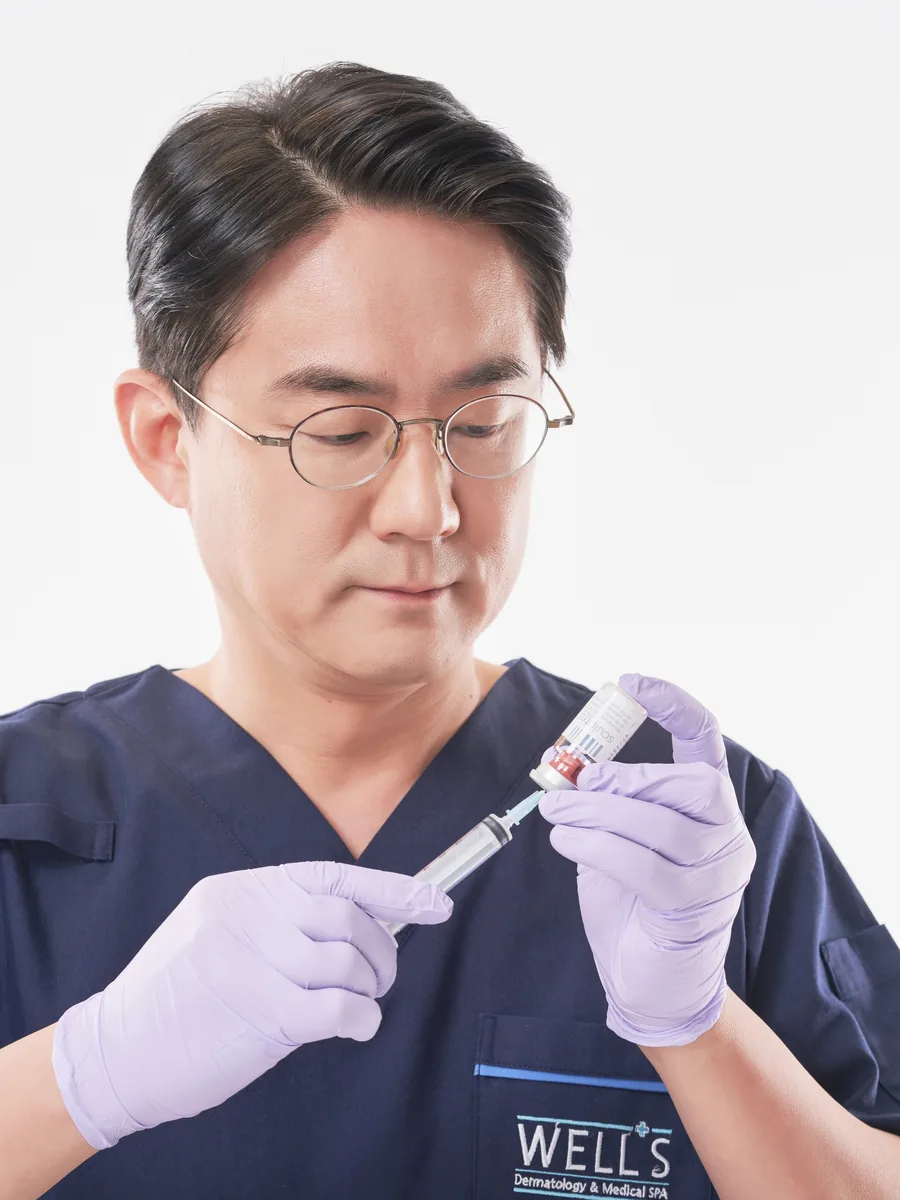
Hello, I'm Dr. Won Woo Choi, M.D., Ph.D., Medical Director of WELLS Clinic in Apgujeong, Seoul.
I'm a board-certified dermatologist trained at Seoul National University Hospital, and WELLS has been a single clinic in Apgujeong since 2008. A board-certified dermatologist handles your consultation, diagnosis and treatment here, so the person who tells you when to train again is the one who saw how deep the mole went. Foreign patients get a medical interpreter for their language at no extra charge, which matters when the aftercare instructions are the part you'll rely on at home.
If your trip is already on the calendar, message us on WhatsApp with a photo of the mole, where it sits on your body, and the first workout you're hoping to get back to.
Send a clear photo and your travel dates, and we will tell you what fits the time you have in Seoul.
Send your mole photo and trip dates on WhatsAppThree things: how the mole was removed, where it sits, and what kind of exercise you mean.
Laser removal leaves a small open wound with no stitches. It heals from the bottom up under a dressing or patch, and the job in the first days is to keep that surface moist, covered and undisturbed. A mole that is cut out leaves a stitched line instead, and there the enemy is tension: anything that pulls the two edges apart.
New skin behaves like fresh paint. It's dry to the touch long before it can take scrubbing. Kaiser Permanente's aftercare guidance for skin lesion removal says most wounds take 1 to 3 weeks to heal, and that stitches usually come out after about 5 to 14 days. Until then, exercise can work against the wound in four ways:
- Blood pressure. Hard effort in the first day or two can restart oozing.
- Sweat. It pools under the dressing, softens the new surface and lifts the edges of a patch.
- Stretch and friction. A stitched line on a shoulder, or a wound under a strap or waistband, gets pulled and rubbed with every rep.
- Water. Pools, hot tubs and saunas soak a wound that isn't sealed yet.
Worried about your own case? Let a dermatologist look first: send a photo and your dates, and we reply whether it can be arranged.
Ask us on WhatsAppA timeline by type of workout
In short, these are general ranges for a small mole on healthy skin. Your own instructions from the treating doctor override them.

| Activity | Laser removal, no stitches | Excision with stitches |
|---|---|---|
| Easy walking | Same day | Same day, kept short |
| Low-sweat movement (easy bike, gentle yoga) | After 2–3 days, if the dressing stays dry and in place | After about a week, if the area isn't pulled |
| Running, weights, hot yoga | Once the surface has closed, usually 1–2 weeks | After the stitches are out, then build up over about 2 more weeks |
| Swimming, sauna, hot tub | Once the skin is fully closed | After the stitches are out and the line has sealed |
| Contact sports | Closed and no longer tender | A few weeks after stitch removal |
Notice that flying isn't in the table. A small skin wound doesn't mind cabin pressure. What matters on the flight is that the dressing is fresh and you have spares in your hand luggage.
Does it matter where the mole was?
Yes, and often more than the method does. Facial skin has a rich blood supply and tends to close sooner. Body skin is thicker than facial skin and recovers at a different pace, which is why we decide settings per area rather than from a template, and why a mole on the back gets a longer pause than one on the cheek.
Think about what touches the spot when you train. A bra strap, a waistband, a sock line, a backpack strap, a barbell across the upper back: friction on a healing wound matters more than your heart rate does. A wound on the face can often tolerate an easy spin on a bike days before a wound on the shoulder blade can tolerate a rowing machine.
Say you're a 34-year-old runner from Toronto with six days in Seoul and a 10K two weeks after you land, and the mole sits on your shoulder blade where your pack strap lies. I'd tell you to do your last long run before the appointment and to put the removal early in the trip, so the first days, when oozing is most likely, pass while you're still in town. Walk the city, carry a tote on the other shoulder, and try a short easy run only once the surface has closed. If that leaves the 10K too close, the mole can wait for your next trip. A benign mole is rarely urgent.
Our guide to how a mole removal visit in Seoul works covers the visit itself. The number of moles and how deep they go also shape the quote, which I've explained in what sets mole removal cost.
Bleeding, a reopened wound and a darker mark: what training too early risks
In the first two days, some pinkness, a little clear or blood-tinged ooze and mild tenderness are expected. Later the spot itches as it closes, and a pink mark can stay for weeks to a few months. None of that is a reason to stop walking.
Going back to hard training too early adds three specific risks. Oozing can restart. A stitched line under tension can widen or, less often, open. And a wound that is repeatedly irritated or exposed to sun is more likely to heal with a brown mark, called post-inflammatory hyperpigmentation, which is more common in darker skin tones and fades slowly.
Some people should plan a longer pause or talk to their own doctor first: anyone on blood-thinning medication, anyone with diabetes or a condition that slows healing, people who form raised or keloid scars, and those whose mole sits over a joint. A mole that has changed in size, shape or color needs to be examined before anyone discusses lasers. Healing speed differs between people, so treat every range on this page as a starting point.
If you take medication or scar easily, add that to your WhatsApp message along with a second photo taken from an arm's length away, so the location on your body is clear.
Send a clear photo and your travel dates, and we will tell you what fits the time you have in Seoul.
Send your mole photo and trip dates on WhatsAppWhat should you do once you're back home?
Keep the wound covered and follow the ointment or patch routine you were given until the surface has closed. If sweat lifts a patch during a walk, replace it after gently cleaning and drying the skin; don't press a damp one back on. Once the skin has closed, sunscreen on the spot matters for outdoor runners and cyclists for the next few months, because sun is what turns a pink mark brown.
Contact the clinic when something looks different from what you were told to expect. The WhatsApp chat you booked through is the place for that: send a daylight photo, say which day you're on and what you did before it changed. Keep a note of the date, the method used and whether tissue was sent to a lab, so a doctor at home can pick up the thread without guessing.
Some signs shouldn't wait for a message across time zones. See a local doctor the same day if:
- bleeding doesn't stop after 10 to 15 minutes of firm, continuous pressure
- redness spreads, the area swells, or there is a foul-smelling discharge
- you have a fever
- stitches come loose or the wound opens
If color returns in the spot months later, have a dermatologist look at it rather than assuming it's harmless regrowth.
What if you're combining it with other laser treatments?
Each treatment brings its own rule, and the strictest one sets your schedule. After laser hair removal, the skin is usually kept away from heat, friction and heavy sweating for a day or two; I've covered the planning side in our men's laser hair removal guide. Pico laser work on old brow pigment, described in eyebrow tattoo removal in Korea, leaves the brow area tender, and sweat running down the forehead is the thing to avoid at first.
What to ask any clinic before you book
Put simply, these questions work at any clinic, in any country. It doesn't have to be us, but the answers should be clear before you pay for a flight.
- Will my mole be removed by laser, or cut out and stitched?
- If there are stitches, who takes them out if I've already flown home?
- Does a dermatologist examine the mole before deciding the method?
- Is the tissue sent to a lab if anything about it looks unusual?
- How do I reach the clinic after I leave, and in what language?
- Could a deep mole need more than one session, and how far apart?
My own position is conservative. A mole is a small thing to remove and a poor reason to carry a wide scar, so I'd rather you lose ten days of training than reopen a wound for one workout. What decides your timeline is how deep the mole goes and whether that patch of skin moves when you do. Nothing about this has to be settled today.
When you're ready, send your travel dates and the date of your first planned workout or race on WhatsApp, and ask how many days before your flight the removal should be.
— Dr. Won Woo Choi, Medical Director · M.D., Ph.D.
Plan your visit before you fly
Send a daylight photo, your travel dates and what you have tried before. A dermatologist will suggest where to start and what fits your stay.
Send your mole photo and trip dates on WhatsAppReplies on WhatsApp · prices in KRW, including 10% VATBefore you message us
Can I fly home the day after a mole is removed?
For a small mole, flying itself doesn't harm the wound. Change the dressing before you leave for the airport, keep spare patches in your hand luggage, and avoid carrying a heavy bag on the treated side if the spot is on your shoulder or back.
Is sweat itself harmful to the wound?
Sweat isn't toxic to a wound, but it keeps the area wet, loosens the dressing and carries skin bacteria around. That's why low-sweat movement comes back before hot yoga or interval training. If you do sweat through a dressing, clean the skin gently, dry it and put on a fresh one.
The mole was on my face. Can I lift weights sooner?
Often a little sooner than with a mole on the trunk, because nothing rubs or stretches the spot. Straining hard still raises blood pressure in the face, so skip heavy lifts for the first two days, and keep sweat from sitting under the patch until the surface has closed.
What if the scab or patch comes off during a workout?
Stop, rinse with clean water, pat dry and cover it again. A little pinpoint bleeding that stops with pressure is common. Don't pick at what remains of the scab, and give it two or three quiet days before you try that workout again.
When can I put sunscreen or makeup over the spot?
Once the surface has closed and there is no raw or weeping skin, which for a small laser wound is usually within one to two weeks. Before that, keep it covered with the dressing instead. After that, daily sunscreen on the spot helps the pink mark fade without darkening.
Results and recovery vary by individual. Every treatment carries possible side effects, which are explained at the consultation. Prices are in Korean won, including 10% VAT, and confirmed at your consultation. This article is general information from the clinic, not a diagnosis.
Dr. Won Woo Choi
- Board-certified dermatologist in Korea; trained at Seoul National University Hospital
- Dermatology residency, Seoul National University Hospital; board certification in dermatology in Korea
- Ph.D. in Dermatology, Seoul National University
- Former clinical instructor, Seoul National University Hospital
- Adjunct professor, Department of Dermatology, Seoul National University Hospital