Area first, brand second: korean filler vs juvederm in Seoul
In the korean filler vs juvederm choice, both are usually cross-linked hyaluronic acid gels. The area, the gel's firmness, the depth and the injector shape your result more than the country on the box.

What does korean filler vs juvederm actually compare?
In the korean filler vs juvederm question, both sides are usually cross-linked hyaluronic acid (HA) gels. What changes your result is the gel's firmness, the area, the depth and the person holding the cannula, far more than the country printed on the box. If you're flying home a few days after treatment, there's a second worry underneath: if something feels off back home, will your own doctor know what was injected?
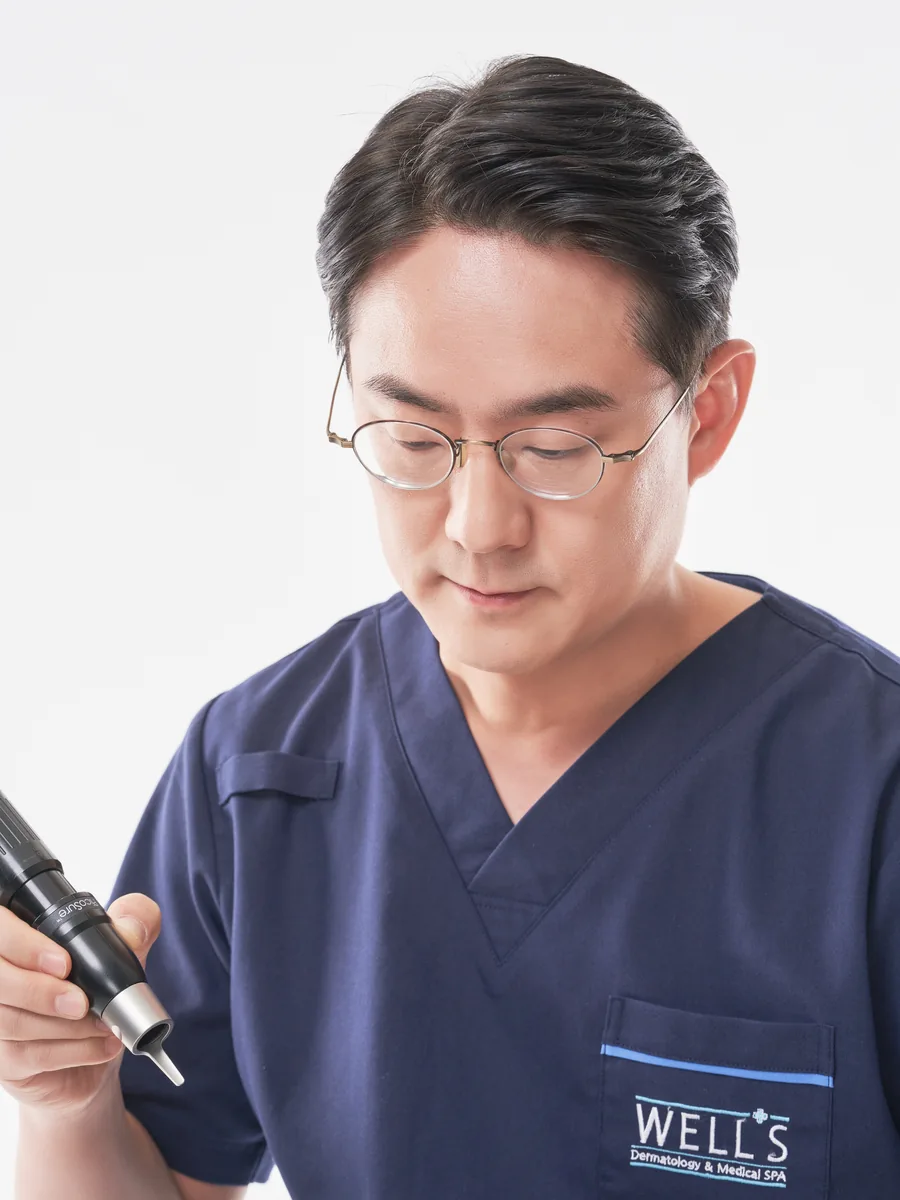
At WELLS in Apgujeong, I inject filler with a cannula where possible, because it lowers the vessel-damage risk of a standard needle, and I confirm the product and amount with you before treatment. That gives you a name and a number you can show any doctor later. Some of the most useful things I say in a filler consultation are a quiet “not this one”: not this gel for that area, not filler for a line that comes from muscle, not more volume in a face that already has enough.
If you're weighing korean filler vs juvederm for a specific area, send two things on WhatsApp: front and side photos of your face in daylight without makeup, and the name and date of any filler you've had before.
Send a clear photo and your travel dates, and we will tell you what fits the time you have in Seoul.
Send your photos and filler history on WhatsAppA country against a brand. “Korean filler” means HA fillers made in Korea and approved by Korea's Ministry of Food and Drug Safety; Juvederm is one family of HA fillers made by a US manufacturer, with several products approved by the US Food and Drug Administration for specific uses.
Inside the syringe, the two are close relatives. Both bind HA chains together (cross-linking) so the gel lasts longer than the body's own HA. Both are made in versions with lidocaine for comfort. Both can usually be broken down with an enzyme called hyaluronidase if a result needs correcting.
The differences sit in the recipe: how tightly the gel is cross-linked, how concentrated the HA is, and whether the gel is smooth or particle-based. Those details make one gel firm enough to project a chin and another soft enough to sit under thin eyelid skin. Manufacturers in both countries make a range of gels for that reason.
| Question | Juvederm | Korean-made HA filler |
|---|---|---|
| Main ingredient | Cross-linked hyaluronic acid | Cross-linked hyaluronic acid |
| Regulator | US FDA approves specific products for specific uses | Korea's MFDS; US FDA status varies by product |
| Firmness range | Several gels, soft to firm | Several gels per maker, soft to firm |
| Can it be dissolved? | Usually, with hyaluronidase | Usually, with hyaluronidase |
| Familiar to your home doctor? | Often recognised in North America, Europe and Australia | Some names may be unfamiliar, so carry the product name |
The area picks the gel, then the brand follows
For each area, the useful question is how much lift and how much softness the gel needs. A firm, cohesive gel holds shape over bone at the chin or cheekbone. A softer gel spreads more evenly under thin skin such as the under-eye.
The filler menu at WELLS covers the forehead, under-eye hollows, nasolabial folds, cheeks and chin. Nasolabial folds are treated with a large-particle, long-lasting filler, and forehead volume is balanced so the face doesn't look larger. Under-eye hollows are treated with filler as an alternative to surgery.
If you're in your 40s or 50s and your cheeks have flattened, the order of decisions matters. First, where support has been lost and at what depth; then how much gel; only then which product. Reading about how a dermatologist plans chin filler next to who Korean under eye filler suits shows how differently two areas behave even with the same type of product.
A dermatologist looking at a cheek generally checks skin thickness, how the face moves when you smile, where shadows fall at rest under overhead light, and whether old filler is still present. A face with thin skin and visible hollows calls for a different gel and depth than a face with thick skin and heavy lower cheeks, whatever the brand.
When neither Korean filler nor Juvederm is the right tool
HA filler replaces volume in a defined spot. Several common concerns aren't a volume problem, and a different product or device often fits better.
- Volume loss spread across the whole face. In the late 40s and beyond, the loss is often broad rather than in one hollow. Poly-L-lactic acid, which the American Society of Plastic Surgeons describes as a collagen stimulator, builds volume gradually over several sessions; see Korean PLLA filler and Sculptra sessions.
- Crepey texture, fine surface lines or enlarged pores. These sit in the skin itself, and filler under the skin won't smooth them. Microneedle RF options in Seoul address texture more directly.
- Lines that appear only when you frown or squint. These come from muscle movement, so neuromodulator is the usual first step.
- A face that already looks heavy. Adding more of any gel tends to make this worse. The post on why faces look overfilled explains the pattern.
- A puffy ridge under the eye years after filler. This needs assessment before anything is added; see how under eye filler migration is assessed.
There are also “not yet” situations. Filler is usually postponed during pregnancy or breastfeeding, with an active skin infection or cold sore near the area, or soon after filler elsewhere when you don't know which product was used.
Which risks stay the same whichever box it comes from?
All of them. Bruising, swelling, tenderness and small lumps are the common ones. The FDA also lists infection and, rarely, filler entering a blood vessel, which can damage skin and cause vision problems or stroke.
No brand removes that vascular risk, Juvederm or Korean. Anatomy and technique matter more.
Bruising and swelling often settle within one to two weeks. Skin that turns pale or dusky, pain that keeps building, or any change in vision after filler needs urgent medical attention, wherever you are. The American Academy of Dermatology advises having fillers injected by a board-certified dermatologist for this reason.
Results and recovery differ from person to person. Whether filler suits you at all is decided when the dermatologist examines you in Seoul.
If you've had filler before and don't know which product it was, that history is the most useful thing to send first: where it was done, which area and roughly when, plus a current daylight photo of the area. Send it on WhatsApp and you'll get a first suggestion of options and of when in your trip treatment fits.
Send a clear photo and your travel dates, and we will tell you what fits the time you have in Seoul.
Send your photos and filler history on WhatsAppWhat should you carry home after filler in Seoul?
The product name, the amount, the areas treated and the date.
This matters more for the korean filler vs juvederm choice than most people expect. A doctor in Toronto or Sydney may not recognise a Korean product name, but once they know it is a cross-linked HA gel, how much was used and where, they can assess a lump or swelling with the same reasoning they'd use for Juvederm. The CDC's medical tourism guidance also recommends bringing copies of your records home and arranging follow-up care before you travel.
Filler doesn't usually stop you flying, but swelling can look more obvious for the first days.
How a filler visit fits a Seoul trip
WELLS is on the 8th floor of the Apgujeong B/D, 842 Nonhyeon-ro, Gangnam-gu, a 5-minute walk from Exit 3 of Apgujeong Station on Line 3.
Hours are Monday to Friday 10:00–20:00 and Saturday 10:00–17:00, with lunch from 13:00 to 14:00. Sundays and public holidays are closed, so a weekend arrival means a Saturday or a Monday visit.
Before you come, list previous treatments with product or device and date (especially fillers, threads or lifting), your medications, allergies and skin conditions, and whether you are pregnant. That list, plus your photos, makes the consultation about your face rather than about brand names.
To start, send your travel dates and front and side photos on WhatsApp, and name any product you've already had or are curious about, Juvederm or Korean.
Plan your visit before you fly
Send a daylight photo, your travel dates and what you have tried before. A dermatologist will suggest where to start and what fits your stay.
Send your photos and filler history on WhatsAppReplies on WhatsApp · prices in KRW, excluding 10% VATBefore you message us
Is Juvederm better than Korean filler?
Neither is better across the board. Both are families of cross-linked hyaluronic acid gels, each with softer and firmer products. Compare the specific product, its approval status and whether it suits the area being treated.
Do Korean fillers last as long as Juvederm?
Longevity differs by product rather than by country. The gel's cross-linking, the area, the amount and how your body breaks down HA all play a part. All HA fillers are temporary and absorbed over time.
Can Korean HA filler be dissolved like Juvederm?
Usually, yes. Hyaluronidase breaks down cross-linked hyaluronic acid from Korean makers and from US makers alike. It should be given by a doctor, and knowing the product and amount you received helps whoever treats you.
Is Korean filler FDA approved?
Korean HA fillers are approved by Korea's Ministry of Food and Drug Safety. US FDA approval differs from product to product, so check the specific product name against the FDA's list of approved dermal fillers.
Can filler be used on the breasts or body in Korea?
The US FDA warns against using injectable fillers for breast or body enhancement. The filler menu at WELLS covers facial areas: forehead, under-eye hollows, nasolabial folds, cheeks and chin.
Results and recovery vary by individual. Every treatment carries possible side effects, which are explained at the consultation. Prices are in Korean won, excluding 10% VAT, and confirmed at your consultation. This article is general information from the clinic, not a diagnosis.
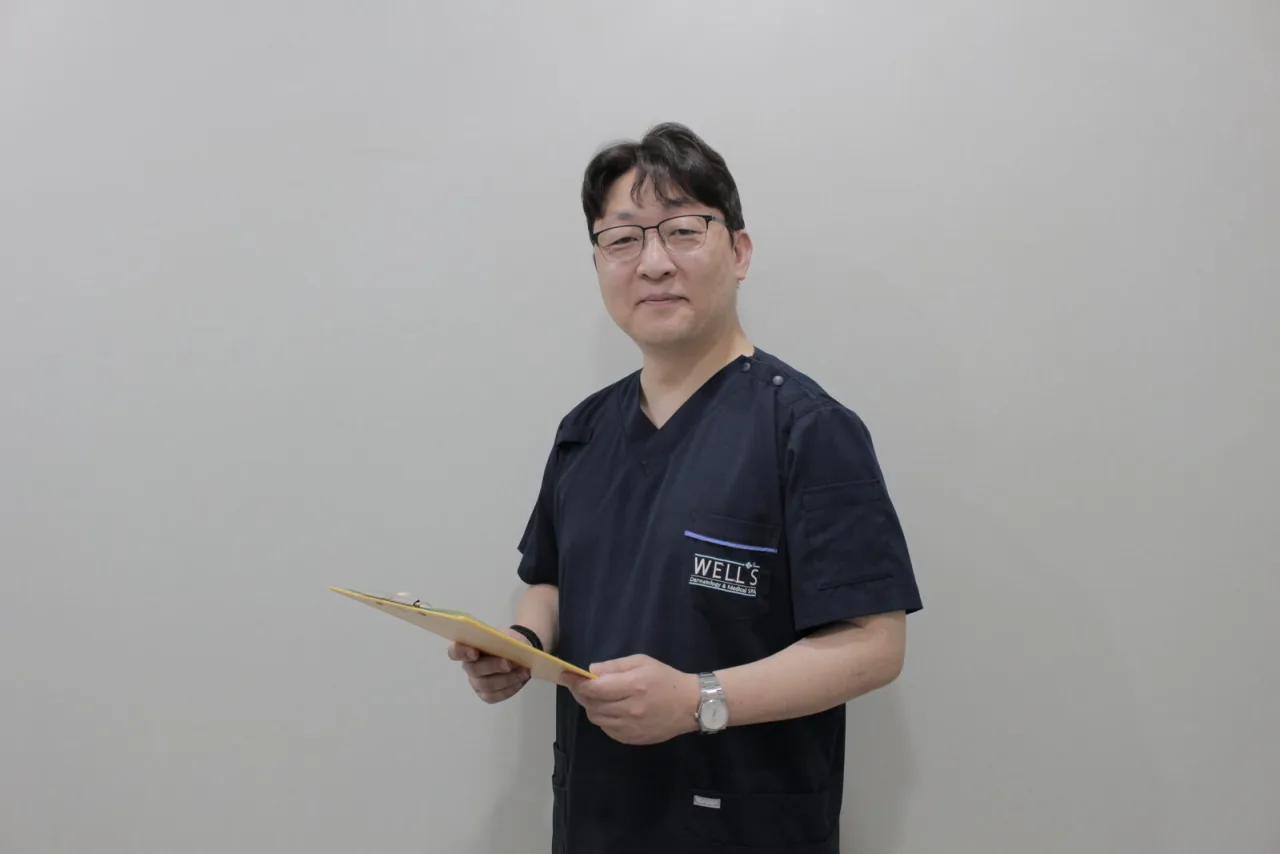
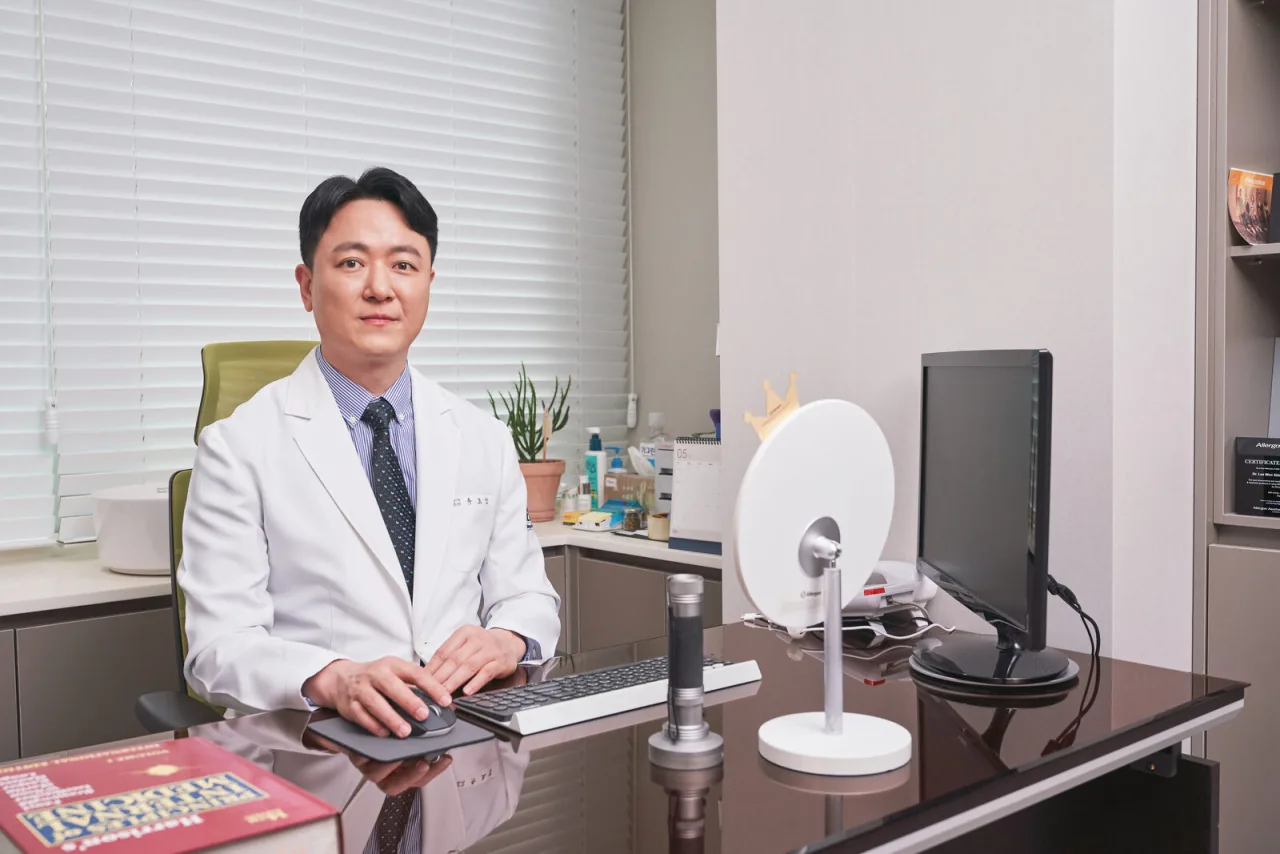
Dr. Won Woo Choi
- Board-certified dermatologist in Korea; trained at Seoul National University Hospital
- Dermatology residency, Seoul National University Hospital; board certification in dermatology in Korea
- Ph.D. in Dermatology, Seoul National University
- Former clinical instructor, Seoul National University Hospital
- Adjunct professor, Department of Dermatology, Seoul National University Hospital