Temple filler Korea: will you fly home bruised, and who follows up once you're back?
Temple filler takes one appointment, but swelling and bruising can last one to two weeks. Treat early in your Seoul stay, keep days to settle, and leave with the product name and amount for your doctor at home.

Why do temples hollow, and what does filling them change?
Would a temple filler Korea trip leave you on a long flight home with puffy, bruised temples, and no one nearby who knows what was injected?
The injection takes one appointment. What shapes your plan is the settling: swelling and bruising can last one to two weeks, so have it done near the start of your stay rather than the day before your flight, and leave with the product name and amount written down for your doctor at home.
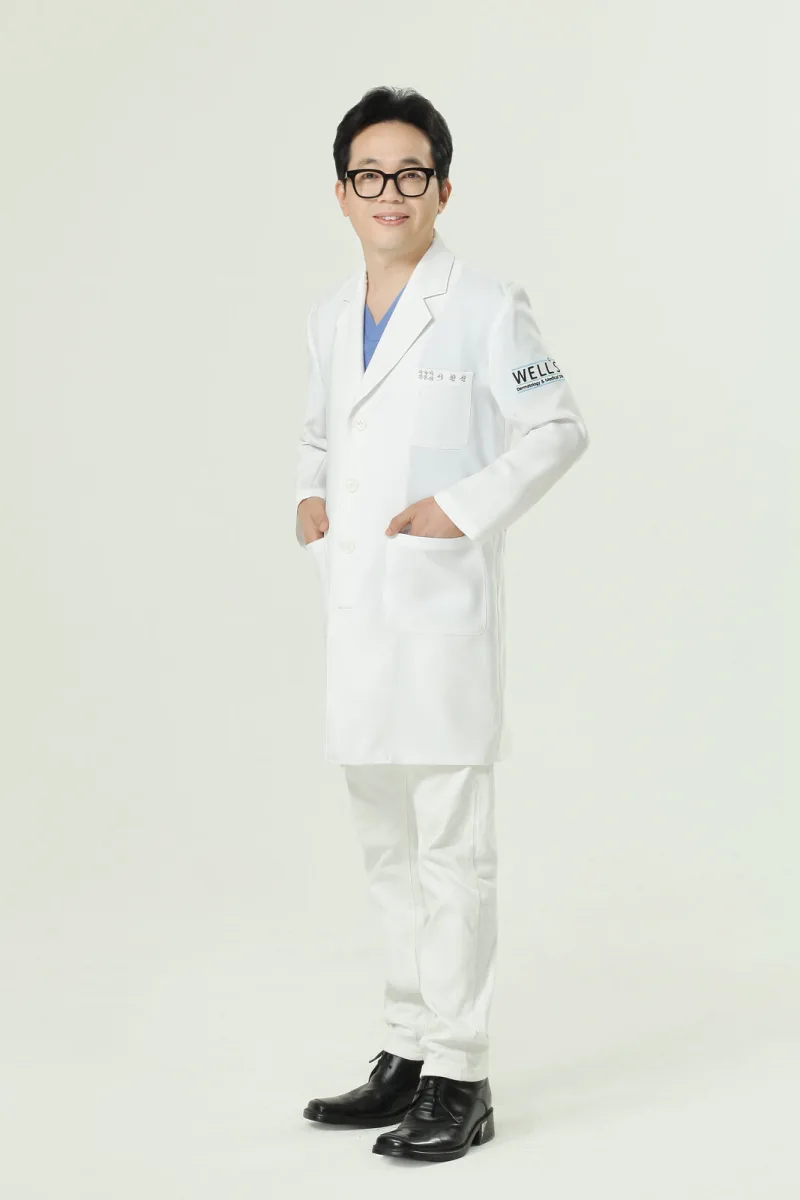
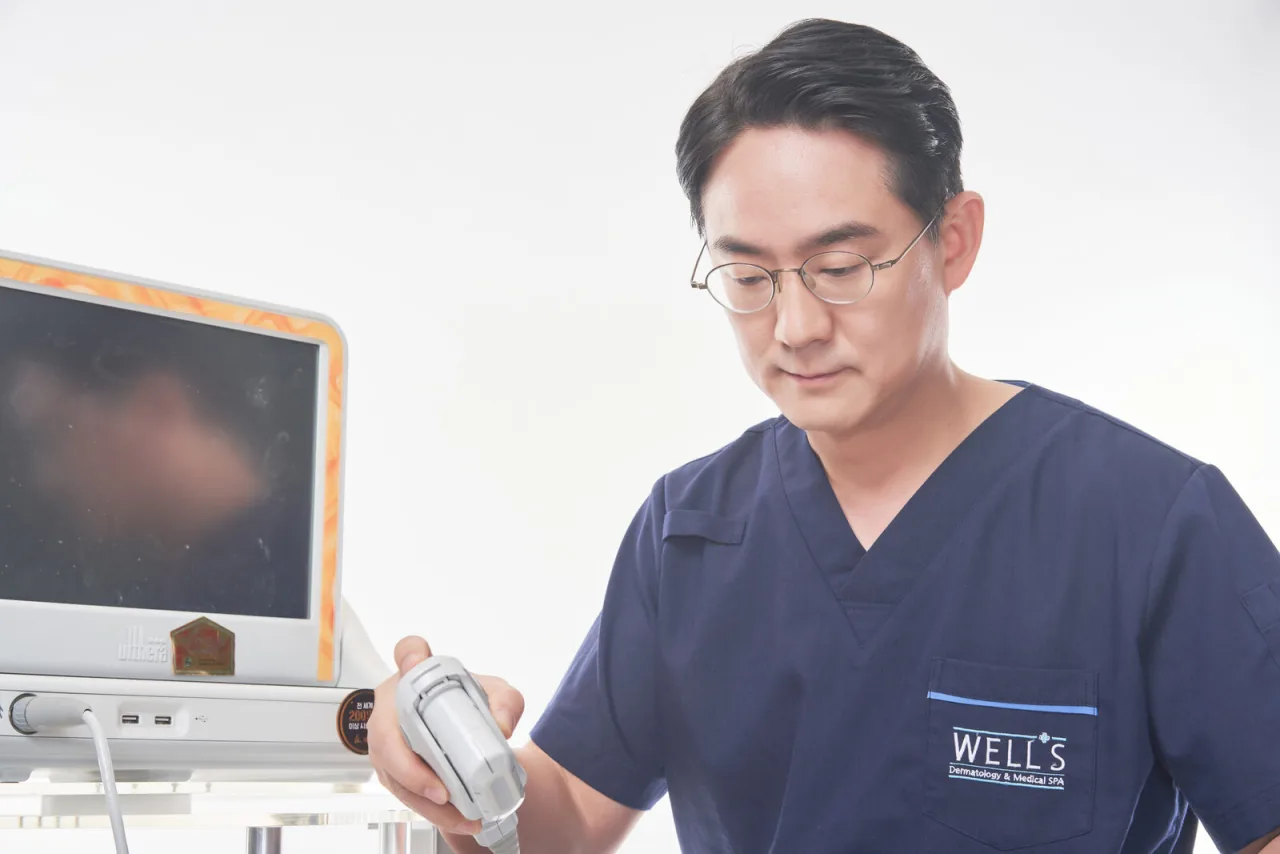
Hello, I'm Dr. Won Woo Choi, Medical Director at WELLS Clinic in Seoul. I'm a board-certified dermatologist who trained and was certified at Seoul National University Hospital, where I'm an adjunct professor of dermatology.
WELLS has been one clinic in Apgujeong since 2008, so the place you message is the place that treats you. Dermatologists consult and inject directly, with a cannula where possible because it lowers the risk of damaging a vessel, and we confirm the product and amount before treatment. A medical interpreter for your language is provided at no extra charge.
If you'd like a starting point, send a daylight photo of your face from the front and from the side on WhatsApp with your dates in Seoul, and ask whether your temples look hollow enough to be worth treating on this trip.
Send a clear photo and your travel dates, and we will tell you what fits the time you have in Seoul.
Send a front and side photo with your Seoul dates on WhatsAppThe temple sits between the outer brow, the hairline and the top of the ear. Under the skin there is a thin layer of fat over a chewing muscle, and that fat thins with age and with weight loss. The bone underneath also changes slowly over the years, so the area dips inward, which most people notice first in overhead light or in photos taken from slightly above.
A hollow temple changes the outline of the whole face. The cheekbone looks wider by contrast, the face narrows at the top and again at the jaw, and the outer brow loses some of its support. Some people describe the shape as a peanut. Filling the temple brings back a smoother line from the forehead down to the cheekbone.
People often hope temple filler will lift their eyes. A filled temple changes the outline of the face more than it lifts the eye. Support beside the tail of the brow can soften the shadow next to the eye and make it look a little more open, but it won't correct a heavy upper lid caused by loose skin. If the hooding is what bothers you, say so in your first message, because filler may be the wrong tool for it.
Hyaluronic filler or Sculptra for the temple?
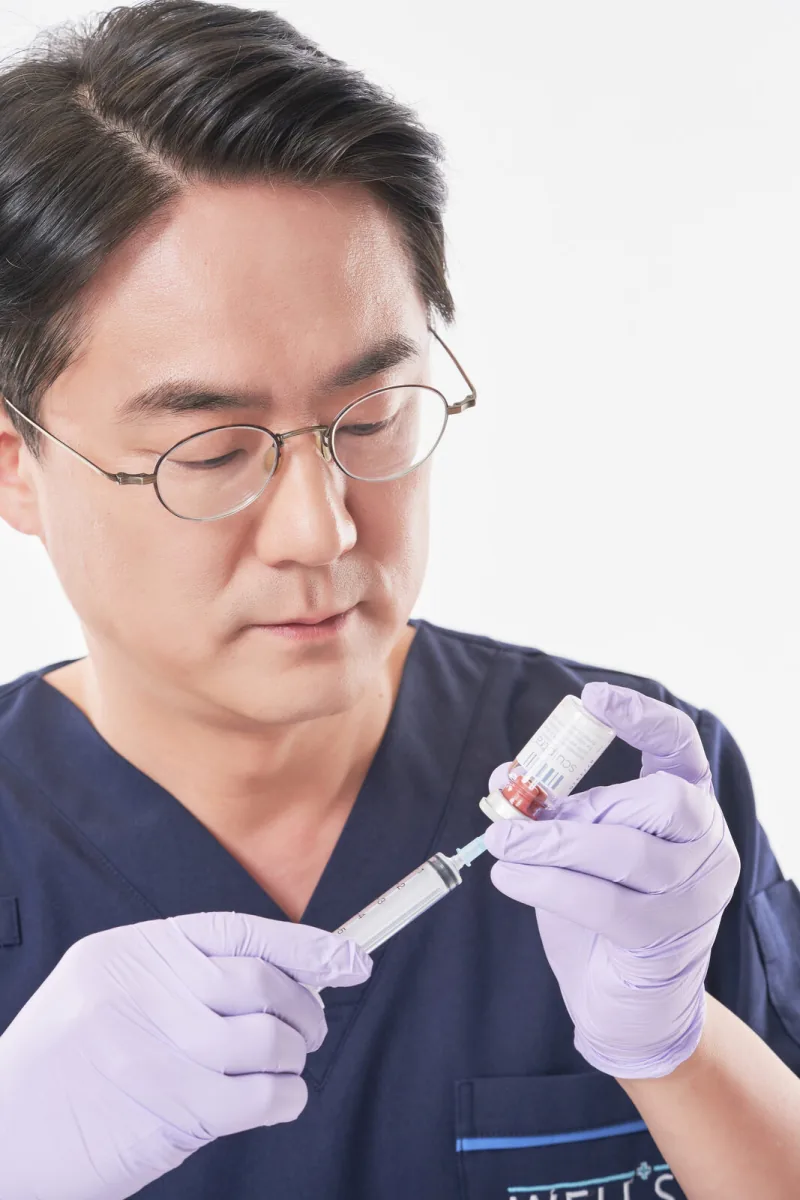
There are two common ways to treat a hollow temple, and they behave very differently on a trip. Hyaluronic acid (HA) filler is a gel that fills the space where it is placed, so you can see the change before you leave the clinic. Sculptra is poly-L-lactic acid; in our Sculptra Lifting plan it goes to the temple and other upper-face support points, and the collagen it prompts builds over the following months.
| Hyaluronic acid filler | Sculptra | |
|---|---|---|
| When you see the change | At the appointment, clearer once swelling eases | Gradually, over the months after treatment |
| If you want it reversed | An enzyme can usually dissolve it | It cannot be dissolved |
| What it means for your trip | You can judge the result while in Seoul | Much of the result arrives after you're home |
My reasoning here is fairly plain. If your temples hollowed after weight loss and the skin over them is still firm, HA filler gives you an answer you can see inside one trip. If the whole upper face has deflated and the cheeks have started to slide, I'd think about Sculptra at the support points and accept that the result will finish at home; the post on planning Sculptra sessions around a Seoul trip covers that timing.
Temple filler Korea: laying out your days
Think of the trip in three parts: arrive and rest, treat, then let it settle while you're still in the city. WELLS is open Monday to Friday 10:00–20:00 and Saturday 10:00–17:00, closed for lunch 13:00–14:00 and closed on Sundays and public holidays. A weekday in your first days works well, so any bruising shows up while you're still in Seoul.
The clinic is a five-minute walk from Exit 3 of Apgujeong Station on Line 3. After the injection you'll usually walk out with some tenderness and perhaps a little puffiness over the temple. Bruising can take until the next day to appear, which is one more reason not to treat on your last full day.
For the first day or two, many dermatologists suggest skipping hard exercise, alcohol, saunas and anything that presses on or massages the area. That includes the head spas and facial massages many visitors book in Seoul, so schedule those before treatment rather than after. If you color your hair, do it before you fly out, since the temple sits right at the hairline.
Most dermatologists don't consider the flight itself a problem once the first day has passed. What matters more is what you see in the mirror at the gate. If you have a family event at home, count back at least two weeks from it, which covers the swelling and bruising window.
One preparation step makes a real difference. A review in the Journal of Clinical and Aesthetic Dermatology on minimizing bruising after fillers recommends stopping non-essential blood-thinning medicines and supplements before injection. Do that only with the agreement of the doctor who prescribed them, and never stop a prescribed blood thinner on your own.
Bruising, lumps or a blocked vessel: how real is the risk in the temple?
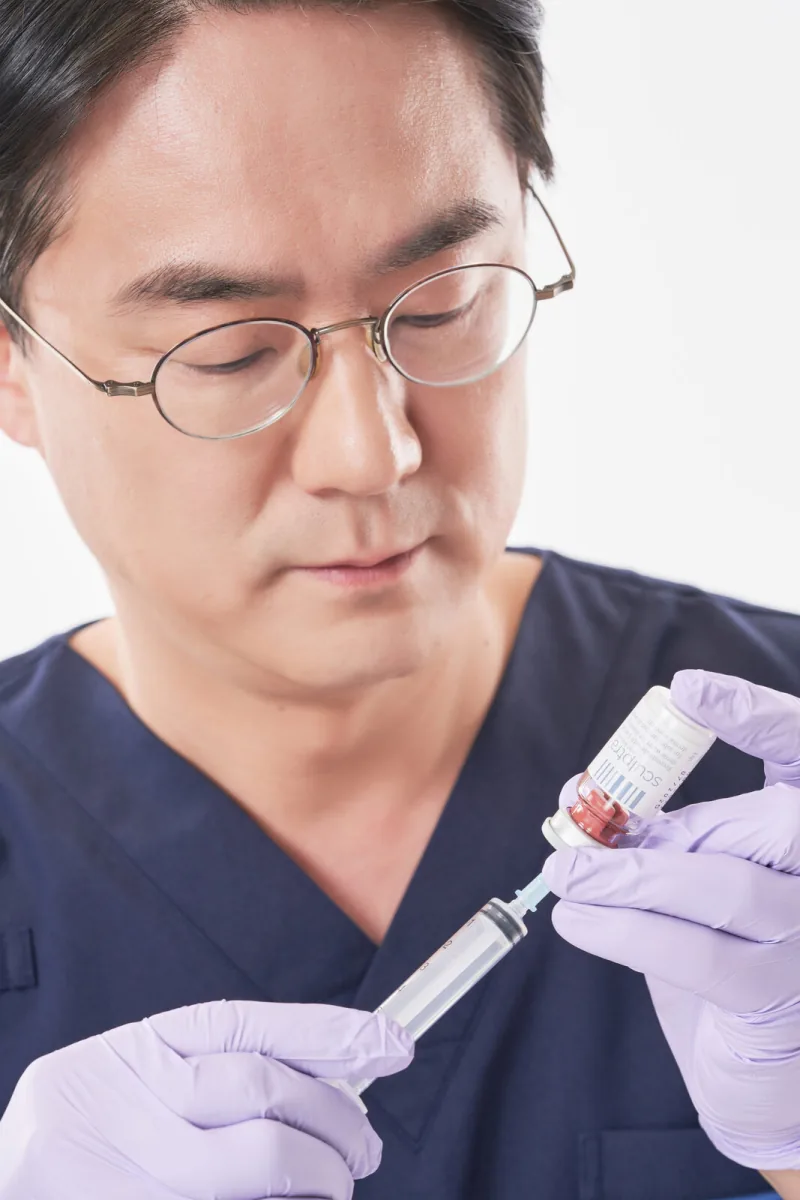
Most of what happens after temple filler is temporary. Swelling and bruising can last one to two weeks, and some people feel an ache when chewing for a few days because the temple sits over a chewing muscle. Lumps and an overfilled look are possible too; with HA these can usually be adjusted or dissolved. How quickly each one settles differs from person to person.
The serious risk is rare, but it is real. The temple has arteries and veins close to the surface, and the U.S. Food and Drug Administration warns that filler accidentally injected into a blood vessel can block blood flow, with possible skin damage, vision problems, blindness or stroke. That's why the instrument, the depth and the amount matter more in this area than the product brand. A cannula, which we use where possible, lowers the chance of piercing a vessel.
Some people should wait: anyone with an infection or active rash near the temple, anyone pregnant or breastfeeding, anyone allergic to lidocaine or a filler ingredient, and anyone who has had another procedure in the same area recently. If you take a blood thinner, mention it in your first message so it's part of the plan from the start.
Once you're home, know which signs can't wait. A patch of skin that turns white, grey or blotchy, pain that gets worse instead of easing, or any change in your vision needs an emergency department the same day, without waiting for a message reply. For a small lump or a bruise that lingers, take a daylight photo and show your local dermatologist the product name and amount from your treatment. It's also worth asking us before you travel how to send a follow-up photo from home, so the route is clear before you need it.
Once your dates are fixed, send a list of the medicines and supplements you take and any filler you've had in your face before, with the product and year if you know them. Then ask how many days you should keep open in Seoul after treatment for your particular plan.
Send a clear photo and your travel dates, and we will tell you what fits the time you have in Seoul.
Send a front and side photo with your Seoul dates on WhatsAppShould the temples come first, or the cheeks and chin?
Temples rarely hollow alone. When the face loses volume, the front of the cheek, the under-eye and the chin often change at the same time, and filling only the temple can leave the lower face looking narrower by contrast. You don't need everything at once, but the order matters.
Say you're 56, you lost a good deal of weight over the past year, and your daughter's wedding is six weeks after your Seoul trip. I'd treat the area that changes your outline most first, often the temples, and leave a second area until the first has settled. If the dark hollow under your eyes bothers you more, the post on who under-eye filler suits is the better place to start. If your profile looks short at the bottom, how chin filler reshapes the lower face explains that side. Six weeks leaves room for the one-to-two-week settling window either way.
Booking from abroad: what to send, and what to settle first
Planning temple filler Korea visits from abroad mostly comes down to your dates, your medicines and the area that bothers you most. If you'd like an overview first, the post on the areas we treat with filler and how a visit runs gives the wider picture. Deposit and payment method are settled after the consultation, so leave that question for WhatsApp once you know what you're having.
At the consultation, a 3D analysis comes before any injection. I'll look at where the hollow begins, how it sits against your cheekbone, and whether the skin over it is firm enough for HA filler or better suited to Sculptra at the support points.
To begin, send the same front and side photos on WhatsApp with your arrival and departure dates, and ask whether that window is long enough for your temples to settle before you fly home.
Plan your visit before you fly
Send a daylight photo, your travel dates and what you have tried before. A dermatologist will suggest where to start and what fits your stay.
Send a front and side photo with your Seoul dates on WhatsAppReplies on WhatsApp · prices in KRW, excluding 10% VATBefore you message us
How long does temple filler last?
Hyaluronic acid in the temple, an area that moves little, tends to last longer than filler in the lips. The exact span changes with the product, so ask which product is planned for you and how long it usually holds. Sculptra is different: the collagen it prompts builds over months, and it is usually planned as a course.
Does temple filler hurt?
Many hyaluronic acid fillers contain lidocaine, a local anesthetic, which dulls the sting once the first drops are in. Most people describe pressure more than sharp pain, followed by tenderness or a dull ache over the temple for a few days, sometimes more noticeable when chewing.
Can I wear glasses or a hat after temple filler?
Light glasses are usually fine. For the first few days, avoid tight frames, headbands or a snug cap pressing on the temple, because steady pressure on fresh filler can move it before it settles.
I've had temple filler before. Does that change anything?
Yes. Old hyaluronic acid can still be present years later, and adding more on top without knowing can overfill the area. Bring the product name and date if you have them; a dermatologist may suggest waiting, adding less, or dissolving the old filler first.
What if I don't like the result after I'm home?
Hyaluronic acid filler can usually be dissolved with an enzyme, which a dermatologist at home can inject if they know which product was used. Sculptra cannot be dissolved, which is one reason it suits people who are sure about treating the upper face as a whole.
Results and recovery vary by individual. Every treatment carries possible side effects, which are explained at the consultation. Prices are in Korean won, excluding 10% VAT, and confirmed at your consultation. This article is general information from the clinic, not a diagnosis.
Dr. Won Woo Choi
- Board-certified dermatologist in Korea; trained at Seoul National University Hospital
- Dermatology residency, Seoul National University Hospital; board certification in dermatology in Korea
- Ph.D. in Dermatology, Seoul National University
- Former clinical instructor, Seoul National University Hospital
- Adjunct professor, Department of Dermatology, Seoul National University Hospital