Korea filler expert: what can go wrong with filler, and who should wait
Most filler problems are predictable: swelling and bruising for one to two weeks, lumps, an overfilled look and, rarely, a blocked vessel. Who injects, where, how much and with what instrument lowers most of them.

What usually goes wrong, and how long it lasts
Had filler go wrong once, and now you're trying to work out whether a Korea filler expert in Seoul would make a second attempt any safer?
Most filler problems are predictable: swelling and bruising that settle within one to two weeks, lumps, an overfilled look and, rarely, gel blocking a blood vessel. Who injects, where, how much and with what instrument lowers most of them, and some faces shouldn't get more filler on this trip at all.
Hello, I'm Dr. Won Woo Choi, Medical Director of WELLS Clinic, a single clinic in Apgujeong, Seoul, since 2008. I'm a board-certified dermatologist and completed my residency and board certification at Seoul National University Hospital.
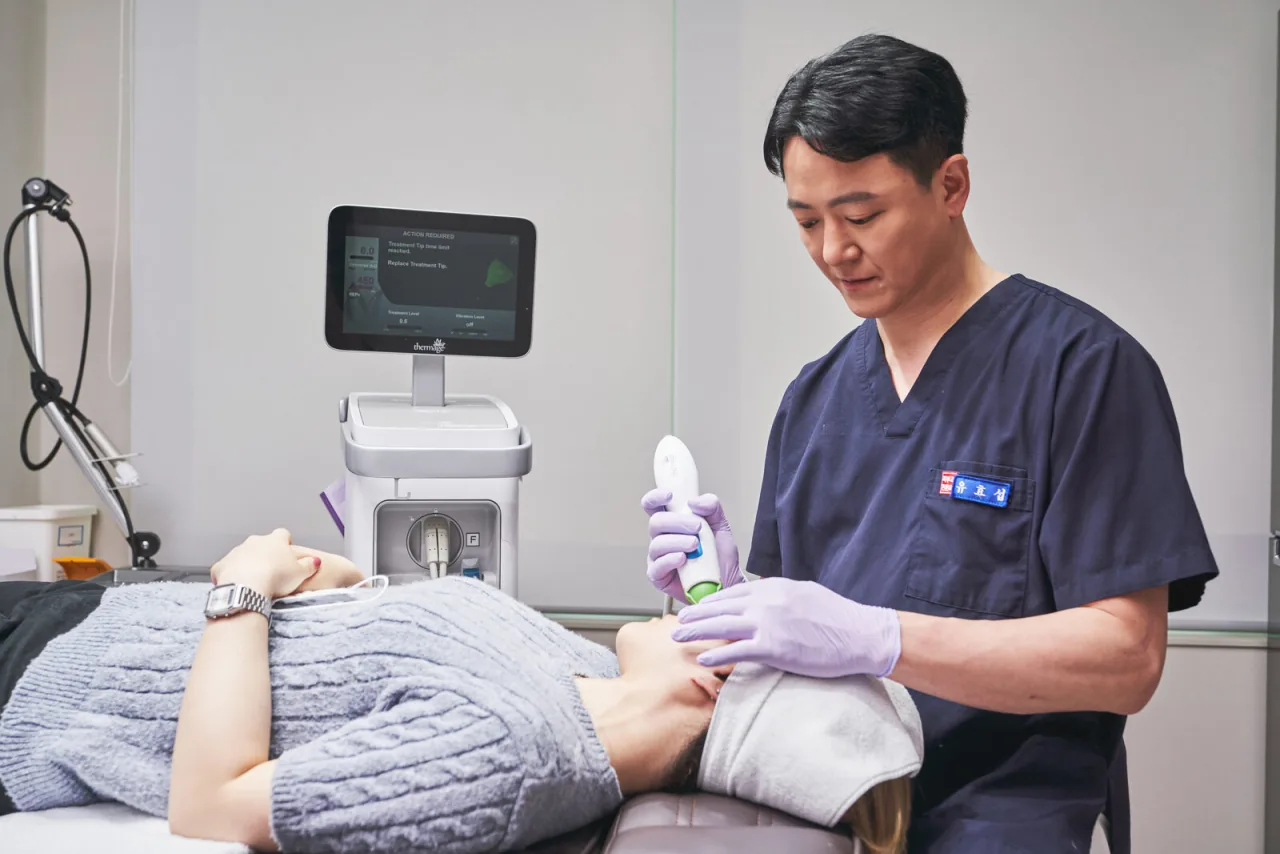
At WELLS, a dermatologist does both the consultation and the injection. We use a cannula where possible because it lowers the vessel-damage risk of a standard needle, and we confirm the product and amount with you before treatment. A medical interpreter for your language is there at no extra charge, so the risk conversation happens in words you can follow.
If your last filler left a lump or a shape you didn't want, send a front and a side photo of that area on WhatsApp, with the product name if you have it, and ask whether it should be touched again at all.
Send a clear photo and your travel dates, and we will tell you what fits the time you have in Seoul.
Send a photo of the area on WhatsApp
Swelling, bruising, tenderness and some redness at the injection points happen to most people to some degree. The American Academy of Dermatology describes these as usually clearing within 7 to 14 days. Lips and the skin under the eyes tend to swell more than the chin or forehead, because the tissue there is looser and holds fluid.
Bruising is the one you can do something about before you fly. A review by Hamman and Goldman on bruising after cosmetic injections lists aspirin, other anti-inflammatory painkillers, fish oil and vitamin E among the things that raise bruising, and cannulas among the ways to reduce it. If a doctor prescribed you a blood thinner, keep taking it and mention it before booking; never stop it on your own for a cosmetic treatment.
Then there are the problems people post about months later: small lumps you can feel, gel that seems to sit in the wrong place, and a face that looks heavier than it used to. They have different causes, so they get their own sections below.
Vascular occlusion: the rare problem that decides how I inject
Hyaluronic acid filler is a gel. If it enters an artery, or presses on one from outside, it can cut off the blood supply to a patch of skin. The U.S. Food and Drug Administration lists this among the serious risks of fillers: it can damage the skin and, in rare cases, cause vision problems, including blindness, or a stroke. It is uncommon, and it is the reason injecting technique matters more to me than the brand on the syringe.
The early signs show up during the injection or within hours. Skin turns white, or blotchy purple in a net-like pattern; the pain is out of proportion to a small injection; and with events near the eye, vision blurs or goes. Hyaluronic acid can be broken down with an enzyme called hyaluronidase, so doctors aim to act within those first hours.
Some areas carry more risk because of the vessels beneath them. The nose and the area between the eyebrows come up most often in published reports of vascular events, with the folds beside the nose close behind. A blunt cannula tends to push a vessel aside instead of piercing it, which is why it's used wherever the area allows. It lowers the risk; it doesn't remove it.
Book your filler early in the trip, never on the last day. If a rare vessel problem or sudden swelling appears, you want it to happen while you're a short walk from Apgujeong Station, not at the gate at Incheon.
Before you book, list the medicines and supplements you take and the name and date of any filler you've had, send that on WhatsApp, and ask which of them matter for this trip.
Send a clear photo and your travel dates, and we will tell you what fits the time you have in Seoul.
Send a photo of the area on WhatsAppWhy do lip filler nodules and lumps form?
A lump in the first week is usually swelling or a small bruise under the surface, and it tends to soften by itself. A lump you can still feel weeks later is a different thing. The usual reasons are gel placed too close to the surface, too much product in one spot, or a product firmer than the tissue around it. Lips are where people notice it most, because the tissue is thin and you feel it every time you press your lips together.
Less often, a tender, red nodule appears weeks or months after the injection. These delayed lumps can be inflammatory, sometimes set off by an infection elsewhere in the body, and they need a doctor's exam, not hard massage at home.
What matters most for any lump is what's inside it. Hyaluronic acid can usually be dissolved. Calcium hydroxylapatite and poly-L-lactic acid, which the American Society of Plastic Surgeons lists among the other filler types, can't be dissolved the same way. That's why I want the product name before planning anything over an old lump, and if you don't know it, say so: that alone changes the plan.
How does a face end up looking overfilled?
The puffy look people call pillow face rarely comes from one session. It builds when new filler goes on top of old filler that hasn't fully broken down, and when every line on the face is answered with volume. Hyaluronic acid also draws in water, so a face that looked right at two weeks can look fuller a few months on.
The other route is asking filler to do a job it can't. Filler in the cheeks to lift jowls, or in the temples to lift the eyes, can help a little while the tissue is still firm. When skin is loose and heavy, adding volume high on the face mostly adds weight. Collagen-stimulating injections are a slower route with their own schedule, and how Sculptra sessions fit around a Seoul trip is a separate decision.
Volume makes sense where something is actually missing. A short or receding chin is one of the clearer cases, and what chin filler can reshape is laid out in its own post. Our filler menu covers the forehead, under-eye hollows, the folds beside the nose, the cheeks and the chin, with forehead volume balanced so the face doesn't look larger. If your concern is lines more than hollowness, read when forehead filler is the wrong tool first.
Who should wait, or skip filler for now?
Some reasons are general medicine and apply wherever you're treated:
- Pregnancy or breastfeeding: there isn't enough safety data, so most doctors wait.
- An infection, cold sore or inflamed acne at or near the injection site.
- Recent or upcoming dental work: many injectors prefer a gap of a couple of weeks, because mouth bacteria are a suspected trigger for delayed lumps.
- Silicone or another non-dissolvable filler already in the area, or a product nobody can name.
- A known allergy to a filler ingredient, or to lidocaine, which many hyaluronic acid fillers contain.
The less obvious group is people whose concern isn't missing volume. Lower-lid bags that bulge forward, deep lines from muscle movement and heavy jowls usually do better with something else. Under the eyes, the question is whether the shadow is a hollow or a bulge, and who under-eye filler suits depends on exactly that.
If your earlier filler was done outside a medical clinic, by someone who wasn't a doctor, have a dermatologist look at it before anyone adds more. Marks from that kind of work can take longer to settle, and the first step is often to leave it alone for a while.
What a Korea filler expert checks before the needle goes in
A title on a website is easy to write. What you can check from home is who holds the syringe, whether that person is a doctor trained in facial anatomy, and what they'll inject. At WELLS, the dermatologist who consults is the one who injects, our filler work is done by dermatologists with more than fifteen years of filler experience, a 3D analysis is done before treatment, and the product and amount are confirmed with you before anything goes in.
Whoever you choose as your Korea filler expert, three questions tell you a lot. Which product, by name, goes into which area? What happens if a vessel problem shows up during or after the injection? Will a needle or a cannula be used in each area, and why? A clear, specific answer to the second question is worth more than any photo gallery.
Say you're 46, your cheeks and the folds beside your nose have been filled twice at home over three years, and lately your face looks wider in photos. You're in Seoul for six days and want the folds softened. The first question is how much of the earlier gel is still there. If the cheeks already carry volume, more filler in the folds usually deepens the heavy look, and the right call for this trip may be to add nothing, or very little.

Planning your days in Seoul around the risk
Treat the first two days after filler as your watch window. Our hours are weekdays 10:00 to 20:00 and Saturday 10:00 to 17:00, with Sundays and public holidays closed. A Saturday afternoon injection leaves a closed Sunday right after it, so a weekday early in your stay gives you more margin.
Take a front and a side photo in daylight each morning for the first few days. If something changes once you're home, those photos, along with the product name, amount and date, let a dermatologist there see what happened and when. Swelling can feel a little worse after a long flight, which is one more reason to leave days between the injection and departure.
If a lump, increasing pain or a colour change in the skin appears after you're home, see a dermatologist there promptly and bring your record. Don't wait for it to pass.
You don't need a full history to start. Send your travel dates and the area you're thinking about on WhatsApp, and ask which day of your stay leaves the most room before your flight, and what to do if something changes once you're home. In the exam room, the first thing to settle is what's already under your skin, and that's where I'd start with you.
Plan your visit before you fly
Send a daylight photo, your travel dates and what you have tried before. A dermatologist will suggest where to start and what fits your stay.
Send a photo of the area on WhatsAppReplies on WhatsApp · prices in KRW, excluding 10% VATBefore you message us
Can hyaluronic acid filler be dissolved if I don't like the result?
Usually, yes. An enzyme called hyaluronidase breaks down hyaluronic acid gel, often within a day or two, though a second round is sometimes needed. It doesn't work on calcium hydroxylapatite, poly-L-lactic acid or silicone, so know your product name before counting on it.
Is a cannula always safer than a needle?
It lowers the chance of piercing a vessel and tends to cause less bruising, but it doesn't make the risk zero. Some small, precise spots still call for a fine needle. What matters is that the choice is made per area and the injector can tell you why.
Should I stop fish oil or painkillers before filler?
Aspirin, ibuprofen-type painkillers, fish oil and vitamin E can increase bruising, and many doctors suggest pausing supplements for about a week beforehand if nothing medical depends on them. Prescription blood thinners are different: keep taking them unless the doctor who prescribed them says otherwise.
What should I do if a lump appears weeks after I'm home?
Don't massage it hard or wait months. See a dermatologist where you live, bring the product name, amount and date plus your daily photos from the first week, and mention any recent infection or dental work, since both can matter for delayed lumps.
Results and recovery vary by individual. Every treatment carries possible side effects, which are explained at the consultation. Prices are in Korean won, excluding 10% VAT, and confirmed at your consultation. This article is general information from the clinic, not a diagnosis.
Dr. Won Woo Choi
- Board-certified dermatologist in Korea; trained at Seoul National University Hospital
- Dermatology residency, Seoul National University Hospital; board certification in dermatology in Korea
- Ph.D. in Dermatology, Seoul National University
- Former clinical instructor, Seoul National University Hospital
- Adjunct professor, Department of Dermatology, Seoul National University Hospital