What are korean dermal fillers? Mostly HA gel, and placement decides the rest
korean dermal fillers are mostly hyaluronic acid gels that restore volume in hollows, folds and the chin. Who injects, with which tool and how much matters more than the brand printed on the syringe.

What's actually in a Korean filler syringe?
korean dermal fillers are, for the most part, hyaluronic acid (HA) gels injected under the skin to restore volume in hollows, folds and the chin, the same family of material the U.S. FDA regulates as a medical device. What changes from one clinic to the next is who injects, with which tool, and how much. The worry most visitors bring is the week after: a lump or swelling that shows up once you're already home, with your injector a long flight away.
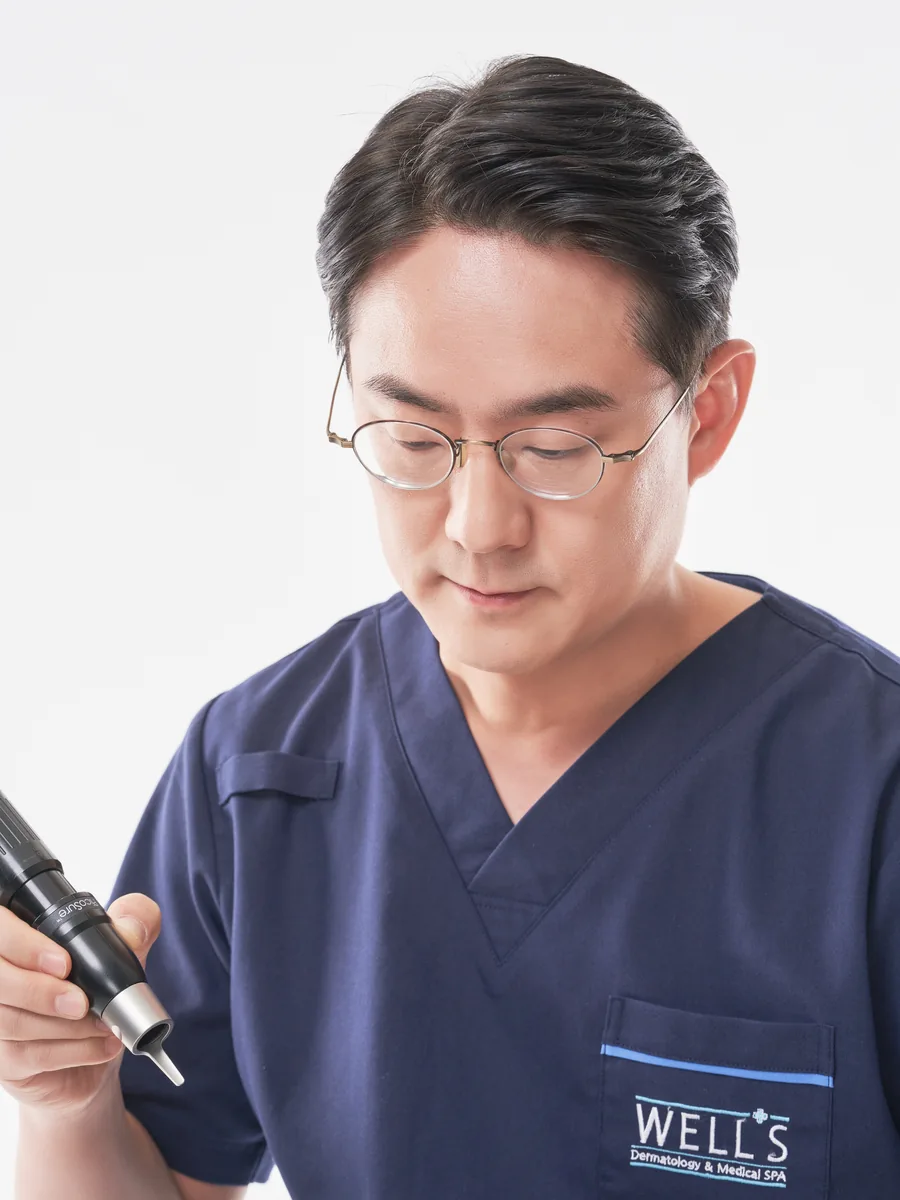
At WELLS Clinic in Apgujeong, a dermatologist does the consultation and the injection, using a cannula where possible because it lowers the risk of vessel damage that comes with a standard needle. The product and the amount are confirmed with you before treatment. For a traveler, those details matter more than the brand on the syringe.
If you already have filler somewhere, or you're planning your first, start with two things on WhatsApp: front and both side photos of your face in daylight without makeup, and your travel dates. Add the product and date of any earlier filler if you know them. You'll get a reply in English with a first suggestion of which options and what timing could fit your trip.
Send a clear photo and your travel dates, and we will tell you what fits the time you have in Seoul.
Send your face photos and travel dates on WhatsAppMostly hyaluronic acid, a sugar molecule your skin already makes, cross-linked into a gel so it stays in place longer than the natural form. Brands differ in how firm the gel is, how large its particles are and whether lidocaine is mixed in. The American Society of Plastic Surgeons groups fillers by material: HA, calcium hydroxylapatite, poly-L-lactic acid and others.
Names like Maxfill, Elasty or Eurasia show up when you search for Korean HA filler. Many of those pages are product listings aimed at buyers, which is a separate matter from treatment. The FDA's advice is plain: do not buy dermal filler online because it could be counterfeit, and needle-free "pens" are not approved for injecting filler.
A syringe that arrives in the mail skips everything that makes filler reasonably safe. There is no examined face, no sterile technique and nobody trained to recognise a blocked vessel in the minutes it matters.
Gel firmness is the variable worth understanding. A firmer, larger-particle gel holds its shape under strong movement, which is why the WELLS filler page describes a large-particle, longer-lasting filler for nasolabial folds. A softer gel spreads more evenly under thin skin such as the under-eye. Poly-L-lactic acid takes a different route, prompting your own collagen over several sessions; our guide to PLLA filler in Seoul covers that option.
Five things people from abroad are often surprised by
Overseas visitors ask about filler in recurring patterns. None of them describes one person, and none of them is about a result.

- The brand matters less than placement. People often arrive with a product name from a forum. The more useful questions are which depth, which tool and how much gel for each area.
- The listed areas are specific. The WELLS filler page lists forehead, under-eye hollows, nasolabial folds, cheeks and chin. If you're searching for Korean lip fillers, ask on WhatsApp before you build a trip around lips.
- Forehead filler is a balancing act. The aim is volume that doesn't make the whole face look larger, so the plan is shaped around proportion first.
- Under-eye hollows can be treated without surgery. It is also the area where gel choice and depth leave the least margin; our Korean under eye filler guide explains who it suits.
- Old filler changes the plan. Filler placed years ago can still be there. Knowing what was used, and when, helps the dermatologist decide whether to add, wait or dissolve first.
The chin is the area people underestimate. A small amount at the tip can change how the whole lower face reads in profile, which our page on planning chin filler walks through.
Who korean dermal fillers suit, and who should wait
Fillers suit people whose main concern is lost or uneven volume: hollow under-eyes, deep folds beside the nose and mouth, flat cheeks, or a short chin that throws off the profile. The American Academy of Dermatology lists cheek volume, under-eye hollows, deep creases and scars among the goals fillers address.
They're a poorer fit when the main problem is loose skin. Adding gel to sagging tissue tends to make a face look heavier, and that is where a lifting device or a collagen stimulator is often the better conversation.
Waiting makes sense if any of these apply. The list follows what the FDA asks patients to tell their provider:
- inflamed or infected skin in the area, which should be treated first
- a bleeding disorder
- severe allergies, or an allergy to lidocaine, animal products or bacteria-derived materials
- pregnancy, since the safety of fillers during pregnancy is unknown
Perhaps a doctor at home called your case "difficult" because earlier filler moved or one side healed differently. That word usually means the first step is an assessment before any more product goes in. Our article on under eye filler migration describes what that assessment looks at.
Risks, side effects and what bad cheek fillers usually look like
Swelling and bruising are the common side effects and appear shortly after injection, according to the FDA; redness, tenderness, itching and rash also occur. Lumps under the skin (nodules or granulomas) are less common. The most serious risk is injection into a blood vessel, which can block blood supply and lead to tissue death, vision problems including blindness, or stroke.
Bad cheek fillers usually trace back to three things: too much product, gel placed too shallow, or volume added to a cheek that had dropped and not emptied. The result is a wide, puffy midface or a ridge you can see in side light. More gel rarely fixes a cheek that has sagged.
A cannula's blunt tip tends to push vessels aside where a sharp needle could pierce them, which is why WELLS dermatologists use one where possible. A cannula lowers the risk; it does not remove it. Your anatomy, earlier filler and skin quality set what is sensible, and those are confirmed only when the dermatologist examines your face in person, with 3D analysis before treatment. Healing and the final look differ from person to person.
If earlier filler is the reason you're hesitating, send a close-up photo of that area on WhatsApp, plus the product name and date if you have them. You'll get a reply in English with a first suggestion of options and timing, so you can see whether an assessment belongs on this trip.
Send a clear photo and your travel dates, and we will tell you what fits the time you have in Seoul.
Send your face photos and travel dates on WhatsAppPlanning filler around a short trip to Seoul
Treat injection day as day zero and leave the last days before your flight clear of anything you can't move. Ask at consultation how many days your area and product usually need to settle.
The AAD notes that most people return to everyday activities straight after most fillers, but swelling and bruising appear early, and a long-haul flight, a wedding and a fresh bruise make a poor combination.
WELLS is on the 8th floor of the Apgujeong Building, 842 Nonhyeon-ro, Gangnam-gu, a five-minute walk from Apgujeong Station Exit 3 on Line 3. Hours are Monday to Friday 10:00–20:00 and Saturday 10:00–17:00, with lunch from 13:00 to 14:00. Sundays and public holidays are closed, so a Sunday arrival means a Monday visit at the earliest.
| What to have ready | Why it helps |
|---|---|
| Front and both side photos in daylight, no makeup or filters | A first suggestion of options before you book |
| Product and date of earlier filler, threads or lifting | Decides whether to add, wait or dissolve |
| Medications, allergies, skin conditions, pregnancy | Matches the FDA's list of things to tell your provider |
| Flight dates | Shows how many days you have after injection |
When something feels off after you fly home
Most changes in the first days are swelling and bruising that settle by themselves. A lump you can feel, growing swelling or worsening pain are reasons to get in touch instead of waiting.
Skin turning pale, dusky or blotchy near an injection site, or any change in vision, needs a doctor the same day, at home, because a blocked vessel is time-sensitive.
The CDC's guidance for medical travelers is to carry copies of your records and arrange follow-up care at home before you leave. For filler, write down the product name, the areas treated and the amount you were told before treatment. A dermatologist at home can work far faster with those three facts than with "a Korean HA filler", and our note on what the dermatologist title means in Korea helps you read the credentials on both ends.
If you're weighing korean dermal fillers for one of the five areas above, send front and side photos in daylight and your travel dates on WhatsApp, along with the product and date of any earlier filler. You'll get a reply in English with a first suggestion of which areas and what timing could fit, and whether old filler changes the plan.
Plan your visit before you fly
Send a daylight photo, your travel dates and what you have tried before. A dermatologist will suggest where to start and what fits your stay.
Send your face photos and travel dates on WhatsAppReplies on WhatsApp · prices in KRW, excluding 10% VATBefore you message us
Is it safe to buy Maxfill or Elasty filler online and inject it at home?
No. The FDA advises against buying dermal filler online because it could be counterfeit, and it states that needle-free devices are not approved for injecting filler. Filler belongs in a clinical setting where someone can recognise and treat a blocked blood vessel.
Can hyaluronic acid filler be removed if I don't like it?
HA filler can usually be dissolved with an enzyme called hyaluronidase. The FDA notes that fillers not made of materials such as hyaluronic acid may be difficult or impossible to remove, which is one reason HA is a common choice for a first treatment.
How long do HA fillers last?
HA fillers are absorbed by the body over time, so the FDA notes that patients may need to repeat the procedure. How long a result holds varies with the product, the area and how much the area moves; the dermatologist explains the expected range for your plan at consultation.
Who injects filler at WELLS Clinic?
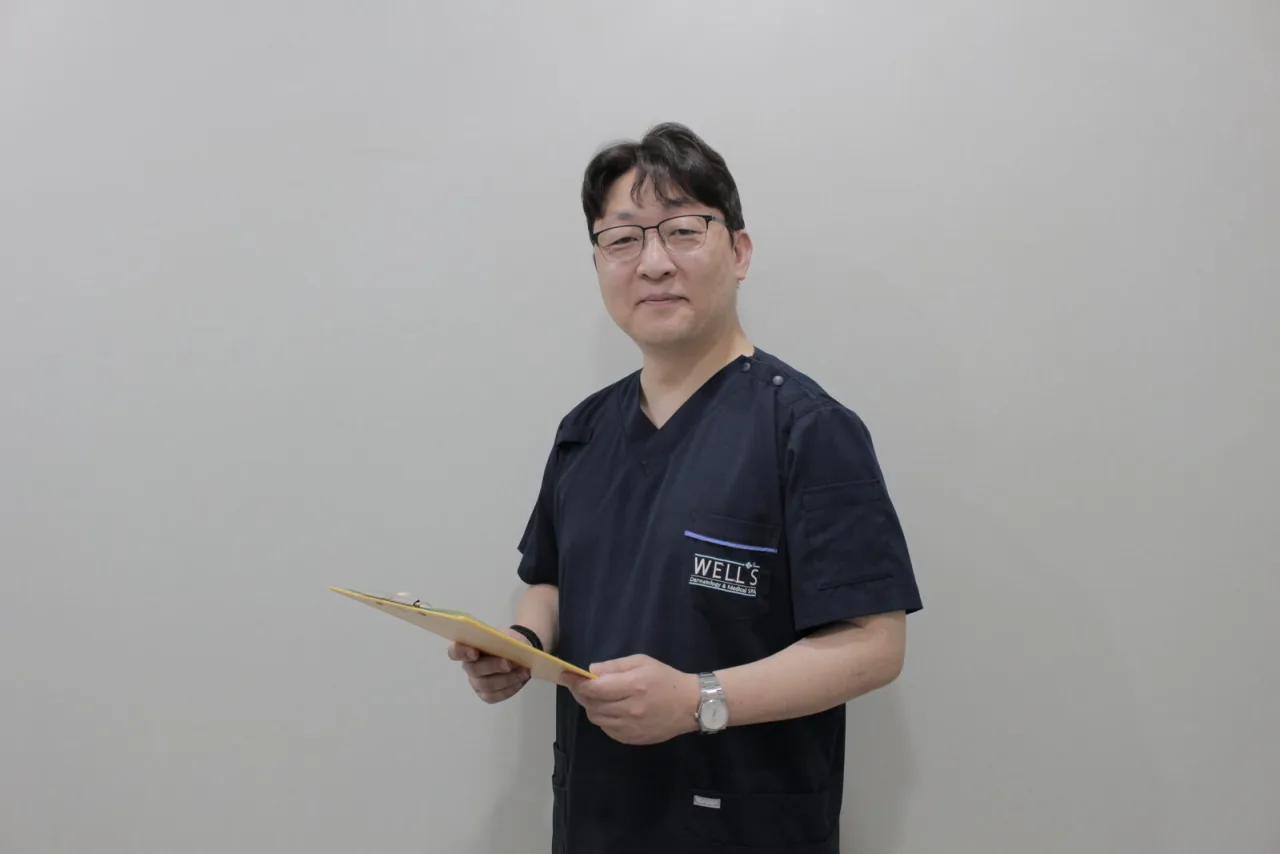
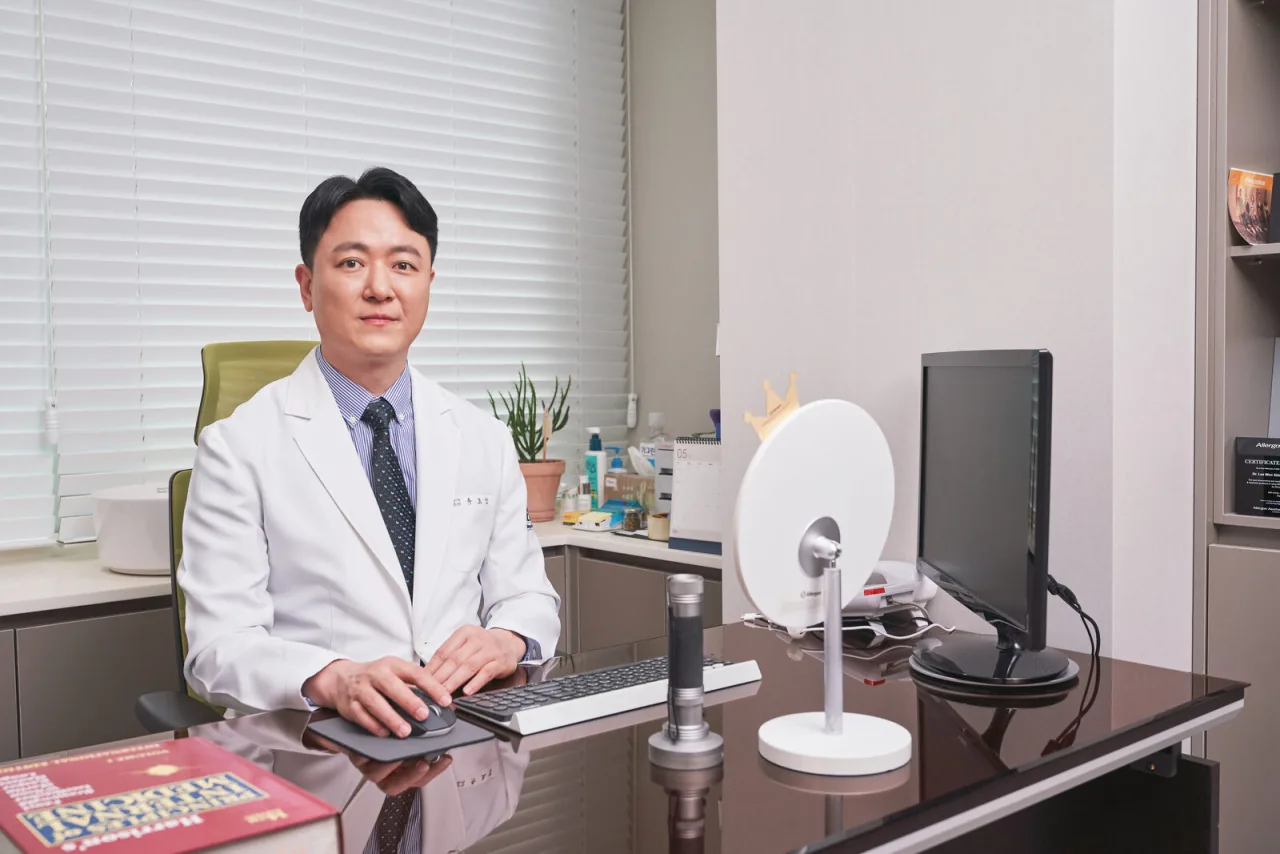
A dermatologist handles the consultation and the injection at WELLS in Apgujeong, Seoul. The clinic's dermatologists use a cannula where possible and confirm the product and amount with you before treatment.
Can filler be combined with neuromodulator on the same visit?
Yes, the two are often planned together. The WELLS filler page notes that combining filler with neuromodulator extends the result, since the neuromodulator relaxes the movement that wears filler down. Whether it suits your face is decided at consultation.
Results and recovery vary by individual. Every treatment carries possible side effects, which are explained at the consultation. Prices are in Korean won, excluding 10% VAT, and confirmed at your consultation. This article is general information from the clinic, not a diagnosis.
Dr. Won Woo Choi
- Board-certified dermatologist in Korea; trained at Seoul National University Hospital
- Dermatology residency, Seoul National University Hospital; board certification in dermatology in Korea
- Ph.D. in Dermatology, Seoul National University
- Former clinical instructor, Seoul National University Hospital
- Adjunct professor, Department of Dermatology, Seoul National University Hospital