How to get rid of acne scars: name the scar type first
Most depressed acne scars can be made shallower, not erased. The method depends on the scar's shape, a course usually takes several sessions, and red or brown marks aren't scars at all.

Whether this treatment suits you needs a dermatologist to assess. Send a photo and your travel dates on WhatsApp, and we reply in English whether it can be arranged for your case and which days are open.
Ask us on WhatsApp
Is it a scar, or a mark that will fade?
You've tried scar creams, a few facials and maybe a home roller, and you still can't work out how to get rid of acne scars that show every time light hits your cheeks from the side. Can they actually go away?
Most depressed acne scars can be made shallower and harder to see, but not erased. What works depends on the scar's shape, and it usually takes several sessions spaced weeks apart. Flat red or brown spots left after a breakout aren't scars, and they need a different plan.
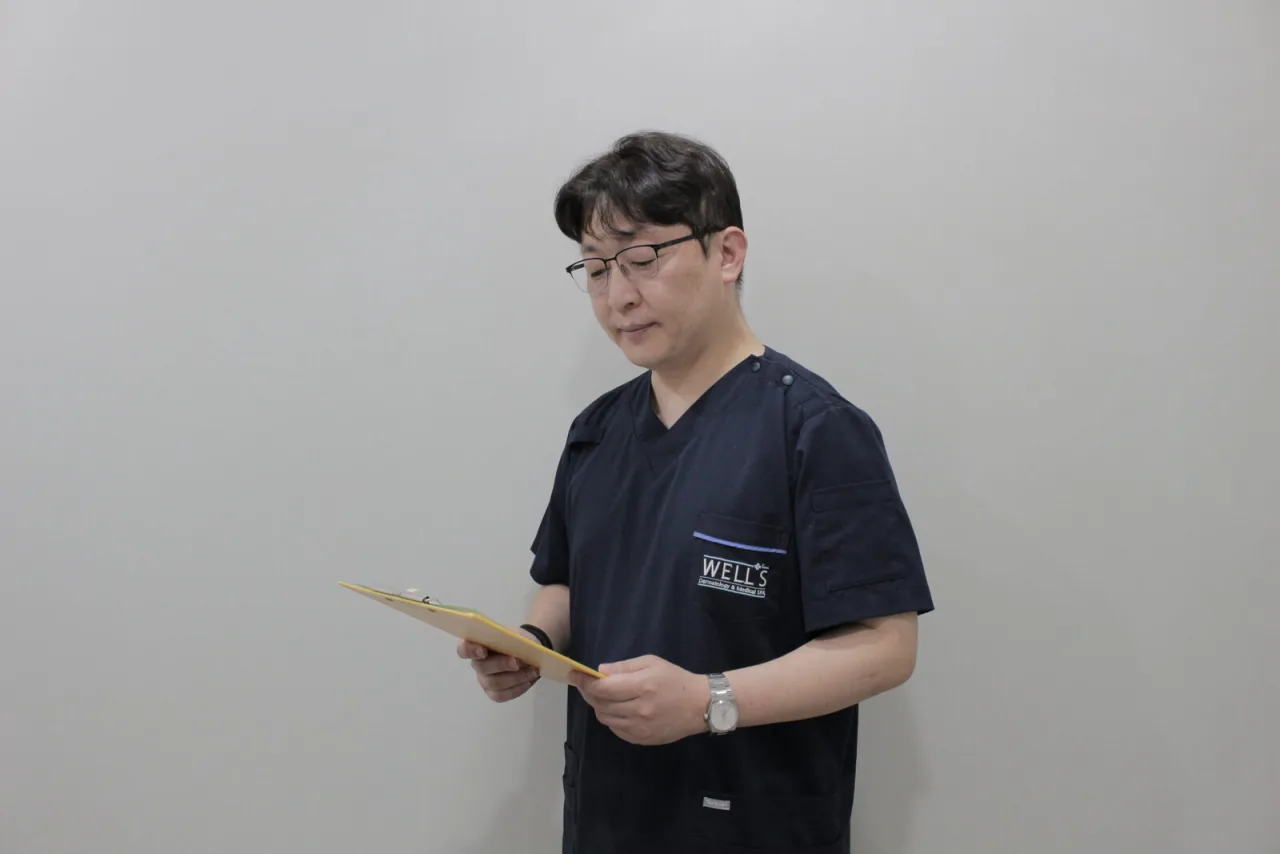
Hello, I'm Dr. Won Woo Choi, Medical Director (M.D., Ph.D.) at WELLS Clinic in Apgujeong, Seoul.
I'm a board-certified dermatologist who trained at Seoul National University Hospital, and the clinic I co-founded in 2008 is still a single clinic in Apgujeong. A board-certified dermatologist handles your consultation, diagnosis and treatment here, and a medical interpreter for your language is provided at no extra charge.
Send a clear photo and your travel dates, and we will tell you what fits the time you have in Seoul.
Send a side-lit photo of your scars on WhatsAppIf you're not sure which kind of scar you have, take one photo of your cheek next to a window with the daylight coming from the side, and send it on WhatsApp with the question that bothers you most. Side light shows the depth that a phone flash flattens, so the photo matches what you see in the mirror.
The first thing to sort out is whether there's a dent at all. After a pimple heals, many people are left with flat pink, red or brown spots. These are color changes, not lost tissue, and they usually fade over months, faster with daily sunscreen.
A true acne scar changes the surface. Tilt your face toward a lamp: a scar casts a small shadow, a mark doesn't. If what you have are tiny white raised bumps rather than dents, they may be milia, which are removed in a different way; I've written about how to get rid of milia under eyes, and the same diagnosis question applies elsewhere on the face.
This is why I put diagnosis ahead of any device. Skin problems that look alike can have different causes and stages, and treating a brown mark as if it were a dent means more heat and more downtime for something that would have faded anyway.
Worried about your own case? Let a dermatologist look first: send a photo and your dates, and we reply whether it can be arranged.
Ask us on WhatsAppWhich type of acne scar do you have?
Depressed scars come in three main shapes, and most faces carry a mix. There's no single answer to how to get rid of acne scars, because each shape fails to flatten for a different reason.
| Scar type | What it looks like | What usually helps |
|---|---|---|
| Rolling | Soft, wavy dips on cheeks and jaw, worse in side light | Collagen-building lasers or microneedle RF, filling where skin is pulled down |
| Boxcar | Round or oval dents with sharp edges | Fractional laser; deeper ones may also need filling |
| Ice pick | Narrow, deep pits, as if pricked with a pin | Hard to reach with surface treatments alone |
| Raised | Firm bumps, more often on chest, back and jawline | A separate plan, usually injections or silicone |
A rolling scar is tethered: bands of scar tissue under the skin pull the surface down. A boxcar scar is a patch where collagen was lost. An ice-pick scar is a narrow tunnel that a laser passing over the surface barely reaches. The treatments I describe below are for depressed scars; if yours are raised, say so in your first message.
Enlarged pores often sit in the same patch of cheek and get mistaken for small scars. They respond to some of the same lasers, which I covered in how to get rid of enlarged pores.
How do lasers and fillers actually lift a scar?
Think of a dented sofa cushion. Smoothing the cover doesn't fix it; the foam underneath has to come back. Scar treatment works in the dermis, the layer below the surface where collagen is laid down, and new collagen takes months to form, which is why one session rarely finishes the job.
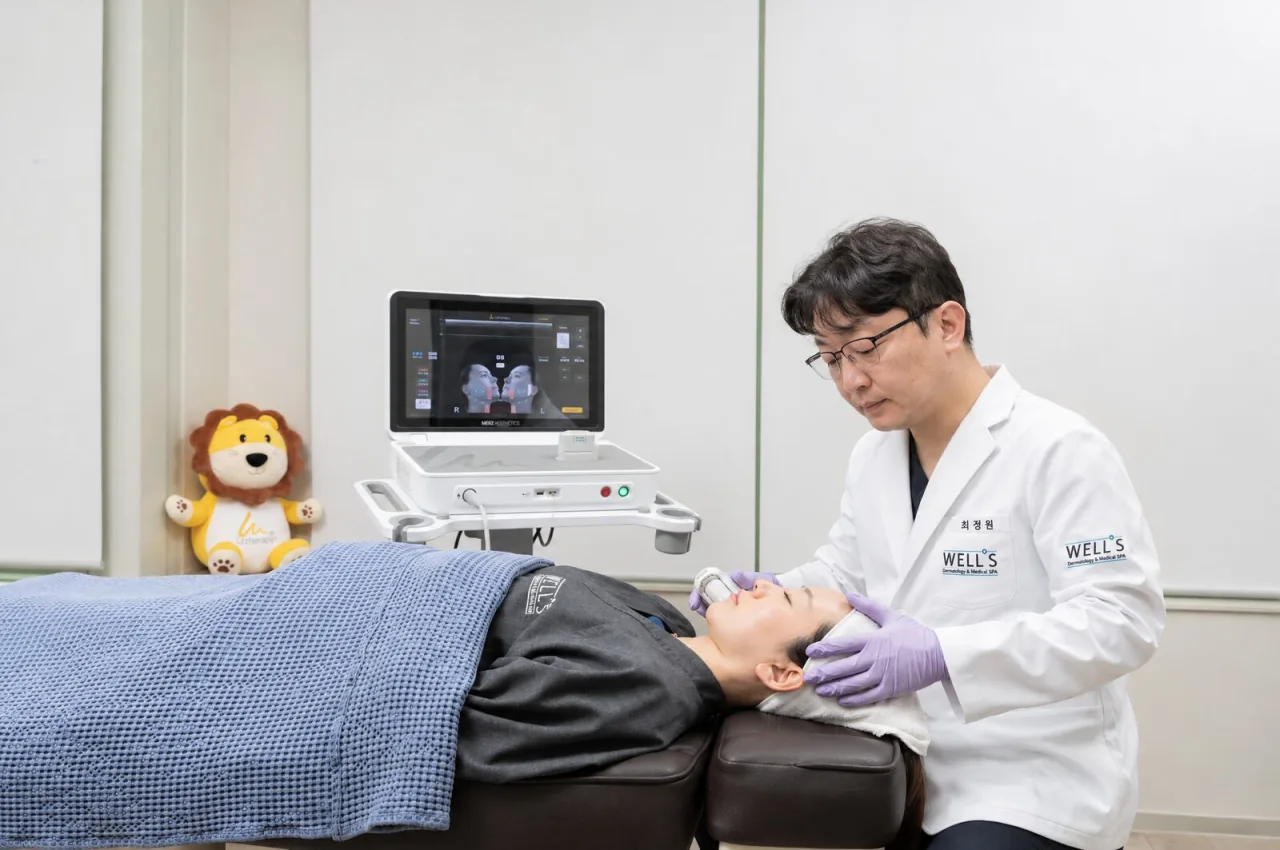
For many depressed scars we use Fractional Picosecond Laser Treatment. It creates tiny points of optical breakdown inside the dermis with almost no heat damage to the surface, so there's no oozing, no dressing to wear, and redness usually clears in 3–4 days. Mosaic fractional laser, microneedle RF, Aquapeel and the Clarity dual laser are combined depending on the scar type and the condition of your pores.
Before treatment there is a 3D analysis of the skin, and results are shown to you under a dermatoscope, so you can see the change at the level of the scar rather than guessing from a selfie.
For deep rolling or boxcar scars, lasers alone may leave a shallow dip. Juvelook, a KFDA-approved mix of PLA and hyaluronic acid, fills a depressed scar right away while it also stimulates collagen. If it's on your list, planning Juvelook around a Seoul trip covers the timing.
Ice-pick scars are the exception. Many dermatologists treat each pit one by one with a focused chemical or a tiny excision, and those pit-by-pit techniques aren't on the scar menu listed on our site. If most of your scars are ice-pick, mention it in your first message and ask what fits.
Clear the active acne first
Lasers can soften old scars, but every new inflamed spot can leave a new one. If you're still breaking out, I'd treat the acne before the scars. Treating scars while new ones are still forming means working on the same patch of skin twice.
For active acne the options here are chosen by type. Gold PTT applies a gold nanoparticle ampoule that a laser activates to shut down the oil gland, weekly for 3–5 sessions. Blue PDT uses no photosensitizer, so you can go out straight afterwards. There's also 1450 nm acne toning, and Aladdin and FCR peels for back and chest acne.
If you've taken isotretinoin, know the date your course ended. Many dermatologists prefer to let some months pass before laser resurfacing because healing can be slower, so bring that date with you.
How many sessions, and how many days in Seoul?
Expect a course, not a single visit. Depressed scars usually need several sessions spaced weeks apart, because each one starts collagen that takes time to build. After fractional picosecond laser, redness usually clears in 3–4 days, so a single session can fit a short trip if you leave the last days for the skin to settle.
Say you're 31, living in Singapore, with rolling scars on both cheeks and a few boxcar scars near the temples, and you have five days in Seoul in April. I'd want your breakouts under control before you fly, the exam and first laser session on day one or two, and the last two days kept free so the pinkness fades before the airport. Whether the deeper dents also need filling is something to decide once the dermatologist sees how they lift in side light; the remaining sessions become return visits.
For a fuller day-by-day plan, Korean acne scar treatment around a trip to Seoul walks through the days.
What changes the number of sessions, and the cost
The cost follows a handful of things: which methods your scar types need (laser alone, or laser plus filling), how large an area is treated, how many sessions it takes, and whether active acne needs treatment first. Prices are listed in Korean won excluding VAT, and the dermatologist confirms your plan and the final price at the consultation, before anything starts. Ask on WhatsApp what it would come to for your scars; deposit and payment method are settled after the consultation, so you can ask about both in that same message.
Send a clear photo and your travel dates, and we will tell you what fits the time you have in Seoul.
Send a side-lit photo of your scars on WhatsAppIf you already have travel dates, send them on WhatsApp together with the end date of any acne medication you've taken. Those two dates decide how much of the course can fit into this trip.
Redness, darker patches and other risks
The usual reactions are redness and mild swelling for a few days, which after fractional picosecond laser typically clear in 3–4 days. Stronger fractional lasers can leave fine dryness or flaking for about a week. After filling, small bruises or a slight lumpy feel can appear and usually settle.
The risk I watch most is darkening. Skin that's prone to brown marks after spots, or skin that meets strong sun soon after treatment, can develop darker patches that take months to fade. Infection and a cold-sore flare are less common but possible. How your skin responds varies with skin type and scar depth.
Who should wait or skip it for now:
- Active breakouts or infection in the area to be treated
- A recent isotretinoin course
- Pregnancy or breastfeeding
- A fresh tan or sunburn
- A history of keloids, or allergy to a filler ingredient
Once you're home, use sunscreen every day and keep products plain for the first week. If redness spreads, the area becomes painful, or you see pus or blisters, see a local doctor promptly. Before you leave Seoul, write down what was done and on which date, and make "who do I contact if something changes after I'm home" one of your questions at the consultation.
Work done by non-specialists sometimes leaves marks that take longer to settle. If a home roller or an unsupervised peel has already irritated your skin, let it calm and show it to a dermatologist first.
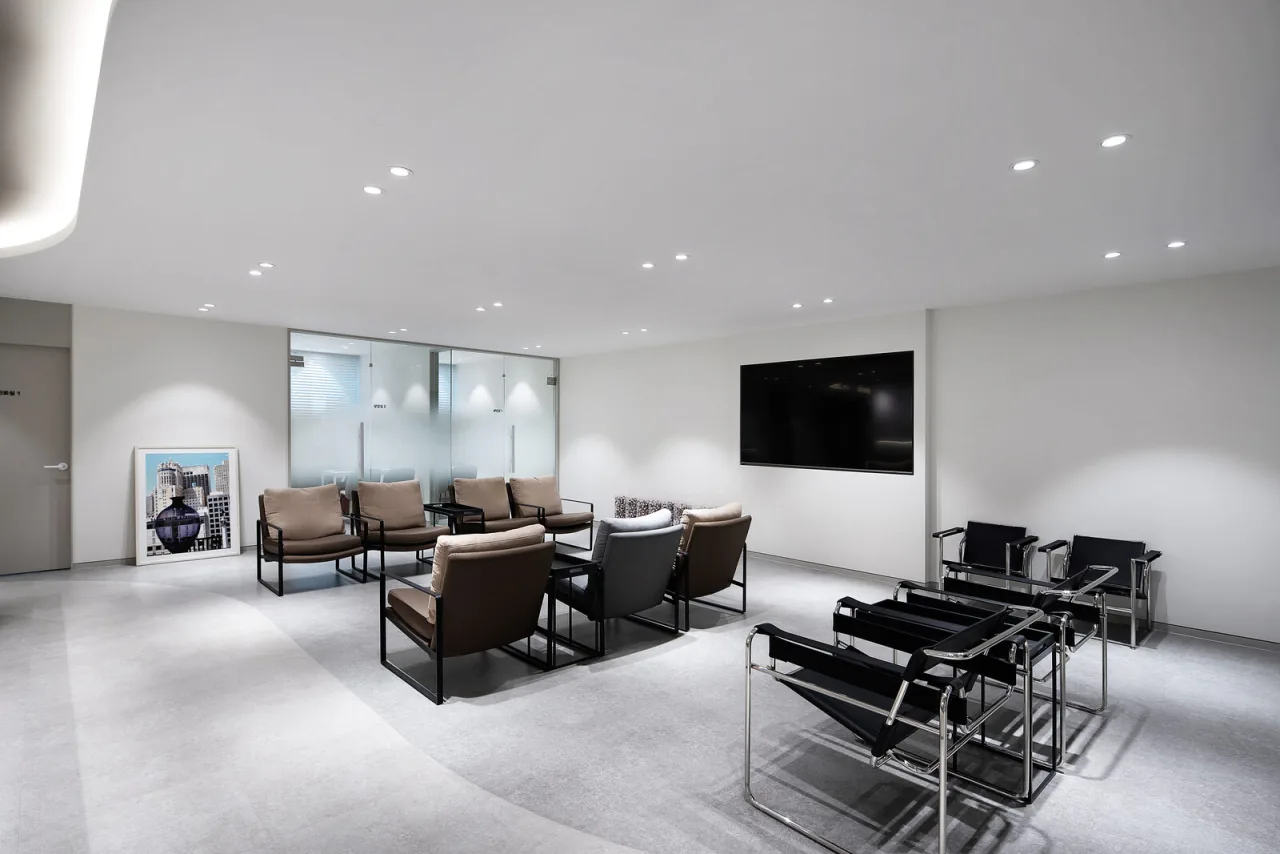
What to ask any clinic before scar treatment
Whoever you talk to about how to get rid of acne scars, get these answered before the first session:
- Who examines my scars, and is that the person who treats them?
- Which scar types do you see on my face, and which method is for which?
- How many sessions do you expect, and how far apart?
- What should my skin look like on day three, and when can I fly?
- If I get darker patches, what's the plan once I'm home?
- Is the final price confirmed before treatment starts?
It doesn't have to be WELLS. Wherever you go, clear answers to these tell you the plan was built on your skin.
My own view on acne scars comes down to three things: diagnose first, work in stages, and use only as much heat as the scar needs. A face with rolling scars and old red marks often looks like one problem and turns out to be two or three. You don't have to pick a method before your skin has been examined, and there's no rush to fit everything into one trip.
If you'd like to start, send one side-lit photo of your cheeks and your travel dates on WhatsApp, and ask how much of the course could fit into those days. Replies on WhatsApp are in English, and you'll get a suggested plan and appointment time before you travel. What decides your plan in the end is how deep the deepest dents are and whether they're tethered underneath.
— Dr. Won Woo Choi, Medical Director · M.D., Ph.D.
Plan your visit before you fly
Send a daylight photo, your travel dates and what you have tried before. A dermatologist will suggest where to start and what fits your stay.
Send a side-lit photo of your scars on WhatsAppReplies on WhatsApp · prices in KRW, including 10% VATBefore you message us
Do scar creams or retinoids make a difference?
For flat red or brown marks, daily sunscreen and products a dermatologist recommends can help them fade faster. For a scar with a real dent, creams don't rebuild the missing collagen underneath. They can make the surrounding skin smoother, which helps a little in side light.
Can treated scars come back?
Collagen built during treatment doesn't simply vanish, but skin keeps aging and losing volume, which can make old dents look deeper years later. New breakouts can also leave new scars, so keeping acne under control matters as much as the treatment.
Can I fly home the day after a laser session?
Flying doesn't harm healing skin, but cabin air is dry, so pack a plain moisturizer and sunscreen. After fractional picosecond laser the redness usually clears in 3–4 days, so expect some pinkness on the flight if you leave early.
Is Juvelook the same as an ordinary filler?
Not quite. It combines PLA, which stimulates collagen, with hyaluronic acid, which gives volume straight away, so a dent is raised immediately and collagen keeps building. It's used for depressed scars, not raised ones.
I have darker skin. Are lasers riskier for me?
Darker skin darkens more easily after heat or irritation. Lasers that spare the surface, such as fractional picosecond treatment, are generally chosen to lower that risk, and strict sun protection for several weeks afterwards matters more. Mention any dark patches you've had after spots or past procedures.
Results and recovery vary by individual. Every treatment carries possible side effects, which are explained at the consultation. Prices are in Korean won, including 10% VAT, and confirmed at your consultation. This article is general information from the clinic, not a diagnosis.
See the treatment in detail, or ask us
You can ask whether it suits your case, which dates are open, and about language support.
Message us on WhatsAppDr. Won Woo Choi
- Board-certified dermatologist in Korea; trained at Seoul National University Hospital
- Dermatology residency, Seoul National University Hospital; board certification in dermatology in Korea
- Ph.D. in Dermatology, Seoul National University
- Former clinical instructor, Seoul National University Hospital
- Adjunct professor, Department of Dermatology, Seoul National University Hospital
Medically reviewed by Dr. Won Woo Choi
Full profile