Korea skin care at a dermatologist in 5 stops, from 3D analysis to your flight home
Korea skin care at a dermatology clinic means a dermatologist examines your skin first, then chooses lasers, skin boosters, lifting devices or scalp treatment to sit alongside the products you use at home.

What does Korea skin care mean at a dermatology clinic?
Is Korea skin care worth planning a trip around, or will you board your flight home still red? Read on before you book anything.
After this you will know what a dermatology visit in Seoul involves, which treatments suit which concerns, how much redness to plan for, and what carries on at home, so you can fit it to your dates.
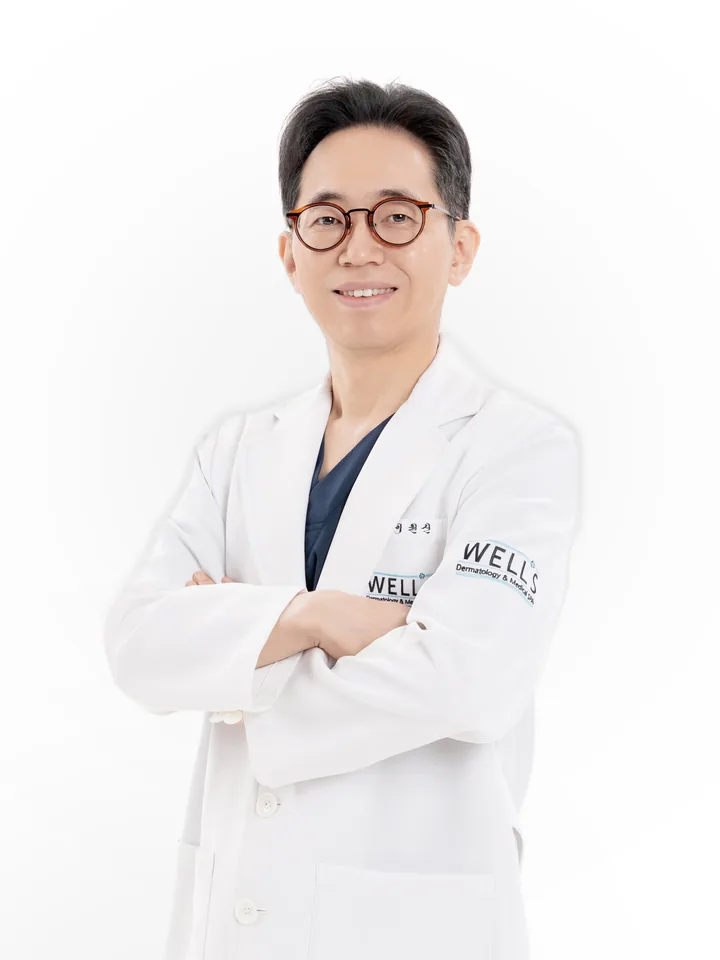
I'm Dr. Won Woo Choi, Medical Director · M.D., Ph.D. At WELLS Clinic in Apgujeong, a 3D analysis comes before any procedure is chosen. I wrote this because many people think Korea skin care is a product routine, when the concern they came for often has a different cause than they assumed. The short answer: a dermatologist examines your skin first, then picks treatments to sit alongside the products you already use.
Send a clear photo and your travel dates, and we will tell you what fits the time you have in Seoul.
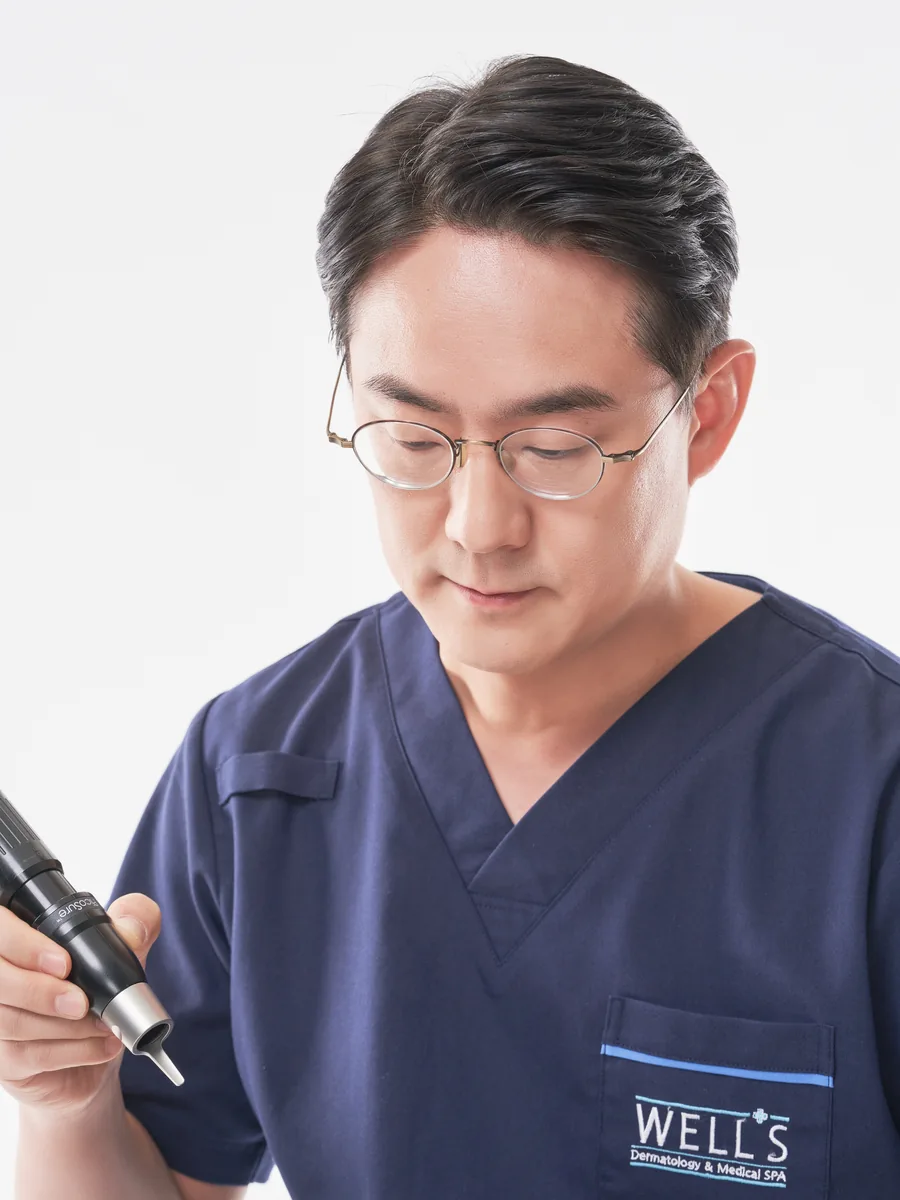
Send a photo and your travel dates on WhatsAppAt a dermatology clinic, Korea skin care means diagnosis before products. A dermatologist looks at what is actually going on (pigment, redness, laxity, scarring, thinning hair) and decides which of those a procedure can change and which belong to your daily routine.
Creams work on the surface, and there's a physical reason for that. The "500 Dalton rule" described by Bos and Meinardi in Experimental Dermatology explains that molecules much larger than about 500 daltons generally do not pass through intact skin. Plenty of ingredients that sound impressive on a label are larger than that.
So a clinic reaches deeper in other ways. Some treatments deliver material with fine needles, and others use laser light, radiofrequency, ultrasound or microwave energy that works below the surface. Your serum and sunscreen still matter; they just do a different job.
Stop one: the conversation and the 3D analysis
The clinic is on the 8th floor of the Apgujeong B/D, 842 Nonhyeon-ro, a 5-minute walk from Exit 3 of Apgujeong Station on Line 3. WELLS opened in 2008, and this Apgujeong clinic is its only location.
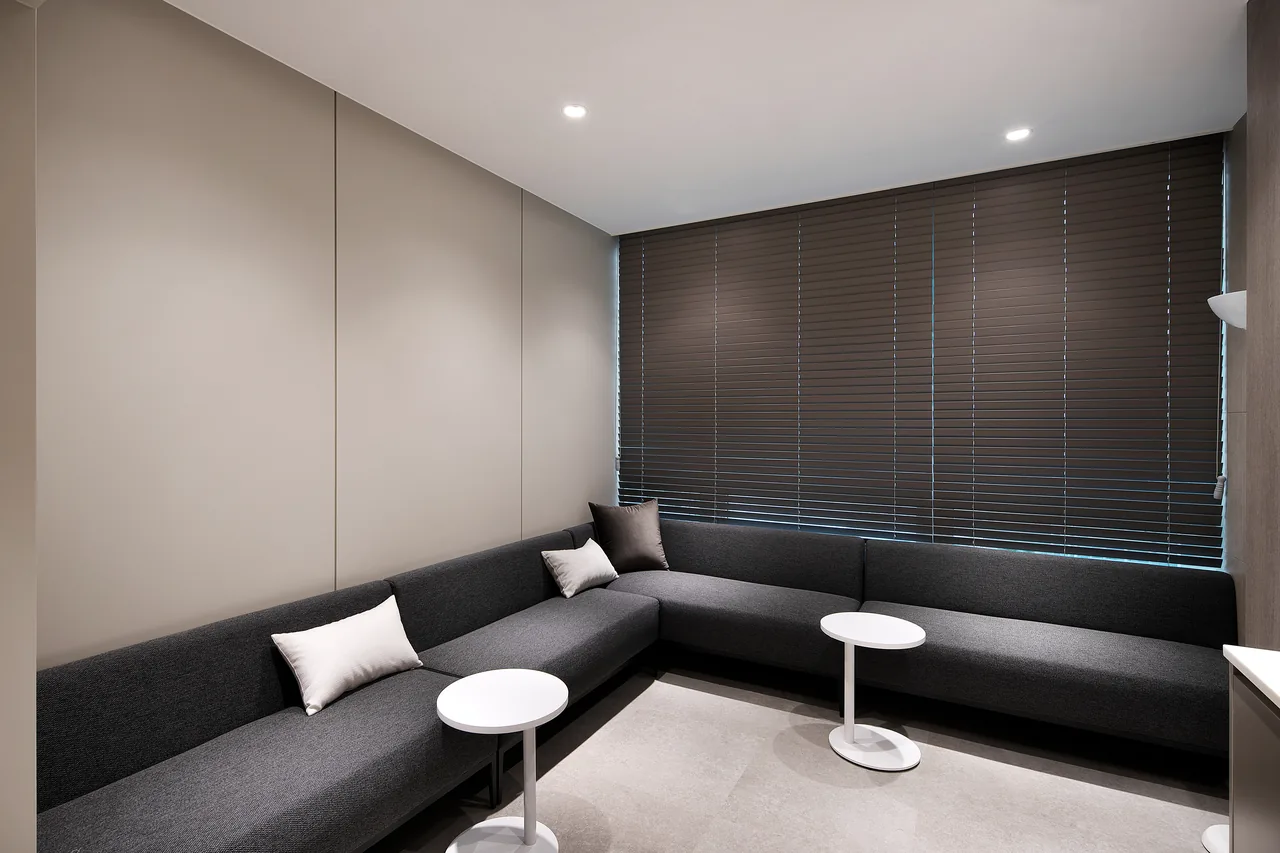
The first stop is a talk with the dermatologist and a 3D analysis of your face. The questions can feel unrelated to skin: when your flight leaves, whether you're pregnant or planning to be, what medicines you take, whether you've been in strong sun recently. Each one changes what is reasonable to do that week.
Here is what a dermatologist is weighing during that look. Brown patches with soft, blurred edges across both cheeks, which darken in summer, point toward melasma, and melasma can get darker after aggressive heat. Small, sharply edged spots that appeared after years of sun behave differently and usually respond to stronger light. Loose skin along the jawline raises a different question altogether: how much of it is skin laxity a device can tighten, and how much is volume or bone change that no device reaches.
Which treatments are part of skin care in Korea, and who does each suit?
Each common concern has a short list of options. The fit is decided by your skin type, the depth of the problem and how much downtime your trip allows. The table lists what WELLS offers for each concern and when that option is usually a poor match.
| Concern | Options at WELLS | Usually a poor fit when |
|---|---|---|
| Freckles, sun spots | BBL, PicoSure Pro | skin is freshly tanned |
| Melasma, stubborn pigment | Pico toning, MELA Triple Toning | you expect one session to clear it |
| Dryness, fine texture | Rejuran HB+ skin booster | the main issue is sagging |
| Loose skin, jawline | Thermage MAX, Ultherapy Prime, Onda, InMode | you want a surgical-level change |
| Thinning hair | CeraXosome Scalp & Hair Program, hair loss treatment | sudden patchy loss needs diagnosis first |
Pigment work is often a course of gentle sessions; how laser toning sessions are planned covers spacing them around trips. Skin boosters are also usually a series, and a 2025 systematic review of polynucleotides in esthetic medicine in the Journal of Cosmetic Dermatology gathered the published evidence on this class of injection. Our post on which skin booster fits and how many visits to plan goes further.
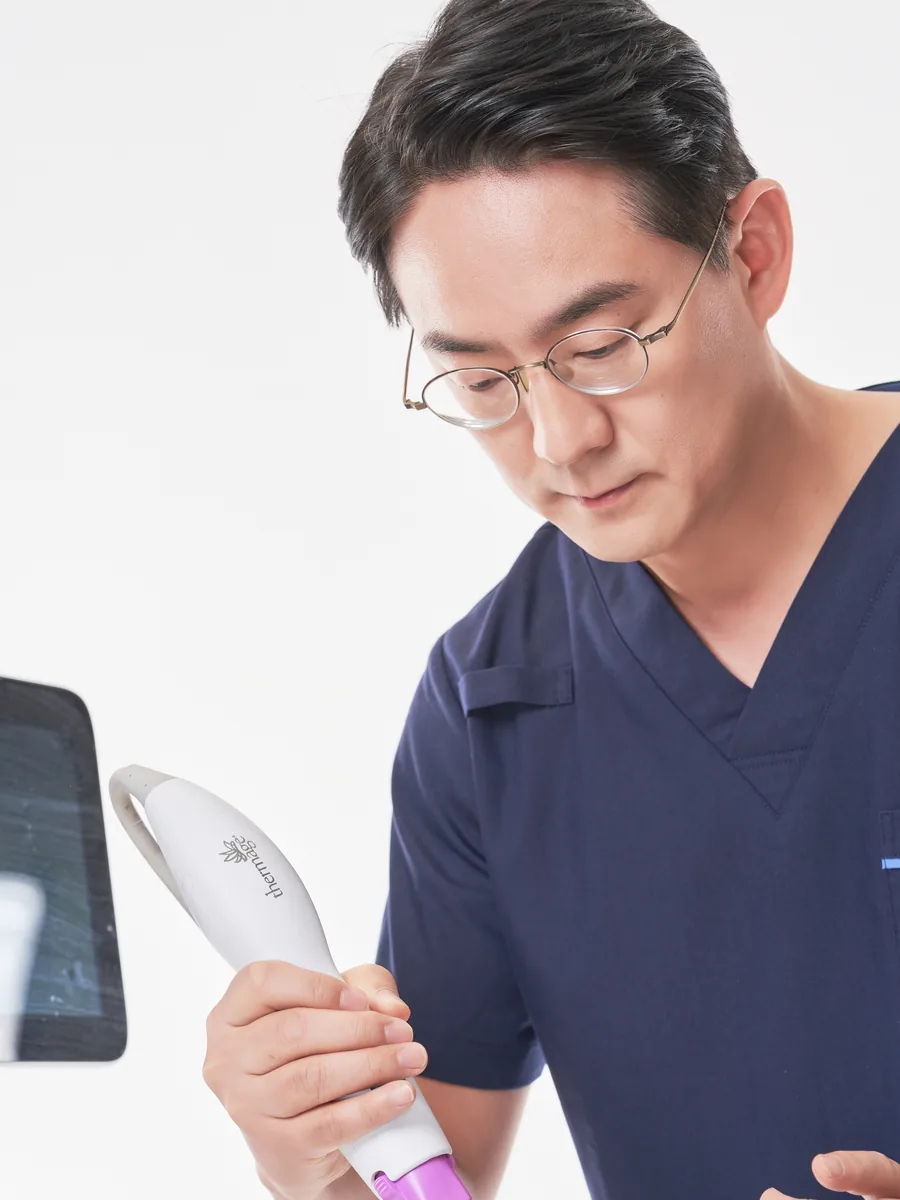
For Thermage and Ultherapy, WELLS uses genuine manufacturer tips, with a stated tenfold compensation policy if a tip is not genuine. If breakouts are your main reason for the trip, acne care at a Seoul clinic is a separate decision with its own timeline.
Say you are 52, travelling to Seoul with your daughter for five days, and you want your skin to look less tired before a family event after you return. You mention redness around the nose and some dullness. I would start with the exam and the 3D analysis, because redness like that can come from sensitivity, from visible vessels or from the products you use, and each calls for a different treatment.
With a flight at the end of the week, I would also lean toward options with little visible reaction and put anything stronger earlier in the trip, so the redness has days to settle. That is the kind of reasoning I would go through with you, adjusted to what the exam shows.
Your scalp is skin, and that's where CeraXosome fits
Thinning hair starts in the scalp. The follicle sits in the dermis, so a dermatologist treats it as a skin problem. WELLS runs the CeraXosome Scalp & Hair Program for hair that has become thin, fine or less full at the hairline or crown, including postpartum or post-menopausal hair loss and care after a hair transplant.
The in-clinic session has a fixed order:
- A scalp microbiome test and standardized photos of the hairline and crown, as a baseline.
- Lidocaine spray on the treated area three minutes before a fine microneedle system delivers CeraXosome into the scalp, followed by an AQ injection and electromagnetic therapy.
- Three months of daily NMN, spermidine and keratin chews at home, between visits.
In clinical treatment courses, the infiltration is repeated every two weeks, and the doctor recommends how many sessions your scalp needs. For a traveler, that means one visit starts the program and the home part continues it. Whether a full course makes sense for you comes down to how often you can come back to Seoul.
How much redness should you expect before your flight home?
Plan by treatment. Pigment toning usually leaves little visible sign beyond some pinkness. Microneedle RF such as Potenza or Genius RF commonly leaves redness and small grid marks for a few days. Injections can bruise, and lifting devices can leave the skin tender to touch for a while.
The risks are real, even when uncommon. Lasers can cause temporary darkening of pigment, especially in darker skin and in melasma. Energy devices carry a small risk of burns or blisters, and any needle can bruise or, rarely, become infected. These are the reasons for the 3D analysis and the medication questions before anything is chosen.
People on blood thinners bruise more easily and should say so at the start. Whether you're a candidate is decided at the in-person exam, after the doctor has seen your skin.
WELLS does not use unnecessary sleep sedation. For comfort it uses Air NOX, a non-sleep sedation system with oxygen and nitrous oxide, so you stay awake and can walk out afterwards. Clinic hours are Monday to Friday 10:00–20:00 and Saturday 10:00–17:00 (lunch 13:00–14:00), closed Sundays and holidays, so a Saturday afternoon is the last slot before a Sunday flight.
To work out your own buffer, send your flight dates and one photo of the concern on WhatsApp.
Send a clear photo and your travel dates, and we will tell you what fits the time you have in Seoul.
Send a photo and your travel dates on WhatsAppWhat carries on once you're home?
The routine does. Daily sunscreen protects any pigment work, a gentle cleanser and moisturizer help skin settle after microneedling, and for scalp care the three months of home chews are built into the program.
What if something unexpected happens at home?
Keep a note of what was done, with the treatment names and dates. If anything unexpected happens at home, such as spreading redness, swelling that keeps growing or a blister, see a local dermatologist and show them that note. Pigment and scalp results take weeks to judge, so give a course time before deciding what to do next.
If moles or spots also worry you, our guide to mole removal in Korea, from photo to aftercare explains how deeper moles are handled in stages.
What decides the cost of Korea skin care at a clinic?
The cost depends on the treatment itself and on your skin, not on a fixed package. The method matters first: a laser, a skin booster, an energy-based lifting session and a scalp treatment differ in time and materials. The area and the amount used come next, since a small area and a full face are not the same job. Some concerns need more than one session, which affects how many days you stay in Korea, and whether you want sedation or numbing for comfort changes the plan as well.
Follow-up after you fly home is also part of the picture. To get the figure for your case, send a clear daylight photo of your main concern on WhatsApp and ask what your plan would involve.
What are the risks when a parent has treatment during a trip?
Older skin tends to bring several concerns at once: age spots, loosening along the jaw, dryness, a thinning crown. Ranking them before the trip helps, because not all of them belong in one visit. Long-standing medications such as blood thinners matter more here, and so does the pace of the day.
Non-sleep sedation means a parent stays awake and can leave on their own feet. Apgujeong Station's Exit 3 is a 5-minute walk from the clinic, which matters if you're juggling luggage and a flight. Build in one quiet evening after any treatment that leaves marks.
Send one clear daylight photo of your main concern (for thinning hair, the crown and part line) on WhatsApp, along with the dates you're considering, and ask one question: which treatment would you look at first, and how much redness should you expect before your flight? One photo is enough to start, and you can ask before booking anything.
Plan your visit before you fly
Send a daylight photo, your travel dates and what you have tried before. A dermatologist will suggest where to start and what fits your stay.
Send a photo and your travel dates on WhatsAppReplies on WhatsApp · prices in KRW, excluding 10% VATBefore you message us
Is Korean skin care just a 10-step product routine?
The product routine is the part most people know. In Seoul, skin care also includes dermatology clinics that treat pigment, scars, laxity and thinning hair with lasers, energy devices and injections. Products maintain the skin day to day, while procedures address what creams can't reach.
Can one clinic visit in Seoul give me glass skin?
A single visit can improve hydration and texture, but the smooth, even look people call glass skin usually comes from a course of treatments plus a steady routine and daily sunscreen. A dermatologist looks first at what is blocking that look, such as pigment, enlarged pores or dryness, and plans for that.
Will I be put to sleep for treatments at WELLS?
No unnecessary sleep sedation is used. When comfort support is needed, WELLS uses Air NOX, a non-sleep sedation system with oxygen and nitrous oxide, so you remain awake. For CeraXosome, a lidocaine spray is applied to the scalp three minutes before the microneedle step.
Do I need to plan around the clinic's opening days?
Yes. WELLS is open Monday to Friday 10:00–20:00 and Saturday 10:00–17:00, with lunch from 13:00 to 14:00, and closed on Sundays and holidays.
Can skin care products bought in Korea replace clinic treatment?
They do a different job. Products are good for hydration, barrier care and sun protection, while deeper pigment, laxity and scarring usually need a procedure.
Results and recovery vary by individual. Every treatment carries possible side effects, which are explained at the consultation. Prices are in Korean won, excluding 10% VAT, and confirmed at your consultation. This article is general information from the clinic, not a diagnosis.
Dr. Won Woo Choi
- Board-certified dermatologist in Korea; trained at Seoul National University Hospital
- Dermatology residency, Seoul National University Hospital; board certification in dermatology in Korea
- Ph.D. in Dermatology, Seoul National University
- Former clinical instructor, Seoul National University Hospital
- Adjunct professor, Department of Dermatology, Seoul National University Hospital