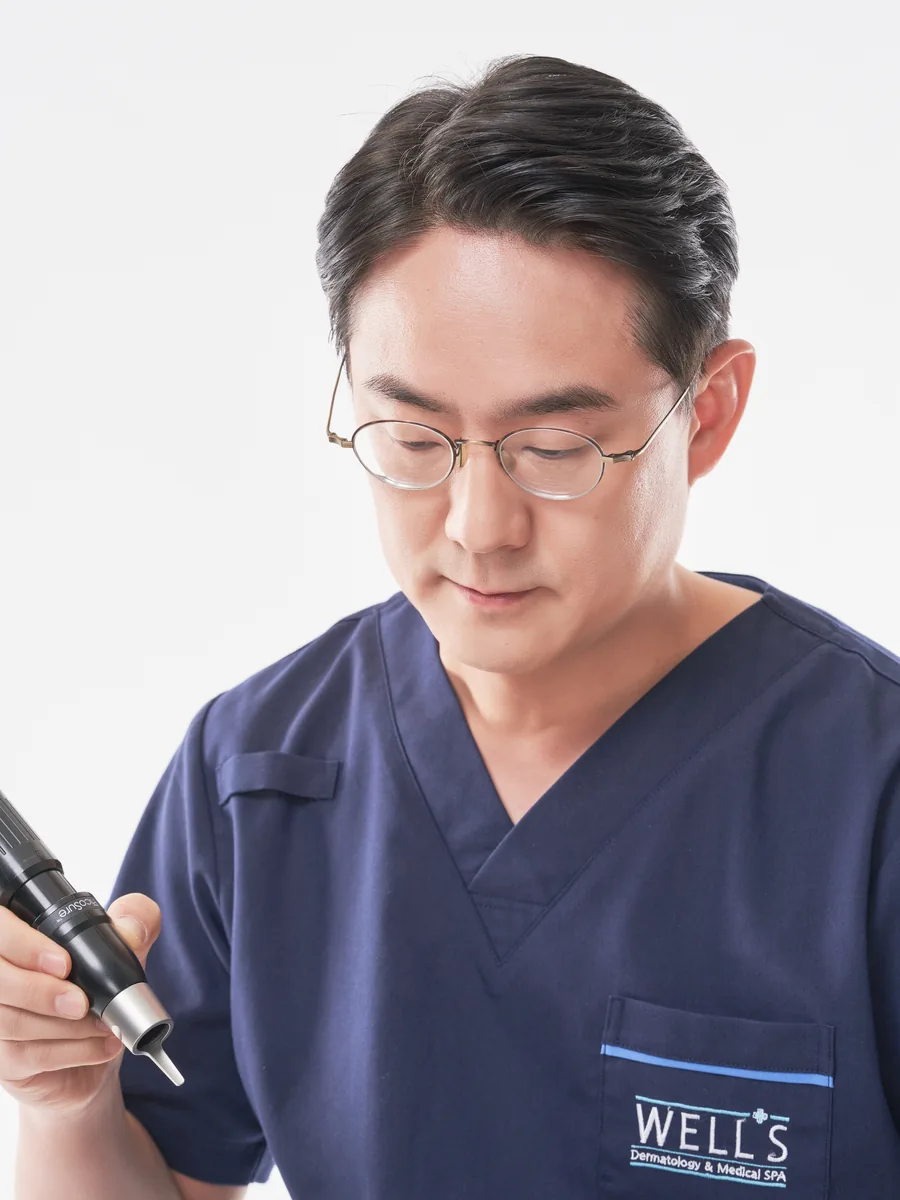
The best PDRN in Korea for dry skin: how we choose at Wells
A Seoul dermatologist on what polynucleotide injections do for dry, tight, textured skin — and how to plan the visit around your flights.

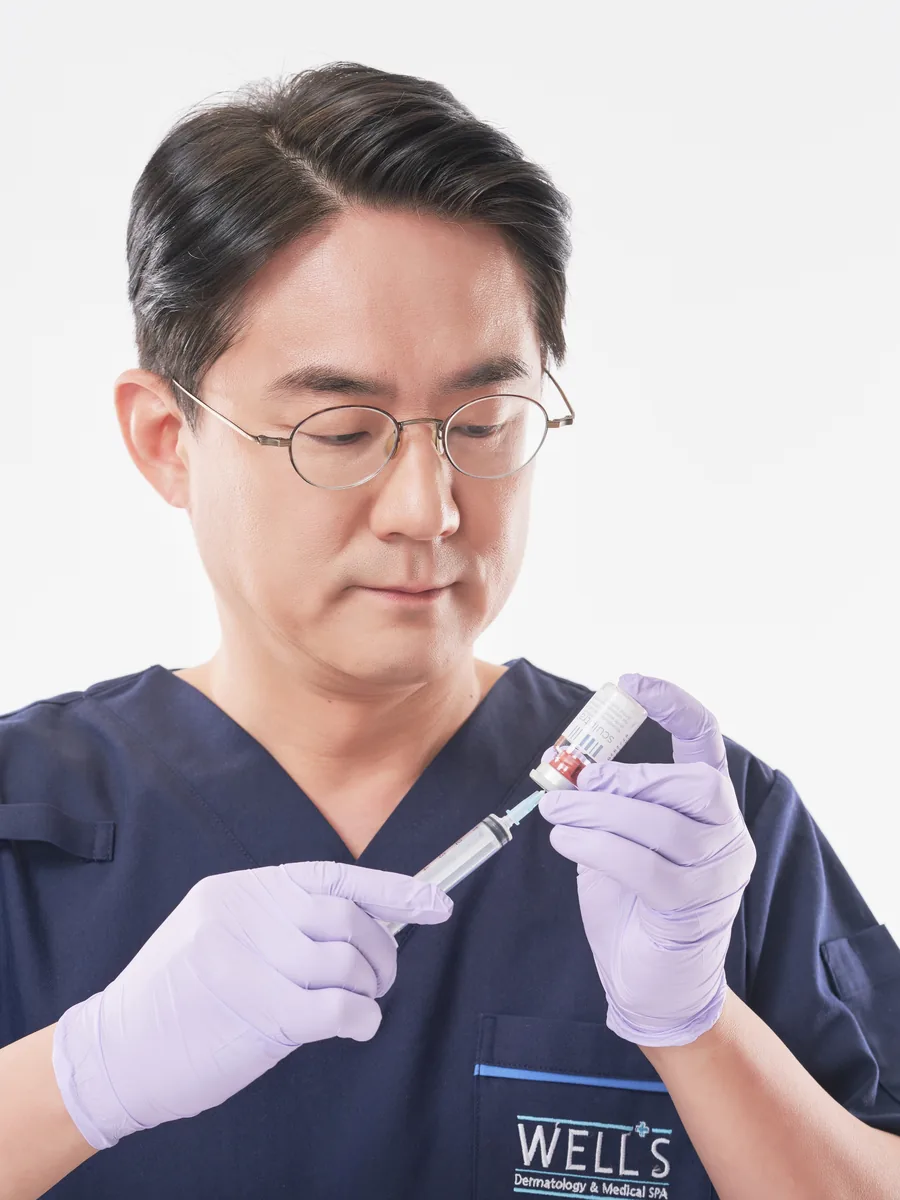
What is PDRN, and why do people search for it for dry skin?
If your skin feels tight by mid-morning, if makeup sits in fine creases on the cheeks, and if you have already tried every serum on the shelf, you have probably typed best PDRN in Korea for dry skin into a search bar at some point. It is a fair question to ask before booking a flight to Seoul. It is also a question that no honest dermatologist can answer without looking at your skin first.
PDRN is the name most international patients use. On our site and in our consultation room we use the wording the product itself uses — polynucleotide, or PN, derived from salmon DNA. Same family of molecule, different label depending on which country's marketing you read first.
Polynucleotide improves the skin's internal environment and restores its structure. It increases elasticity in both epidermis and dermis, smooths fine lines and texture, and normalises the oil–moisture balance so the skin looks less dull. That last part is why dry, tight skin is one of the most common reasons people ask about it.
I say this carefully: a booster is not a moisturiser in a syringe. It works on the environment underneath, which is a slower and more structural change than anything you apply on top.
Which polynucleotide option does Wells use, and why HB+?
At Wells we use Rejuran HB+ — salmon-derived polynucleotide combined with hyaluronic acid and lidocaine. The hyaluronic acid in the formula strengthens hydration, which is the specific reason I reach for this version rather than a plain PN when someone's main complaint is dryness and tightness.
The lidocaine matters too. In the manufacturer's data, the lidocaine in the formula cut post-injection pain by an average of 53% on the VAS scale compared with Rejuran Healer. For a patient who has flown in and is nervous about a face full of injections, that difference is not cosmetic.
For the HB+ booster on its own, four sessions at 2–3 week intervals are recommended. That is a schedule built for someone living in Seoul, not for a five-day trip — which is why the planning conversation matters more than the product name.
- Dry, tight skin that stops holding makeup by lunchtime
- Rough or textured skin on the cheeks and around the mouth
- Fine lines that read as crepey rather than deep
- Dull skin that looks flat in photographs
Send a clear, unfiltered photo in daylight and your travel dates. You will get a reply in English telling you whether polynucleotide is the right starting point for your skin.
Send a photo, get a planPDRN alone, or PDRN with skin botox?
The question I get most often from visiting patients is whether one session can do more. It can, and that is the reason we built Rejuran Tox as a single-visit protocol.
Rejuran HB+ (3 cc) works on regeneration, moisture and elasticity underneath. Skin botox (3 cc) is micro-dosed across the surface to smooth fine lines, refine pores and improve sebum and texture. Both are done in the same visit, so the inner condition and the surface finish improve together.
| Option | Contents | Price (VAT excl.) |
|---|---|---|
| Nabota (Korean) | Rejuran HB+ 3 cc + Nabota 3 cc | ₩913,000 |
| Allergan | Rejuran HB+ 3 cc + Allergan 3 cc | ₩1,089,000 |
Both toxins are genuine and dosed by the dermatologist. Nabota is Korean-made; Allergan is the original Botox brand. If you have a preference, tell us before you arrive so it is ready on the day.
One honest caveat from me: skin botox is a surface refinement, not a hydration treatment. If your skin is very dry and very thin, I would rather start with the booster and see how the skin responds before adding anything else.
What about glass skin, brightness and "fair skin"?
The Korean glass skin facial look that circulates online is mostly light reflection. Skin reflects light evenly when the surface is smooth and the barrier holds water — which is why hydration and texture work, rather than bleaching, sits behind most of those results.
So when patients ask me how to get fair skin, I usually redirect the conversation. If the goal is an even, luminous tone, the honest question is whether the issue is texture, dryness, or pigment — because those three need different treatments.
If melasma or uneven tone is part of your picture, we have a dedicated protocol, MELA Triple Toning, at ₩770,000 (VAT excluded) per session. I mention it because patients often arrive asking about one thing and leave having had the other properly diagnosed.
Generally speaking, brightness that comes from healthier skin structure lasts better than brightness that comes from stripping the surface. That is the approach I take.
How does a visit work if you are flying into Seoul?
The whole thing runs in English, from the first message to the aftercare instructions. You do not need a translator, and you do not need an agency.
Step 1 — message before you fly
Send your skin concern, a photo if you like, and your travel dates on WhatsApp or Instagram. You will get a reply in English with which treatment fits and available appointment times, before you book anything.
Step 2 — the consultation
At the clinic, a board-certified dermatologist examines your skin and confirms the plan and the final price before anything starts. Consultation, diagnosis and treatment are done by the dermatologist — not handed to a nurse or an aesthetician.
Step 3 — treatment and aftercare
Treatment follows on the same floor. You leave with the dermatologist's aftercare instructions, and you can reach us on WhatsApp afterwards from wherever you are.
We are on the 8th floor of the Apgujeong Building, 842 Nonhyeon-ro, Gangnam-gu — five minutes on foot from Apgujeong Station, Exit 3 on Line 3. Hours are Monday to Friday 10:00–20:00 and Saturday 10:00–17:00, with lunch from 13:00 to 14:00. We are closed on Sundays and Korean public holidays.
Tell us your arrival and departure dates and we will fit the consultation and treatment into your schedule, not the other way round.
Message the clinic on WhatsAppHow do you time injections around a flight?
This is the part most guides skip. Injections are not like a facial — your skin will be doing something for the rest of the day, and you want a dermatologist reachable if you have a question.
My practical advice: do not book anything injectable for the morning of your flight home. Give yourself at least a day in Seoul afterwards, ideally more, so we can see you again if anything needs checking.
Tell us your flight dates on WhatsApp and the dermatologist will advise on timing for your specific plan. If your trip is short, we will tell you honestly whether it is better to do one well-planned session now than to squeeze in a series that cannot be completed.
How do I judge a clinic before I book?
Most clinics in Gangnam own the same machines and the same product lines. What actually changes your result is who holds the syringe and what happens before it touches your skin. Here is what I would check in any city, not only Seoul.
- Does a board-certified dermatologist do the consultation and the injection, start to finish?
- Is the product genuine, and is the quantity stated before you agree?
- Is the price given in writing before treatment, with VAT explained?
- Will someone answer you in your own language after you fly home?
For the record, at Wells the dermatologist does the consultation, the diagnosis and the treatment. Genuine product and quantity are guaranteed on our injectables. Prices are listed in Korean won excluding 10% VAT, and the dermatologist confirms the final figure at consultation, before anything starts.
Wells has been in Apgujeong since 2008. I founded it with Dr. Won Sin Lee, and four board-certified dermatologists now see patients here. My own background is Seoul National University Hospital, where I completed my residency, board certification and Ph.D. in dermatology.
If you want to compare notes with a related treatment before deciding, our post on the Rejuran skin booster covers what it does and who it suits, and Rejuran before and after explains what changes and in what order.
So what is the best PDRN in Korea for dry skin?
The honest answer is that there is no single best PDRN in Korea for dry skin that applies to every face. There is a best plan for your skin, decided after someone examines it.
What I can tell you is what we use and why: Rejuran HB+ for its added hyaluronic acid and reduced injection pain, and Rejuran Tox when the surface needs work in the same visit. Both are placed by a board-certified dermatologist, with genuine product and stated quantity.
Individual results vary, and side effects are possible with any injectable — which is why every treatment here starts with a dermatologist consultation. If you are planning a trip, start the conversation early and arrive with a plan already agreed. You can browse the full injectables and skin boosters menu to see what else sits alongside it.
Plan your Seoul visit with a dermatologist first
Send your skin concern, a daylight photo and your travel dates. A board-certified dermatologist will tell you whether polynucleotide fits your dry skin, what it costs and how it fits around your flights — before you book anything.
Message the clinic on WhatsAppReplies on WhatsApp · prices in KRW, VAT excludedBefore you message us
Is PDRN the same thing as polynucleotide?
PDRN is the name most international patients search for. The product we use is described as polynucleotide (PN), salmon-derived. We use the site and product wording — polynucleotide — in the consultation room, but people arrive asking about PDRN and mean the same family of treatment.
How many sessions will I need for dry skin?
For Rejuran HB+, four sessions at 2–3 week intervals are recommended. The dermatologist confirms what fits your skin and your schedule at consultation — if you are visiting Seoul briefly, tell us your dates and we will be realistic with you.
Does it hurt?
The HB+ formula contains lidocaine, which cut post-injection pain by an average of 53% on the VAS scale compared with Rejuran Healer, according to the manufacturer's data. The dermatologist will explain what to expect for your skin before starting.
How soon can I fly home after treatment?
Tell us your flight dates on WhatsApp and the dermatologist will advise on timing for your specific plan.
Should I choose Rejuran HB+ alone or Rejuran Tox?
Rejuran Tox combines Rejuran HB+ 3 cc with skin botox 3 cc in one session, from ₩913,000 with Nabota or ₩1,089,000 with Allergan, VAT excluded. If your skin is very dry and thin, I often prefer to start with the booster alone and add the surface work later.
Do I need to speak Korean to book?
No. Consultations at the clinic are available in English, and replies on WhatsApp and Instagram are in English — you can plan the whole visit without a translator.
Results and recovery vary by individual. Every treatment carries possible side effects, which are explained at the consultation. Prices are in Korean won, VAT excluded, and confirmed at your consultation. This article is general information from the clinic, not a diagnosis.
Dr. Won Woo Choi
- Board-certified dermatologist, Seoul National University Hospital
- Residency & board certification in dermatology, Seoul National University Hospital
- Ph.D. in Dermatology, Seoul National University
- Former clinical instructor, Seoul National University Hospital
- Adjunct professor, Department of Dermatology, Seoul National University Hospital