Laser hair removal Seoul: men's treatment at WELLS, and how to plan it
WELLS offers laser hair removal for men only. How the Clarity laser works, why sessions repeat, and how to fit treatment around a trip to Seoul.

Laser hair removal Seoul: who WELLS treats
If you typed laser hair removal Seoul into a search bar, you are probably tired of the same routine: shaving every morning, a rash by evening, and dark marks that never quite fade. You may also want to know whether a trip to Korea is a sensible time to start.
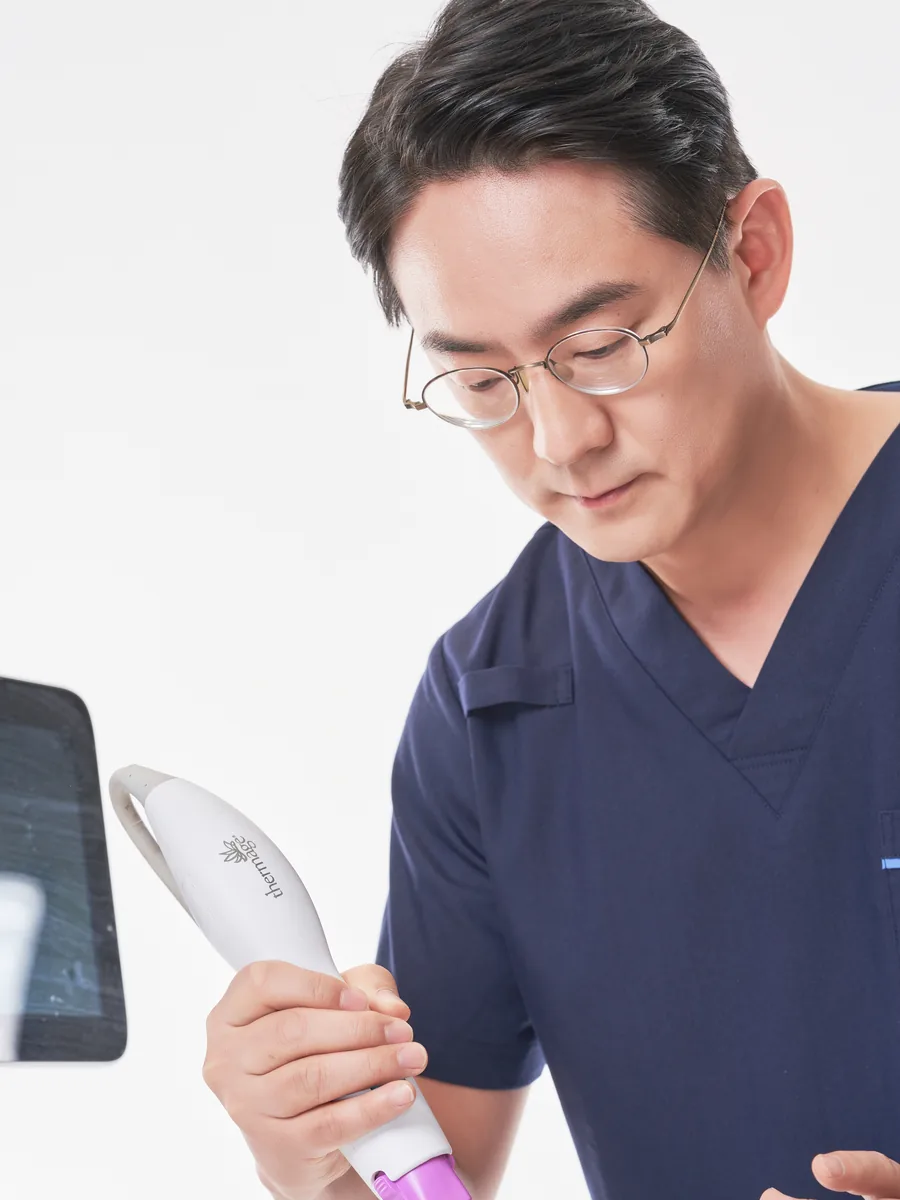
Let me be clear from the start. At WELLS, laser hair removal is offered for men only. It is performed by a male dermatologist in a private, single-patient treatment room, and that is the only hair removal service we provide.
Men make up a noticeably larger share of dermatology patients in Korea than they used to, and laser hair removal is one of the treatments younger men ask for most. So you won't be the only man in the waiting room.
If you are a woman looking for laser hair removal in Korea, WELLS is not the right clinic for that treatment, and I would rather tell you now than after you have booked a flight. You are still welcome to ask us about pigmentation, skin quality or lifting, which we treat for everyone.
Which laser do we use for men's hair removal, and why does it matter?
We use Clarity, a dual-wavelength laser with skin cooling. It holds US FDA, European CE and KFDA approval, which is the first thing I would ask about at any clinic before letting a laser near my skin.
Clarity's intelligent cooling lowers pain and burn risk. As a result, most areas are done without anesthesia in about ten minutes, which suits a busy day in Seoul.
The laser is non-contact, so it never touches your skin and there are no shared tips. You can read the full outline on our men's laser hair removal page.
Why a male dermatologist and a private room?
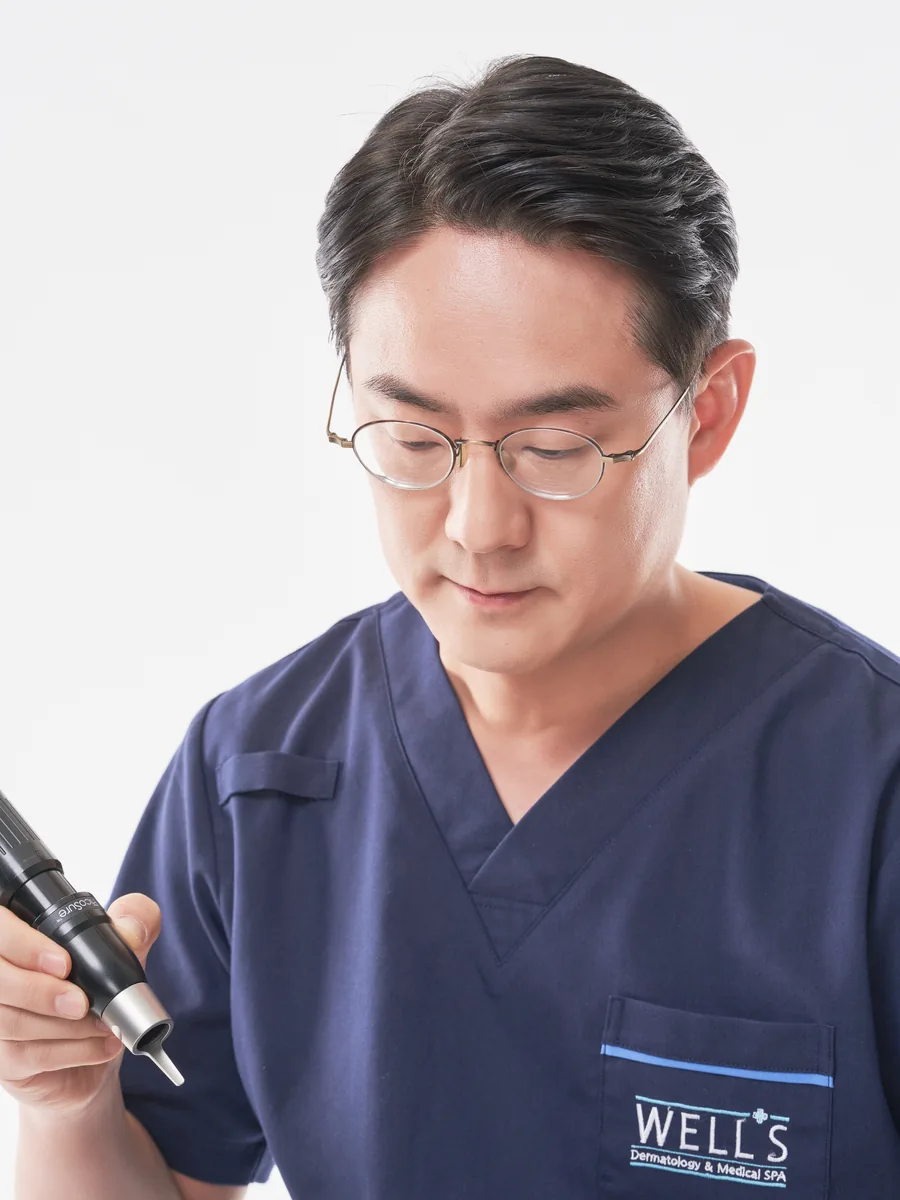
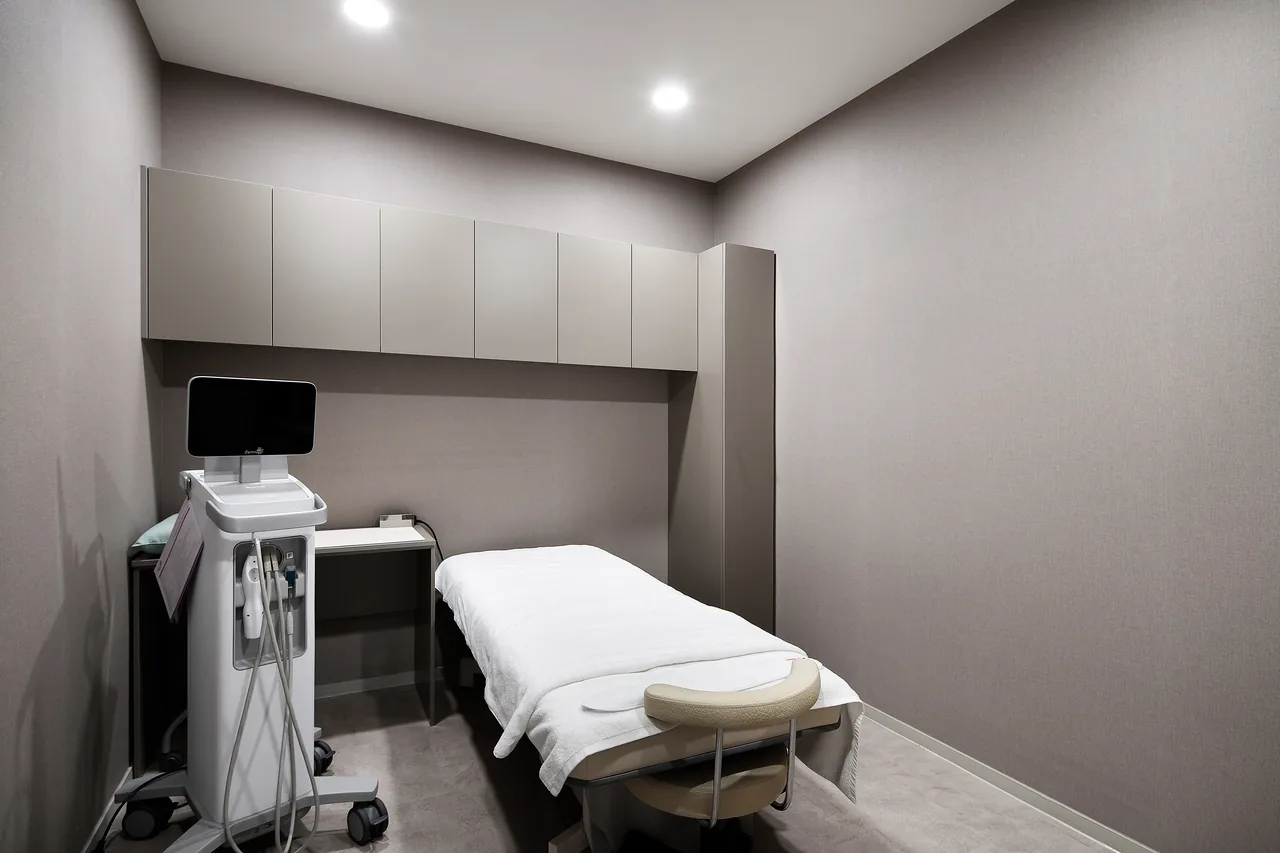
Many men put off hair removal because they don't want to be treated in a busy open space or explain themselves to a stranger. At WELLS, treatment and aftercare are handled by a male dermatologist in a room used for one patient at a time.
It also means a doctor sees your skin before the laser starts. At WELLS a board-certified dermatologist handles the consultation, diagnosis and treatment, so if something on your skin needs attention first, it gets noticed.
How many sessions does laser hair removal in Korea take?
Laser hair removal is never finished in one session. Results depend on how deep the hair roots sit, so hair is reduced gradually over repeated sessions, not cleared in a single visit.
For someone flying in, that changes the plan. One session on a short trip is a start, and you continue when you are next in Seoul; if you live here for a while, the dermatologist can set a regular schedule. The number of sessions and the interval are decided at consultation for your hair and skin.
Be wary of any clinic that promises a finished result after one appointment. Korean laser hair removal works the same way as anywhere else: steady, repeated treatment is what reduces hair over time.
Try not to judge the result after the first session. It is more useful to notice how quickly hair comes back in each area and mention it at your next visit, because that is what the dermatologist uses to adjust the plan from one session to the next.
Tell us the area you'd like treated and your dates in Seoul. We'll reply with how many visits to expect and available times.
Ask about a session planShaving bumps, folliculitis and dark marks
Frequent shaving can cause repeated inflammation at the hair root. Over time that can show up as folliculitis or dark marks where the skin has been irritated again and again.
Reducing the hair with laser hair removal can help prevent acne-like bumps and folliculitis, because there is less to shave. This is one of the most practical reasons men start treatment, beyond saving time in the morning.
If dark marks from years of shaving are already there, those are pigment, and they are treated separately. Our pigmentation treatments are where I would look, after the hair removal plan is in place.
One more thing men sometimes mix up: thinning hair on the scalp is the opposite problem and a different treatment. If that is your concern, see our hair loss treatment page or our post on scalp treatment in Seoul.
What should you ask any clinic about hair removal in Korea?
Whether you choose WELLS or not, a few questions tell you a lot about how hair removal in Korea will be done. Ask them before you pay, not on the treatment bed.
- Which laser is it, and what approvals does it hold?
- Who performs the treatment: a dermatologist, or someone else?
- Does the handpiece touch the skin, and are tips shared between patients?
- Will you be treated in a private room?
- Is the plan and final price confirmed before anything starts?
At WELLS the answers are straightforward: Clarity, with US FDA, European CE and KFDA approval; a male dermatologist; a non-contact laser with no shared tips; a single-patient room; and a price confirmed at consultation. If a clinic can't answer these clearly, that is useful information in itself.
How much is laser hair removal in Korea at WELLS?
For men's laser hair removal, the price is confirmed at consultation. It depends on the area and how many sessions your plan needs, so we don't publish a single number that might not match your case.
All WELLS prices are in Korean won and exclude 10% VAT. Send us the area you want treated on WhatsApp, and the dermatologist confirms your plan and final price at the consultation, before anything starts.
Laser hair removal Seoul visits: how it works if you are flying in
Message us on WhatsApp with the area you'd like treated and your travel dates. We reply in English with options and available appointment times; our FAQ for international patients covers booking from overseas.
At the clinic, a dermatologist examines your skin and confirms the plan and price. Consultations are available in English, and you leave with the dermatologist's aftercare instructions and can reach us on WhatsApp afterwards.
Tell us your flight dates when you first write. The dermatologist will advise on timing, and we fit the appointment around your itinerary so the session doesn't collide with a travel day.
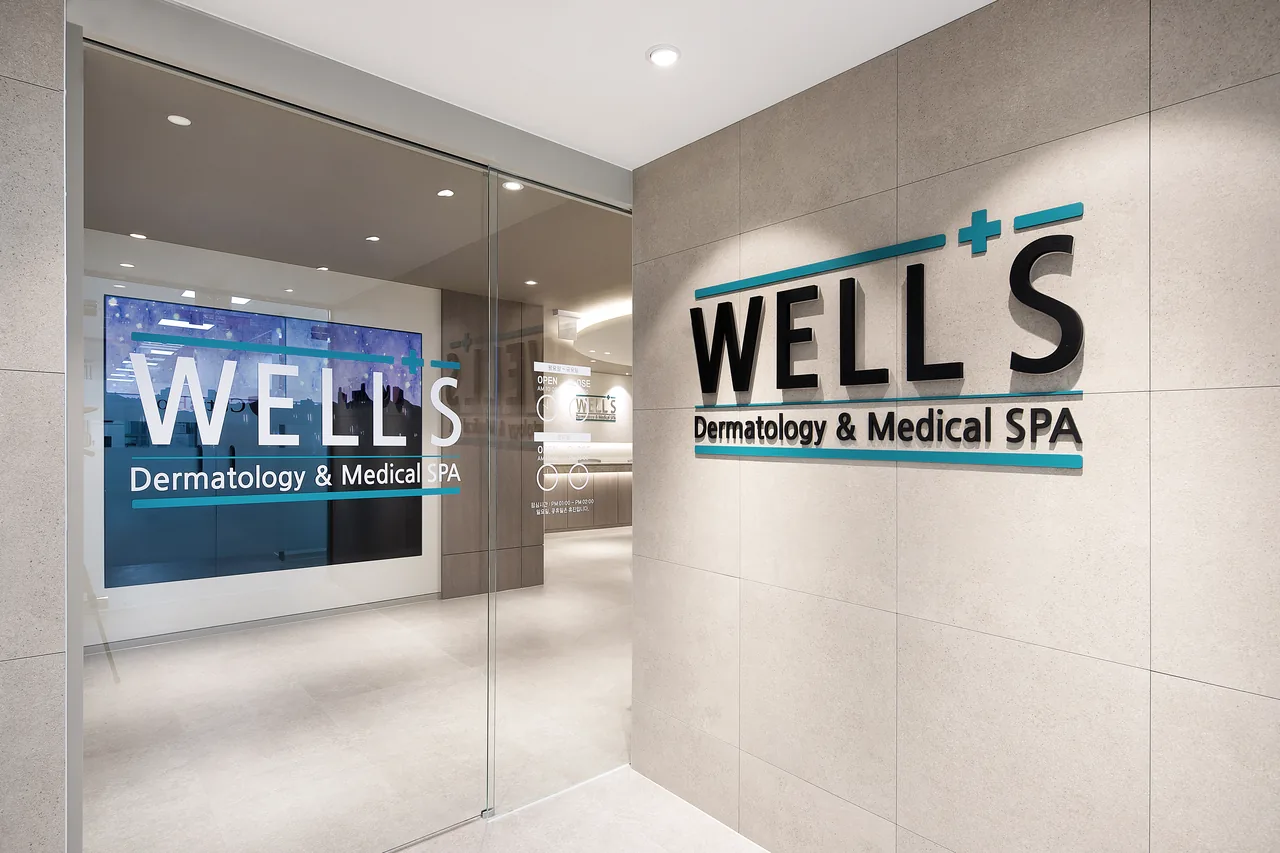
WELLS is on the 8th floor of the Apgujeong Building, a five-minute walk from Exit 3 of Apgujeong Station on Line 3. We are open Monday to Friday 10:00–20:00 and Saturday 10:00–17:00, closed for lunch 13:00–14:00; the clinic and directions page has the map. If you are comparing clinics, our Seoul skin clinic guide lists what to check.
Planning laser hair removal in Seoul on your next trip? Send your dates and we'll suggest a time.
Check appointment timesConsidering men's laser hair removal in Seoul?
Send the area you'd like treated and your travel dates on WhatsApp. We'll explain how many sessions to expect and share available appointment times.
Message the clinic on WhatsAppReplies on WhatsApp · prices in KRW, excluding 10% VATBefore you message us
Does WELLS offer laser hair removal for women?
No. Laser hair removal at WELLS is for men only, performed by a male dermatologist in a private room. Women are welcome for our other treatments.
Does it hurt?
Clarity's intelligent cooling lowers pain and burn risk, so most areas are done without anesthesia. Pain tolerance differs, and the dermatologist checks your comfort during treatment.
How long does a session take?
Most areas take about ten minutes.
Is the laser tip shared between patients?
No. Clarity is a non-contact laser that never touches the skin, so there are no shared tips.
Can I finish hair removal in one trip?
Usually not. Hair is reduced over repeated sessions depending on root depth, so the dermatologist plans the number of sessions and the interval with you.
Do I need to speak Korean?
No. Consultations are available in English, and WhatsApp replies are in English.
Results and recovery vary by individual. Every treatment carries possible side effects, which are explained at the consultation. Prices are in Korean won, excluding 10% VAT, and confirmed at your consultation. This article is general information from the clinic, not a diagnosis.
Dr. Won Woo Choi
- Board-certified dermatologist in Korea; trained at Seoul National University Hospital
- Dermatology residency, Seoul National University Hospital; board certification in dermatology in Korea
- Ph.D. in Dermatology, Seoul National University
- Former clinical instructor, Seoul National University Hospital
- Adjunct professor, Department of Dermatology, Seoul National University Hospital