Korean Exosomes for Hair: When Should You Skip Them? Methods, Cost and Reviews
Exosomes for hair loss are still experimental: human studies are small and short, and the FDA has approved no exosome product. Get a diagnosis first, and ask what's in the vial before you decide.

What the evidence on Korean exosomes for hair can and can't tell you
Are Korean exosomes for hair worth trying when your current treatment hasn't done enough, or would you be paying for something nobody has tested for long?
Read this before you book a session.
You'll know when to skip them, which methods get them into the scalp, what decides the cost and what reviews get wrong, so you can judge whether they fit your hair loss and your budget.
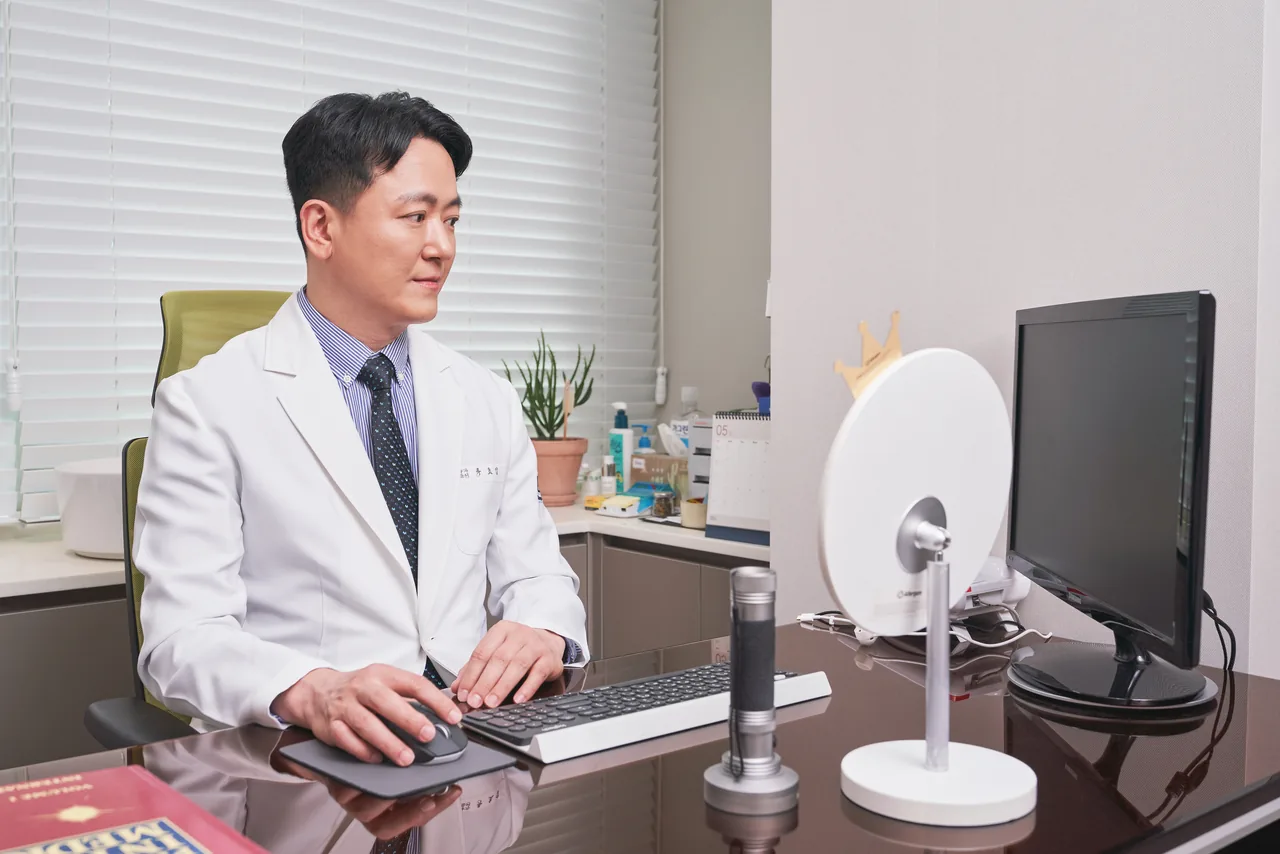
Hello, I'm Dr. Won Woo Choi, Medical Director · M.D., Ph.D., at WELLS Clinic.
You should know my stake from the start. I developed CeraXosome, an exosome product, and I'm CEO of CutisBio, the company behind it. At WELLS in Apgujeong, a dermatologist handles your consultation, diagnosis and treatment, and hair-loss medication is selected for the cause and stage of your hair loss.
I wrote this because exosomes are often treated as the next purchase after minoxidil, when the earlier question is why your hair is thinning.
Exosomes are still experimental for hair loss. Human studies are small and short, and the FDA states there are no FDA-approved exosome products. Get a diagnosis first, then decide.
To start that conversation, send daylight photos of your hairline and crown on WhatsApp, say what you've used and for how long, and ask whether exosomes make sense at your stage.
Send a clear photo and your travel dates, and we will tell you what fits the time you have in Seoul.
Send your hairline and crown photos on WhatsApp
Exosomes are tiny vesicles that cells release to carry signals. In the lab, those signals can act on the cells around the hair follicle, which explains the interest. The word "Korean" tells you where a product was made, and it doesn't tell you how well it has been tested.
A 2025 systematic review in Cureus called exosome therapy promising but experimental. The authors couldn't pool the results because the preparations and designs differed too much, they noted a lack of controlled trials, and they said long-term durability remains unknown.
That same review names oral finasteride and topical minoxidil as the FDA-approved treatments for pattern hair loss in the US, with topical minoxidil the approved option for women. Those have the longer record, and they should be part of the discussion before anything newer.
Here is my own data, with its limits. In human hair follicles kept alive in a laboratory, CeraXosome raised hair-shaft growth speed by about 40% within six days and thickness by about 30%. The mechanism work was published in Experimental Dermatology and presented at the World Congress for Hair Research 2026. A follicle in a dish is still a long way from your scalp over a year.
When should you skip exosomes for hair?
Skin diseases that look alike can have different causes and stages, and hair loss is no exception. I'd hold off in these situations:
- No diagnosis yet. Sudden shedding, round patches or loss after illness or childbirth can have causes that need different treatment, and blood tests may be useful.
- A red, scaly, sore or itchy scalp. Inflammation comes first, and needles shouldn't go through it. Similar redness can have quite different causes, as it does on the face in Korean rosacea treatment.
- Smooth, shiny or scarred areas. Where follicles are gone, there's little for a signal to act on, and a transplant consultation may answer your question better.
- Pregnancy or breastfeeding. There isn't enough safety data, so I would wait.
- Allergy to an ingredient or to lidocaine, a bleeding problem, or a weakened immune system. Each of these changes the risk of needling the scalp, so raise them early. If you've had cancer, ask your oncologist as well, since long-term data on these growth signals is missing.
- You want to replace treatment that's working. Stopping an established treatment for a less-tested one may cost you hair you can't easily get back.
If any item on that list sounds familiar, mention it on WhatsApp along with when the shedding started and any recent blood tests. Then ask which of these questions applies to your scalp.
Send a clear photo and your travel dates, and we will tell you what fits the time you have in Seoul.
Send your hairline and crown photos on WhatsAppWhich methods get exosomes into the scalp?
In short, this is where serums and clinic treatments differ. Molecules generally need to be under about 500 daltons to pass through intact skin, according to the 500 Dalton rule, and exosomes are far larger. A shampoo or serum on an unbroken scalp is unlikely to deliver many of them to the follicle.
That's why clinics pair exosomes with microneedling or injection. It's also where the risk comes in, because every channel in the skin is a route for bacteria and for whatever else is in the vial.
Lidocaine is sprayed on first, and the product goes in through a micro-needle system. It may suit a thinning hairline or crown, fine hair, hair loss after childbirth or menopause, and care after a transplant. A separate hair-loss program uses growth-factor infiltration, EMTS and prescription medication when appropriate. You can read how these compare in exosome, stem cell and PRP options for the scalp and what a Seoul dermatologist offers for hair loss.
Five questions to ask any clinic about the vial
Ask these wherever you go, including at WELLS, and write the answers down:
- What cells or source does this product come from, and who manufactures it?
- What is its regulatory status for use on the scalp, and can I see the batch or lot number?
- Who diagnoses my hair loss, and who performs the needling?
- What baseline photos do you take, and when would we compare them?
- At what point would you tell me to stop, and how do I reach you once I'm home?
A vague answer to the first two is a reason to pause. Reviewers in this field keep flagging the same gap: preparations differ widely from one study to the next, so a result with one product doesn't transfer to another.
What do reviews get right about hair exosomes?
Three claims turn up often in reviews and forum threads.
"My scalp was red for a day or two." That's plausible. Small, short studies can still miss uncommon problems.
"I saw thicker hair within weeks." Be cautious with this one. Hair grows slowly and sheds in cycles, so changes that early can reflect the cycle, the lighting or the other treatments you're using. Compare standardized photos taken months apart.
"They're natural, so there's no risk." This one doesn't hold up. A biological product can still cause an infection or a reaction, and the FDA warns that some illegally marketed regenerative products have significant safety issues.
What decides the cost of Korean exosomes for hair?
The figure for your case comes down to these factors:
- which product or program you choose
- how many sessions your scalp needs
- whether testing, injections or take-home products are part of it
- any prescription treatment alongside it
- how many trips to Seoul that schedule means
The CeraXosome set, for example, includes the microbiome test, one in-clinic session and three boxes of NMN gummies for home use. To get a figure, ask on WhatsApp what it would cost for your case, and include a scalp photo and how many visits you could realistically make.
Can one Seoul trip be enough?
For most hair loss, one trip is a start and little more. In clinical programs, CeraXosome is infused every two weeks, and the number of sessions you'd need is a recommendation made for your own scalp. If you can only visit once and you're hoping for visible density, I'd rethink the plan.
A trip does work well for a diagnosis, baseline photos and a plan you can continue at home. We're five minutes on foot from Apgujeong Station Exit 3 on Line 3, open weekdays 10:00–20:00 and Saturdays 10:00–17:00, and closed on Sundays and holidays.
Risks and side effects to know
After microneedling or scalp injections, temporary redness, swelling, tenderness and pinpoint bleeding are common and usually settle within days. Less often, needling can lead to infection or an allergic reaction. Long-term effects of exosomes on the scalp simply haven't been studied for long enough, and results vary between individuals.
The groups who should wait or skip are listed above: undiagnosed loss, an inflamed scalp, pregnancy or breastfeeding, relevant allergies, and bleeding or immune problems. The CDC's medical tourism guidance is also worth reading before any treatment abroad.
If you develop spreading redness, pus, fever or severe pain after flying home, see a local doctor promptly and show them the product name and lot number. Keep those details with you. In the US, the FDA asks people to report injuries or bad side effects through its MedWatch program.
Best clinics for hyperhidrosis botulinum toxin in Korea: how to choose one go further into what usually comes next.
Your next message
On WhatsApp, send clear photos of your hairline and crown, your travel dates, and the treatments you've tried. Ask one question: is my hair loss the kind where exosomes are worth discussing? Clear photos and dates are enough for a first suggestion, and you can ask before booking anything. When you visit, a dermatologist examines your scalp and recommends the treatment that fits, whether or not that includes Korean exosomes for hair.
Plan your visit before you fly
Send a daylight photo, your travel dates and what you have tried before. A dermatologist will suggest where to start and what fits your stay.
Send your hairline and crown photos on WhatsAppReplies on WhatsApp · prices in KRW, excluding 10% VATBefore you message us
Are exosomes FDA approved for hair loss?
No. The FDA states that there are currently no FDA-approved exosome products, and that products intended to treat diseases or conditions need approval. In the US, the FDA-approved treatments for pattern hair loss are oral finasteride and topical minoxidil.
Is there a difference between Korean and American exosomes?
The country label tells you little. What matters is the cell source, the manufacturing process, batch control, regulatory status and the human data for that specific product. Ask for those details whatever the origin.
Do exosome shampoos or serums work the same way?
They're unlikely to reach follicles in the same way. Exosomes are far larger than the molecules that usually pass through intact skin. Good human data on these home products is limited too.
Can exosomes replace a hair transplant?
No. A transplant moves follicles to an area that has lost them, while exosomes are being studied for their signaling effect on follicles still present.
Does the CeraXosome session hurt?
Lidocaine is sprayed on the hairline, and on the crown if it's being treated, three minutes before microneedling. How it feels differs from person to person, so tell the dermatologist if you're worried about discomfort.
Results and recovery vary by individual. Every treatment carries possible side effects, which are explained at the consultation. Prices are in Korean won, excluding 10% VAT, and confirmed at your consultation. This article is general information from the clinic, not a diagnosis.
Dr. Won Woo Choi
- Board-certified dermatologist in Korea; trained at Seoul National University Hospital
- Dermatology residency, Seoul National University Hospital; board certification in dermatology in Korea
- Ph.D. in Dermatology, Seoul National University
- Former clinical instructor, Seoul National University Hospital
- Adjunct professor, Department of Dermatology, Seoul National University Hospital