Is Korean dermal filler different from filler at home? Mostly not
Korean dermal filler is usually the same kind of hyaluronic acid gel used abroad. What matters more is where the syringe came from, who injects it, and what you do if something feels off after you fly home.

Is Korean dermal filler a different product from what you'd get at home?
Korean dermal filler is, in most cases, the same kind of hyaluronic acid gel used in Sydney or Los Angeles, and the clinical rules for placing it in the face are the same. If you're in your forties or fifties and have been reading forum threads before a Seoul trip, the worry is usually narrower: is the syringe going into your face the same cheap product you keep seeing on web shops? At WELLS, a dermatologist does both the consultation and the injection, and we confirm the product and the amount with you before treatment.
If you've had filler before, send what you know about it on WhatsApp: the product name and the month it was injected, plus front and side photos of your face taken in daylight without makeup. Add the one question you'd most like answered, for example which product would be used for your folds. Filler that is still in place changes what makes sense to add, so those details are worth digging out before you book.
Send a clear photo and your travel dates, and we will tell you what fits the time you have in Seoul.
Send your filler history and photos on WhatsAppMostly, no. The filler used for most facial treatments, here and abroad, is hyaluronic acid (HA), a gel based on a sugar your skin already contains, cross-linked so it lasts months instead of days. The American Society of Plastic Surgeons groups fillers by material, such as HA, calcium hydroxylapatite and poly-L-lactic acid, and the material tells you more than the country printed on the box.
HA brands differ from each other in how firm the gel is and how far it spreads, the same way brands differ in any country. A firmer gel tends to suit a chin or a deep fold; a softer one suits a fine line.
Not every product called filler is HA. Sculptra is poly-L-lactic acid, which prompts your own collagen over several sessions, and it behaves differently enough that I've covered it in how Sculptra builds volume across a Seoul trip. One point matters for travelers: the US FDA notes that fillers not made of materials like HA can be harder to remove.
Brand names from online shops are a poor starting point
Many people searching for Korean dermal filler land on names such as Maxfill, Elasty or Eurasia, often on listings that sell syringes straight to the public. None of them is named on our published treatment list, so I won't comment on them one by one. The questions I'd ask about any product are shorter: is it approved where it's injected, and did it reach the clinic through a medical supply chain?
Risks and side effects to know
The FDA is blunt about this: don't buy dermal filler online, because it could be counterfeit. A copied syringe, or one that sat in a parcel through a hot summer, is a risk no injection technique can fix.
In Korea, filler products are regulated by the Ministry of Food and Drug Safety. If you'd like to see the box or the syringe label before the injection, ask. It's a reasonable request, and you shouldn't feel awkward making it.
Does more filler make a face look younger?
Past a certain point, it does the opposite. Filler restores volume where it has been lost; it doesn't lift skin that has loosened. When syringe after syringe goes in to chase a sagging jawline, the face gets wider and heavier, and it reads as puffy.
That's why the amount matters as much as the product. In the forehead, we balance volume so the face doesn't look larger, and for nasolabial folds we use a large-particle, long-lasting filler. Combining filler with neuromodulator can extend how long the result holds, because the muscle that creases the area is quieter.
If the real issue is loosening rather than lost volume, an energy-based lifting device or threads may fit better than more gel. That conversation is worth having before anyone adds another syringe.
Lips, nose, temples, breasts: where filler fits and where it doesn't
The areas listed on our filler page are the forehead, under-eye hollows, nasolabial folds, cheeks and chin. Under-eye hollows are treated with filler instead of surgery, and because the skin there is thin, product choice and depth matter a great deal; I go through that in who under-eye filler suits and how to plan it. The chin tip can be refined for a slimmer face shape, which is the subject of what chin filler can reshape.
Lips, nose and temples aren't on that list. If one of them is what you're after, ask before you plan a trip around it.
Body and breast filler is a separate question. The FDA lists breast augmentation and buttock enlargement among the uses it advises against for dermal fillers. Searches for Korean breast filler come up often, and my view matches the regulator's: I'd steer you away from injected body filler, in any country.
What if a vessel is involved, or something feels off after you fly home?
Vascular occlusion is the complication behind the frightening forum posts. It happens when filler enters or presses on a blood vessel and blocks blood flow. The FDA calls unintentional injection into a vessel the most serious risk of fillers, with reported complications including tissue death, vision problems including blindness, and stroke. It is rare, and it's the reason technique matters.
Our dermatologists, who have more than fifteen years of filler experience, inject with a cannula where possible. A cannula has a blunt tip, so it tends to push a vessel aside instead of piercing it, which lowers the vessel-damage risk of a standard needle. It lowers that risk; it doesn't remove it.
The common effects are milder: bruising, swelling, tenderness, and small lumps you can feel for a week or two. Signs that need a doctor the same day are different: pain that keeps building, skin that turns pale, blotchy or dusky, or any change in your vision. HA filler can usually be dissolved with an enzyme called hyaluronidase, which matters more when you'll be far from the clinic within days.
Before you leave Seoul, keep a written note of the product name, the amount and the areas injected. The CDC's advice for medical travelers is to carry copies of your records and arrange follow-up care at home, and a local doctor can act faster with that note in hand. How each person responds to filler varies, and whether filler suits you at all is decided at the exam in Seoul.
When you message, add your travel dates and any medicine or supplement you take regularly, especially anything that thins the blood, since that raises the chance of bruising. Ask which days after the injection you should keep clear of photos, dinners or meetings.
Send a clear photo and your travel dates, and we will tell you what fits the time you have in Seoul.
Send your filler history and photos on WhatsAppHow many days should you leave in Seoul?
The injection itself is short. Plan the trip around what follows: bruising and swelling can take 7 to 14 days to settle, so an appointment on your last afternoon before a flight leaves no room to be seen again if something feels wrong.
Leave a few days in Seoul after the appointment if you can. We're open Monday to Friday 10:00 to 20:00 and Saturday 10:00 to 17:00, with lunch from 13:00 to 14:00, and closed on Sundays and public holidays. Apgujeong Station Exit 3, on Line 3, is a five-minute walk away, so a short return visit fits around sightseeing.
Who holds the syringe
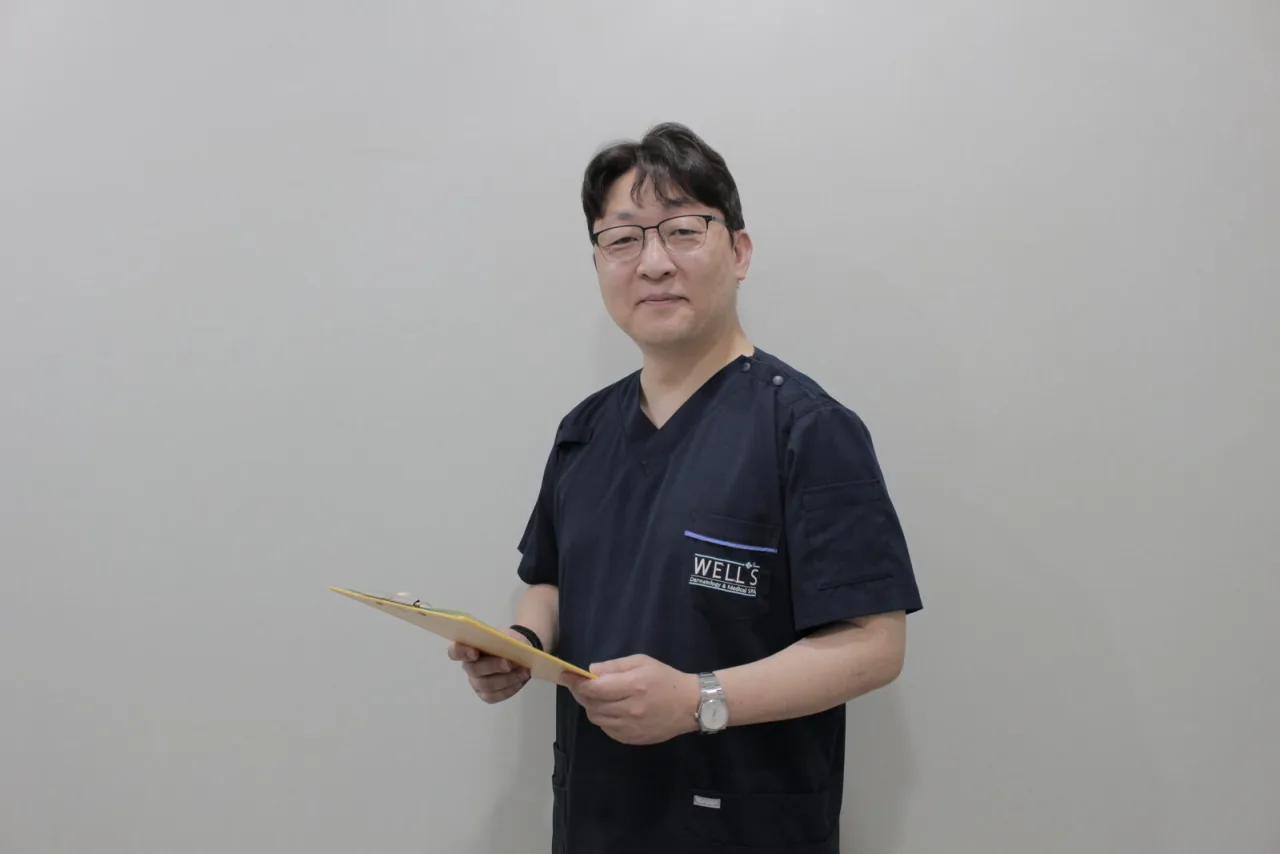
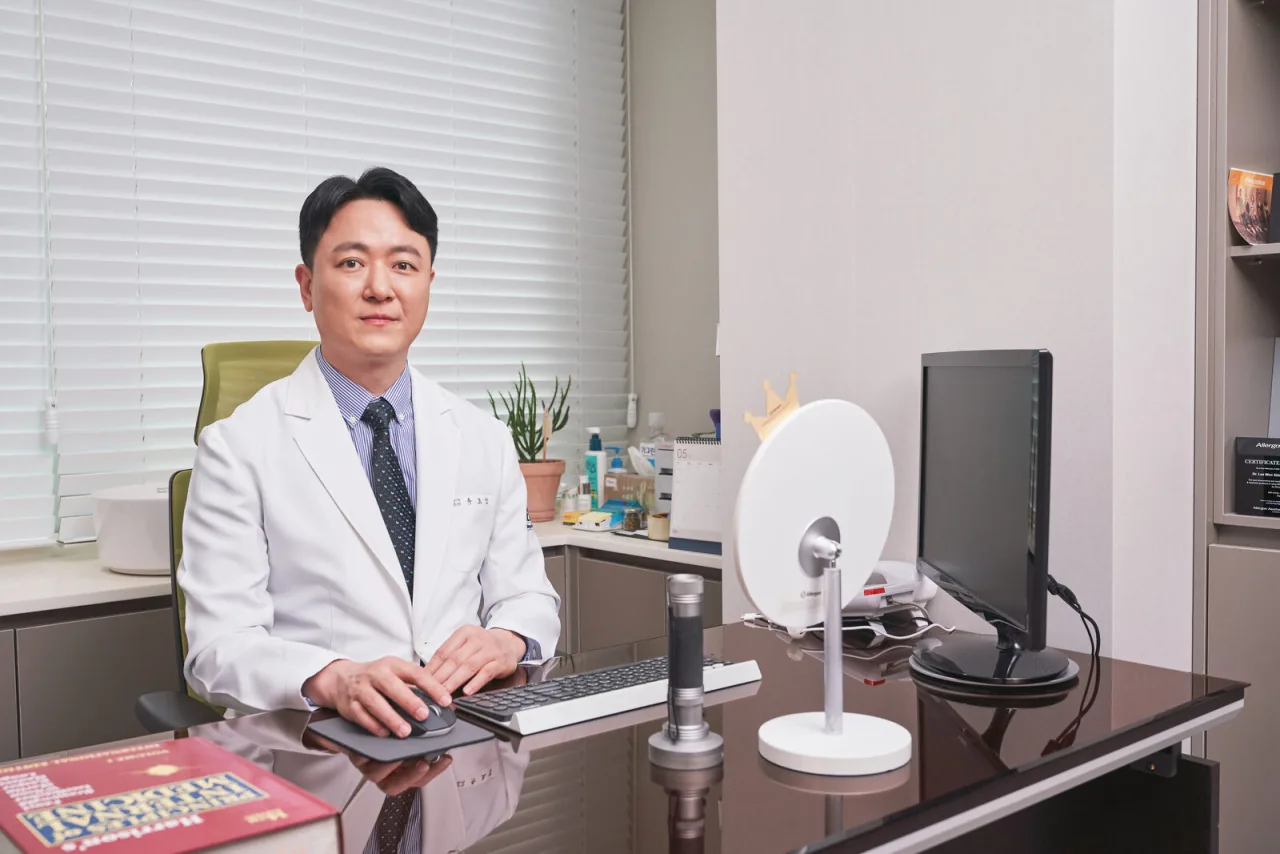
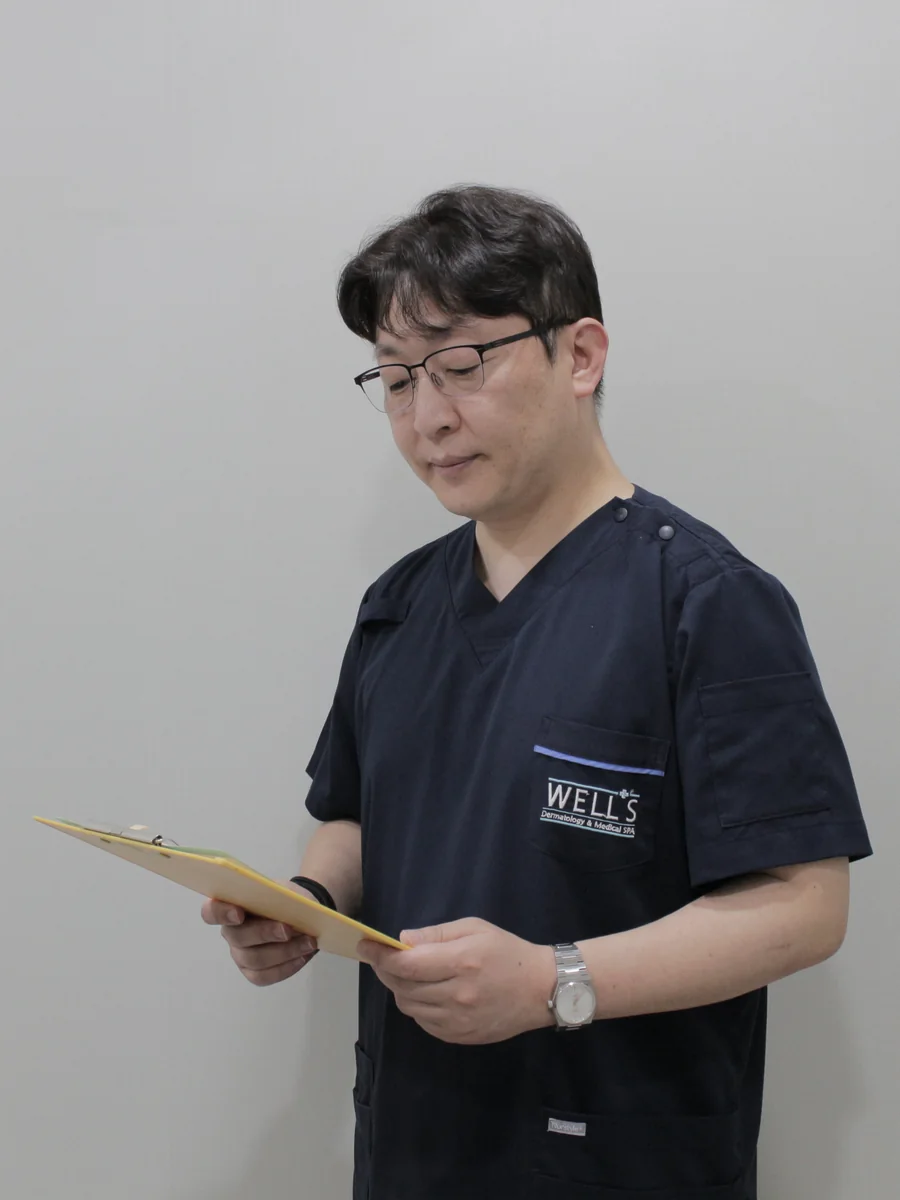
I'm a board-certified dermatologist, trained and certified at Seoul National University Hospital, where I'm an adjunct professor of dermatology. At WELLS a dermatologist consults and treats directly, and we do a 3D analysis before treatment, so the plan starts from the shape of your face, not a standard dose.
In Korea, a clinic sign that mentions skin doesn't always mean a board-certified dermatologist works there. How to check is in what the title means for a Korean dermatologist, and for filler that check is worth five minutes.
If you're weighing Korean dermal filler for your folds or cheeks, start with one WhatsApp message: a daylight photo of the area that bothers you, and the question you keep coming back to.
Plan your visit before you fly
Send a daylight photo, your travel dates and what you have tried before. A dermatologist will suggest where to start and what fits your stay.
Send your filler history and photos on WhatsAppReplies on WhatsApp · prices in KRW, excluding 10% VATBefore you message us
How long does Korean dermal filler last?
HA fillers are gradually absorbed by the body, so results last months, not years, and areas that move a lot, such as around the mouth, tend to fade sooner. The FDA notes that absorbable fillers need repeat treatments to keep the effect.
I have allergies. Is HA filler a problem?
Tell the doctor about any allergy before the injection. The FDA points out that some HA fillers are made by bacterial fermentation, so people with allergies to bacterial material should mention it.
Can I fly the day after filler?
Flying itself is not usually the issue. The concern is being far from the clinic during the first days, when bruising peaks and any warning sign needs a quick look, so a few days in Seoul after the injection is the safer plan.
Does filler hurt?
Most people describe pressure and a sting. Many HA fillers contain a local anesthetic mixed into the gel, and a cannula usually needs fewer entry points than a needle.
Can filler I had somewhere else be dissolved?
HA filler can usually be broken down with hyaluronidase. Whether dissolving is the right move depends on what the filler is, where it sits and how long ago it went in, so bring any records you have.
Results and recovery vary by individual. Every treatment carries possible side effects, which are explained at the consultation. Prices are in Korean won, excluding 10% VAT, and confirmed at your consultation. This article is general information from the clinic, not a diagnosis.
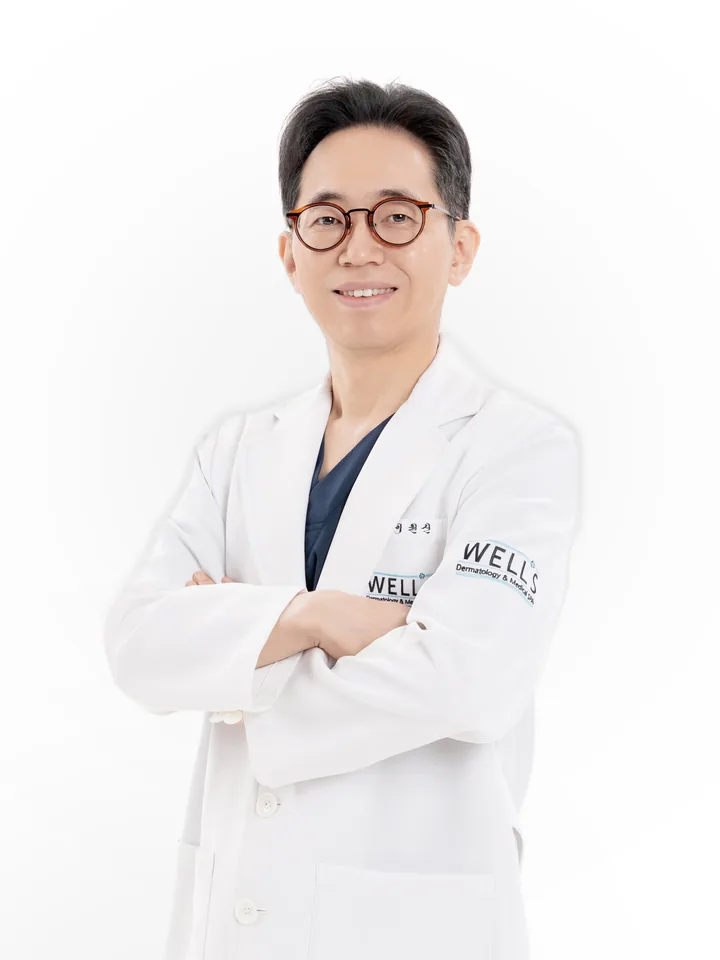
Dr. Won Woo Choi
- Board-certified dermatologist in Korea; trained at Seoul National University Hospital
- Dermatology residency, Seoul National University Hospital; board certification in dermatology in Korea
- Ph.D. in Dermatology, Seoul National University
- Former clinical instructor, Seoul National University Hospital
- Adjunct professor, Department of Dermatology, Seoul National University Hospital