Korean pore treatment after 40: how much pores can shrink, and is it worth the redness and risk?
Fractional picosecond laser and microneedle RF can make enlarged pores look smaller by firming the skin around them, usually over several sessions, but no treatment erases a pore.

Why pores look larger after 40
Your pores have looked a little bigger every year since your forties, and you're wondering whether a Korean pore treatment in Seoul can actually shrink them?
Fractional picosecond laser and microneedle RF can make enlarged pores look smaller by firming the skin around them, usually over several sessions, but no treatment erases a pore. How much change you get depends mostly on why they widened: oil, skin that has lost firmness with age, or old acne scars.
Hello, I'm Dr. Won Woo Choi, Medical Director at WELLS Clinic, which has been at one address in Apgujeong, Seoul, since 2008. I hold a Ph.D. in Dermatology from Seoul National University and am a board-certified dermatologist.
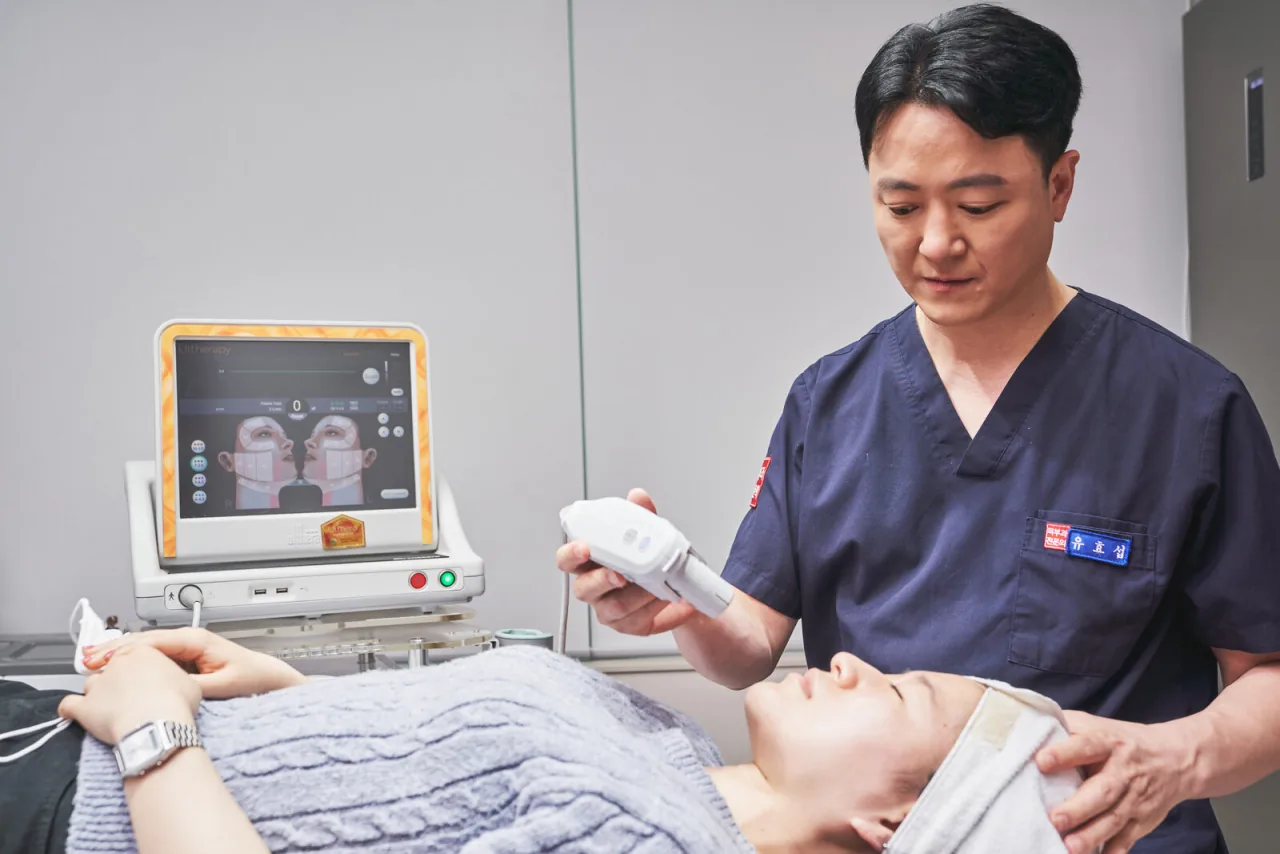
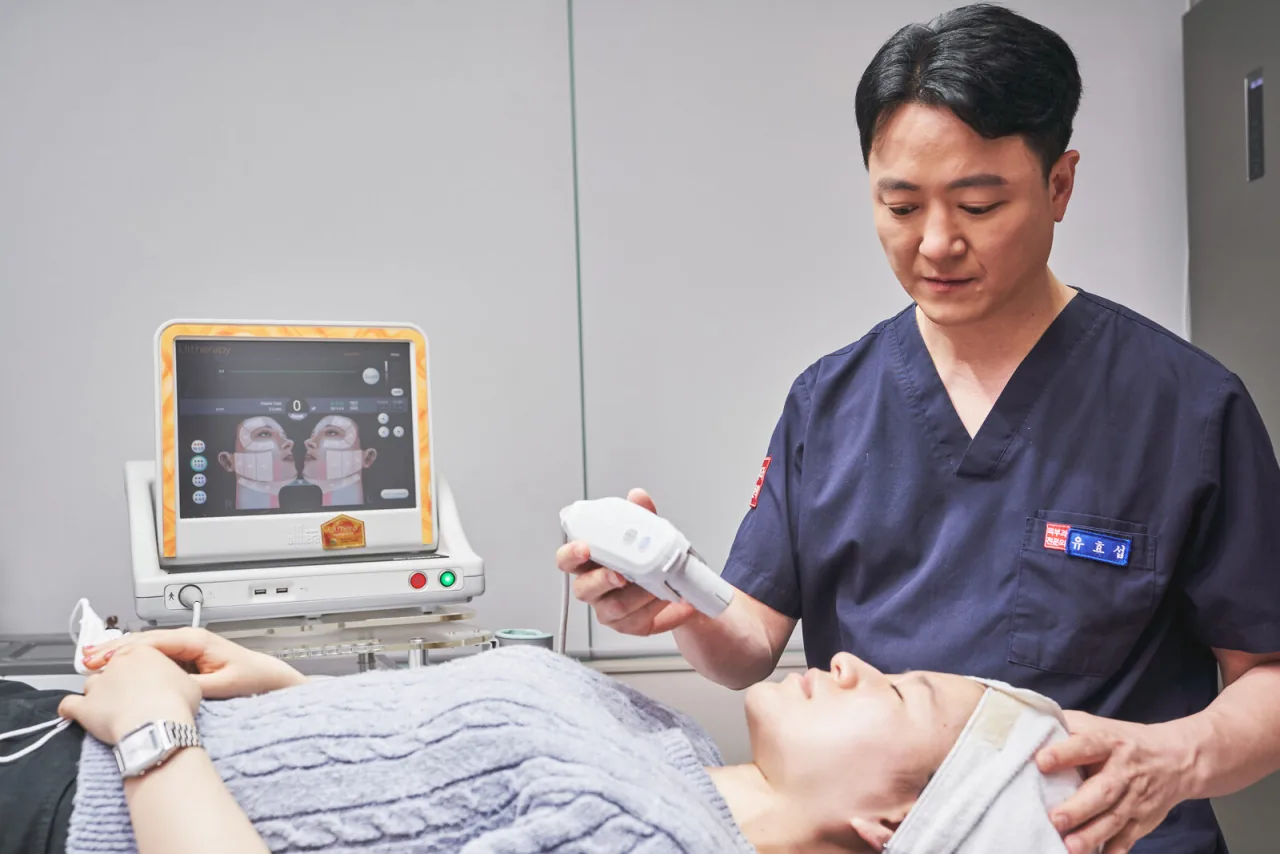
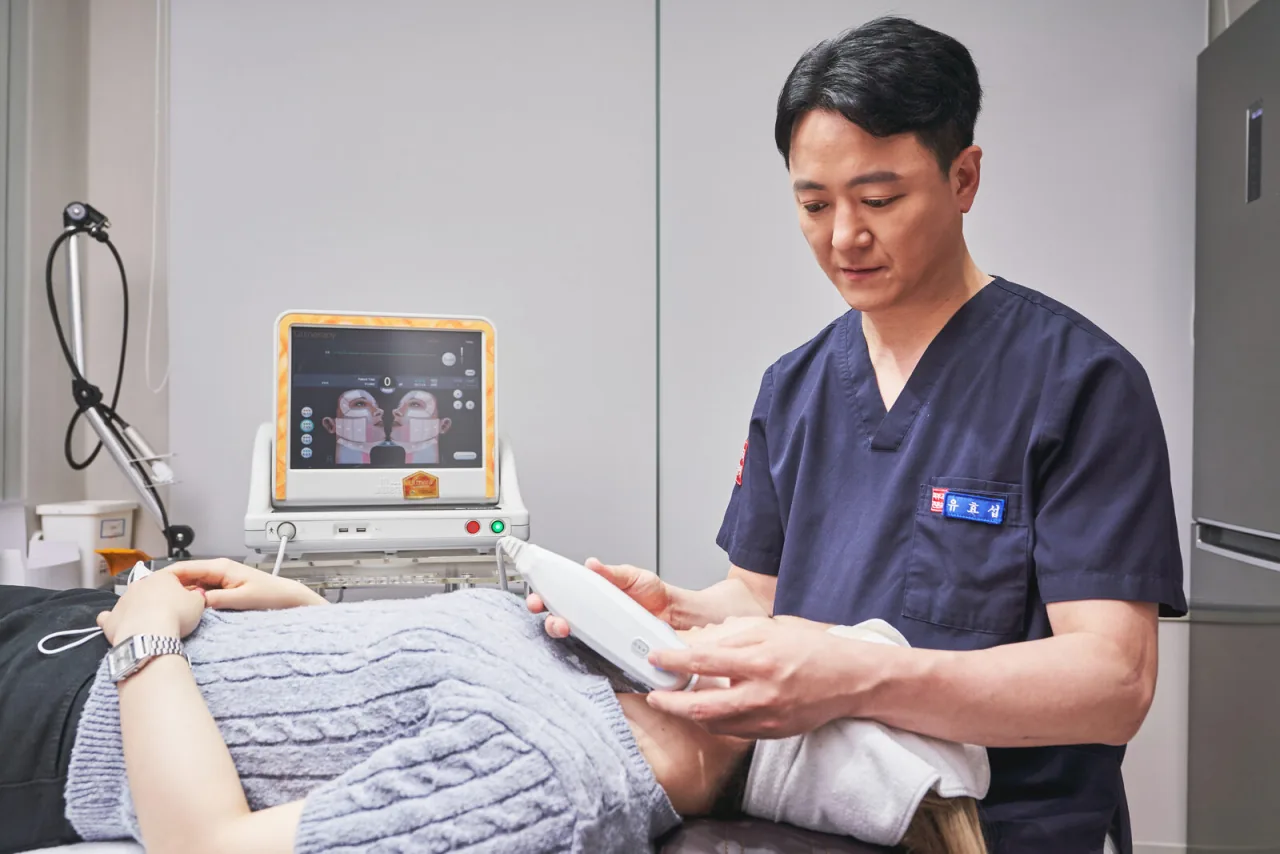
For pores, a dermatologist examines you and does the treatment here. The fractional picosecond laser we use works inside the dermis and spares the surface, so redness usually clears in 3–4 days, and the change is shown to you under a dermatoscope. A medical interpreter for your language is available at no extra charge.
Stand by a window with the light coming from one side, photograph one cheek without makeup, and send it on WhatsApp along with any pore treatments or lasers you've had before. Side light is what shows the shape of a pore.
Send a clear photo and your travel dates, and we will tell you what fits the time you have in Seoul.
Send a cheek photo on WhatsApp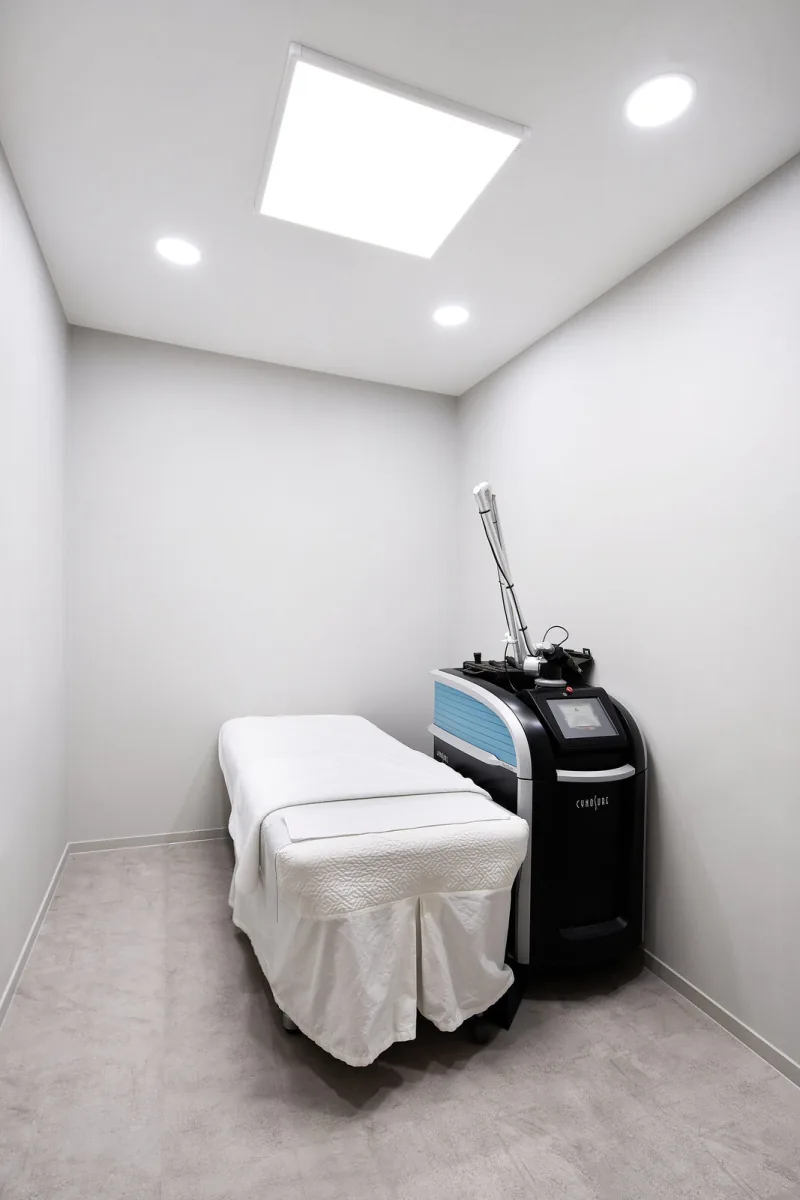
A pore is the opening of a hair follicle and its oil gland. It can't be erased, and you wouldn't want it to be, because that's where oil reaches the surface. What changes with age is the support around it. As collagen and elastic fibers in the dermis thin out, the rim of the pore loosens, and on the cheeks pores start to look oval or teardrop-shaped instead of round.
Three things make pores look large, according to the American Academy of Dermatology: oily skin, loss of elasticity with age, and sun damage. They need different treatment. Oil-driven pores, usually on the nose and central cheeks, respond to oil control. Pores stretched by age respond to treatment that rebuilds firmness in the dermis, and pores widened by acne scarring sit in a third group that overlaps with scar care.
One thing to know before you judge any result: pores look largest in the late afternoon, when oil has built up, and in dehydrated skin. Take your comparison photos at the same hour, in the same window light, or you'll be measuring your schedule more than your skin.
Is there such a thing as Korean pore surgery?
No operation removes or closes pores. What gets called pore surgery online usually means energy treatments in the dermis, such as lasers, microneedle RF or both, done without stitches. A Korean pore treatment at a dermatology clinic is that kind of treatment, and if anyone offers to cut pores closed, ask exactly what the procedure is.
The pore minimizers and deep-cleansing foams that fill Korean beauty shelves do something real, but only at the surface. Clearing oil and dead skin from the opening and keeping skin hydrated makes pores look smaller for hours or days. They don't change the support around the pore, which is why the effect fades by evening. When pores are driven by oil and breakouts, the medical side looks more like acne care, set out in acne treatment in Seoul and the order it's done in.
What laser and microneedle RF can change
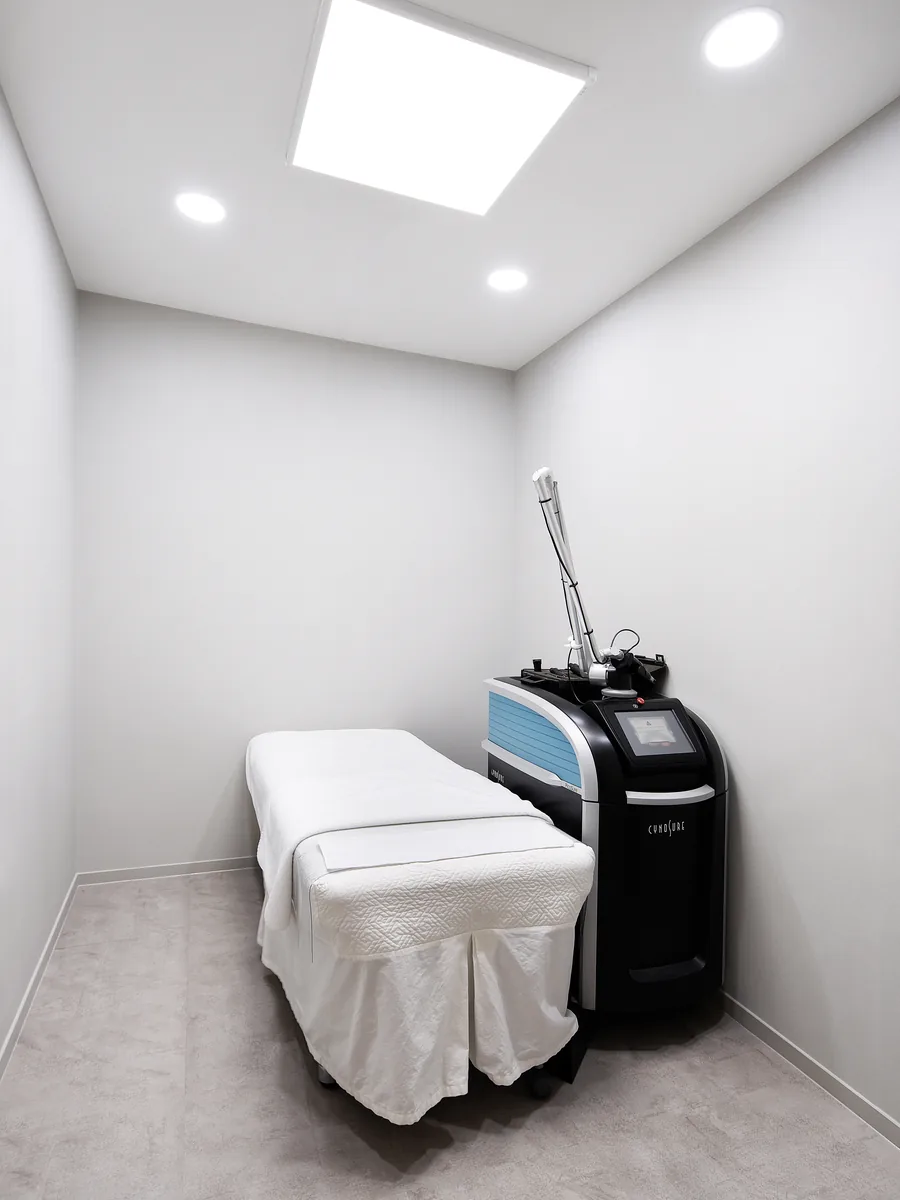
Fractional picosecond laser creates tiny points of laser-induced optical breakdown inside the dermis, with very little heat at the surface. There's no oozing and no dressing, and redness usually clears in 3–4 days. Because the surface is spared, it suits skin that reacts badly to heat. The aim is to restore firmness in the dermis so the pore tightens from underneath.
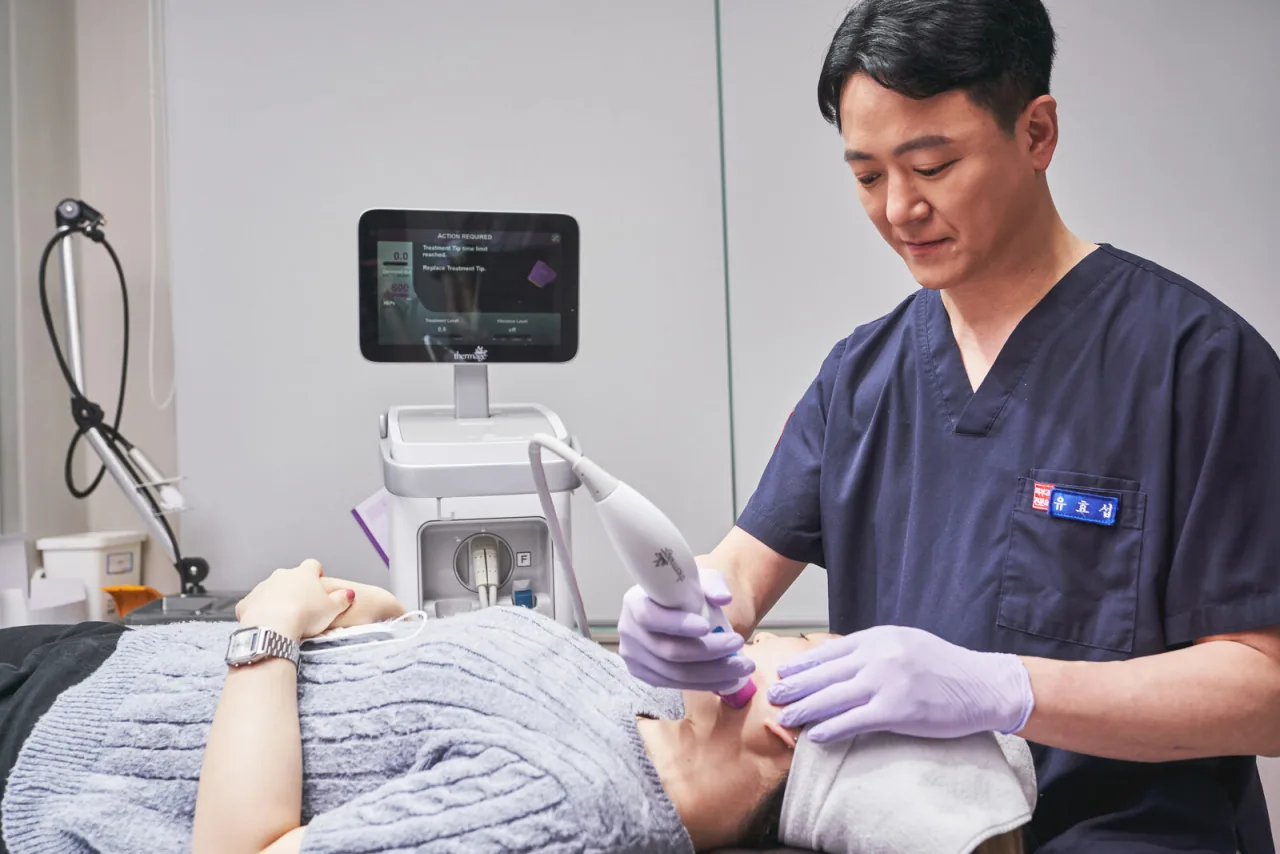
Where the nose or cheeks need extra tightening, we add Genius RF, which delivers radiofrequency energy through fine needles, or Winergy. Depending on scar type and pore condition, Mosaic fractional laser, microneedle RF, Aquapeel and the Clarity dual laser can be combined.
Expect gradual change across sessions, not one dramatic visit. Collagen rebuilds over weeks, and the American Academy of Dermatology's guidance on microneedling describes results appearing gradually, with more than one treatment usually needed. How many sessions you'd need, and how far apart, is one of the questions further down.
Redness, dark marks and melasma flares: what to expect and who's at risk
After fractional picosecond laser, redness usually clears in 3–4 days. After microneedle RF, redness, mild swelling and tiny pinpoint marks for a few days are common, and some people get a small breakout or a tight, dry feeling. These settle without treatment in most people.
The risk that matters more for many readers is darkening. DermNet describes post-inflammatory hyperpigmentation as more common in darker skin types, able to follow laser treatment, and slow to fade, often over months. Heat and inflammation can also darken melasma, so faint patches on the cheekbones change how a pore plan should be built. Less often, a cold sore flares around the mouth, an infection develops, or scarring follows, especially when energy is pushed too hard.
How your skin reacts also depends on how much sun it gets afterward. If dark patches or lasting redness appear after you're home, protect the area from sun, skip scrubs and acids, and see a dermatologist there instead of waiting it out.
If you have melasma or tend to get dark marks after pimples, say so in your WhatsApp message and include a photo of the darkest patch; that detail changes a pore plan more than any other.
Send a clear photo and your travel dates, and we will tell you what fits the time you have in Seoul.
Send a cheek photo on WhatsAppWho should hold off on pore lasers for now?
- Inflamed acne: treat the breakouts first. How skincare and clinic acne care differ is a good starting point.
- Oral isotretinoin now or recently: many dermatologists wait several months after the last dose before needling or resurfacing, so check with your prescriber.
- Pregnancy or breastfeeding.
- A fresh tan or sunburn, or a beach holiday straight after treatment.
- Frequent cold sores, if the area near the mouth will be treated: mention it, since preventive medicine is often used.
- A tendency to raised or keloid scars, or a peel or laser elsewhere in the past few weeks.
- Active melasma that hasn't been addressed, which calls for a gentler approach to melasma first.
There's one more group: people whose pores bother them in a magnifying mirror but look normal at conversation distance. If that's you, I'd tell you that you don't need this, and that sunscreen and good cleansing will do more for you than a laser.
Six questions to ask before any Korean pore treatment
| Question to ask | Why it matters |
|---|---|
| What's making my pores look large: oil, lost firmness, scars or a mix? | Each cause needs a different treatment |
| Which layer of skin does this work on? | Surface care fades fast; dermal work takes weeks |
| How many sessions, and how far apart? | Tells you how many trips to plan |
| What's the plan for my melasma or dark marks? | Heat can darken them |
| Who sets the energy and depth? | A doctor's settings decide both effect and risk |
| How will we measure the change? | Same-light photos or a dermatoscope beat memory |
Say you're 51, you live in Toronto, and over five years the pores on your cheeks have stretched into ovals while your nose stays oily but otherwise fine. You also have faint melasma on the cheekbones. I'd treat the cheeks for firmness, keep heat low over the melasma, and leave the nose to skincare. If you were hoping one visit would handle all three, I'd tell you plainly that it won't.
If the large pores turn out to be small rolling or boxcar scars, the plan follows scar logic instead, and planning acne scar treatment around a Seoul trip covers that route.
Fitting pore treatment into a Seoul trip
With fractional picosecond laser, redness usually clears in 3–4 days, so a session in the first half of your stay leaves those days to pass before you fly. Our hours are weekdays 10:00 to 20:00 and Saturday 10:00 to 17:00; we're closed on Sundays and public holidays.
Keep the days right after for indoor plans, since sun on freshly treated skin is what turns redness into dark marks. Pack a sunscreen your skin already tolerates instead of testing a new Korean product on treated skin. Write down the device names and the date of each session, so a dermatologist at home can follow on if you continue there.
Most people fit a Korean pore treatment into a trip they're already taking. Send your travel dates on WhatsApp and ask how many days of redness to plan around before your flight home, and whether one visit is worth it for your skin. When you're here, the first thing I'd look at is the shape of the pores on your cheeks, round or stretched, because that tells me whether we're treating oil or firmness.
Plan your visit before you fly
Send a daylight photo, your travel dates and what you have tried before. A dermatologist will suggest where to start and what fits your stay.
Send a cheek photo on WhatsAppReplies on WhatsApp · prices in KRW, excluding 10% VATBefore you message us
Do pores come back after treatment?
The skin around them keeps ageing and sun keeps breaking down collagen, so the improvement fades over time. Daily sunscreen and a retinoid, if your skin tolerates one, slow that down, and many people plan occasional maintenance sessions.
Can I wear makeup the day after?
After fractional picosecond laser the surface stays intact, so many people go back to light makeup within a day or so. After microneedle RF, waiting until the tiny needle points have closed, usually a day or two, is the safer habit. Ask which applies to your treatment.
Are pore lasers safe for Asian or darker skin?
They can be, with lower heat and longer gaps between sessions, because darker skin marks more easily after inflammation. How easily you get dark marks after a pimple or bug bite tells a dermatologist more than a skin-type label.
Will a chemical peel do the same thing?
Light peels clear the surface and can make pores look smaller for a while, but they don't firm the dermis the way fractional laser or microneedle RF aims to. For oily, acne-prone skin, a peel can be a sensible first step.
Results and recovery vary by individual. Every treatment carries possible side effects, which are explained at the consultation. Prices are in Korean won, excluding 10% VAT, and confirmed at your consultation. This article is general information from the clinic, not a diagnosis.
Dr. Won Woo Choi
- Board-certified dermatologist in Korea; trained at Seoul National University Hospital
- Dermatology residency, Seoul National University Hospital; board certification in dermatology in Korea
- Ph.D. in Dermatology, Seoul National University
- Former clinical instructor, Seoul National University Hospital
- Adjunct professor, Department of Dermatology, Seoul National University Hospital