Four sessions, two to three weeks apart: why a Korean skin booster injection is a course
A Korean skin booster injection such as Rejuran HB+ is planned as a course: four sessions, two to three weeks apart, because polynucleotides work on the skin's repair environment gradually rather than filling it in one visit.

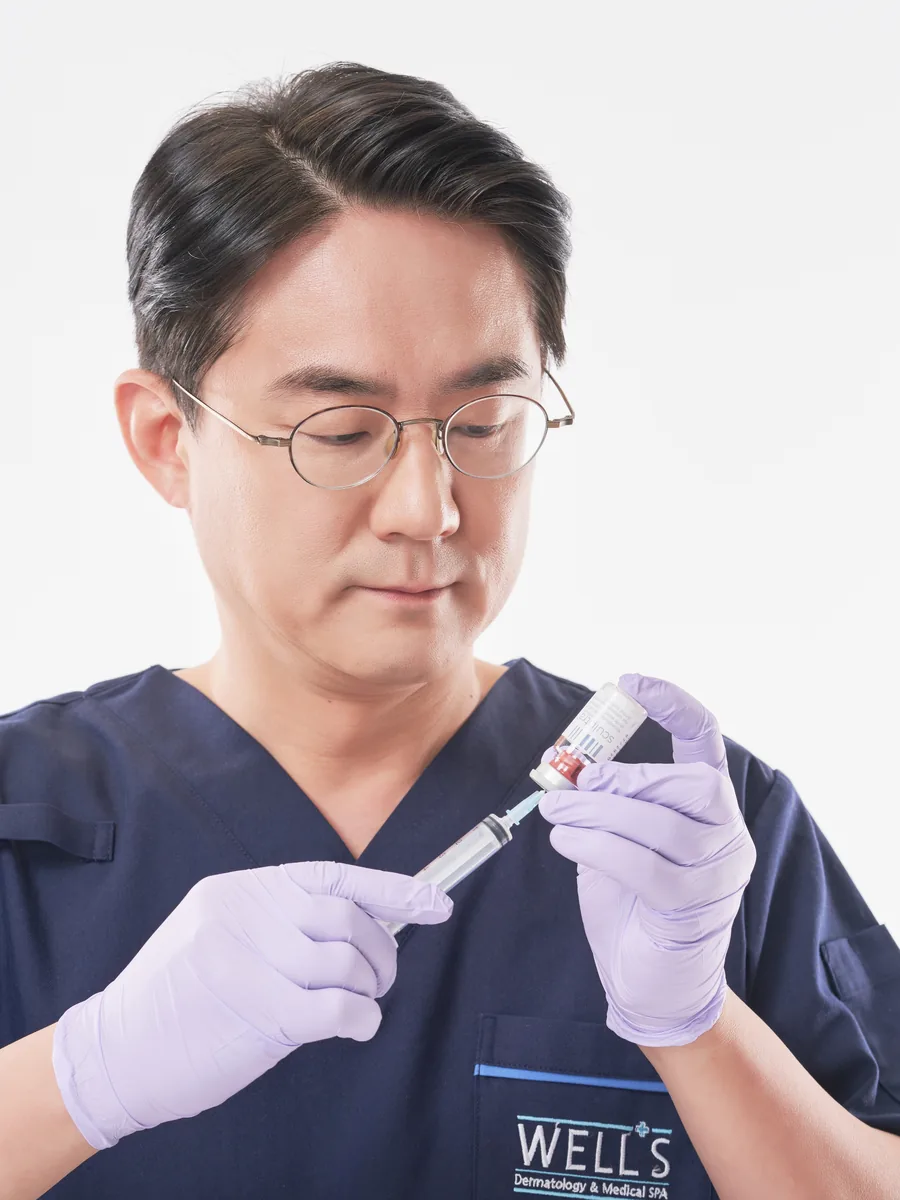
What is actually in a Korean skin booster injection syringe?
Four sessions, two to three weeks apart. That is the line on a Rejuran HB+ plan that surprises people most, especially if you have already had one booster at home and saw little change. A Korean skin booster injection is not a single fix. It is a short course, and each number in the plan (the syringe volume, the interval, the session count) tells you something about how it works and whether it fits your skin.
If you've been told your texture, scarring or dryness is "too much for a booster", this page walks through those numbers so you can judge your own plan before you book a flight.
Rejuran HB+ contains salmon-derived polynucleotide (PN), plus hyaluronic acid and lidocaine. PN works on the skin's internal environment and structure; the hyaluronic acid adds hydration; the lidocaine is there for comfort during and after injection.
That makes it a different tool from a filler. A filler occupies space. PN is injected as many small, shallow deposits across the face, and what you notice later (finer texture, better hydration, a little more elasticity in the epidermis and dermis) builds as the skin responds.
The evidence base is real but still young. A 2025 systematic review in the Journal of Cosmetic Dermatology on polynucleotides in esthetic medicine found improvements in skin quality across the included studies, while noting that many were small and that larger, controlled trials are still needed.
A review in Pharmaceutics that compared PN with PDRN explains why the two are related but not interchangeable: they differ in fragment length and in how long they stay in tissue. If you've been reading about PDRN for dry skin, our page on how we think about PDRN for dry skin goes further into that question.
What about RE20, exosome boosters or peptide injections you see in search results? They are not on the WELLS treatment list, so I won't describe them as options here.
Why does the plan say four sessions, two to three weeks apart?
Four sessions at two to three week intervals is the course recommended for Rejuran HB+. The interval gives the skin time to respond to one round before the next is placed; the count reflects that a single round is a starting point, not the finished change.

In practical terms, that course spans roughly six to nine weeks from the first session to the last. For someone who lives in Seoul, that is easy. For someone flying in, it is the number that decides the whole plan, which is why the travel section below spends more time on it than on anything else.
A single session is still a legitimate choice. It just needs honest expectations: you are starting the process, and the dermatologist can tell you at consultation what one round is likely to change for your skin.
3 cc plus 3 cc: reading the Rejuran Tox numbers
Some plans you'll see from WELLS read "Rejuran HB+ 3 cc + skin smoothing injection 3 cc". That is Rejuran Tox, a combination done in one session.
The two volumes do different jobs:
| Line on the plan | What it is | What it targets |
|---|---|---|
| Rejuran HB+ 3 cc | Polynucleotide with hyaluronic acid | Regeneration, hydration and elasticity from below |
| Neuromodulator 3 cc (diluted, shallow) | Very small amounts spread evenly in the surface layer | Fine lines, pores, oiliness and surface texture |
The idea is simple: one works on the skin's internal state, the other refines the surface, and doing both in one visit covers texture, fine lines and pores together. There are two neuromodulator options at WELLS, a Korean-made product and one made in the US; both are genuine products, and the dermatologist decides the dose. Our Korean skin booster planning guide compares the combinations side by side.
Send a clear photo and your travel dates, and we will tell you what fits the time you have in Seoul.
Send your skin photos and travel dates on WhatsAppWhat does "53% less pain" actually measure?
The 53% figure is a comparison on the VAS pain scale. Per the Rejuran HB+ product information WELLS publishes, the lidocaine in the formula made post-injection pain on average 53% lower on the VAS than with Rejuran Healer.
Two things are worth knowing about that number. First, it is relative. Rejuran Healer has a reputation for stinging, so "53% less" means noticeably more tolerable, not that you'll feel nothing. Second, it is an average. Thin skin under the eyes, a low pain threshold or a stressful week can all change how you experience it.
If pain is the reason you've been putting this off, tell the dermatologist before the first injection rather than during it. WELLS does not use unnecessary sleep sedation; for lifting treatments it uses Air NOX, an awake sedation with oxygen and nitrous oxide. Whether that or something simpler suits a booster session is something to ask in the room.
Side effects, and the skin a booster is the wrong tool for
The common effects are the ones you'd expect from many shallow injections: small bumps that settle, redness, swelling, some bruising and tenderness.
The U.S. Food and Drug Administration's page on dermal fillers lists bruising, redness, swelling, pain, tenderness, itching and rash as common injection effects. Boosters are a different product category, but the needle and the skin's reaction to it are similar. Allergic reactions and infection are less common, and any injection carries them.
Some situations deserve a conversation before anything is injected:
- Deep, depressed acne scars. A booster improves texture and hydration; it does not lift a pitted scar. For depressed scars, Juvelook (PLA plus hyaluronic acid) fills the scar while stimulating collagen, and fractional or microneedle devices are combined depending on scar type. Even then, deeper scars rarely remodel in a single visit.
- Active acne or inflamed skin in the area. Injecting through active inflammation is generally postponed until it settles.
- Allergies. Rejuran HB+ is salmon-derived and contains lidocaine, so tell the dermatologist about fish or local-anaesthetic allergies.
- Pregnancy, or recent fillers and threads in the same area. These change timing and technique.
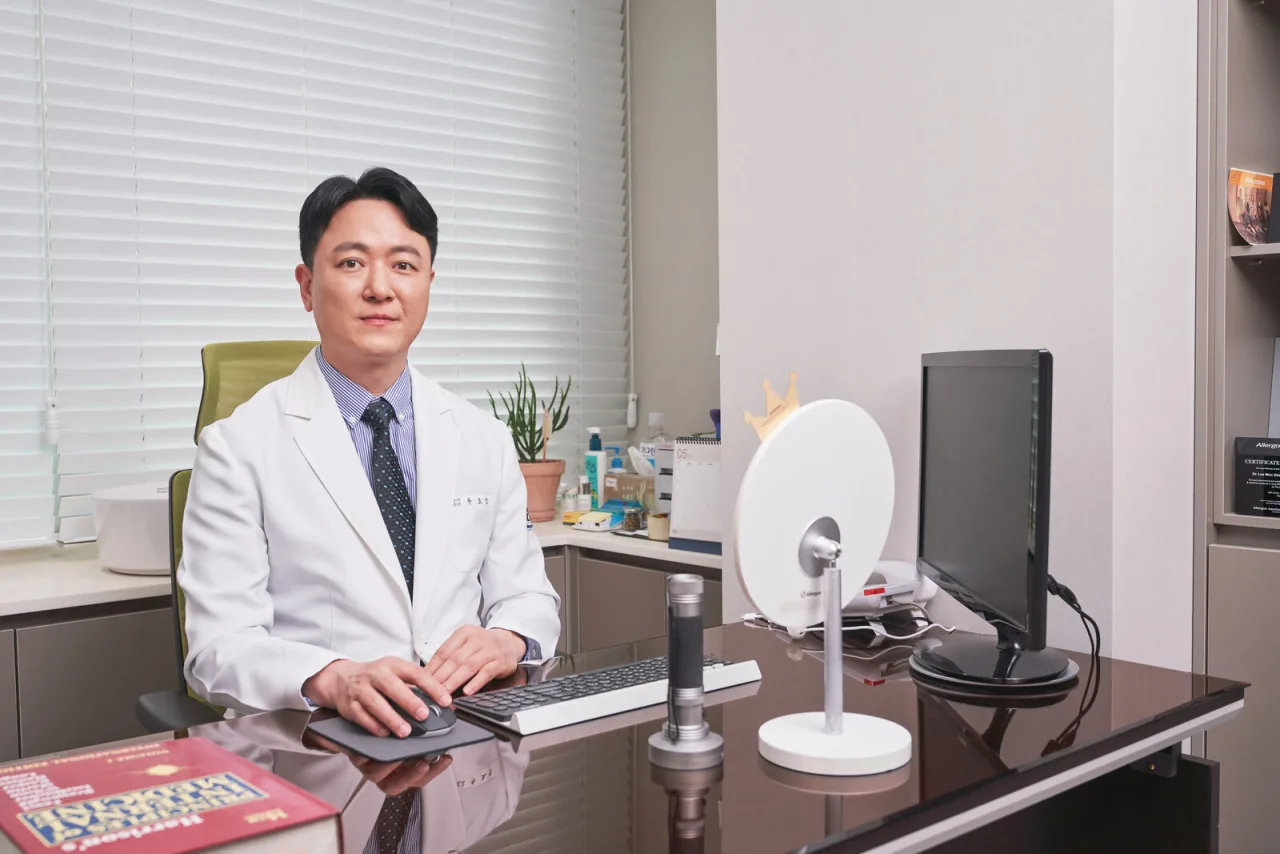
Individual skin responds differently, and the in-person examination decides what is suitable. At WELLS, a board-certified dermatologist does the consultation, the diagnosis and the injection.
Send a clear photo and your travel dates, and we will tell you what fits the time you have in Seoul.
Send your skin photos and travel dates on WhatsAppHow do the numbers fit a trip to Seoul?
The session interval is the constraint. With two to three weeks between sessions, a full four-session course only fits a single stay of about six to nine weeks; most visitors either come back for later sessions or start with one round and judge from there.
A few scheduling facts help you plan around the clinic:
- WELLS is at 8F Apgujeong Building, 842 Nonhyeon-ro, Gangnam-gu, about a five-minute walk from Apgujeong Station Exit 3 (Line 3).
- Hours are Monday to Friday 10:00–20:00 and Saturday 10:00–17:00, with lunch from 13:00 to 14:00. Sundays and public holidays are closed.
- Weekday evenings make it possible to land in the morning and still be seen the same day.
Plan for some redness and small bumps on the day of injection, so a big photo day or an important dinner fits better later in the trip. If you're also thinking about brightening or pigment work, what a Seoul dermatologist can change for skin brightening covers how those treatments are spaced, and the Rejuran skin booster overview explains who it suits. Clinic details and every treatment page are on the WELLS Clinic home page.
The photos that tell a dermatologist more than any number
The plan numbers are the same for everyone; your skin is not. Clear photos and your travel dates are enough for a first suggestion of options and timing.
What helps most: front and both side views of your face in daylight, without makeup or filters; close-ups of the area that bothers you (texture, scars, dryness); your flight dates; previous treatments with product or device names and dates, especially fillers, threads or lifting; and any medications, allergies or skin conditions.
Photos help with options and timing, but the plan is confirmed only after a dermatologist examines you in Seoul. If the honest answer for your skin is a different tool, or no injection at all, that is a useful outcome before you spend a flight on it.
If you have those photos on your phone now, send them with your travel dates on WhatsApp, and the dermatologist will review them and suggest which Korean skin booster injection option, if any, makes sense for your skin.
Plan your visit before you fly
Send a daylight photo, your travel dates and what you have tried before. A dermatologist will suggest where to start and what fits your stay.
Send your skin photos and travel dates on WhatsAppReplies on WhatsApp · prices in KRW, excluding 10% VATBefore you message us
Is a skin booster the same as a filler?
No. A filler adds volume in one place, while a booster such as Rejuran HB+ is injected as many small, shallow deposits to improve the skin's quality. The change builds over a course of sessions rather than appearing as added volume.
Can I do one Rejuran session on a short trip to Seoul?
Yes, a single session is possible, but the recommended course for Rejuran HB+ is four sessions at two to three week intervals. One session is a start, and the dermatologist can explain at consultation what it is likely to change for your skin.
Does Rejuran HB+ hurt?
It contains lidocaine, and post-injection pain was on average 53% lower on the VAS scale than with Rejuran Healer. That is a relative figure, so most people still feel the injections, and sensitivity varies by area and person.
Will a skin booster fix acne scars?
A booster can improve texture and hydration around scars, but it does not fill depressed scars. For those, options such as Juvelook or fractional and microneedle devices are considered, usually over more than one visit.
Who should not get a polynucleotide booster?
People with an allergy to fish-derived ingredients or local anaesthetics, active inflammation in the area, or pregnancy should raise it before treatment. Recent fillers or threads in the same area also change the timing.
Results and recovery vary by individual. Every treatment carries possible side effects, which are explained at the consultation. Prices are in Korean won, excluding 10% VAT, and confirmed at your consultation. This article is general information from the clinic, not a diagnosis.
Dr. Won Woo Choi
- Board-certified dermatologist in Korea; trained at Seoul National University Hospital
- Dermatology residency, Seoul National University Hospital; board certification in dermatology in Korea
- Ph.D. in Dermatology, Seoul National University
- Former clinical instructor, Seoul National University Hospital
- Adjunct professor, Department of Dermatology, Seoul National University Hospital