A Korean face pack for glowing skin won't fix redness, and here is why
A Korean face pack for glowing skin works by hydrating the outermost layer of skin for a few hours. It can't reach collagen, pigment or the small blood vessels behind persistent redness.

What does a Korean face pack for glowing skin actually do?
Is a Korean face pack for glowing skin enough for your dull, uneven complexion, or is something else going on? Read on before you buy another box or book anything.
After this you will know what a pack does, how to read its label, why the glow fades by morning, whom it can irritate, and when redness needs a dermatologist.
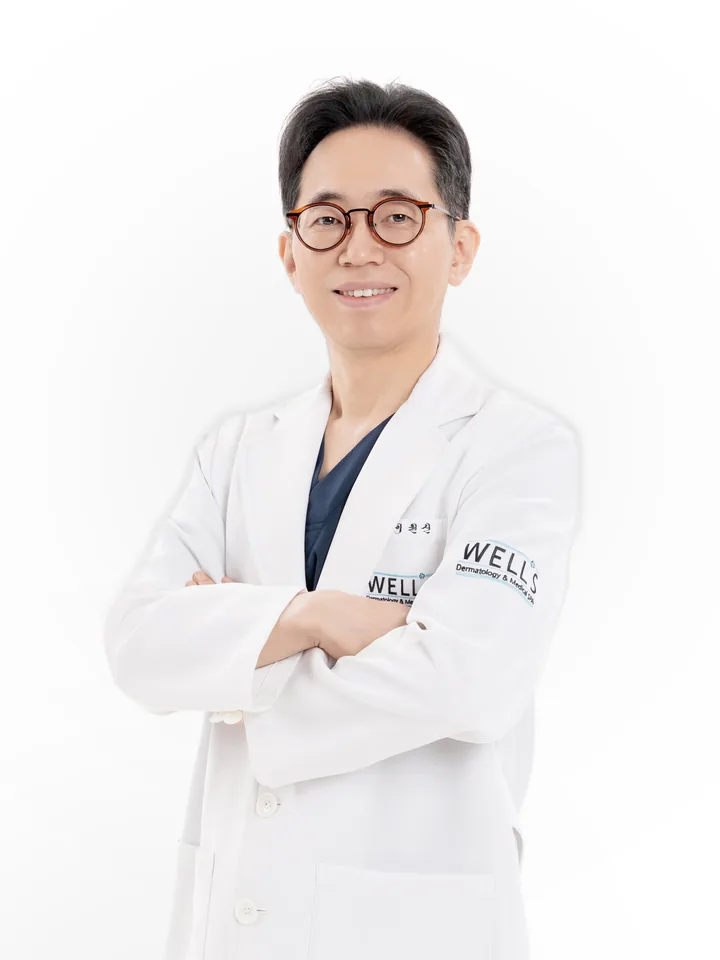
I'm Dr. Won Woo Choi, Medical Director · M.D., Ph.D. At WELLS Clinic in Apgujeong, a board-certified dermatologist consults and treats you directly, which matters when dullness and redness look alike. I wrote this because many people assume one pack fixes both. A Korean face pack for glowing skin hydrates the top layer for a few hours, so it helps dehydration but not redness or visible capillaries.
Send a clear photo and your travel dates, and we will tell you what fits the time you have in Seoul.
Send a daylight photo of your skin on WhatsAppA face pack hydrates the outermost layer of skin, the stratum corneum, for a few hours. That layer is made of flattened dead cells held together by lipids. When it holds more water, its surface lies flatter and bounces light back more uniformly, and that is what people mean by glow.
The sheet, the clay or the overnight gel is mostly a delivery method. It slows evaporation so the humectants have time to pull water in. A clay pack works the other way round on the surface, soaking up oil so the skin looks less shiny for a while.
What a pack doesn't do is change anything deeper. Collagen, pigment cells and the small blood vessels of the dermis all sit below the layer it works on.
Reading the back of the pack, line by line
The front of a face pack sells a feeling; the back tells you what it can do. Here is how I read the lines that matter.
| Label line | What it tells you | What to watch for |
|---|---|---|
| Glycerin, hyaluronic acid, panthenol | Humectants that draw water into the top layer | This is where the glow comes from |
| Niacinamide, vitamin C derivatives | Brightening ingredients with slow, modest effects | One pack is a small dose; a daily serum does more |
| AHA, BHA, PHA, "peeling" | Acids that loosen dead surface cells | Stinging on sensitive or rosacea-prone skin |
| Fragrance, essential oils, alcohol near the top | Scent and a cooling feel | Common triggers for irritation |
| "Leave on 15–20 minutes" | How long the sheet stays wet | Peel it off before it dries out on your face |
The last row matters more than people expect.
Why does the glow fade by the next morning?
Healthy skin is built to keep things out, and a widely cited paper, the 500 Dalton rule (Bos & Meinardi, Experimental Dermatology, 2000), describes how compounds above roughly 500 Dalton in molecular weight pass poorly through intact skin.
Many of the headline molecules on face packs, such as collagen and high-molecular-weight hyaluronic acid, are far larger than that. They stay on the surface and work there as moisturizers. That's a perfectly good job for a pack, and the glow it gives is real; it just lasts hours.
If you want a change that is still visible in a month, the work has to happen in the dermis, where injectable skin boosters and energy devices act. Our guide to Korean skin boosters covers which options reach that layer and how many visits they take.
What decides the cost of treating redness a face pack can't fix?
A sheet mask is a small purchase, but treating redness is a medical decision with several factors behind it. The main ones are the method chosen for the vessels or the flushing, and the size of the area, whether a few cheeks spots or the whole face. The number of sessions matters too, since redness is often treated in a series rather than once. Days in Korea and the follow-up you need can change the plan, particularly if you are flying home soon.
To get a figure for your own case, send a clear photo of your face on WhatsApp and ask for it there.
Side effects and risks: whose skin a face pack can irritate
A Korean face pack for glowing skin suits skin that is dehydrated but otherwise calm. Think tight cheeks after a long-haul flight, dullness after a week of dry hotel air, or flaky patches in winter. For that skin, a plain humectant pack a few times a week is a sensible, low-risk habit.
The risk sits with a few groups. People with rosacea or easily flushed skin can react to acids, fragrance, alcohol and the menthol-style cooling some packs advertise. People already using a retinoid or benzoyl peroxide can sting badly when a peeling pack goes on top; the American Academy of Dermatology's advice on exfoliating at home warns that exfoliating while using these products can worsen dryness or trigger breakouts.
Anyone with active eczema or broken skin should ask a dermatologist before leaving any product on for twenty minutes. With a new pack, try it on a small patch along the jaw first, and take it off at the first sign of burning rather than waiting out the timer.
Redness and broken capillaries: where a pack stops
Persistent redness is the line a pack can't cross. Redness that stays across the cheeks and nose, or fine red threads that don't fade after a cool pack, usually come from enlarged blood vessels in the dermis. No amount of surface hydration shrinks a vessel.
The American Academy of Dermatology's page on lasers and lights for rosacea says laser or light treatment is most likely to be recommended when rosacea has caused visible blood vessels or thickened skin. It also notes that laser is unlikely to be the only treatment: skincare and medication still matter, and new vessels can form over the years.
At WELLS, the rosacea and broken capillaries treatment uses Synergy, Clarity and BBL, so the wavelength can be matched to the vessel instead of heating the surrounding skin. Anesthetic cream goes on beforehand, and treatment can focus on one area such as the nose or cheeks. Mild flushing can sometimes be managed with medication or skincare alone, and whether a laser suits your skin at all is decided at the in-person exam.
Say you are in Seoul for a week and your cheeks look dull and slightly pink by afternoon. You have used a sheet mask every night, and the glow lasts until breakfast and then fades. I would first ask where the pink sits. If it is spread evenly and your skin feels tight, dehydration is likely, and a pack plus a gentler face wash is a reasonable start.
If the colour stays around the nose and cheeks, or you can see fine red lines, the pack is not reaching the cause, because those vessels sit below the layer it hydrates. That is when I would want to look at your skin in person before you spend more on masks.
Can a Seoul visit fit around your flight home?
The practical details are fixed. WELLS is at 8F Apgujeong B/D, 842 Nonhyeon-ro, Gangnam-gu, a 5-minute walk from Exit 3 of Apgujeong Station on Line 3. Hours are Mon–Fri 10:00–20:00 and Sat 10:00–17:00, with lunch from 13:00 to 14:00, and the clinic is closed on Sundays and public holidays. If you land on a Saturday evening, Monday is the first day you can be seen.
Send your arrival and departure dates and a daylight photo of the red areas on WhatsApp.
Send a clear photo and your travel dates, and we will tell you what fits the time you have in Seoul.
Send a daylight photo of your skin on WhatsAppDoes your face wash change what the pack can do?
Yes, and sometimes more than the pack itself. A cleanser that leaves your face squeaky strips the lipids that hold water in, so a pack rehydrates skin that will be tight again by evening. Fixing the wash first makes the pack's effect last longer.
For oily skin, a gentle gel cleanser morning and night is usually enough. Very strong foaming washes can leave skin feeling oily and tight at the same time. For dry skin, a cream or milk cleanser in the evening and lukewarm water in the morning keeps more of the barrier intact, and the pack then has less to make up for.
If what bothers you is uneven tone or dark spots rather than dryness, a pack won't settle it either. This piece on Korean skin brightening explains what a dermatologist can change there, and how to check a Korean dermatologist's title helps if you're comparing clinics before you book anything.
Two photos to bring for a dermatologist's view
The first shows whether the redness looks like a flush or like fixed threads; the second shows whether the pack itself could be part of the irritation.
Send two photos on WhatsApp: one bare-faced in daylight, one close up of the reddest area, along with the dates you'll be in Seoul. Then ask one question: "Is my dullness dehydration or redness?" One photo is enough to start, and you can ask before booking anything.
Plan your visit before you fly
Send a daylight photo, your travel dates and what you have tried before. A dermatologist will suggest where to start and what fits your stay.
Send a daylight photo of your skin on WhatsAppReplies on WhatsApp · prices in KRW, excluding 10% VATBefore you message us
How often should I use a Korean sheet mask?
A plain hydrating sheet mask can be used a few times a week on calm skin. Peeling or acid-based packs need more space between uses, especially if you also use a retinoid. If your skin starts to sting or flush, stop and give it a few days.
Can a face pack make a round or chubby face look slimmer?
No. The width of a face comes from fat, the jaw muscle and bone structure, none of which a pack reaches. A cold pack can make morning puffiness look less for a while, but that is water, not shape. Enlarged jaw muscles or fat are a separate dermatology consultation.
Are Korean face packs safe if I have rosacea?
Many people with rosacea tolerate a hydrating pack made without fragrance or alcohol. Acids, essential oils and strong cooling agents are the usual triggers. Test a new pack on a small area first and remove it at the first sign of burning.
Can I use a sheet mask after a laser treatment?
Ask the dermatologist who treated you, because the answer changes with the device and settings used. Freshly treated skin is more reactive, so skip acids and fragrance until the doctor clears them. Sun protection matters more than any pack in the days after.
Will one face pack make a difference before an event?
Yes, for a few hours. A hydrating pack the evening before or the morning of an event can make skin look smoother and more even. Expect the effect to fade by the next day.
Results and recovery vary by individual. Every treatment carries possible side effects, which are explained at the consultation. Prices are in Korean won, excluding 10% VAT, and confirmed at your consultation. This article is general information from the clinic, not a diagnosis.
Dr. Won Woo Choi
- Board-certified dermatologist in Korea; trained at Seoul National University Hospital
- Dermatology residency, Seoul National University Hospital; board certification in dermatology in Korea
- Ph.D. in Dermatology, Seoul National University
- Former clinical instructor, Seoul National University Hospital
- Adjunct professor, Department of Dermatology, Seoul National University Hospital