What is Onda? Microwave lifting explained, and who it really suits
Onda uses Coolwaves microwaves to heat the dermis and fat while cooling the surface. How it works, how it differs from Ultherapy, and who it suits.

What is Onda, in plain terms?
What is Onda, and why does it keep coming up when people ask about lifting the jawline without looking hollow? Onda is a lifting device made by DEKA in Italy that uses microwaves, rather than ultrasound or radiofrequency, to heat the layers under the skin.
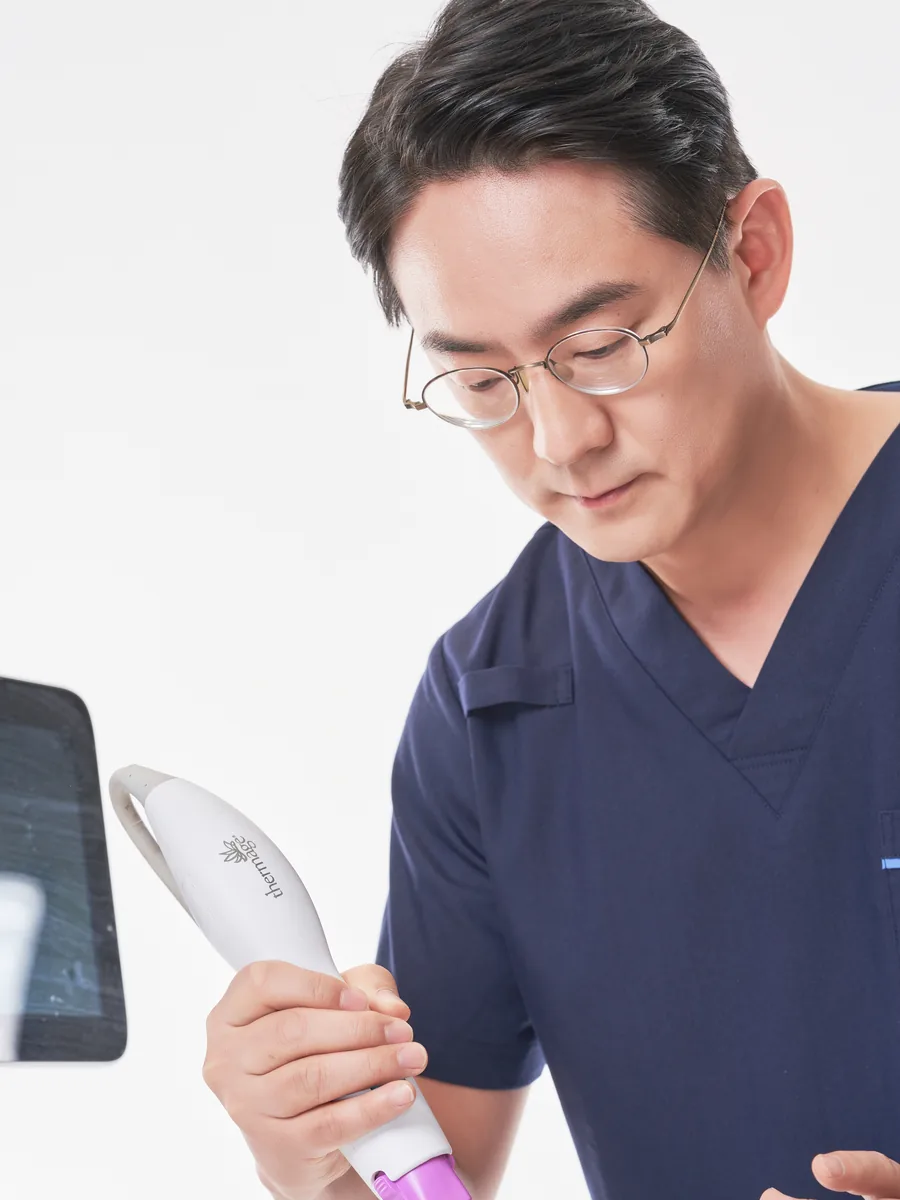
I'm Dr. Won Sin Lee, a board-certified dermatologist trained at Asan Medical Center in Seoul and a chief director at WELLS in Apgujeong. I'll explain what Onda does, what it does not do, and how I decide whether it fits a particular face.
On the name: onda is the Italian word for wave, which fits a device built on microwave energy. The technology behind it is called Coolwaves, and the cooling part of that name matters as much as the waves.
How does Onda Coolwaves work?
Most lifting devices use radiofrequency or focused ultrasound, and a good part of that energy is lost as it passes through the skin surface. To reach the target depth, the output has to go up, and higher output can mean more pain and more risk of side effects.
Onda's Coolwaves microwaves pass through the skin surface with almost no energy loss and concentrate heat in the dermis and the fat layer beneath it. At the same time, the surface is cooled in real time, which is why many people can be treated without numbing cream.
Two handpieces, two depths
The 3 mm handpiece works in the dermis, where heat stimulates collagen and firmness. The 7 mm handpiece reaches the fat layer under the jawline and chin, reducing unnecessary fat while the skin tightens.
Deciding where each handpiece goes is the real skill in an Onda treatment. On a face with thin cheeks, I keep the 7 mm handpiece away from the cheeks and use it only where there is excess fat.
What does Onda lifting treat?
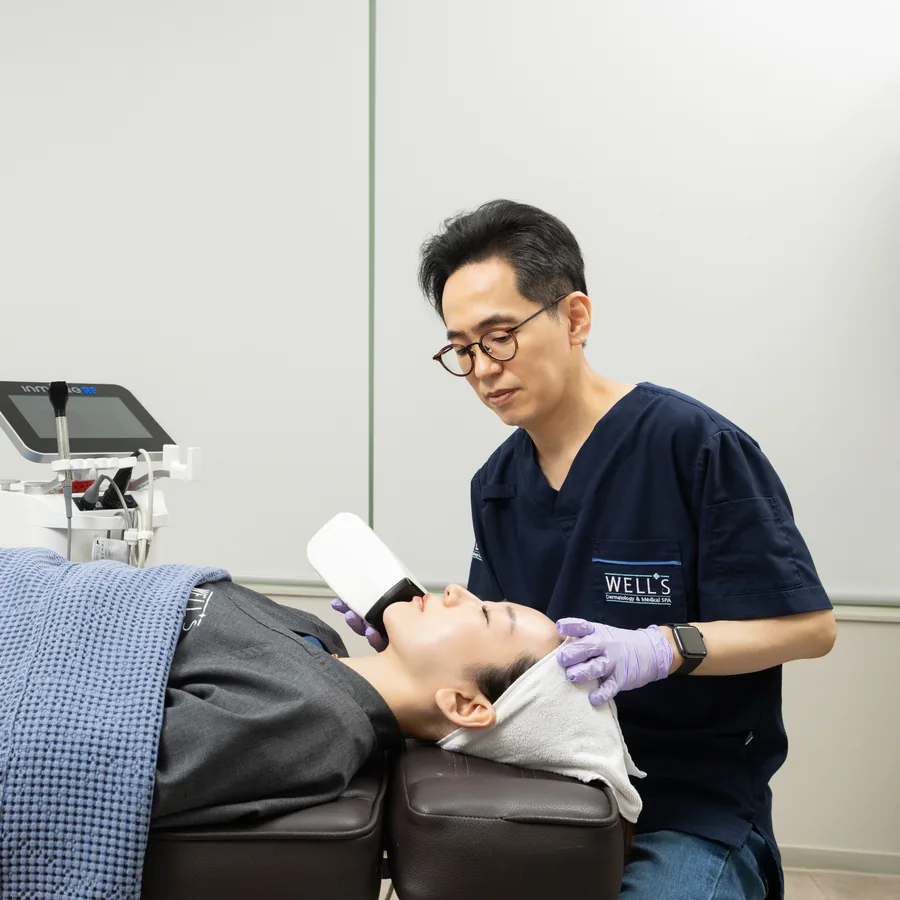
Onda lifting is best known for the lower face. The areas that tend to respond are the jawline, the cheek line and a soft double chin.
- Sagging along the jawline and a soft double chin
- People who want lifting without losing cheek volume
- People worried about discomfort or time away from daily life
The characteristic I value most is that Onda refines the contour without over-reducing cheek volume. Lifting that pulls hard but leaves the cheeks deflated can make a face look older, not younger.
Onda is also used on the body. In our body slimming program, V-OLET injections reduce stubborn fat in the lower abdomen or upper arms, and Onda tightens the skin over it so the area does not sag once the fat is reduced.
Onda vs Ultherapy: how do they differ?
The two are often compared because both aim at a sharper lower face. They work at different depths with different energy, and that changes the experience as much as the result.
| Ultherapy | Onda MAX | |
|---|---|---|
| Energy | Focused ultrasound to the SMAS layer | Microwaves to the dermis and fat layer |
| Cheek volume | Strong energy can reach the fat layer and hollow the cheeks | Depth and range are controlled to keep cheek volume |
| Comfort | Numbing cream, sometimes injections or sedation | Real-time surface cooling, usually no numbing cream |
| Downtime | Some swelling possible | Little swelling; back to daily life the same day |
The timeline differs as well. Ultherapy's effect generally appears gradually over two to three months, while with Onda many people notice a more defined jawline about one to two weeks after treatment.
Neither one is simply better. Ultherapy lifts the deep support layer; Onda works on the dermis and fat above it. If you want to understand the deeper option, read our Ultherapy explainer.
Not sure whether your jawline needs Onda, Ultherapy or neither? Send a relaxed photo of your face and your question.
Ask which lift fits meWhat is Onda MAX, and why the cream matters
If the device is the same, why do Onda results differ from one clinic to another? A large part of the answer is how efficiently the microwave energy is delivered into the skin, including what is applied to the skin during treatment.
Most clinics run the Onda handpiece over jojoba oil, which only helps it slide. At WELLS we apply our own Detology cream, which contains collagen peptide and CeraXosome, and we call this protocol Onda MAX.
- It raises conductivity, so the microwave energy reaches the dermis with less loss.
- It protects the skin barrier while the tissue heats.
- It supports collagen synthesis in the period after treatment.
You take a jar of Detology cream home for aftercare, and every energy level includes it. The listed prices on the Onda MAX treatment page are per session:
| Energy | Price |
|---|---|
| 60 kJ | ₩700,000 (VAT excluded) |
| 80 kJ | ₩800,000 (VAT excluded) |
| 100 kJ | ₩900,000 (VAT excluded) |
The kJ figure is the total microwave energy delivered in the session. More energy covers a larger area or more passes, and the dermatologist chooses the level for your jawline, chin and neck at consultation.
What does an Onda treatment feel like, and when do results show?
Because the surface is cooled in real time, most patients complete the session without numbing cream. Pain tolerance differs from person to person, and the dermatologist adjusts the energy to you.
Mild redness usually settles within a few hours, and there is little swelling, so most people go back to their day. That makes Onda a practical choice for busy schedules or for anyone who has avoided lifting because of pain.
A single session gives an immediately visible tightening. For collagen remodelling that holds, our dermatologists recommend about three sessions, four to six weeks apart, which builds a foundation for roughly six months, up to a year.
How much energy actually reaches the target, and whether aftercare is done, decide the rest. Individual results vary, and side effects are possible with any treatment.
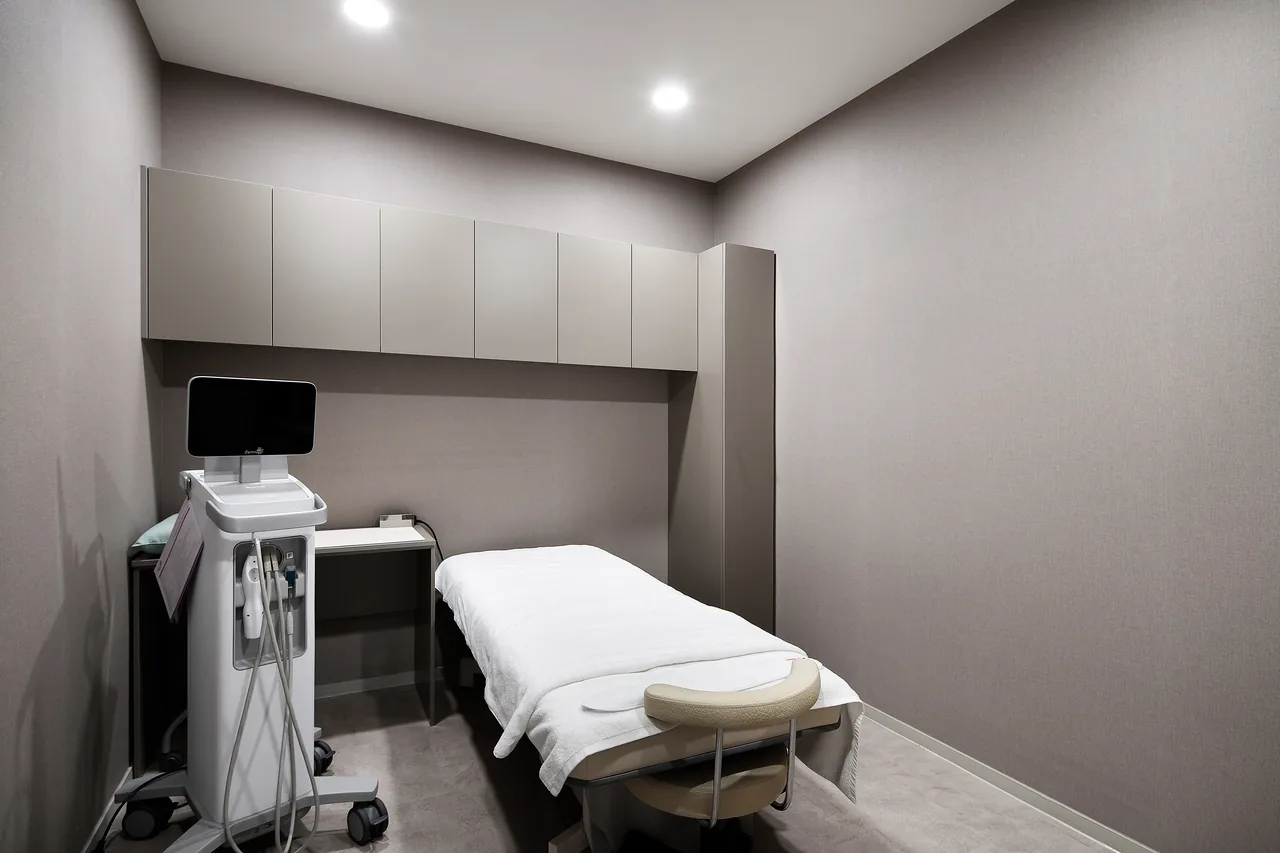
Who is Onda right for, and who should look elsewhere?
Onda suits people who want a cleaner jawline and less softness under the chin, who want to keep their cheek volume, and who need to go straight back to daily life. It is also worth considering if an earlier Onda treatment elsewhere felt underwhelming.
It is not the answer for every face. If you have already lost cheek volume, I may suggest a different plan rather than any treatment that reduces fat.
When the upper and lower face are both sagging, one device is often not enough. In that case a combination with Thermage or EMFACE may make more sense; our 3X Upper Face Lifting program and Collagen Booster Thermage FLX cover the upper face.
Tell us what bothers you about your lower face and share a photo. A dermatologist will suggest whether Onda MAX, and which energy level, fits.
Send a photo for an Onda planWondering whether Onda fits your face?
Send a relaxed photo of your face and tell us what bothers you about your jawline or chin. A dermatologist will reply in English with whether Onda MAX suits you and which energy level makes sense.
Message the clinic on WhatsAppReplies on WhatsApp · prices in KRW, excluding 10% VATBefore you message us
What is Onda in one sentence?
Onda is a microwave-based lifting device by DEKA (Italy) that heats the dermis and fat layer while cooling the skin surface in real time, mainly used to define the jawline and lower face.
Does Onda hurt? Do I need anesthesia?
Onda cools the skin surface while it heats the layers underneath, so most patients complete the session without numbing cream. Pain tolerance differs, and the dermatologist adjusts the energy to you.
Will Onda make my cheeks look hollow?
The plan is tailored to reduce the risk of unwanted cheek volume loss. The 7 mm handpiece is kept to areas with excess fat, and the dermatologist limits it on thin cheeks. If you have already lost cheek volume, a different plan may be suggested.
What is the difference between Onda and Onda MAX?
Onda MAX is the WELLS protocol: instead of jojoba oil, the handpiece runs over our own Detology cream with collagen peptide and CeraXosome, and you take a jar home for aftercare.
How many Onda sessions will I need?
A single session gives visible tightening. For collagen remodelling that holds, our dermatologists recommend about three sessions four to six weeks apart; your dermatologist confirms the schedule at consultation.
Results and recovery vary by individual. Every treatment carries possible side effects, which are explained at the consultation. Prices are in Korean won, excluding 10% VAT, and confirmed at your consultation. This article is general information from the clinic, not a diagnosis.
Dr. Won Sin Lee
- Board-certified dermatologist in Korea; trained at Asan Medical Center in Seoul
- Dermatology residency, Asan Medical Center; board certification in dermatology in Korea
- Adjunct professor, Department of Dermatology, Asan Medical Center
- Former director, Bokji Dermatology Clinic, Korean Leprosy Welfare Association
- Commendation for Outstanding Service as a Public Health Physician