The Best Korean Acne Treatment Depends on Your Acne Type, Not a Single Laser
No single Korean acne treatment suits everyone: oily inflamed spots, clogged pores, deep nodules and scars each respond to something different, and a dermatologist sorts which one you have before choosing.

Why does no single Korean acne treatment suit everyone?
Wondering which is the best Korean acne treatment for your skin, and whether a trip to Seoul is worth it?
Read on before you book a flight or pick a procedure.
After this you will know how acne type decides the method, why a short stay suits some treatments and not others, how scars differ from active acne, and what risks and waiting periods to expect.
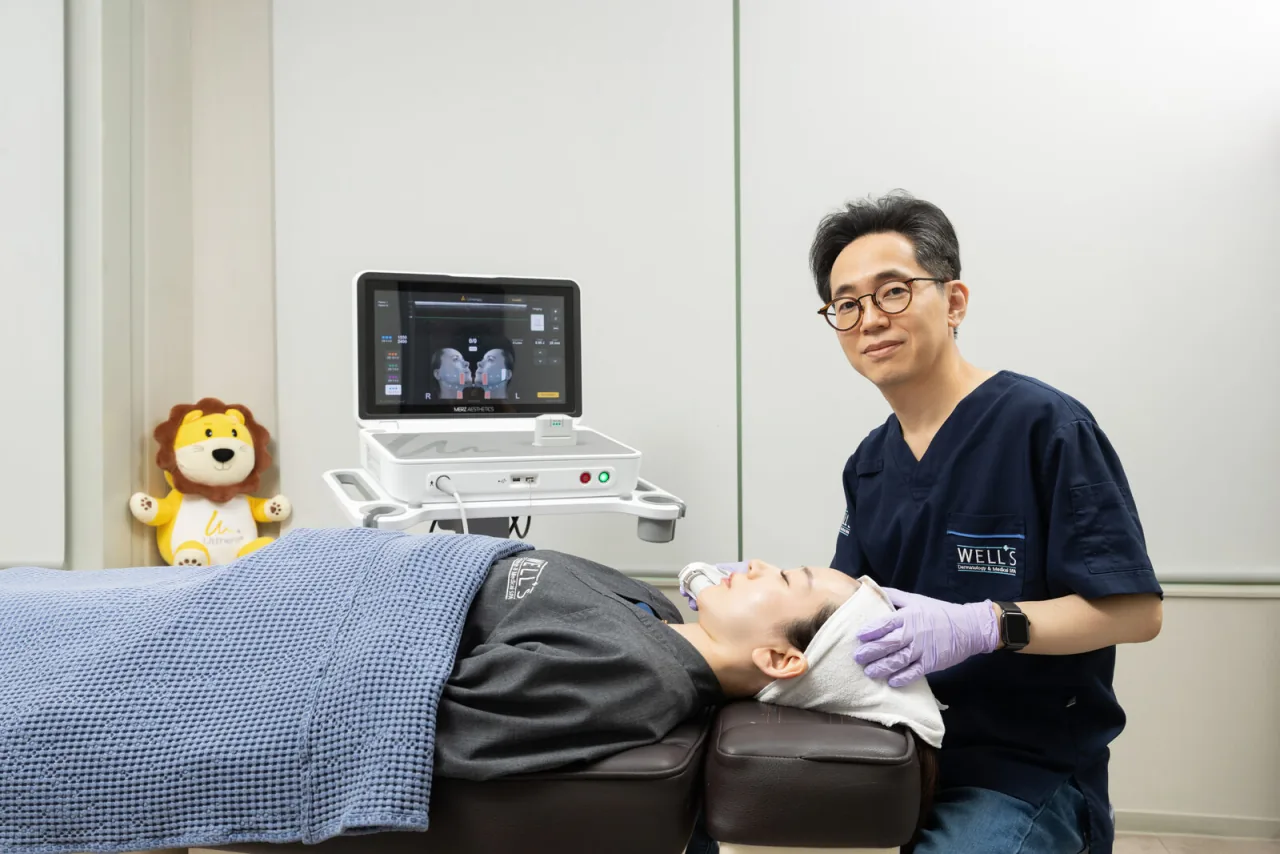
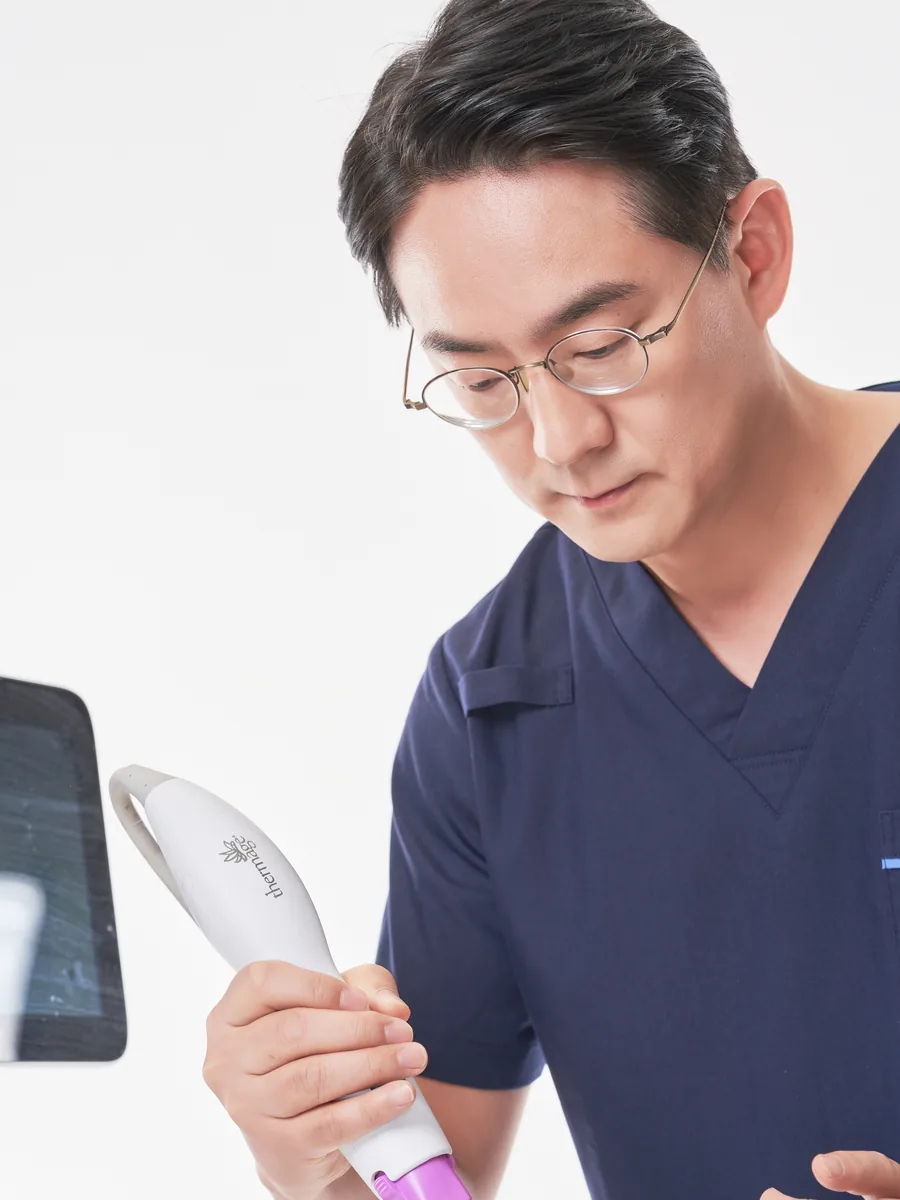
I'm Dr. Won Woo Choi, Medical Director · M.D., Ph.D. at WELLS in Apgujeong, Seoul. In 2016 our clinic took part in an acne microbiome study with research institutions in the US and Luxembourg. I wrote this because many people assume one laser or one product clears every kind of acne, and it does not.
There is no single best Korean acne treatment. The right one depends on your acne type, and scars are a separate plan that comes after breakouts settle.
Send a clear photo and your travel dates, and we will tell you what fits the time you have in Seoul.
Send one acne photo and your question on WhatsAppAcne is several conditions sharing one name. Dermatologists sort breakouts by type and by where they appear, because different types often need different treatment, as the American Academy of Dermatology explains.
Here is how that sorting maps onto the acne options at WELLS.
- Oily skin, many inflamed spots · What is usually driving it: Overactive oil (sebaceous) glands; Options at WELLS: Gold PTT, 1450 nm acne toning; Fit for a trip: Gold PTT runs weekly for 3 to 5 sessions
- Red, inflamed spots before a busy week · What is usually driving it: Inflammation in the pore; Options at WELLS: Blue PDT; Fit for a trip: No photosensitizer, so you can go out straight afterwards
- Clogged pores, dull skin, back or chest acne · What is usually driving it: Dead skin cells and oil blocking pores; Options at WELLS: Aladdin or FCR peels; Fit for a trip: Discussed at consultation
- Deep, painful nodules · What is usually driving it: Severe inflammatory acne; Options at WELLS: Assessed in person by the dermatologist; Fit for a trip: Discussed at consultation
- Depressed scars once breakouts settle · What is usually driving it: Damage in the dermis; Options at WELLS: Fractional Picosecond Laser, Juvelook; Fit for a trip: Redness from the laser usually clears in 3 to 4 days
- Lasting redness, visible capillaries · What is usually driving it: Enlarged vessels; Options at WELLS: Synergy, Clarity, BBL vascular lasers; Fit for a trip: Planned as a separate concern
Gold PTT applies a gold nanoparticle ampoule that is then activated by laser, and it aims to reduce oil gland activity. Most faces fit two rows at once. Oily cheeks with a few scars from last year is a common pairing, and it means two plans that run on different clocks.
A short trip suits some acne treatments and not others. A weekly course of 3 to 5 sessions needs several weeks in Seoul or a return visit, while a treatment you can walk out of the same day fits a few days better.
Send a clear photo and your travel dates, and we will tell you what fits the time you have in Seoul.
Send one acne photo and your question on WhatsAppWhat about a spot treatment? A spot gel can calm one pimple, but it does not change why the next one forms. If the cause is oil gland activity or clogged pores across the face, treating single spots only follows the breakout around. The same goes for Korean skincare for acne: a cleanser or moisturizer supports treatment, but it rarely replaces it.
A short trip suits some acne treatments and not others
One visit can start a plan; it rarely finishes one. The AAD says to expect at least 6 to 8 weeks before breakouts decrease on a treatment plan, and that clock does not run faster in Seoul.
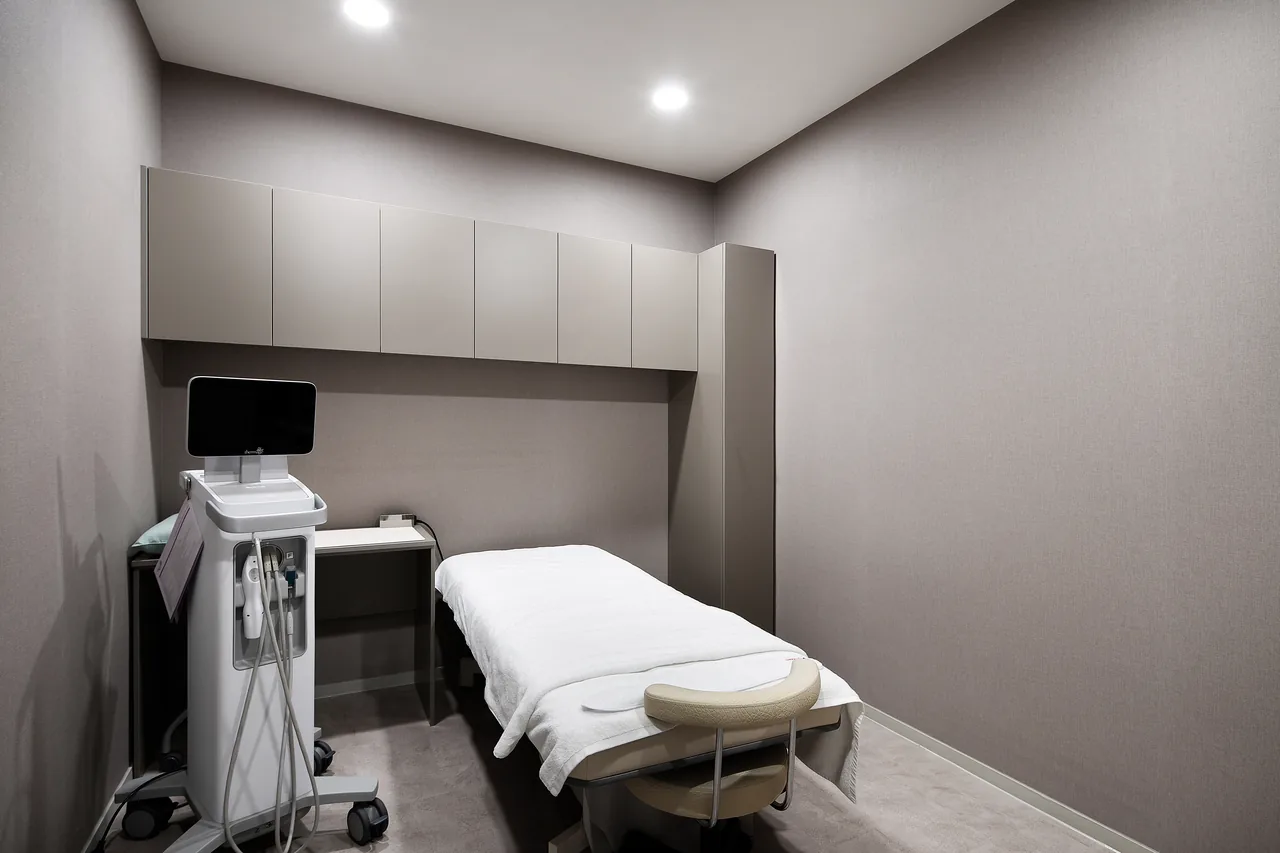
Gold PTT is the clearest example. It is three simple steps with little disruption to daily life, but it runs weekly for 3 to 5 sessions.
On a one-week trip you get the first session, not the course. If you live in Seoul for a semester or come back every few weeks, it fits well.
Blue PDT fits a tight schedule better. Because no photosensitizer is used, you can go out straight afterwards and keep your sightseeing plans. The 1450 nm acne toning laser heats the oil gland with almost no pain, and WELLS has ten years of clinical data with this laser. For acne on the back and chest, Aladdin and FCR peels exfoliate dead skin cells and stimulate collagen.
The surprise for many visitors is that the procedure they read about most is not the one their calendar can hold. If you only have five days, say so at the start; it changes which option makes sense.
Send a clear photo and your travel dates, and we will tell you what fits the time you have in Seoul.
Send one acne photo and your question on WhatsAppCan Korean skincare or a face wash clear acne on its own?
For mild acne, a gentle routine and a consistent topical treatment can be enough. For inflamed, deep or scarring acne, products alone usually are not.
The AAD's skin care advice for acne-prone skin is plainer than most product shelves. Wash up to twice a day and after sweating, with a gentle, non-abrasive cleanser applied with your fingertips. Skip astringents, toners and exfoliants that dry the skin, because dryness can make acne look worse. Stick with one treatment instead of switching often, since it may take several weeks to a few months to see a difference.
That last point is where layered routines go wrong. If your routine has grown to six or seven steps of acids and spot gels chasing each breakout, nothing has been given long enough to work. A spot treatment can calm one spot. It does not change why spots keep appearing.
For mild to moderate acne, dermatologists usually start with topical medicines such as retinoids, benzoyl peroxide, azelaic acid or salicylic acid, according to the AAD. Any Korean face wash for acne-prone skin should be judged by the same standard: gentle, without alcohol, and something you can use every day without irritation.
How a dermatologist reads your acne before choosing
The choice comes from four things the eye and the history show: which spots dominate, where they sit, what is red for which reason, and what you have already tried and for how long.
Which spots dominate matters first. Blackheads and whiteheads point to clogged pores, red raised spots and pus spots point to inflammation, and deep tender lumps along the jaw point to a more severe acne that usually needs medication. Location comes next. Forehead and nose acne behaves differently from a jawline that flares in cycles, and back and chest acne needs a treatment that can cover a large area.
Redness is the part people misread most. A flat red mark where a spot used to be is fading inflammation. Redness with visible fine vessels is a vascular problem, and that is a job for vascular lasers used in rosacea treatment, not for an acne laser. At WELLS, a board-certified dermatologist handles consultation, diagnosis and treatment, so the person sorting these signs is the one who treats you.
Say you are in your mid-twenties with oily skin and red, tender bumps along the jaw. For eight months you have used creams, and a course of antibiotics only quieted things for a while. I would first look at whether the problem is mainly oil, inflammation or both, and whether any marks are active redness that will fade or true scars.
If oil and inflammation lead, I would think about treatments aimed at those, and I would ask how many days you can stay and whether you can return for follow-up. If you can only come once, I might suggest finishing your current routine at home and treating scars later. That depends on your skin, so it is a way of thinking, not a plan for you.
Scars and active acne are two separate plans
Scar work usually comes after breakouts are under control, because new spots leave new marks. If both are present, expect one plan for the acne and another for the scars, sometimes on different trips.
For depressed scars, Fractional Picosecond Laser creates tiny points of optical breakdown (LIOB) inside the dermis with almost no heat damage to the surface. There is no oozing and no wound dressing, and any redness usually clears in 3 to 4 days. Juvelook, a KFDA-approved mix of PLA and hyaluronic acid, fills depressed scars immediately while stimulating collagen. Mosaic fractional laser, microneedle RF, Aquapeel and the Clarity dual laser are combined depending on scar type and pore condition, and results are shown to you with a dermatoscope.
The American Academy of Dermatology also describes microneedling as one way dermatologists treat acne scars. Deeper scars generally need more than one session. Our guide to planning acne scar treatment around a Seoul trip covers the timing in more detail.
What decides the cost of acne treatment in Korea?
The area treated matters too: the cheeks alone differ from the whole face, chest or back. The number of sessions counts as well, because acne usually needs a course rather than one visit.
How many days you can spend in Seoul decides whether the sessions can be spaced properly or have to be compressed, and any scar treatment adds a second plan. To get the figure for your case, send a daylight photo on WhatsApp and ask what your skin would need.
What are the risks, and when is it better to wait?
Lasers, light treatments and peels are generally well tolerated, but redness, mild swelling, dryness and temporary irritation are common in the first days.
Three risks matter more on a trip than at home:
- Sun. Some acne medicines increase sun sensitivity, and the AAD advises avoiding sun exposure and using a broad-spectrum, water-resistant SPF 30+ sunscreen labeled non-comedogenic. A trip spent outdoors needs planning for this.
- Picking. Picking or squeezing slows healing and raises the risk of scarring and dark spots (post-inflammatory hyperpigmentation), according to the AAD. Irritated skin after a procedure is easy to pick at.
- Timing with medicines. If you take or recently stopped oral acne medication, especially isotretinoin, tell the dermatologist before any laser or peel. It can change what is done and when.
It is often better to wait if you are pregnant or planning pregnancy (some acne medicines and treatments are not used then), if the skin has an active infection, or if deep nodules dominate and have not been treated with medication yet.
Send a clear photo and your travel dates, and we will tell you what fits the time you have in Seoul.
Send one acne photo and your question on WhatsAppWhat should you send before booking a flight?
Clear photos and your travel dates are enough for a first suggestion. Take front and both side views in daylight, without makeup or filters, plus close-ups of the worst area, including back or chest if that is where the acne is.
Add a short list: what you have used for acne and for how long, any oral medicine now or in the past year, allergies, and previous procedures with the date. The plan is confirmed only after the dermatologist examines you in Seoul, and a 3D analysis is done before treatment. For a fuller view of the order acne treatments usually follow, see acne treatment in Seoul and the order it works in, or the personalized acne treatment page. The WELLS Clinic homepage lists every treatment area.
WELLS has been in Apgujeong since 2008, on the 8th floor of 842 Nonhyeon-ro, about five minutes on foot from Apgujeong Station Exit 3 (Line 3). Hours are Monday to Friday 10:00 to 20:00 and Saturday 10:00 to 17:00, closed for lunch 13:00 to 14:00 and on Sundays and holidays.
If you are unsure whether your acne is the kind a trip can help, send one daylight photo of the area on WhatsApp, plus a line on what you have already tried. Then ask this: "Is my acne mainly oil, inflammation or scarring, and what would you do first?" One photo is enough, and you can ask before booking anything. Sometimes the honest suggestion is to finish your current treatment at home first.
Plan your visit before you fly
Send a daylight photo, your travel dates and what you have tried before. A dermatologist will suggest where to start and what fits your stay.
Send one acne photo and your question on WhatsAppReplies on WhatsApp · prices in KRW, excluding 10% VATBefore you message us
Is acne treatment in Korea different from treatment at home?
The medical principles are the same everywhere: dermatologists match treatment to acne type and severity. What differs from clinic to clinic is which procedures are available. At WELLS these include Gold PTT, Blue PDT, 1450 nm acne toning and Aladdin or FCR peels, chosen by the type of acne.
How many Gold PTT sessions does acne usually need?
Gold PTT is done weekly for 3 to 5 sessions. On a short trip you would complete only the first part of that course, so it suits you more if you stay in Seoul for several weeks or can return. Your dermatologist confirms the plan after examining your skin.
Can I go sightseeing after Blue PDT?
Most people can. Blue PDT uses no photosensitizer, so you can go out straight afterwards, though individual response varies. Sun protection still matters, because some acne medicines increase sun sensitivity and sun can darken post-acne marks.
Does the 1450 nm acne toning laser hurt?
It heats the oil gland and is described as causing little pain. Sensitivity differs between people, and you can raise any concern about comfort at consultation before treatment starts.
Which Korean face wash is good for acne-prone skin?
Look for a non-abrasive cleanser without alcohol and use it with your fingertips, up to twice a day and after sweating, as the American Academy of Dermatology advises. Avoid harsh scrubs, astringents and toners. A cleanser supports treatment but rarely clears inflamed acne by itself.
Results and recovery vary by individual. Every treatment carries possible side effects, which are explained at the consultation. Prices are in Korean won, excluding 10% VAT, and confirmed at your consultation. This article is general information from the clinic, not a diagnosis.
Dr. Won Woo Choi
- Board-certified dermatologist in Korea; trained at Seoul National University Hospital
- Dermatology residency, Seoul National University Hospital; board certification in dermatology in Korea
- Ph.D. in Dermatology, Seoul National University
- Former clinical instructor, Seoul National University Hospital
- Adjunct professor, Department of Dermatology, Seoul National University Hospital