PN Skin Booster Korea: Is One Trip Enough? Cost, Reviews, Methods and Flights
One session of a PN skin booster fits a short stay in Seoul. The four Rejuran HB+ sessions we recommend, 2–3 weeks apart, take six to nine weeks from first to last.


Why a PN booster takes several sessions
Planning a PN skin booster Korea trip, but worried that one visit won't be enough before you fly home?
Read this before you book the flight.
You'll know what decides the cost, what reviews get right and wrong, which methods you can choose from, and how many days to plan. That should help you pick a plan that fits your skin, your leave and your budget.
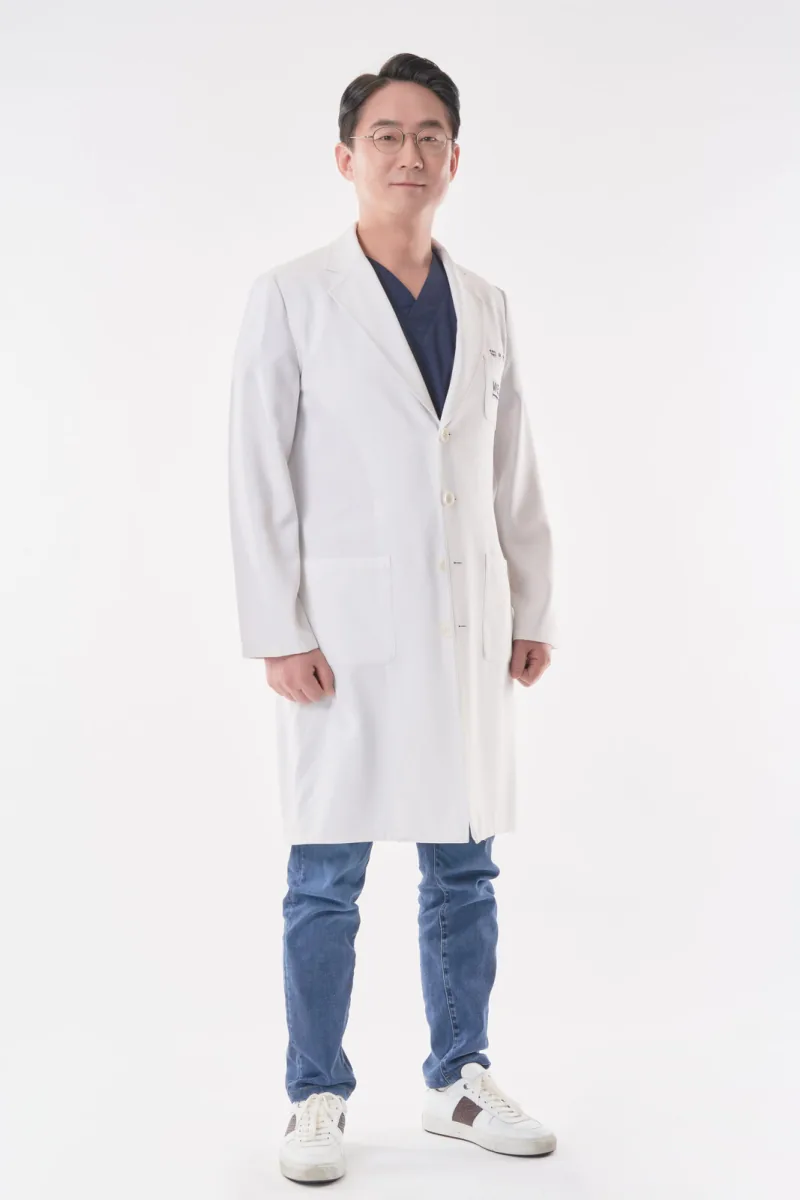
Hello, I'm Dr. Won Woo Choi, Medical Director at WELLS Clinic and a board-certified dermatologist.
At WELLS, a dermatologist consults with you and performs the treatment. We've been in Apgujeong since 2008, at this one location, and we use 3D analysis before treatment.
I'm writing this because people often book a skin booster like a single appointment, when the course is spread across weeks.
One session fits a short stay. The four Rejuran HB+ sessions we recommend, 2–3 weeks apart, take six to nine weeks from first to last.
If you already know your window, send your arrival and departure dates on WhatsApp and ask what a first PN session could look like inside them. Your first question is then about your own calendar.
Send a clear photo and your travel dates, and we will tell you what fits the time you have in Seoul.
Send your travel dates on WhatsAppPN stands for polynucleotide, a purified, salmon-derived DNA material injected into the skin. Rejuran HB+ combines PN with hyaluronic acid and lidocaine. It works on the skin's internal environment and structure, with effects on elasticity, fine lines, texture and hydration.
That's why the calendar matters. A booster like this is meant to change skin quality gradually, so it's usually given as a series. A 2024 systematic review in the Journal of Cosmetic Dermatology found that studies most often used 3–4 sessions at 2- or 3-week intervals.
The same review is a useful reality check. It covered only nine small studies of low to moderate quality, and it called for better research. Wrinkle findings all pointed toward improvement, though only about half were statistically significant. So a single session is a start, and it isn't the schedule most of that research tested.

Which methods can you choose from in Seoul?
For PN at WELLS, the choice usually comes down to two options on our menu. They suit different goals, so start with what bothers you most.
| Option | What's in it | Who it tends to suit |
|---|---|---|
| Rejuran HB+ | PN, hyaluronic acid and lidocaine | Dull, dehydrated skin with fine lines or rough texture |
| Rejuran Tox | Rejuran HB+ 3 cc plus a skin smoothing injection 3 cc, in one session | Fine lines and texture, along with enlarged pores |
The four-session recommendation above is for Rejuran HB+. If you're leaning toward Rejuran Tox, ask how often it should be repeated before you plan a return trip. If you're still comparing PN with other products, our guide to choosing a Korean skin booster covers the wider menu, and this overview explains what Rejuran does and who it suits. If dryness is your main complaint, read how we think about PDRN for dry skin.
How many days do you need in Korea?
Start with the length of your stay, because the interval sets the limit. You need at least 15 days in Korea for two sessions, and six to nine weeks for all four. This table shows what each kind of trip can hold.
| Your time in Korea | Rejuran HB+ sessions that fit | What it means |
|---|---|---|
| Up to 14 days | One | A first session, with the rest still ahead |
| 15 days to 5 weeks | Two | Halfway through the course |
| 6–9 weeks | Up to four | The full course, if the intervals hold |
| Repeat visits from nearby | One each visit | Four trips over six to nine weeks |
Our hours affect the plan too. We're open Monday to Friday 10:00–20:00 and Saturday 10:00–17:00, with lunch from 13:00 to 14:00. We're closed on Sundays and holidays, so land on a Saturday night and the first day you can be seen is Monday. If you live a short flight away, Saturday is the only weekend day that works, and Korean public holidays can break up a run of four visits.
Say you live in Sydney, your skin feels dry and thin with fine lines around the eyes, and you have ten days in Seoul. Ten days holds one session, so I'd place it early in your stay and treat it as a start. Then you have two questions to settle: can you return within the interval, and can a dermatologist at home continue the course? If the answer to both is no, you'd know before you fly that you're buying one session, and you can set your expectations to match.
I wouldn't shrink the gap between sessions just to fit a flight. The recommended spacing exists for the skin, and your booking dates don't change how skin responds.
Flights and follow-up once you're home
The CDC's advice to delay flying for 10–14 days applies to major surgery, and an injectable skin booster is a much smaller procedure. For a PN session, the practical issue is how your skin looks and feels in the following days. The 2024 review describes mild reactions that typically resolved within a week. I'd leave several days between a session and any wedding, meeting or photo shoot, and I'd avoid having the session on the morning you fly.
Arrange your follow-up before you leave home. The CDC's medical tourism guidance says to make sure you can get follow-up care where you live and to get copies of your medical records before returning. Ask for the product name, the amount injected and the date in writing while you're still in Seoul, so a doctor at home knows what was used.
Those same records help if you want to continue the course at home. Whether a PN product is available there varies by country, so check with a local dermatologist before you assume you can finish it there.
PN skin booster Korea cost: what decides it
I can't give you a useful figure without knowing your plan, because these factors move it:
- The product: Rejuran HB+ alone, or Rejuran Tox with its added injection and your choice of neuromodulator.
- The amount and area: how many cc you need and how much of the face is treated.
- The number of sessions: a single session and a four-session course are very different commitments.
- The trips: repeat visits add flights and hotels, while one long stay adds more nights and time off.
- VAT: check whether the figure you're given includes it, since our listed prices exclude VAT and are confirmed at consultation.
To get a figure for your case, ask on WhatsApp what it would cost, name the option and the number of sessions you have in mind, and add a photo of the area.
PN skin booster Korea reviews: what holds up
Public reviews and forum threads tend to repeat a few claims. Some hold up well, and some leave out the part that matters.
"You get small bumps afterward." This is largely true. Injecting into the skin can leave raised spots, swelling or redness at the injection points, and these usually settle within days. It's the main reason to keep some distance between a session and a big event.
"It's one of the more painful boosters." This varies with the formula and the person. Lidocaine in Rejuran HB+ reduced post-injection pain by an average of 53% on the VAS scale compared with Rejuran Healer, so older accounts may not describe the version you'd have.
"One session gave me glass skin." Treat this one with care. Skin can look more hydrated early on, but that's a different thing from a change in texture. In the 2024 review, texture and pore changes were most visible around three months in some studies, and one study saw partial decline by six months.
"It lifts the face." That overstates it. PN is aimed at skin quality, and the review found mixed results for elasticity and sagging. If sagging or lost volume is your main concern, it's a different conversation.
When should you wait, and what if a reaction starts at home?
Risks and side effects to know
The common reactions are pain, swelling, itching, redness and bruising at the injection sites. In the review these were mild and typically resolved within a week, and no severe treatment-related events were reported. That evidence comes from small studies, though, and individual reactions differ.
As a general rule, you should wait or skip treatment in these situations:
- Infection or active inflammation in the area
- A recent laser treatment or peel in the same area
- Current or recent isotretinoin use
- Pregnancy or breastfeeding
- A known allergy to fish or salmon-derived products, or to any ingredient, including lidocaine
If you're home and notice redness that keeps spreading, growing heat or pain, pus or a fever, see a local doctor promptly and show them your treatment record. Don't wait for your next trip. For anything sudden and severe, such as swelling of the lips or throat or trouble breathing, get emergency care.
A recent treatment can move your start date, so put it in your first message. Write down any lasers, peels or acne medicine from the past few months, send the list on WhatsApp, and ask whether any of it changes when you can start.
Send a clear photo and your travel dates, and we will tell you what fits the time you have in Seoul.
Send your travel dates on WhatsAppThe last step can be small. One daylight photo of your face is enough for a first WhatsApp message, and you can ask before booking anything. Ask one question with it: for my skin and my dates, would you start with Rejuran HB+ or Rejuran Tox? When you come to Apgujeong, the dermatologist examines your skin and recommends the plan that fits it.
Plan your visit before you fly
Send a daylight photo, your travel dates and what you have tried before. A dermatologist will suggest where to start and what fits your stay.
Send your travel dates on WhatsAppReplies on WhatsApp · prices in KRW, excluding 10% VATBefore you message us
Is PN the same as PDRN?
They're closely related, and both are DNA-derived materials, usually from salmon. The terms are often used loosely, and PN generally refers to longer chains than PDRN. Ask for the exact product name rather than relying on the label.
How long do the results of a PN booster last?
There's no firm figure. In a 2024 systematic review, texture and pore changes were most visible around three months in some studies, and one study reported partial decline by six months. Studies were small and used different products and schedules.
Can I sightsee on the day of my session?
Usually you can walk around, but expect possible redness, swelling or small bumps at the injection points. Plan your photos and any big event for later in your trip, and ask your dermatologist about sun, makeup and exercise for your own skin.
Where is WELLS Clinic, and when is it open?
We're on the 8th floor of the Apgujeong Building, 842 Nonhyeon-ro, Gangnam-gu, a 5-minute walk from Exit 3 of Apgujeong Station on Line 3. Hours are Monday to Friday 10:00–20:00 and Saturday 10:00–17:00, with lunch from 13:00 to 14:00. We're closed on Sundays and holidays.
Results and recovery vary by individual. Every treatment carries possible side effects, which are explained at the consultation. Prices are in Korean won, excluding 10% VAT, and confirmed at your consultation. This article is general information from the clinic, not a diagnosis.
Dr. Won Woo Choi
- Board-certified dermatologist in Korea; trained at Seoul National University Hospital
- Dermatology residency, Seoul National University Hospital; board certification in dermatology in Korea
- Ph.D. in Dermatology, Seoul National University
- Former clinical instructor, Seoul National University Hospital
- Adjunct professor, Department of Dermatology, Seoul National University Hospital