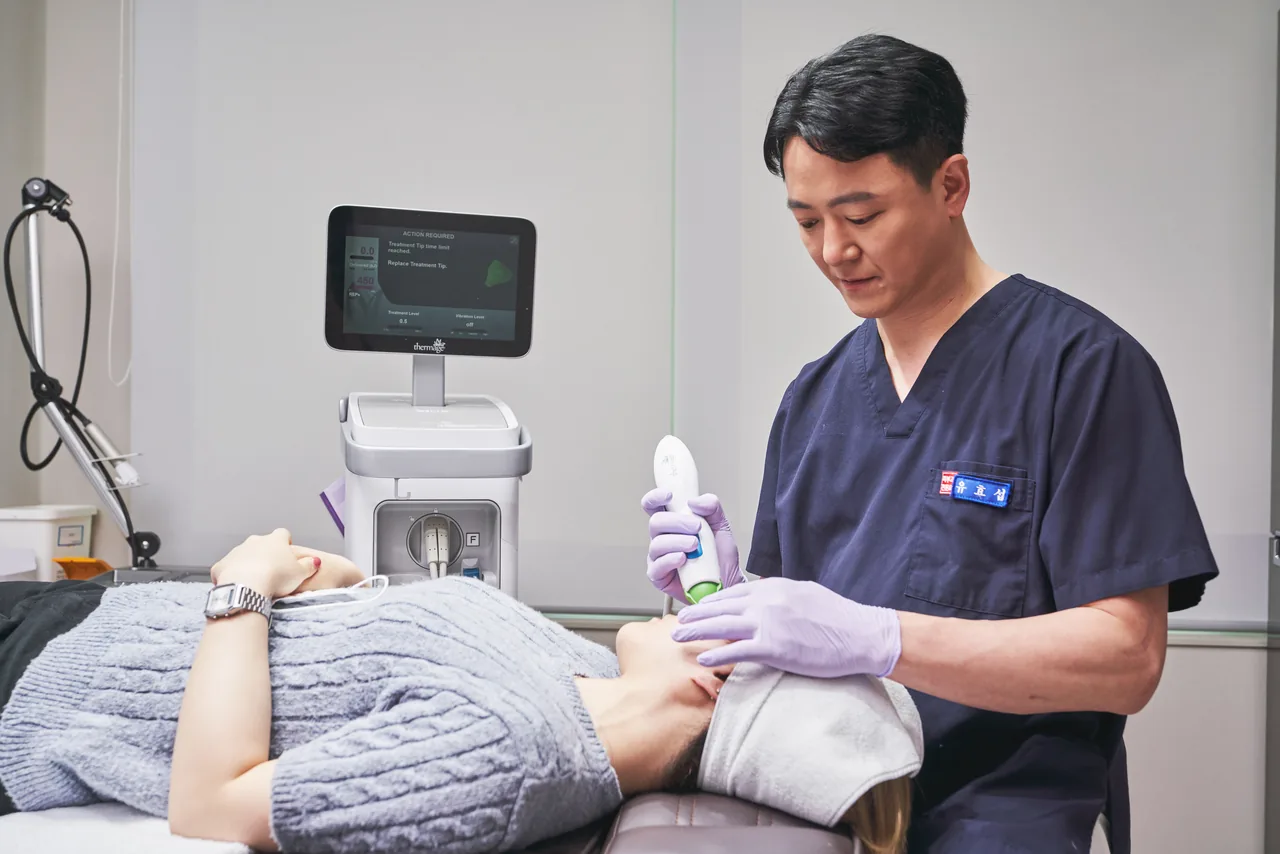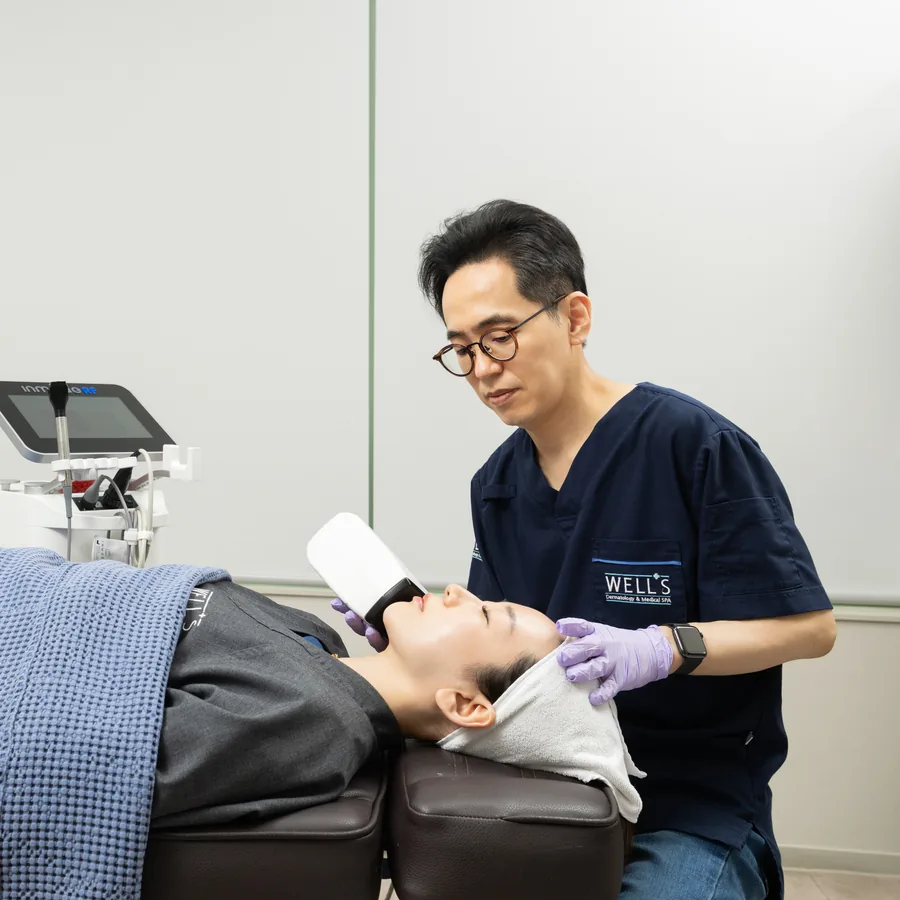
Tattoo removal by session: what changes each time with PicoSure
What actually happens at each laser tattoo removal session, why the fading shows between visits, and how a dermatologist adjusts the plan.

Tattoo removal by session: what really changes each time?
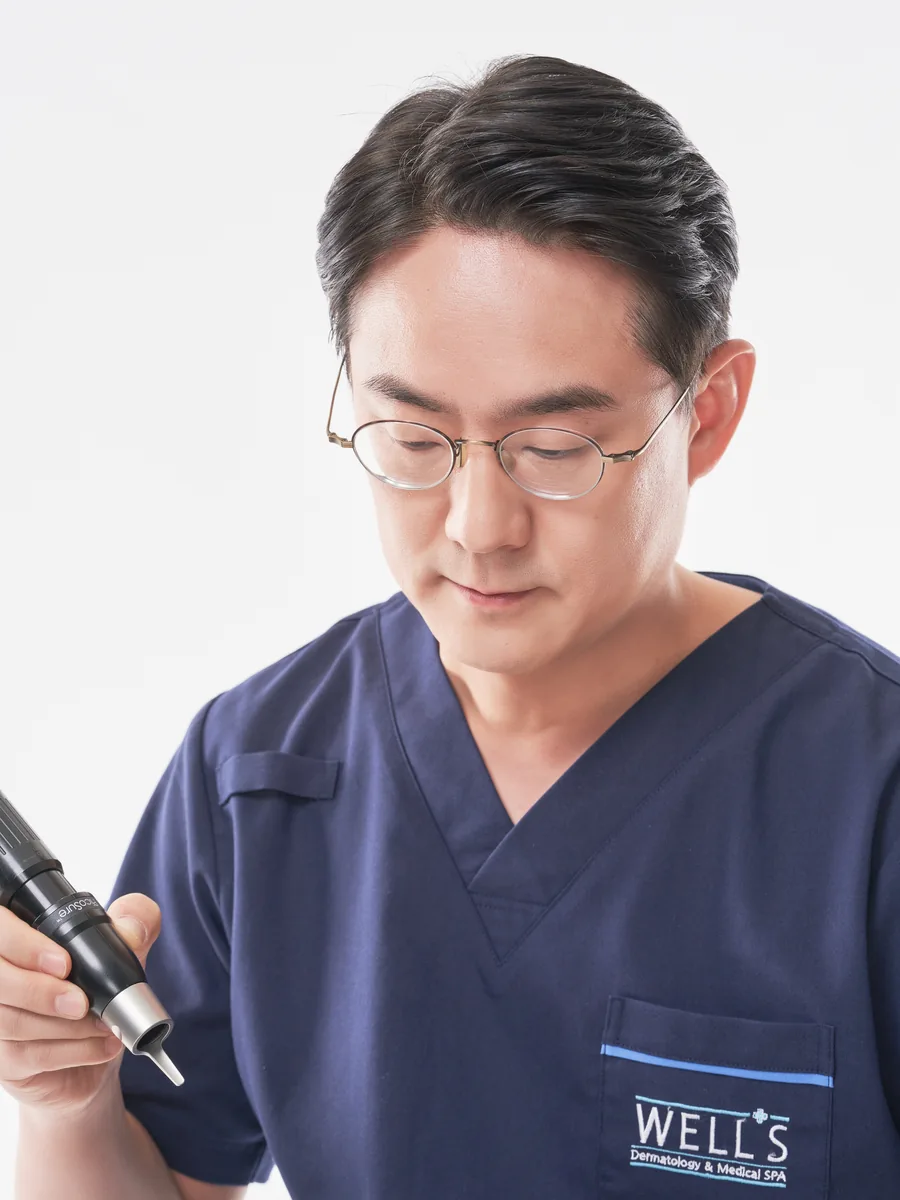
Hello, I'm Dr. Won Woo Choi, a board-certified dermatologist and chief director at WELLS Clinic in Apgujeong, Seoul. I trained at Seoul National University Hospital, where I was a clinical instructor and am now an adjunct professor of dermatology. Patients often ask me about tattoo removal by session, because they want to know what each visit will actually do.
The direct answer: each session shatters part of the ink, and the body clears those fragments in the time between visits. So the fading mostly shows between sessions, not on the day. From one session to the next, the tattoo lightens unevenly, stubborn colours become easier to see, and the dermatologist adjusts wavelength and energy to what is left. No honest session count can be given before the tattoo is examined.
Below I walk through the process the way I explain it in clinic: before the first session, the first session, the time in between, and the later sessions.
Before the first session: what the dermatologist looks at
At WELLS, dermatologists assess the ink and the skin before deciding the method. That assessment is what shapes every session that follows.
- Ink colour: black, blue, red and green each respond to a different wavelength.
- Ink density: heavily packed professional work holds more pigment than a light amateur tattoo.
- Ink depth: deeper ink generally takes longer to fade.
- Your skin: skin type and condition decide how much energy is safe.
- Earlier attempts: previous removal, especially by non-specialists, can leave marks that take longer to treat.

If you are planning from abroad, a clear photo with something for scale and a list of the colours lets us explain how the dermatologist is likely to approach it before you travel. The plan itself is confirmed in person.
Session one: how picosecond lasers shatter the ink
A tattoo is ink sitting in the dermis, below the surface. A laser cannot pull it out; it can only break it into particles small enough for the body to carry away.
Picosecond pulses are 1,000 times shorter than older Q-switched lasers, so ink is shattered more finely with less energy delivered to the skin. Older lasers tend to crack pigment into gravel-sized pieces; a picosecond pulse breaks it closer to sand. Because the effect is mechanical rather than heat-driven, the burning sensation is generally less, though pain varies from person to person.
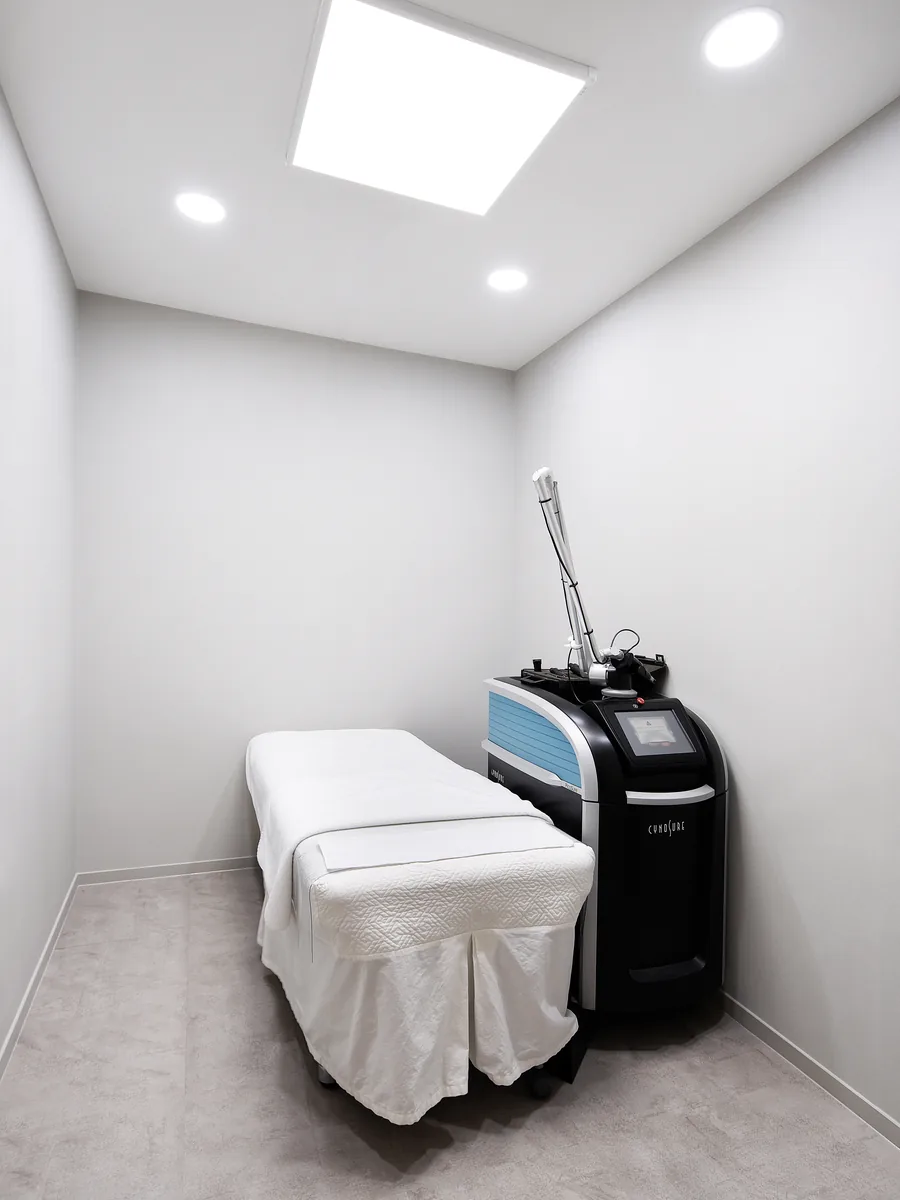
Our main device is PicoSure Pro, a 755 nm picosecond laser that is FDA and KFDA approved. It delivers over 40% more fluence than the original PicoSure, for fewer, faster sessions, and it is combined with 1064 nm and 532 nm to cover pigments at different depths.
The first session also tells us something: how your ink and skin respond. That response guides the settings for the next visit.
Between sessions: why the fading happens at home
After a session, immune cells called macrophages engulf the shattered ink, and the fragments are cleared through the lymphatic vessels. Small, sand-like particles are cleared far more easily than gravel-sized ones, which is why picosecond treatment generally needs fewer sessions overall.
This is also why firing more energy in a single visit does not shortcut the process. Clearance takes time, and pushing harder mainly raises the risk to the skin. The dermatologist sets the interval between sessions for your tattoo and skin.
- Use sunscreen of SPF 30+ and PA+++ or higher on exposed treated skin, and reapply every 2–3 hours outdoors.
- Moisturise the area generously with a gentle product.
- For about a week, avoid peels, scrubs, retinol and high-strength vitamin C on the treated area.
- Avoid saunas, jjimjilbang and vigorous exercise that heat the skin.
Middle sessions: when the colours separate
In a multi-coloured tattoo, the colours rarely fade at the same pace. As the darker ink lightens, the colours that respond more slowly become more obvious. This is the stage where having several wavelengths in one clinic matters.
| Wavelength | What it is used for |
|---|---|
| 1064 nm | Reaches the dermis; black and deep, dark ink |
| 532 nm | Superficial red and yellow pigment and lighter tattoos |
| 755 nm (PicoSure) | Colours other lasers leave behind |
Because black, blue, red and green each respond to a different wavelength, and all of them are available at WELLS, a stubborn colour can be treated in the same visit rather than sent elsewhere. The outline is on our tattoo removal page.
Send a photo of your tattoo with something for scale, and list the colours. A dermatologist will explain how the sessions are likely to go.
Send a photo, get a planLater sessions: adjusting, pausing or continuing
Towards the end, what remains is usually faint, scattered ink. At this stage the dermatologist looks as closely at the skin as at the ink, and adjusts energy and wavelength to what is left.
Sometimes the right call is to continue; sometimes it is to give the skin more time before the next session. Fading varies with pigment colour, density and depth, so I avoid promising a set number of visits or a specific end result. Individual results vary, and side effects are possible.
Thinking about tattoo removal by session also makes progress easier to judge. I suggest taking your own photo in the same light and from the same distance before each visit. Small changes are hard to see day to day, but side by side across several sessions the fading is usually much clearer, and it helps the dermatologist decide the next step with you.
Korean eyeliner tattoo and eyebrows: how sessions differ on the face
Many people looking up an eyebrow tattoo in Korea or an eyebrow tattoo in Seoul later want it gone, along with an old Korean eyeliner tattoo. Semi-permanent pigments are usually blue, red or grey and need different wavelengths from black body tattoos.
On the face, the approach is more conservative. Because only the abnormal pigment is targeted, the risk of scarring, hypertrophic marks or discoloration is low. Work done by non-specialists sometimes leaves marks that take longer, so bring it to a dermatologist first. Our permanent makeup removal page has the details, and my colleague's post on eyebrow tattoo removal in Korea covers brows in depth.
Price, planning and your first visit
For tattoo removal, the price is confirmed at your consultation, because it follows the size, the colours and how the ink is likely to respond. Prices at WELLS are in Korean won and exclude 10% VAT.
If you are fitting sessions around trips to Seoul, my colleague's guide to tattoo removal Korea explains how to line them up with your flights. All our options are on the tattoo removal overview, and you can read about each of us on the doctors page.
Tell us about your tattoo and your dates in Seoul. We will suggest how a first session could fit your trip.
Ask about my tattooReady to plan your tattoo removal?
Send a photo with something for scale, list the colours, and share your travel dates. A board-certified dermatologist will explain how the sessions are likely to go and confirm the plan at consultation.
Message the clinic on WhatsAppReplies on WhatsApp · prices in KRW, excluding 10% VATBefore you message us
How many sessions does tattoo removal take?
It depends on the ink colour, density and depth, and on your skin. The dermatologist sets the plan after examining the tattoo, so we don't give a number before seeing it.
Why doesn't my tattoo fade much right after a session?
The laser shatters the ink, but the body clears the fragments through immune cells and lymphatic vessels in the weeks that follow. Most of the fading happens between sessions.
Which laser does WELLS use for tattoo removal?
Our main device is PicoSure Pro, a 755 nm picosecond laser that is FDA and KFDA approved, combined with 1064 nm and 532 nm to cover different colours and depths.
Can coloured tattoos be removed?
Black, blue, red and green each respond to a different wavelength, and all of them are available at WELLS. Some colours fade more slowly than black.
How much does tattoo removal cost at WELLS?
The price is confirmed at your consultation. Prices are in Korean won and exclude 10% VAT.
Results and recovery vary by individual. Every treatment carries possible side effects, which are explained at the consultation. Prices are in Korean won, excluding 10% VAT, and confirmed at your consultation. This article is general information from the clinic, not a diagnosis.
Dr. Won Woo Choi
- Board-certified dermatologist in Korea; trained at Seoul National University Hospital
- Dermatology residency, Seoul National University Hospital; board certification in dermatology in Korea
- Ph.D. in Dermatology, Seoul National University
- Former clinical instructor, Seoul National University Hospital
- Adjunct professor, Department of Dermatology, Seoul National University Hospital