Hyperpigmentation Treatment After a Sunny Season: What I Advise
In a 2020 health column I explained why autumn sun and face masks make spots worse, and which hyperpigmentation treatment fits which pigment.

Why did I write about hyperpigmentation treatment in autumn?
Hello, I'm Dr. Won Sin Lee, a board-certified dermatologist and Chief Director at WELLS Clinic in Apgujeong, Seoul. I completed my residency and board certification in dermatology at Asan Medical Center, and I am an adjunct professor in its Department of Dermatology. Patients often ask me about hyperpigmentation treatment once summer is over and their spots look darker than they remember.
The short answer: spots that darkened over a sunny season can usually be improved, but only after a dermatologist has worked out what kind of pigment they are. Prevention and treatment have to work together, or the same spots return the next year.
In November 2020 I wrote a health column on exactly this for Tax & Finance News (조세금융신문), under the title that autumn sun had made melasma and spots worse and that pico toning could help. This post rewrites that column for readers outside Korea, with what we do at WELLS today.
Why do spots get darker even when the sun doesn't feel strong?
The column was written in the second year of daily mask-wearing. Many people had stopped wearing makeup and, with it, skipped the sunscreen step. A mask does not block ultraviolet light the way people hope it does.
I also pointed out that a white mask can reflect light upward, toward the skin around the eyes and over the nose. Those are exactly the places where freckles and melasma tend to show.
Autumn adds its own trap. The air is drier, the sun feels gentler, and it is easy to assume ultraviolet levels have dropped with it. But ultraviolet light does not disappear with the heat, so unprotected skin can keep producing pigment and ageing faster even when the sun does not sting.
So the link between autumn sun and melasma is less about how hot the day feels and more about how long skin stays unprotected. People who wrote off masks and UV as a non-issue, and spent long afternoons outside, are often the ones who come in once the weather cools with darker patches on the cheeks.
How should you protect skin before and during hyperpigmentation treatment?
Ultraviolet exposure switches on the pigment cells and is generally accompanied by inflammation and widened blood vessels. That is why sun protection is part of any hyperpigmentation treatment plan, not an optional extra.
If you are already in a course of laser sessions, protection matters even more. Skin that has just been treated is more sensitive to light, and pigment stimulated between sessions works against the progress you are paying for. I ask patients to treat sunscreen as part of the treatment itself.
When you choose a sunscreen, look at both numbers on the label. SPF describes protection against UVB, the burning rays. The PA rating describes protection against UVA, and pigment problems such as melasma and age spots are mainly driven by UVA.
- Apply sunscreen before you go out, not at the door, so it has time to settle.
- Use enough: a thin film gives less protection than the label promises.
- Reapply every few hours if you stay outside.
- If a full layer feels greasy or looks white, apply a little at a time in several layers.
- Avoid the strongest midday sun where you can, and add a hat, sunglasses or a parasol.
These habits keep new pigment from forming. They do not remove pigment that has already settled in the skin, which is where treatment comes in.
Which hyperpigmentation treatment fits which kind of pigment?
In the column I named pico toning as the treatment I consider most suitable for melasma and similar pigment. It concentrates strong energy on the pigment in a very short pulse, so normal skin is spared more than with older toning, and the course can be shorter.
Pico toning is not the only tool, though, and the right one depends on the diagnosis. At WELLS we have treated pigment since 2008, and we choose between several approaches.
| Pigment | What we usually consider | Price |
|---|---|---|
| Melasma, age spots (lentigo), nevus of Ota, ABNOM | Pico toning at 1064 nm and 755 nm | Confirmed at consultation |
| Melasma that returns after toning | MELA Triple Toning | ₩770,000 (VAT excluded) per session |
| Light freckles and sun spots | BBL at 515 nm with strong cooling | Confirmed at consultation |
| Café-au-lait spots and other birthmarks | Low-fluence picosecond laser, slowly | Confirmed at consultation |
Details are on our pages for melasma and pico toning, MELA Triple Toning and freckles and sun spots with BBL.
Not sure whether your spots are melasma, freckles or something else? Send a photo without makeup and your dates in Seoul, and a dermatologist will reply with a suggested approach.
Send a photo on WhatsAppHow does pico toning work as a hyperpigmentation treatment?
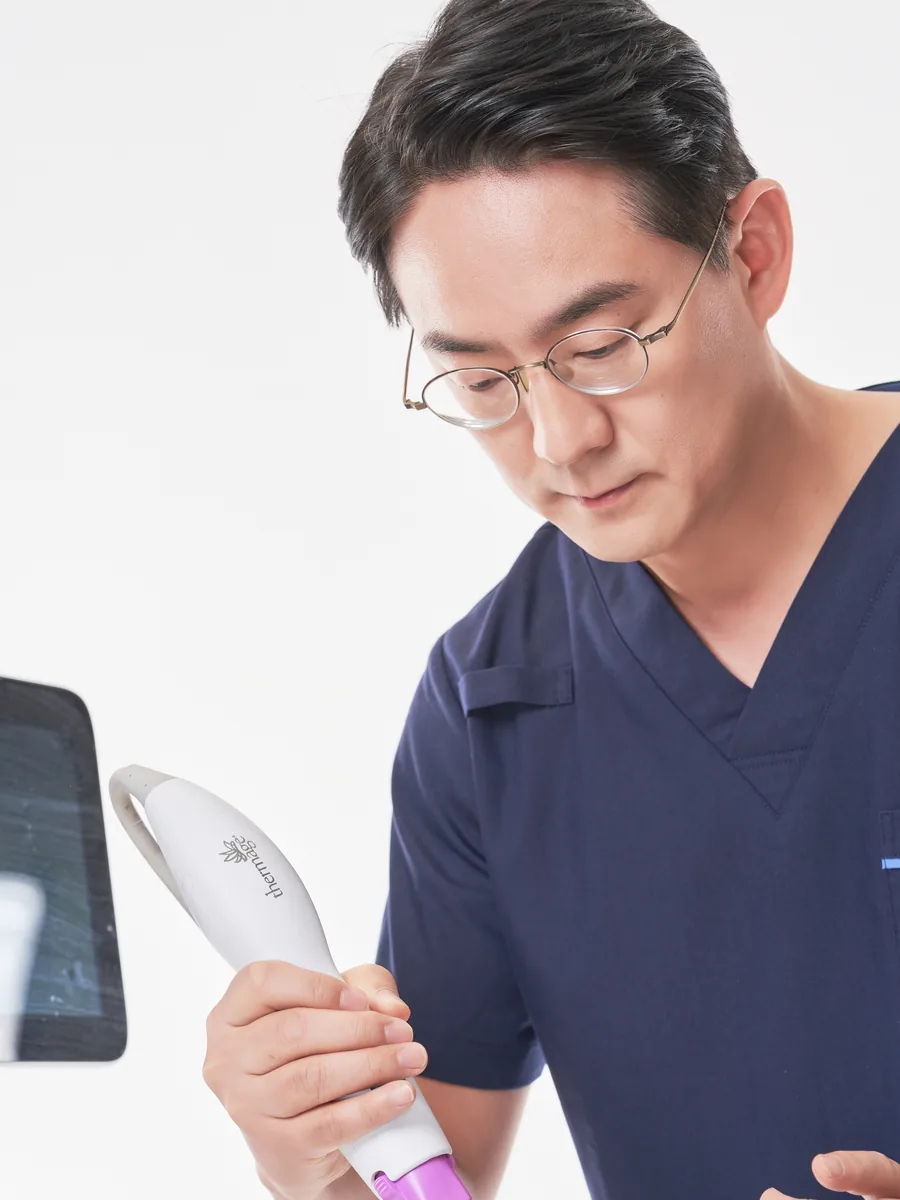
Picosecond pulses at WELLS are 1,000 times shorter than conventional laser toning. The short, powerful pulse breaks abnormal pigment into finer particles while sending less heat into the surrounding skin.
In the column I wrote that pico toning rarely causes the pale or darkened patches that older pigment treatments sometimes left behind, which is why patients tend to be satisfied with it. I still hold that view, with an honest caveat: fewer of these problems is not the same as none, and the energy and interval have to be matched to your skin.
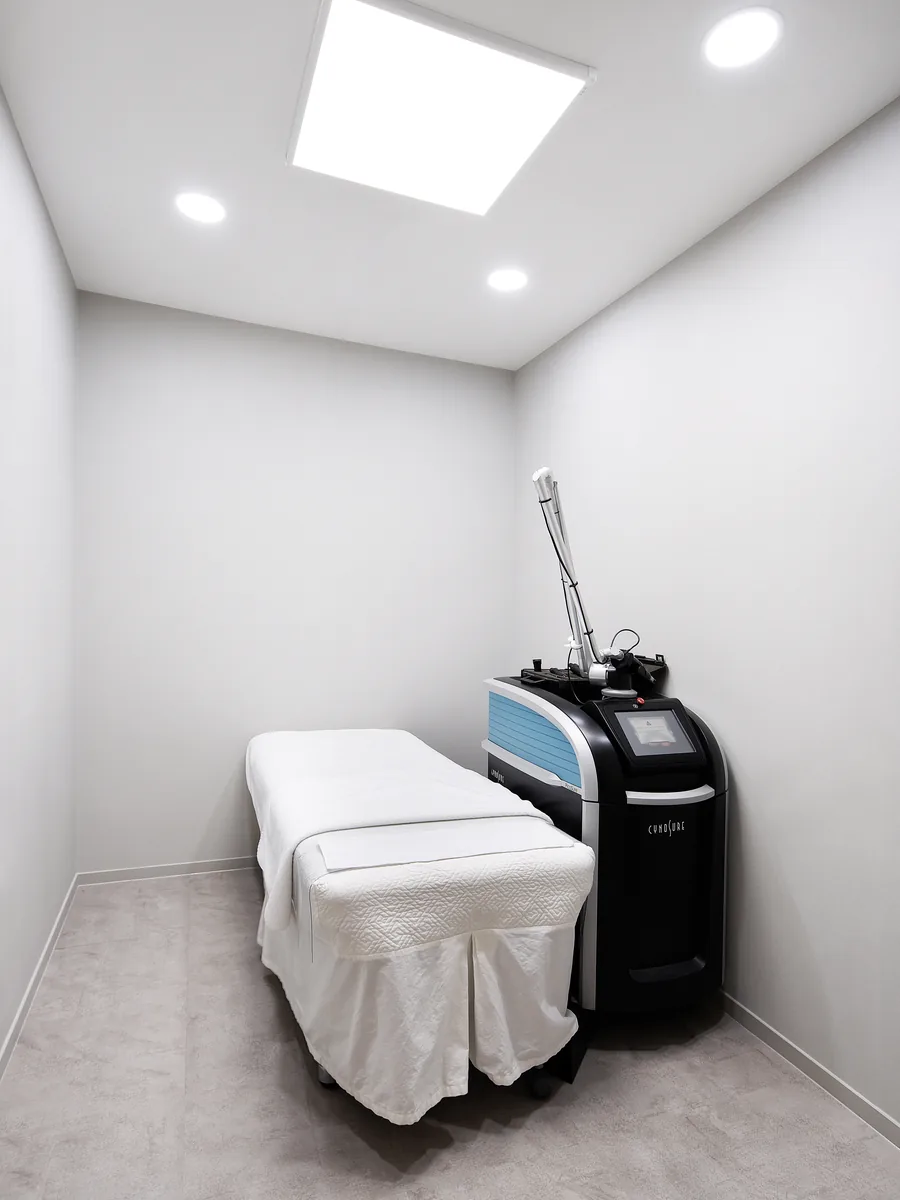
WELLS has used PicoSure since introducing it in 2015, and our PicoSure Pro is a 755 nm picosecond laser approved by the FDA and KFDA. The number of sessions and the interval depend on the type and depth of your pigment, which is the point I ended the column on.
Why does the clinic you choose matter for hyperpigmentation treatment?
My closing advice to Korean readers was to choose a clinic that understands pigment disorders well and can tailor treatment. Melasma, freckles, age spots and nevus of Ota can look similar to an untrained eye, yet they need different plans.
- A board-certified dermatologist examines and diagnoses your pigment in person.
- The wavelength is chosen for the pigment, not for whatever device is free.
- Energy and interval are adjusted to how your skin reacts after each session.
- There is a plan for pigment that comes back, not just a repeat of the same laser.
If you want more background, my colleague has written a longer guide to Korean hyperpigmentation treatment with more on diagnosis.
How do you plan a hyperpigmentation treatment visit to Seoul?
Most pigment is managed over several sessions, so it helps to plan around repeat visits to Seoul and to stay with one clinic. Start on WhatsApp with a photo and your dates, and we will suggest how sessions could fit your stays.
At the clinic a dermatologist examines your skin, confirms the plan and price, and treats you where it is appropriate. WELLS is about five minutes on foot from Apgujeong Station (Line 3), Exit 3; see our clinic and directions page. Keep up your sunscreen between visits, because the sun does not stop working on your skin while you wait for the next session.
Send your dates in Seoul and a clear photo of the area. We reply in English with options and appointment times.
Plan my visit on WhatsAppSend a photo, find out what your spots are
Send a clear photo of your pigment without makeup and your dates in Seoul. A dermatologist will reply with a suggested approach, the listed price where there is one, and available times.
Message the clinic on WhatsAppReplies on WhatsApp · prices in KRW, excluding 10% VATBefore you message us
What did Dr. Lee write in the 2020 Tax & Finance News column?
That masks do not block ultraviolet light, that autumn sun is easy to underestimate, that sunscreen should be chosen by both SPF and PA rating, and that pico toning suits melasma and similar pigment when the plan is tailored to each person.
Does wearing a mask protect against pigment?
Not reliably. Ultraviolet light still reaches the skin, and a white mask can reflect light toward the eyes and nose, so sunscreen is still needed.
What is the best hyperpigmentation treatment for melasma?
At WELLS melasma is often treated with pico toning at 1064 nm and 755 nm, and recurring melasma with MELA Triple Toning. A dermatologist decides after examining your skin.
How much does hyperpigmentation treatment cost at WELLS?
MELA Triple Toning is listed at ₩770,000 (VAT excluded) per session. Prices for pico toning, BBL and birthmark treatment are confirmed at consultation.
Results and recovery vary by individual. Every treatment carries possible side effects, which are explained at the consultation. Prices are in Korean won, excluding 10% VAT, and confirmed at your consultation. This article is general information from the clinic, not a diagnosis.
Dr. Won Sin Lee
- Board-certified dermatologist in Korea; trained at Asan Medical Center in Seoul
- Dermatology residency, Asan Medical Center; board certification in dermatology in Korea
- Adjunct professor, Department of Dermatology, Asan Medical Center
- Former director, Bokji Dermatology Clinic, Korean Leprosy Welfare Association
- Commendation for Outstanding Service as a Public Health Physician