Rosacea treatment: why redness lingers and what treats the vessels
A dermatologist explains rosacea and broken capillaries: what keeps the redness coming back, and how vascular lasers treat the vessel itself.


Rosacea treatment: what actually reduces the redness?
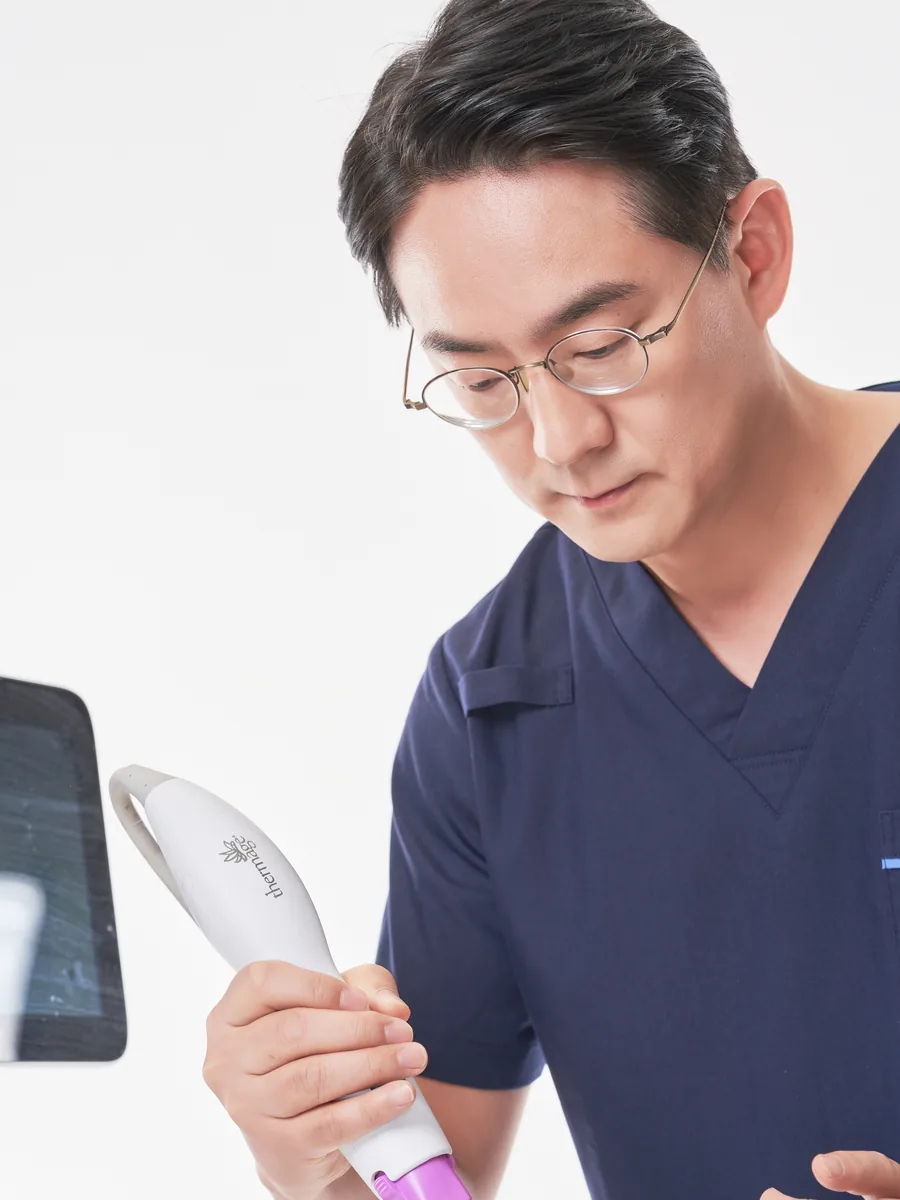
Hello, I'm Dr. Won Sin Lee, a board-certified dermatologist and chief director at WELLS Clinic in Apgujeong, Seoul. I completed my residency and board certification in dermatology at Asan Medical Center, where I am now an adjunct professor of dermatology. Patients often ask me about rosacea treatment because the redness keeps coming back, whatever they put on their skin.
The direct answer: persistent redness and broken capillaries come down to dilated blood vessels near the surface. Skincare and medication can calm mild flushing, but vessels that are already dilated respond best to a vascular laser that treats the vessel and leaves the surrounding skin alone.
Below I explain what rosacea is, why it lingers, how the main treatments compare, and how we use vascular lasers at WELLS.
What is rosacea, and how is it different from broken capillaries?
Rosacea is a long-term condition of the facial skin, centred on the cheeks, nose and chin. It generally shows up as flushing that comes and goes, redness that stays, small visible vessels, and in some people bumps that look like acne.
Broken capillaries are the visible vessels themselves: fine red lines on the nose or cheeks. They often appear with rosacea, but they can also exist on their own. Both are vascular problems, which is why they are treated in a similar way.
Everyone flushes sometimes, with heat, exercise or emotion. The difference with true facial redness is how long it lasts. It can stay for 30 minutes, and sometimes as long as two hours.
- Flushing: sudden redness with heat, emotion, alcohol or hot and spicy food.
- Persistent redness: a background redness that no longer fully settles.
- Visible vessels: fine red lines, most often around the nose and cheeks.
- Bumps: small red spots that can be confused with acne.
Why does the redness keep coming back?
When I assess a red face, I am usually looking for one of two causes, and often both. The first is chronic inflammation: flushing or breakouts that continue for more than three months can settle into lasting redness.
The second is a problem with the autonomic nerves that control how facial vessels widen and narrow. When they misfire, the face flushes suddenly with emotion, heat or hot and spicy food. Both causes end in the same place: capillaries near the surface that stay dilated.
Season plays a part too. Between November and February we see noticeably more people with facial redness, because dry air and sharp changes between cold outdoors and heated rooms make it worse.
That is also why I ask every patient the same few questions before treatment: when the redness started, what sets it off, how long a flush lasts, and what has already been tried. The answers tell me whether inflammation, nerve-driven flushing or both need attention, and that shapes the whole plan.
Medication, skincare or laser: how each rosacea treatment works
Each approach has a place, and each has limits. Mild flushing can sometimes be managed with medication or skincare alone; clear vascular changes respond best to early treatment.
| Approach | What it does | The limit |
|---|---|---|
| Oral medication | Acts on the whole body | Not limited to the face, which some people dislike |
| Topical medication | Can work well on the skin | Redness can rebound when it wears off |
| Gentle skincare | Calms and protects the barrier | Cannot shrink vessels already dilated |
| Vascular laser | Treats the enlarged vessel selectively | Usually needs a short series of sessions |
Searches for korean beauty for rosacea, or rosacea treatment korean skincare, usually lead to calming, barrier-friendly products. They are worth using. But home care alone cannot shrink dilated vessels; what it can do is stop things getting worse.
- Avoid saunas, jjimjilbang and other very hot environments.
- Go easy on very spicy or very hot food and drink.
- Protect the skin barrier in cold, dry weather.
- Keep your routine simple; long lists of actives tend to irritate.
How vascular lasers treat broken capillaries
Flushing and visible capillaries are vascular conditions. The right wavelength treats the enlarged vessel selectively, while normal tissue around it is left untouched. That is the logic behind vascular lasers: they destroy, reduce or contract the dilated vessels rather than covering the redness.
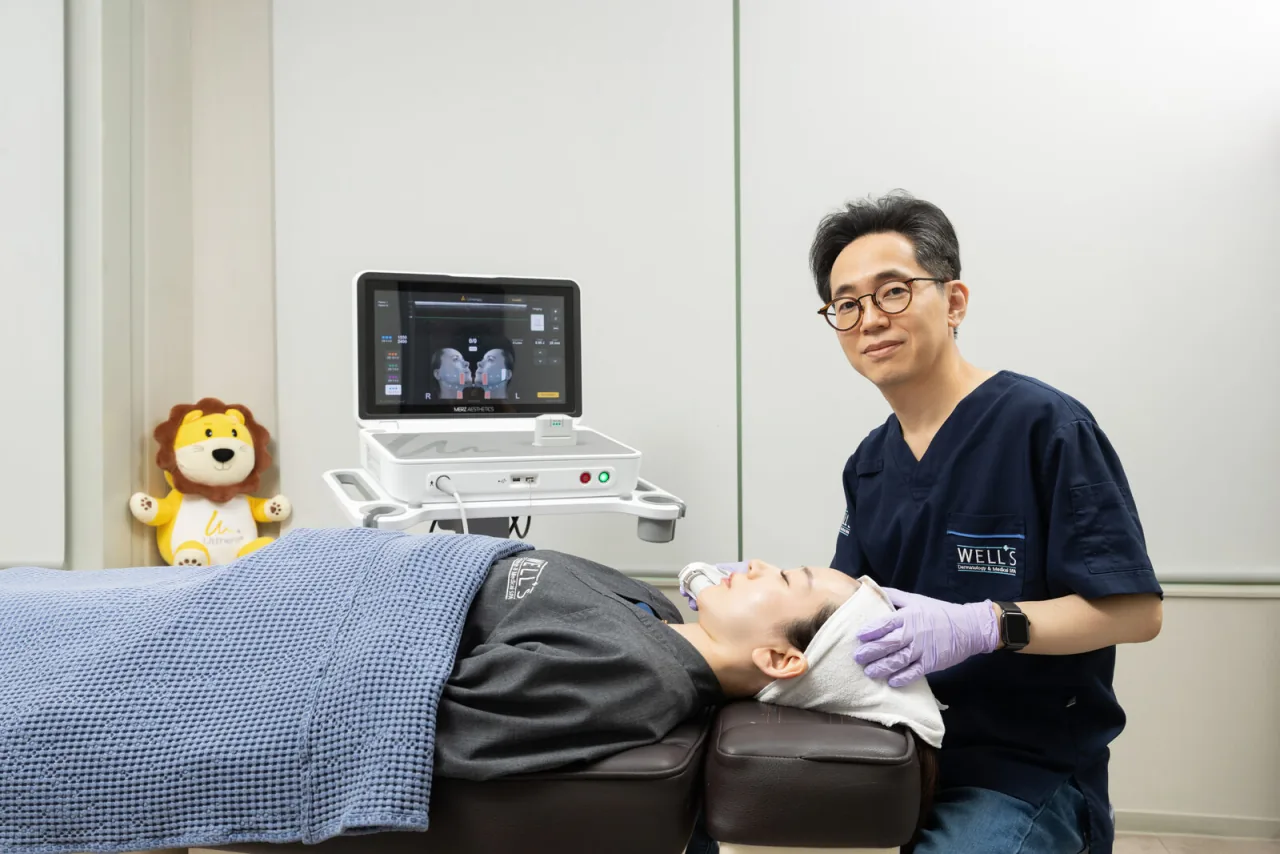
At WELLS we use three devices, Synergy, Clarity and BBL, to cover every wavelength needed for different vessels and skin. For facial redness the Synergy vascular laser is the one we rely on most, because it can be used locally and safely. The full outline is on our rosacea and broken capillaries page.
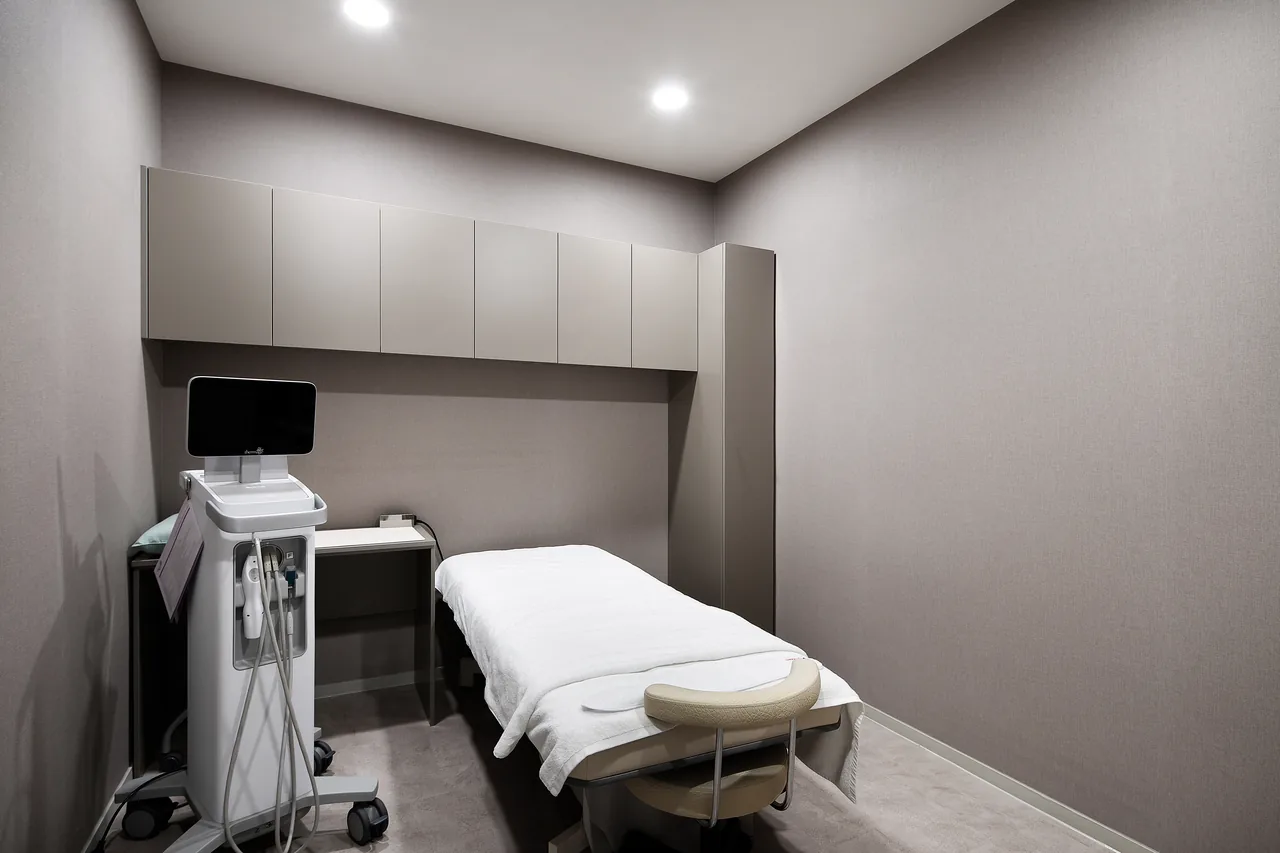
Anesthetic cream is applied beforehand. Treatment can cover the whole face or focus on specific areas, such as the nose or cheeks. The number of sessions depends on severity, but a course is usually 3 to 5 sessions, spaced 2 to 3 weeks apart.
Treating early matters. Clear vascular changes respond best when they are treated before they become widespread, so I would rather see a patient while the vessels are still few. Between sessions, the habits that prevent flares also help the result settle: avoid saunas, very hot environments and very spicy food.
The price for this treatment is confirmed at your consultation, once the dermatologist has seen your skin and set the plan. Individual results vary, and side effects are possible.
Send a photo of your redness in natural light and tell us when it flares. A dermatologist will suggest where to start.
Send a photo, get a planWhen rosacea overlaps with acne, or won't settle
Red bumps can belong to rosacea, to acne, or to both at once, and the treatment differs. If breakouts are part of the picture, our personalized acne treatment addresses them at the source. Early red marks left by acne can also respond to vascular lasers.
Some people reach us after trying several treatments elsewhere. For redness that will not settle, we recommend a skin microbiome test to look for the source of the chronic inflammation, so treatment can aim at the cause as well as the vessels.
Everything we offer in this area is on the acne, scars and pores page.
Korean treatment for rosacea: planning it from abroad
If you are searching for a korean treatment for rosacea, the treatment itself is the same vascular laser approach described above. What changes is the planning, because sessions are spaced weeks apart and rarely fit one short holiday.
My colleague has written a separate guide to Korean rosacea treatment that covers how to plan sessions around a trip, so I won't repeat it here. Answers on booking, prices and English consultations are on our FAQ for international patients.
Earlier in my career I directed the Bokji Dermatology Clinic of the Korean Leprosy Welfare Association and served as a regional supervisor for leprosy control with the KCDC. You can read about each of us on the doctors page.
Tell us what you have tried for your redness and when you will be in Seoul. We will suggest a plan and an appointment time before you fly.
Ask about my rednessRedness that keeps coming back?
Send a photo in natural light, tell us what you have tried, and share your travel dates. A board-certified dermatologist will explain the options and confirm the plan at consultation.
Message the clinic on WhatsAppReplies on WhatsApp · prices in KRW, excluding 10% VATBefore you message us
What is the most effective rosacea treatment for redness?
Because lasting redness comes from dilated vessels, a vascular laser that treats the vessel selectively is the most direct approach. Mild flushing can sometimes be managed with medication or skincare.
Can Korean skincare cure rosacea?
Gentle, barrier-friendly skincare can calm the skin and help prevent flares, but home care alone cannot shrink vessels that are already dilated.
Which lasers does WELLS use for rosacea and broken capillaries?
We use Synergy, Clarity and BBL to cover the wavelengths needed. For facial redness, the Synergy vascular laser is the one we use most.
Does vascular laser treatment for rosacea hurt?
Anesthetic cream is applied before the laser to keep you comfortable. Sensation varies from person to person, and the dermatologist adjusts the treatment to your skin.
How many sessions does rosacea treatment take?
It depends on severity, but a course is usually 3 to 5 sessions, spaced 2 to 3 weeks apart. The dermatologist confirms the plan for your skin.
How much is rosacea treatment at WELLS?
The price is confirmed at your consultation. Prices are in Korean won and exclude 10% VAT.
Results and recovery vary by individual. Every treatment carries possible side effects, which are explained at the consultation. Prices are in Korean won, excluding 10% VAT, and confirmed at your consultation. This article is general information from the clinic, not a diagnosis.
Dr. Won Sin Lee
- Board-certified dermatologist in Korea; trained at Asan Medical Center in Seoul
- Dermatology residency, Asan Medical Center; board certification in dermatology in Korea
- Adjunct professor, Department of Dermatology, Asan Medical Center
- Former director, Bokji Dermatology Clinic, Korean Leprosy Welfare Association
- Commendation for Outstanding Service as a Public Health Physician